
Blue and White Porcelain Moon Flask (Bianhu)
Estimated value
$150 - $450Rarity
Average(4/10)Category
Ceramics & PotteryEra
Late 20th Century or contemporaryOrigin
ChinaVisual assessment
Photo analysis
Save to revisit in your watchlist. This does not add the object to your own collection.
Blue and White Porcelain Moon Flask
A flattened, rectangular moon flask featuring underglaze cobalt blue decoration of twin five-clawed dragons beneath a phoenix medallion. The shoulders are adorned with high-relief 'bi-long' or dragon handles. The foot shows an unglazed, buff-orange paste which suggests a high iron content in the clay body typical of certain provincial or later reproduction kilns.

Related traditions
Islamic Metalwork
12th-14th Century
The 'pilgrim flask' shape was inspired by bronze and silver canteens used by travelers on the Silk Road.
Use and ceremony
Ming Dynasty
Vessels of power representing the expansion of maritime trade.
Modern Era
Popular decorative 'Chinoiserie' objects for global interior design.
Origins and context
The 'bianhu' or flattened flask form originates from Middle Eastern metalwork and was adopted by Chinese potters as early as the Han Dynasty, seeing a significant revival during the Ming and Qing periods. This specific iconographic pairing of the dragon (yang) and phoenix (yin) represents imperial union and marital harmony, a motif heavily utilized in the Qianlong period (1736-1795) and subsequently replicated in the late 19th and 20th centuries.
Further details
The unglazed orange base, often called a 'red bottom,' is sometimes artificially induced in modern kilns to mimic the iron-oxidation seen on genuine early Ming wares.
Five-clawed dragons were historically reserved for the Emperor's exclusive use, while four-clawed versions were permitted for princes and lower officials.
Attribution and evidence
The identification of the form and motif is certain, but the high risk of modern manufacture based on the footrim characteristics prevents a higher confidence level for a period attribution.
Identifying details
- 1Unglazed orange paste on the foot is a hallmark of modern provincial reproductions mimicking 'iron foot' characteristics.
- 2Five-clawed dragon motif is inconsistent with the overall quality of the painting and potting.
- 3The 'heaping and piling' of the cobalt lacks the depth and crystalline metallic luster seen in genuine 15th-century blues.
- 4Dragon handles show mold lines and simplified modeling compared to hand-sculpted period pieces.
Open questions
- •Base oxidation appears to be a surface wash rather than a natural firing effect.
- •Symmetry of the bird and floral medallion is slightly rigid.
- •Lack of 'orange peel' texture in the clear glaze glaze common in Qing period wares.
Photographs that would help
- Provide a high-resolution photo of the mouth rim and interior neck.
- Perform a 'long-wave UV' light test to check for hidden repairs or modern glaze fluorescing.
- Take a close-up photo of the cobalt blue under 10x magnification to check for modern pigment particles.
Terms in this record
- Bianhu
- The technical Chinese term for a flattened pilgrim flask or moon flask shape.
- Paste
- The clay body of a ceramic vessel before it is glazed and fired.
Wear and preservation
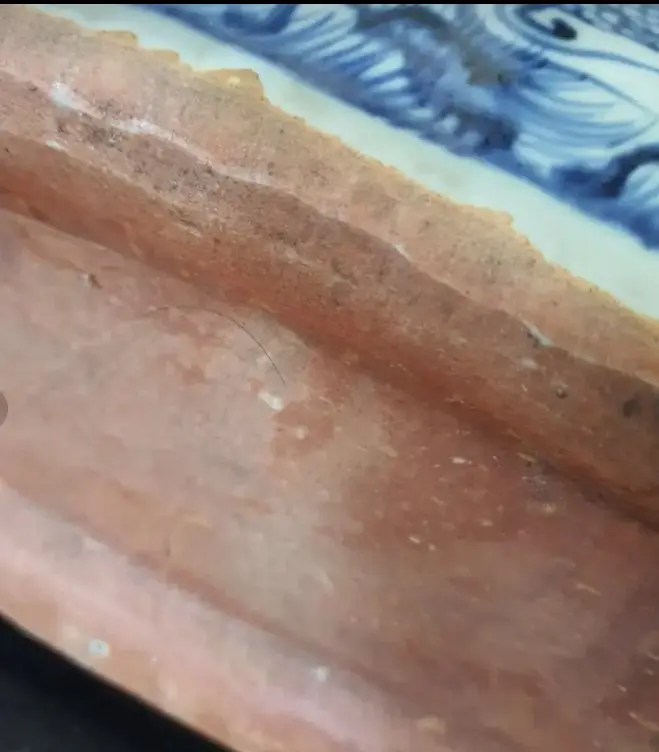
Condition is generally stable, but the artificial distressing on the base precludes a standard antique grade.
Minor surface abrasions and pin-holing in the glaze. The foot shows irregular chipping and artificial staining to simulate age and burial conditions.
Glaze and painted decoration
Glossy glaze with significant cobalt 'heaping and piling' effect that appears manually applied rather than natural. The unglazed footrim reveals a gritty, terracotta-colored paste with visible inclusions and a rough sheer.
Recorded physical details
Estimated at 1.8 to 2.5 kg; the thick walls and heavy unglazed base suggest a dense, modern stoneware or high-fired earthenware body.
Scarcity and surviving examples
Average · 4/10 estimated rarity
This is a qualitative collection score, not a measured survival count, market percentile or proof of authenticity.
What the photographs establish
Interpretation of the photographs and supplied context. This does not authenticate the object.
- The 'red bottom' footrim appears too uniform in color and texture for period Ming or Qing wares
- Cobalt blue application shows exaggerated 'heaping and piling' often found on 20th-century reproductions
- Dragon anatomy and line work lack the fluid precision of 18th-century imperial examples
Value and its basis
Estimate recorded: May 11, 2026
How we estimate value
Estimate context (not a documented sale): Sotheby’s and Christie's regularly sell period examples for $50,000+, while similar 'red bottom' decorative reproductions frequently sell for $100-$300 on eBay and LiveAuctioneers.
Collectors and interest
Standard interior decorators and casual collectors of Asian-style decorative arts.
What supports the estimate
- •Large scale of the piece for decorative impact
- •Classic dragon and phoenix iconography popular in the export market
What could change it
- •Diagnosis as a 20th-century reproduction significantly limits auction value
- •Visible chipping on the footrim
Comparing quality
- •Natural iron-spotting in the cobalt
- •Verified mark-and-period reign marks (e.g., Da Qing Qianlong Nian Zhi)
- •Translucent eggshell-quality porcelain body
The effect of condition
Glaze integrity, clarity of the cobalt blue, and absence of modern kiln scars.
Market interest
For informational purposes only, not a formal appraisal.
Related objects
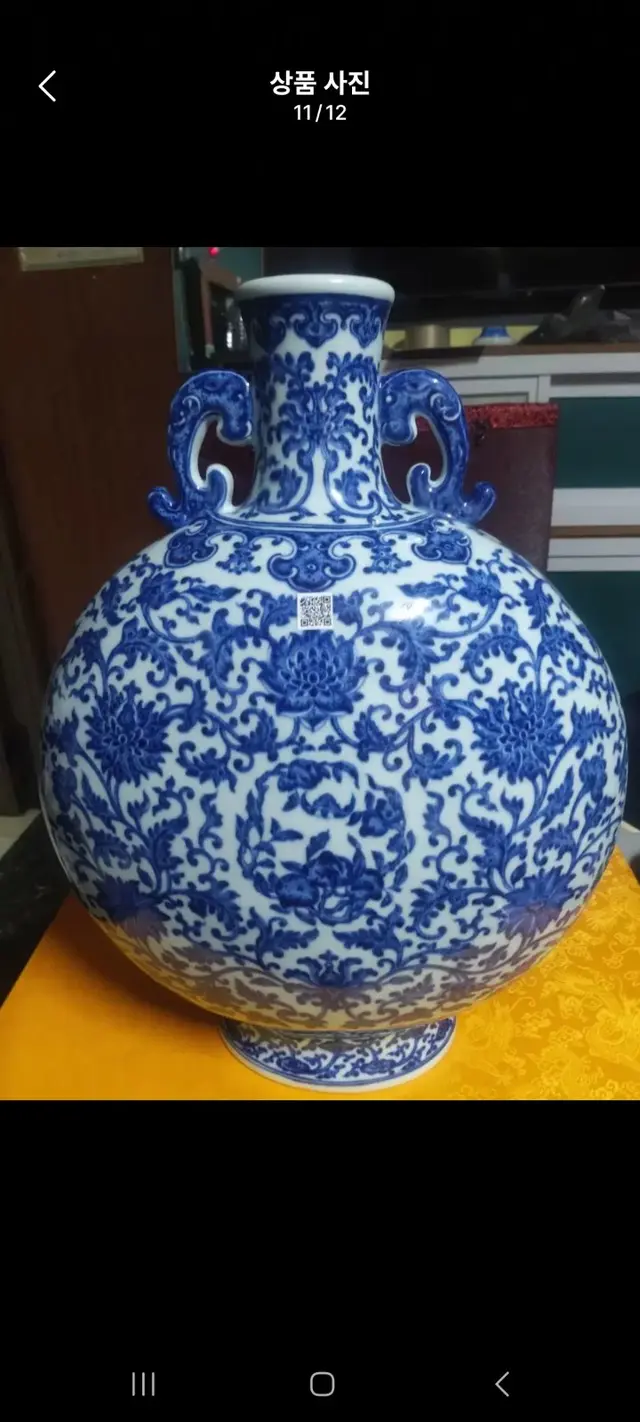
Blue and White Moon Flask (Bianhu) with Qianlong Mark
Shared title details
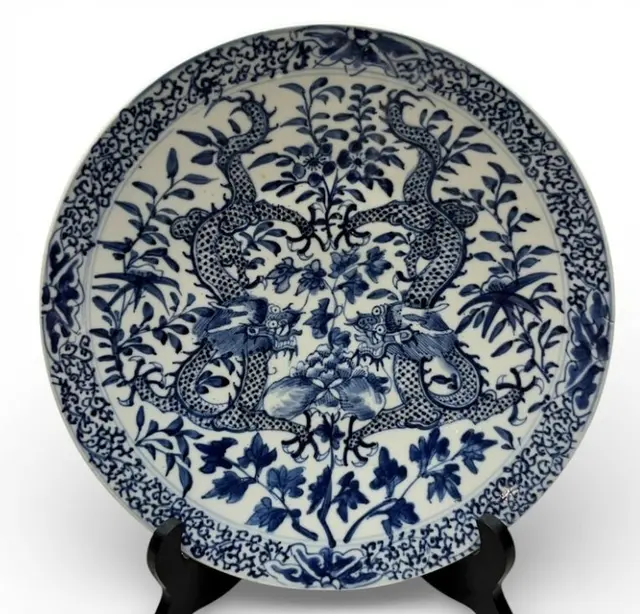
Chinese Blue and White Porcelain 'Dragon and Phoenix' Charger
Shared title details
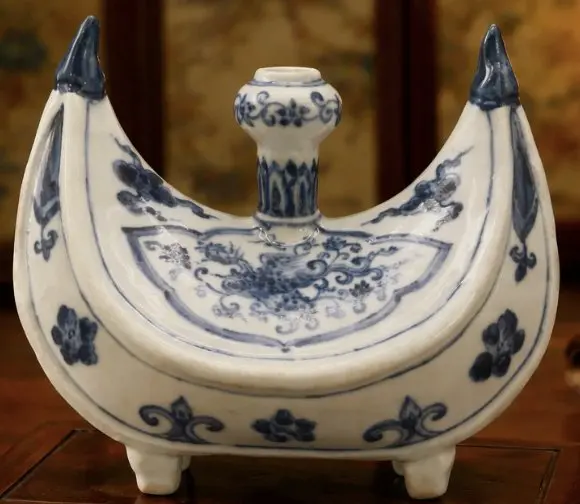
Blue and White Porcelain Crescent-Shaped Vessel
Shared title details
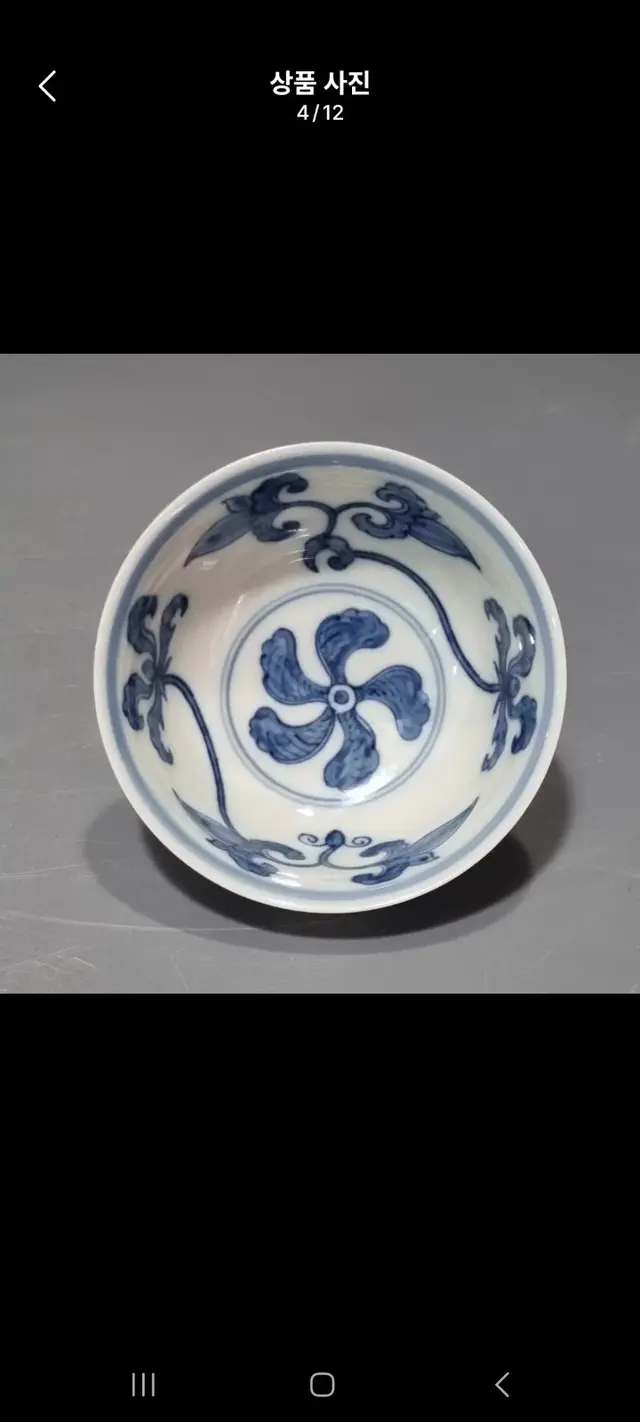
Blue and White Porcelain Small Bowl with Apocryphal Chenghua Mark
Shared title details
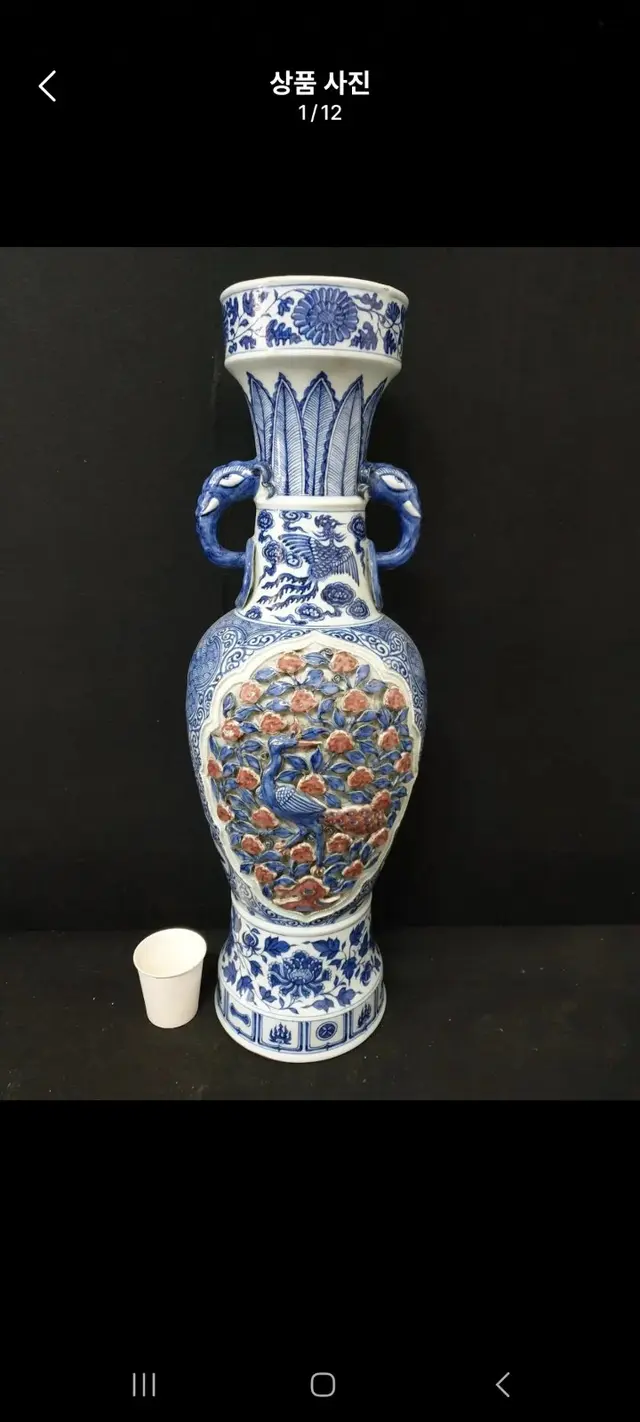
Chinese Blue and White Porcelain 'Peacock' Vase with Reticulated Openwork
Shared title details
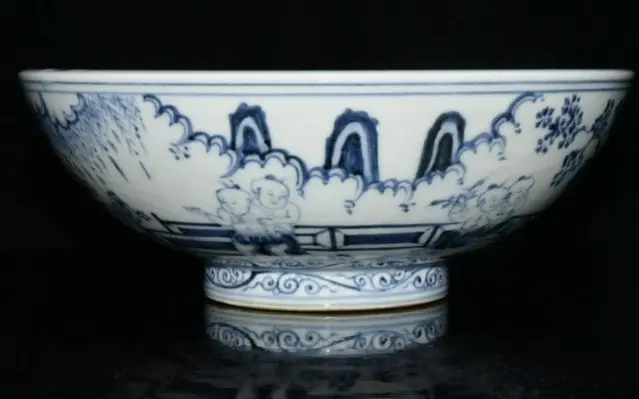
Chinese Blue and White 'Boys at Play' Porcelain Bowl
Shared title details
Explore Ceramics & Pottery
Pottery, porcelain, stoneware, earthenware, and kiln-fired objects.
Ceramics & Pottery value and rarity guideShare this find
A place for your ceramics
Keep its photographs, maker’s marks and the story you know in one object record. Start with a photo.
Create an account for 10 free scans. No credit card needed.
Join the conversation
Recognise a detail or have a question? Add what you know and cite your source. Suggested corrections stay in the discussion for the owner or a moderator to review.
Sign in to leave a comment
Sign in