Fake art detection & recognition
AI-assisted analysis of visual features, materials, provenance data, stylistic patterns, and historical context, helping you recognize warning signals before formal expert appraisal.
How fake detection works
Five layers of analysis working together to surface signals that warrant attention.
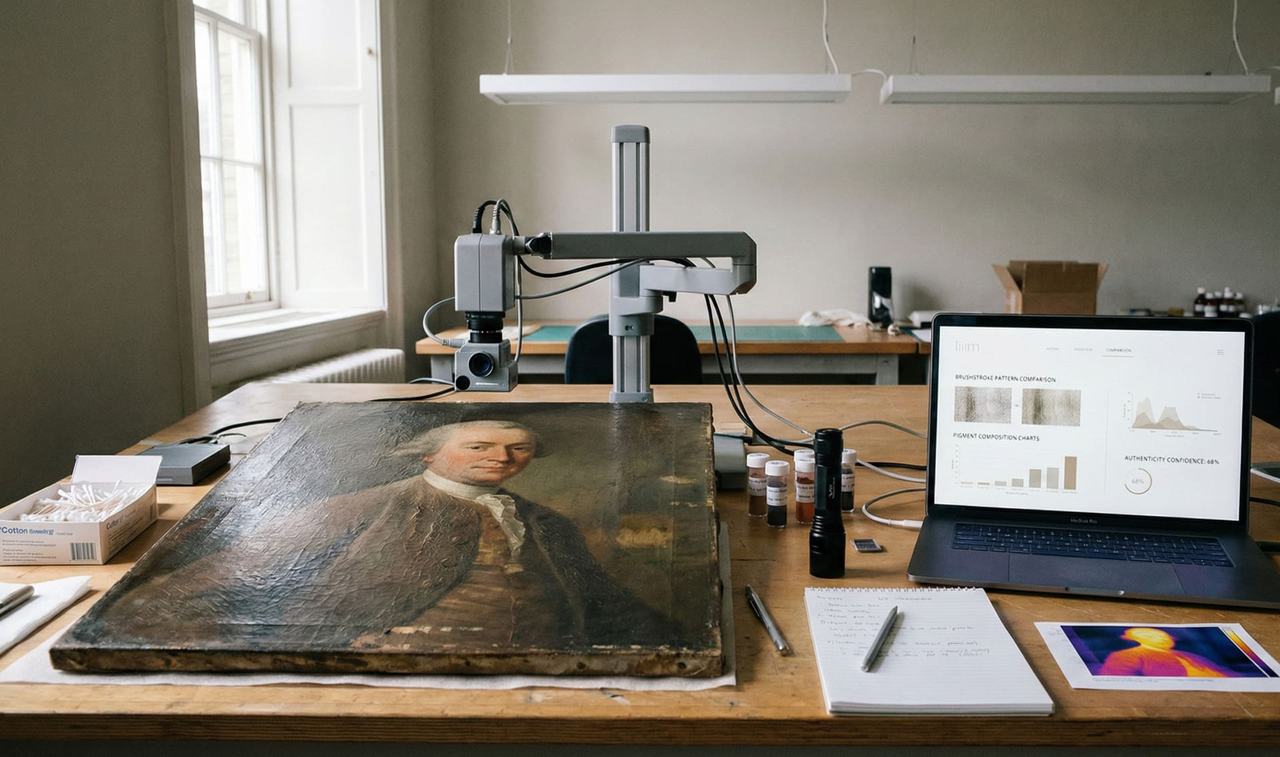
Visual analysis
Examining brushwork, glazing patterns, printing techniques, aging signals, symmetry, and tooling marks to identify inconsistencies invisible to the untrained eye.
Material & technique checks
Cross-referencing visible materials, construction methods, and surface characteristics against what's expected for the claimed period and origin.
Style & period comparison
Comparing stylistic elements against known references: proportions, color palettes, decorative motifs, and manufacturing patterns typical of specific eras.
Provenance logic checks
Evaluating timeline plausibility, ownership gaps, geographic mismatches, and documentation consistency to flag improbable provenance narratives. Explore our dedicated provenance gap detection tool.
Pattern recognition
Matching against known reproduction traits, common forgery signatures, and recurring patterns observed across documented fakes and copies.
What we analyze, and what we can't
Clarity about our strengths is just as important as honesty about our limits.
Signals we analyze
- ✓Common reproduction signals and copy indicators
- ✓Style-period mismatches and anachronistic elements
- ✓Modern materials appearing in historical objects
- ✓Inconsistent wear patterns or artificial aging
- ✓Overused or suspicious marks, signatures, and stamps
- ✓Machine-made characteristics in supposedly handmade objects
- ✓Printing or manufacturing patterns inconsistent with claimed origin
Important limitations
- -Not a replacement for physical laboratory testing
- -Not a legal authentication certificate or expert opinion
- -Cannot detect sophisticated forgeries requiring scientific analysis
- -Results are probabilistic signals, not definitive verdicts
- -Designed as an early warning and research accelerator
Signals, not verdicts
Results are expressed as confidence ranges and signal strength, never as yes/no judgments.
Authenticity signals
Positive indicators that align with genuine characteristics, such as consistent aging, period-appropriate materials, and expected stylistic features.
Risk indicators
Warning signals that suggest further investigation, including unusual patterns, material inconsistencies, stylistic anomalies, or provenance gaps.
Reproduction likelihood
A confidence range indicating how closely the object matches known reproduction patterns, expressed as probability, never as a binary judgment.
Who this is for
Anyone who needs a second set of trained eyes before making decisions about art and collectibles.
Private collectors
Verify pieces before purchasing. Add a layer of due diligence to every acquisition decision.
Auction buyers
Research lots before bidding. Identify potential red flags that deserve expert follow-up.
Dealers & galleries
Screen inventory efficiently. Build client confidence with documented analysis records.
Inheritors & estate researchers
Understand what you've received. Separate genuine heirlooms from later copies or attributions. See our inheritance evaluation tool.
Learn moreCurious owners
Finally learn whether that attic find, flea market purchase, or family mystery is what you think it is.
Ethical & transparent AI
We believe honest ambiguity is more valuable than false certainty.
Reducing false certainty
We never declare objects fake or real. Every result communicates uncertainty, because honest ambiguity is more useful than false confidence.
Explainable results
Every flag comes with reasoning. You can see exactly which signals contributed to the assessment, avoiding black-box verdicts.
Supporting human expertise
Our tool is designed to complement, not replace, professional appraisers, conservators, and historians. We accelerate research, not bypass it. See our full appraisal process.
Learn moreTransparent limitations
We clearly communicate what our analysis can and cannot do. Trust is built through honesty about boundaries.
Part of every scan
Authenticity checks run on the same photos you already capture, no extra step.
Object scanning
Authenticity signals are generated automatically during every scan, so no extra steps are required.
Collection cataloging
Risk indicators are stored alongside your item records for ongoing reference and research.
Provenance building
Detection insights feed into provenance documentation, strengthening ownership narratives.
Valuation context
Authenticity assessment directly informs value estimates, as genuine pieces command different markets.
Learn morePeriod plausibility analysis
Material and technique checks feed directly into historical alignment assessments, verifying whether objects fit their claimed era.
Learn moreCity curiosity guide
Scan monuments, facades, and architectural details while exploring cities. Authenticity signals apply to urban objects too.
Learn moreLong-term research
Track how assessments evolve as new reference data becomes available and your knowledge grows.
Explore related tools
Other capabilities that connect to this workflow.
Is it real?
Quick authenticity checks for art, antiques, and collectibles using AI visual analysis.
Learn morePeriod plausibility analysis
Evaluate whether an object's materials, techniques, and style match the constraints of its claimed era.
Learn moreInsurance readiness
Organize documentation, images, and provenance into structured records insurers can assess.
Learn moreA second set of eyes
Scan your object and get a clear read on the warning signs before you commit.