What is the most valuable stamp in the world?
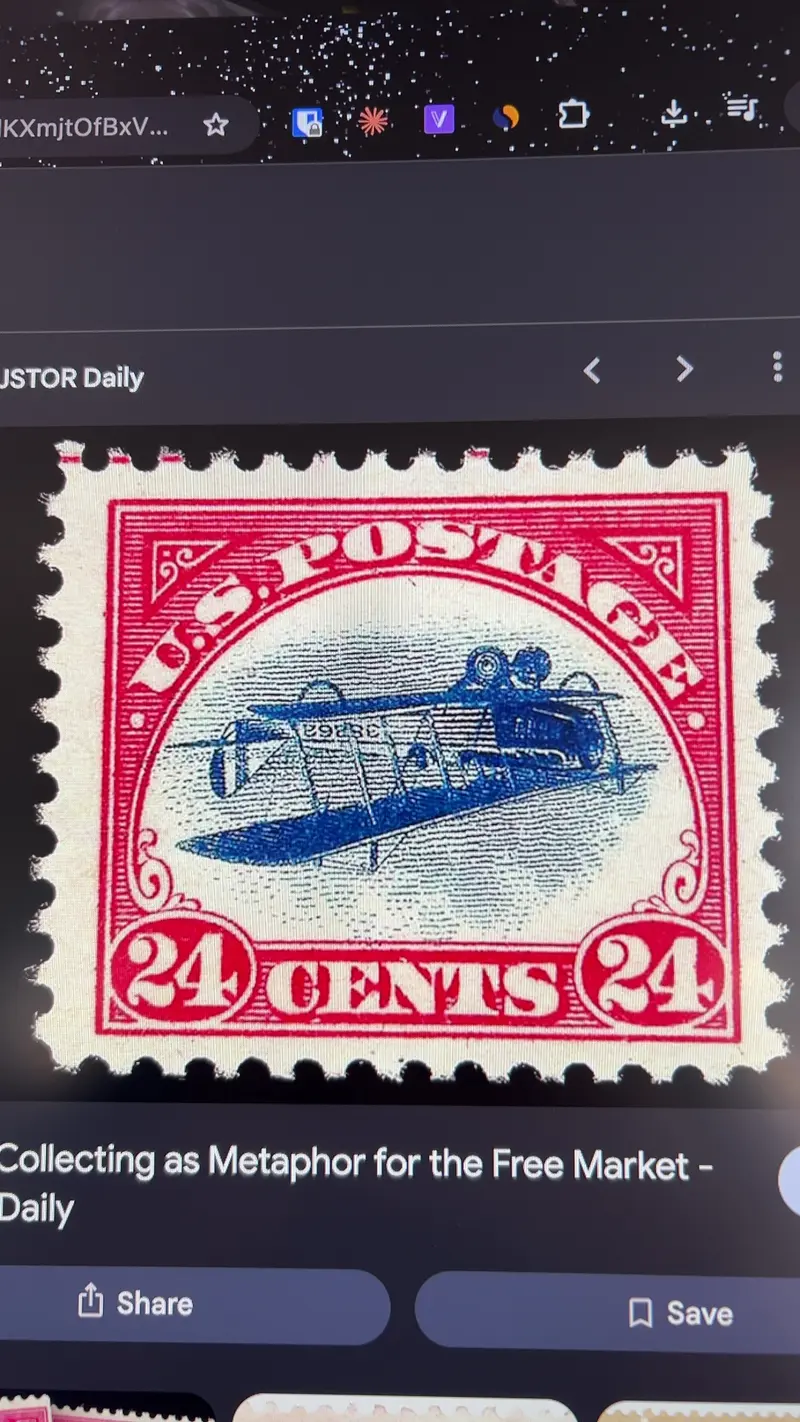
The British Guiana 1c Magenta (1856) is considered the world's most valuable stamp, last selling at Sotheby's in 2021 for 8.3 million dollars. Only one example is known to survive. Other contenders include the Treskilling Yellow (Sweden, 1855, misprinted in yellow instead of blue-green, last sold privately for an estimated 2.3 million dollars), and the 1918 US Inverted Jenny 24c airmail (inverted airplane, approximately 95 known, individual examples selling for 1 to 2 million dollars depending on position and condition). For British stamps, the 1840 Penny Black (the world's first adhesive postage stamp) is more historically significant than valuable: used examples start at 200 to 500 dollars, with mint examples reaching 5,000 to 20,000 dollars.
How do I start a stamp collection in 2026?
Begin with country collecting (a single country's stamps across all years) or topical collecting (a subject like birds, space, or art across all countries). The Scott Standard Postage Stamp Catalogue (for worldwide) or Stanley Gibbons (for Commonwealth) provides numbering systems and valuations. Purchase a quality stockbook or Lighthouse/SAFE album for storage. Essential tools include stamp tongs (never handle stamps with fingers), a perforation gauge, and a watermark detector. Start with mint stamps on approval or 'kiloware' (stamps sold by weight) from reputable dealers, which costs 10 to 50 dollars for a starter collection. Join the American Philatelic Society (30 dollars annual membership) for access to stamp circuit sales, expertising, and educational resources.
What Chinese stamps are most valuable?
Chinese stamps from the Cultural Revolution era (1966 to 1976) are among the most valuable modern stamps. The 1968 'The Whole Country Is Red' stamp (pulled from circulation after one day due to a mapping error) has sold for over 1 million dollars. The 1980 Year of the Monkey stamp (T46, designed by Huang Yongyu) is the most sought-after modern Chinese stamp: a mint block of four sold at auction for over 200,000 dollars. Imperial Chinese stamps (1878 to 1911) are rare and collected both as stamps and as historical documents. The market is driven primarily by mainland Chinese collectors, and prices have fluctuated with the Chinese economy. Authentication is critical as sophisticated forgeries are common, particularly for Cultural Revolution-era stamps.
What is the difference between mint and used stamps in terms of value?
The value relationship between mint (unused, with original gum) and used (canceled) stamps varies by era and country. For most modern stamps (post-1940), mint is worth significantly more than used, often 5 to 20 times more. For classic stamps (pre-1900), the relationship can reverse: an used classic stamp on a cover (envelope) with a clear, dated postmark can be worth more than the mint stamp alone, because the postal history provides context and dating. For the most expensive stamps, used versus mint is often irrelevant because the stamp's rarity crosses condition categories. Gum condition is critical for mint stamps: original gum (OG), never hinged (NH), and no gum (NG) represent descending value tiers.
How do I detect forged or altered stamps?
Common alterations include added perforations (smooth stamps made to appear perforated), regumming (adding new gum to increase value), repaired thins and tears, and bleached cancellations to create 'mint' stamps from used examples. Detection methods: hold stamps to light to reveal thins, repaired tears, and paper additions. Use a watermark detector (benzine or electronic) to check paper consistency. Examine perforations under magnification: genuine perforations are clean-punched; added perforations often show rough edges or inconsistent spacing. UV light reveals regumming (different fluorescence from original gum). Expert certificates from organizations like the Philatelic Foundation or BPA (British Philatelic Association) are essential for stamps valued above 500 dollars.
Are first day covers worth collecting?
First day covers (FDCs) are envelopes bearing stamps canceled on their first day of issue. Commercially produced FDCs from major stamp agencies (post-1950) have limited value, typically 1 to 5 dollars each, as millions were produced. However, historical FDCs from the early 20th century, particularly those with hand-painted cachets (illustrated envelopes) by known cachet makers, sell for 50 to 5,000 dollars. The most valuable are combination FDCs bearing stamps from multiple countries issued on the same date, and covers with historical significance (Zeppelin mail, wartime censor marks, disaster-related postal delays). Collecting FDCs is an accessible entry point to philately, with modern issues available at or near face value from postal authorities.