
Blue and White Porcelain Small Bowl with Apocryphal Chenghua Mark
Estimated value
$150 - $450Rarity
Average(4/10)Category
Ceramics & PotteryEra
Late 19th to early 20th centuryOrigin
ChinaVisual assessment
Photo analysis
Save to revisit in your watchlist. This does not add the object to your own collection.
Blue and White Porcelain Small Bowl
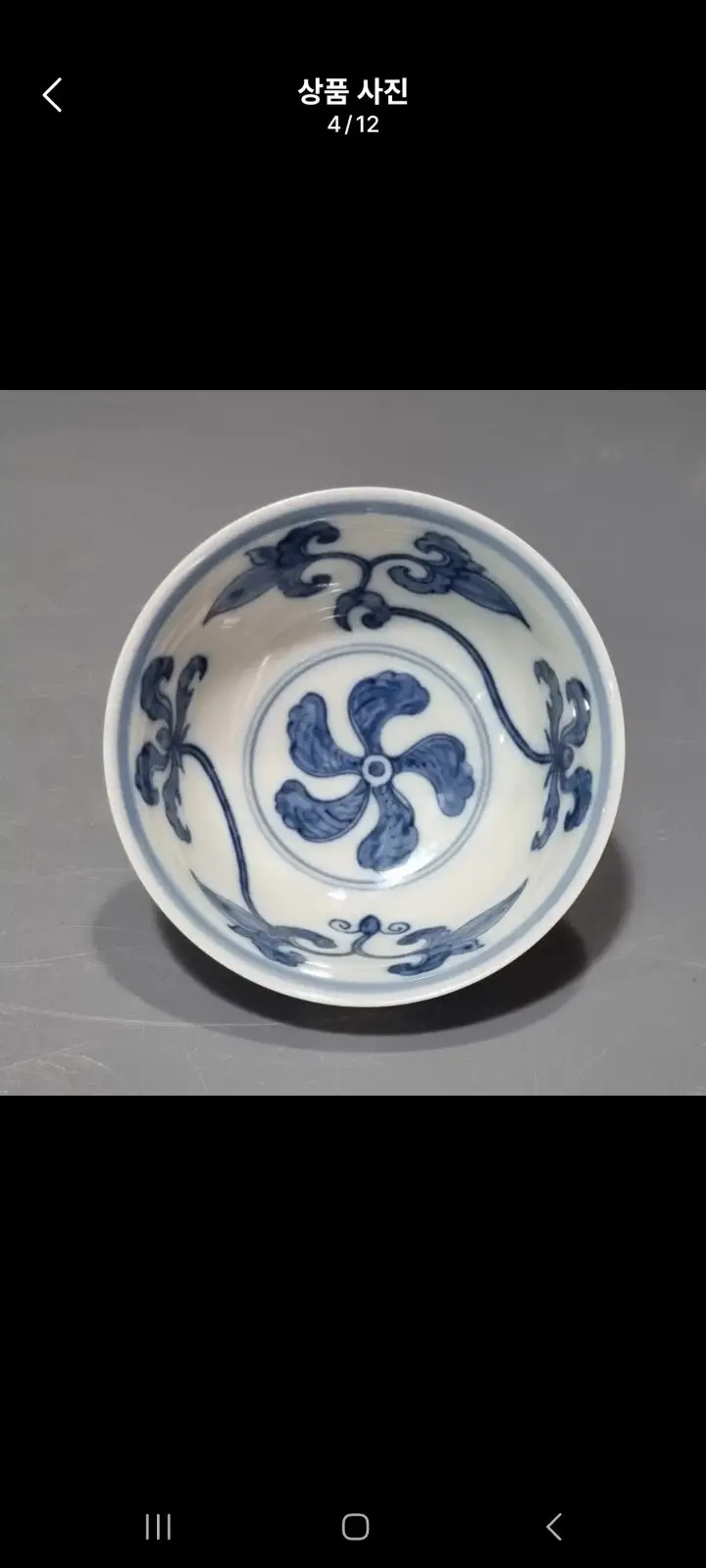
Small porcelain bowl featuring underglaze cobalt blue decoration. The interior cavetto is decorated with four floral sprays surrounding a central pinwheel-style floral medallion within double circles. The exterior depicts matching abstracted floral motifs and stylized clouds. The base features a six-character apocryphal mark in a double square reading 'Da Ming Chenghua Nian Zhi'. The body shows a high-white translucent paste with a smooth, slightly oily glaze characteristic of late 19th to early 20th-century Jingdezhen production.
Related traditions
Ming Dynasty China
15th Century
The central medallion motif is a stylized 'vajra' or solar wheel, common in Buddhist-influenced ceramics.
At the tea table
15th Century
Imperial exclusive ware reflecting the pinnacle of ceramic technology.
Early 20th Century
Standard high-quality scholar's table item or export ware evoking historical prestige.
Origins and context
While the base mark references the Chenghua reign (1465-1487) of the Ming Dynasty, the calligraphy style and glaze consistency suggest this is a 'guanyang' or 'after the style of' production from the late Qing Dynasty to the early Republic Period (circa 1880-1920). During this era, Jingdezhen potters frequently applied Chenghua marks as a tribute to the 'golden age' of porcelain, a practice documented by auction houses like Sotheby's and Christie's for domestic and export wares.
Further details
The Chenghua mark is the most frequently faked or 'honored' reign mark in Chinese ceramic history, appearing on porcelain from every century since the 15th.
The cobalt blue used here displays 'heaping and piling' effects, a decorative technique intended to mimic early Ming Dynasty 14th-century porcelain.
Attribution and evidence
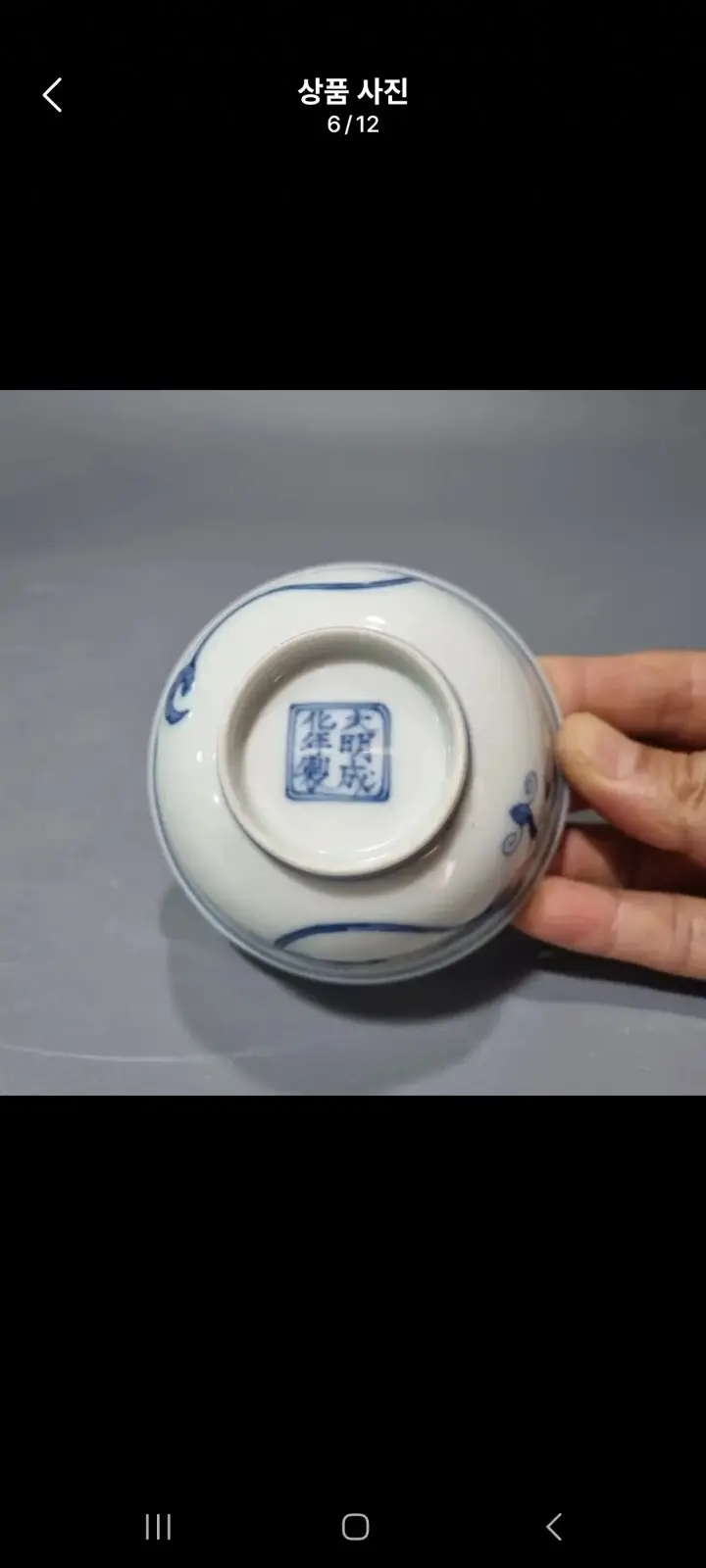
Identification is based on well-documented mark styles and glaze characteristics from Jingdezhen, though the distinction between late 19th and early 20th century is difficult without physical handling.
Identifying details
- 1Apocryphal 6-character Chenghua mark in double square.
- 2Underglaze cobalt blue floral decoration with mid-range saturation.
- 3Footrim shows 'burnt-orange' oxidation line where the glaze meets the paste.
- 4Cavetto decoration includes classic 'spiraling' cloud/floral forms.
Open questions
- •The calligraphy of the mark is too stiff for authentic 15th-century imperial ware.
- •The glaze has a slightly blue-green tint typical of late Qing coal-fired kilns.
Photographs that would help
- High-resolution photo of the footrim to check for 'chatter marks'.
- Shortwave UV light test to check for transparent over-paints or repairs on the rim.
- Translucency test by holding a light source behind the wall to check paste density.
Terms in this record
- Apocryphal Mark
- A mark on a piece of pottery that attributes it to an earlier, more prestigious period than its actual date of manufacture.
- Cavetto
- The curved internal side of a bowl or plate between the rim and the bottom.
- Underglaze
- A method of decorating ceramic objects where the pigment is applied to the surface before the glaze is added and the piece is fired.
Wear and preservation
The rim shows no visible chips or 'mushikui' (moth-eaten) edging. The footrim shows minor shelf wear and darkening of the unglazed paste.
Glaze and painted decoration
Glossy, high-fired glaze with localized pooling near the footrim; cobalt blue displays moderate diffusion into the glaze layer with a 'ghosting' edge.
Recorded physical details
Small and lightweight, likely weighing between 80-120 grams, suggesting thin-walled porcelain construction.
Scarcity and surviving examples
Average · 4/10 estimated rarity
This is a qualitative collection score, not a measured survival count, market percentile or proof of authenticity.
What the photographs establish
Interpretation of the photographs and supplied context. This does not authenticate the object.
- The Chenghua mark is apocryphal and does not match 15th-century imperial calligraphy standards.
- The bright white paste is characteristic of 19th-century industrial refinement rather than 15th-century 'mushy' paste.
- The precision of the inner double-circle line suggests modern or late-period centering techniques.
Value and its basis
Estimate recorded: May 11, 2026
How we estimate value
Estimate context (not a documented sale): Similar late-Qing apocryphal bowls have sold on eBay and at regional houses (Catawiki, Lyon & Turnbull) for $200-$400 in 2023-2024.
Collectors and interest
Collectors of late Qing Dynasty provincial wares and enthusiasts of 'mark and period' study pieces.
What supports the estimate
- •Clarity of the cobalt decoration
- •Lack of chips or hairline cracks on the fragile rim
- •Quality of the mark's calligraphy
What could change it
- •Common nature of late-period apocryphal wares
- •Any hidden hairline cracks (often detected by a 'ping' test)
Comparing quality
- •Authentication as a genuine 15th-century piece (unlikely here)
- •Vivid 'Su-ni-po' blue imitation effect
The effect of condition
Condition of the rim, presence of kiln grit in the glaze, and centering of the interior decoration.
Market interest
For informational purposes only, not a formal appraisal.
Related objects
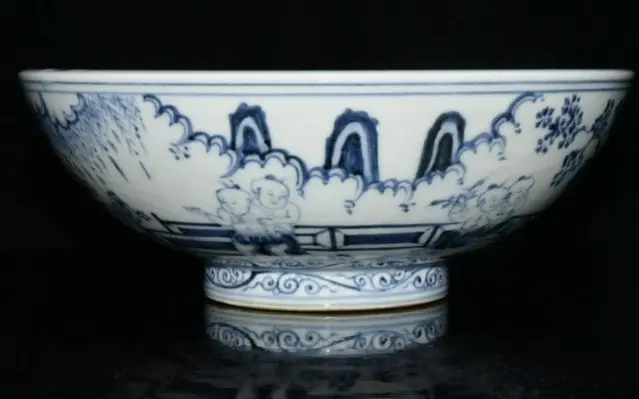
Chinese Blue and White 'Boys at Play' Porcelain Bowl
Shared title details
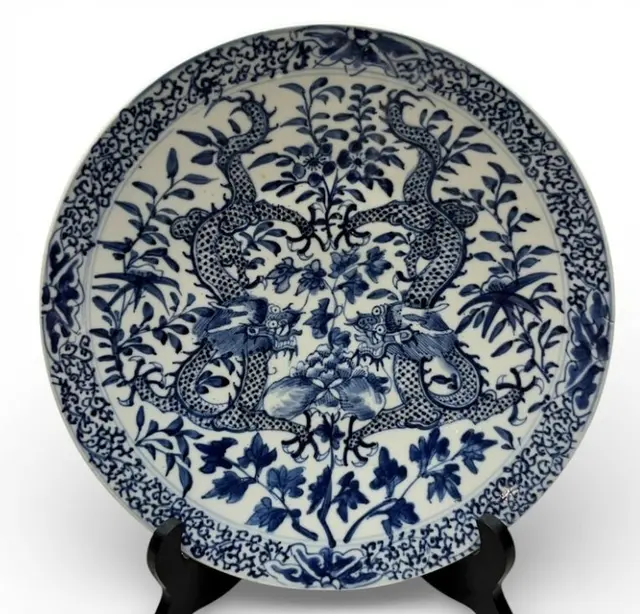
Chinese Blue and White Porcelain 'Dragon and Phoenix' Charger
Shared title details
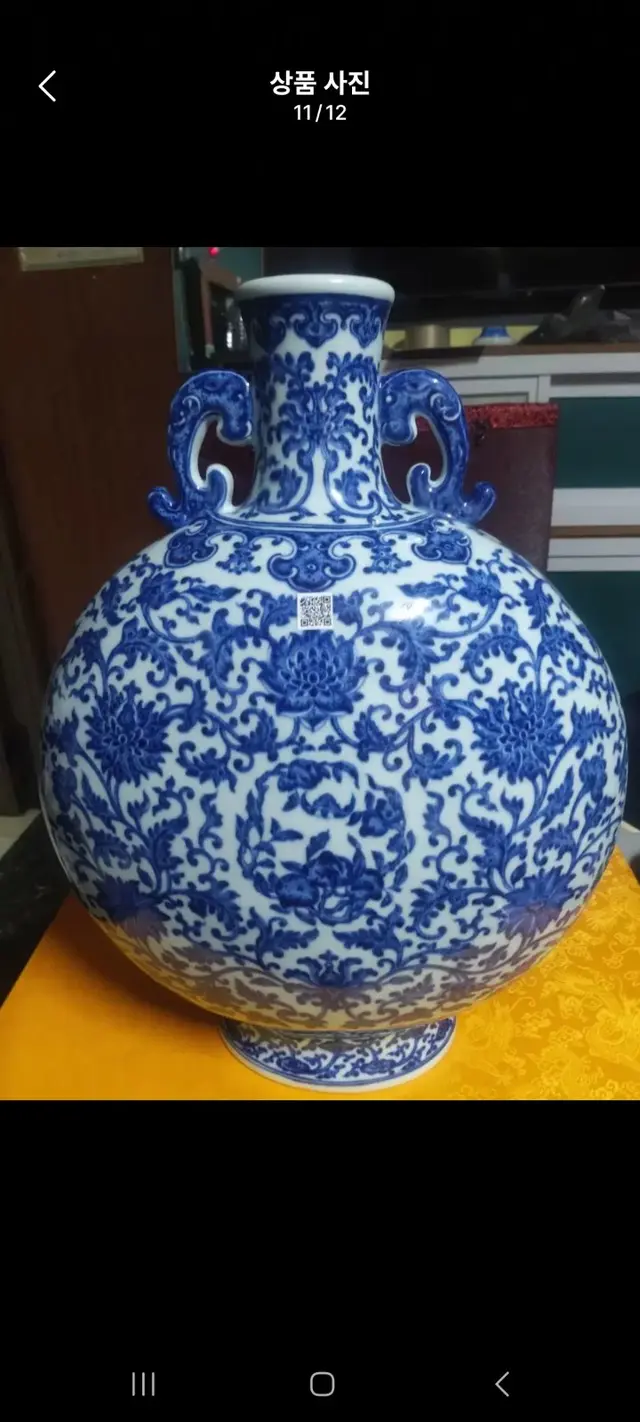
Blue and White Moon Flask (Bianhu) with Qianlong Mark
Shared title details
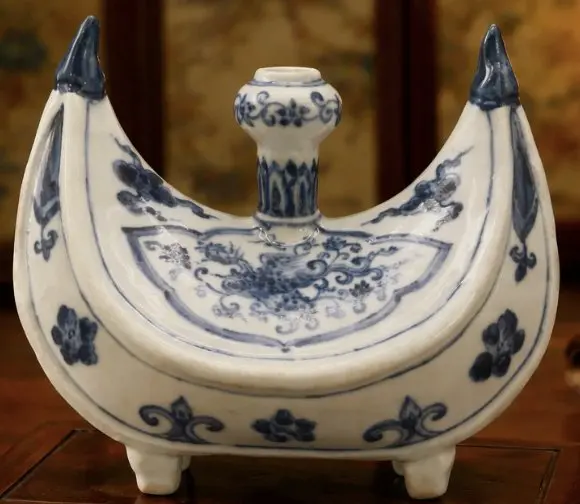
Blue and White Porcelain Crescent-Shaped Vessel
Shared title details
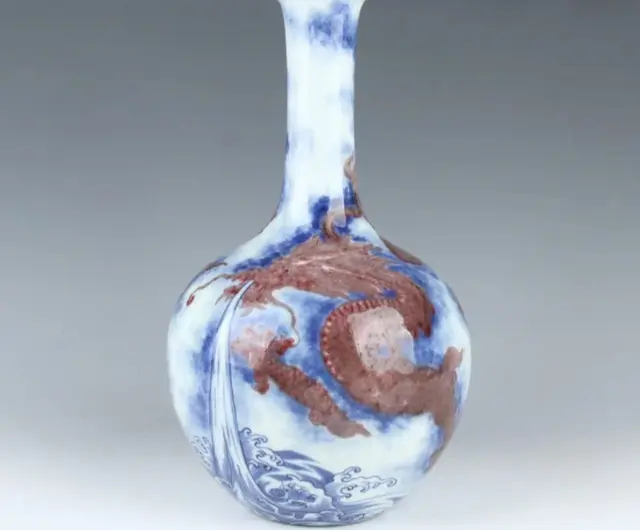
Chinese Blue and White with Underglaze Red 'Dragon' Bottle Vase, Qianlong Mark
Shared title details
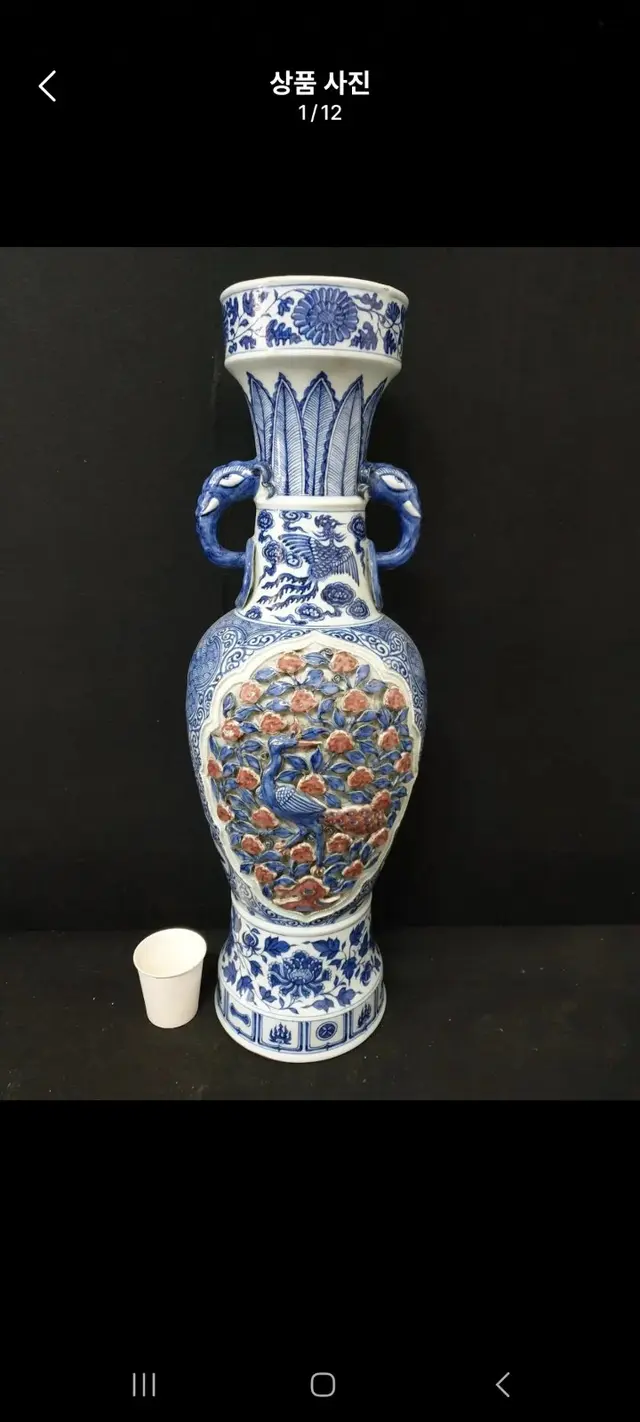
Chinese Blue and White Porcelain 'Peacock' Vase with Reticulated Openwork
Shared title details
Explore Ceramics & Pottery
Pottery, porcelain, stoneware, earthenware, and kiln-fired objects.
Ceramics & Pottery value and rarity guideShare this find
A place for your ceramics
Keep its photographs, maker’s marks and the story you know in one object record. Start with a photo.
Create an account for 10 free scans. No credit card needed.
Join the conversation
Recognise a detail or have a question? Add what you know and cite your source. Suggested corrections stay in the discussion for the owner or a moderator to review.
Sign in to leave a comment
Sign in