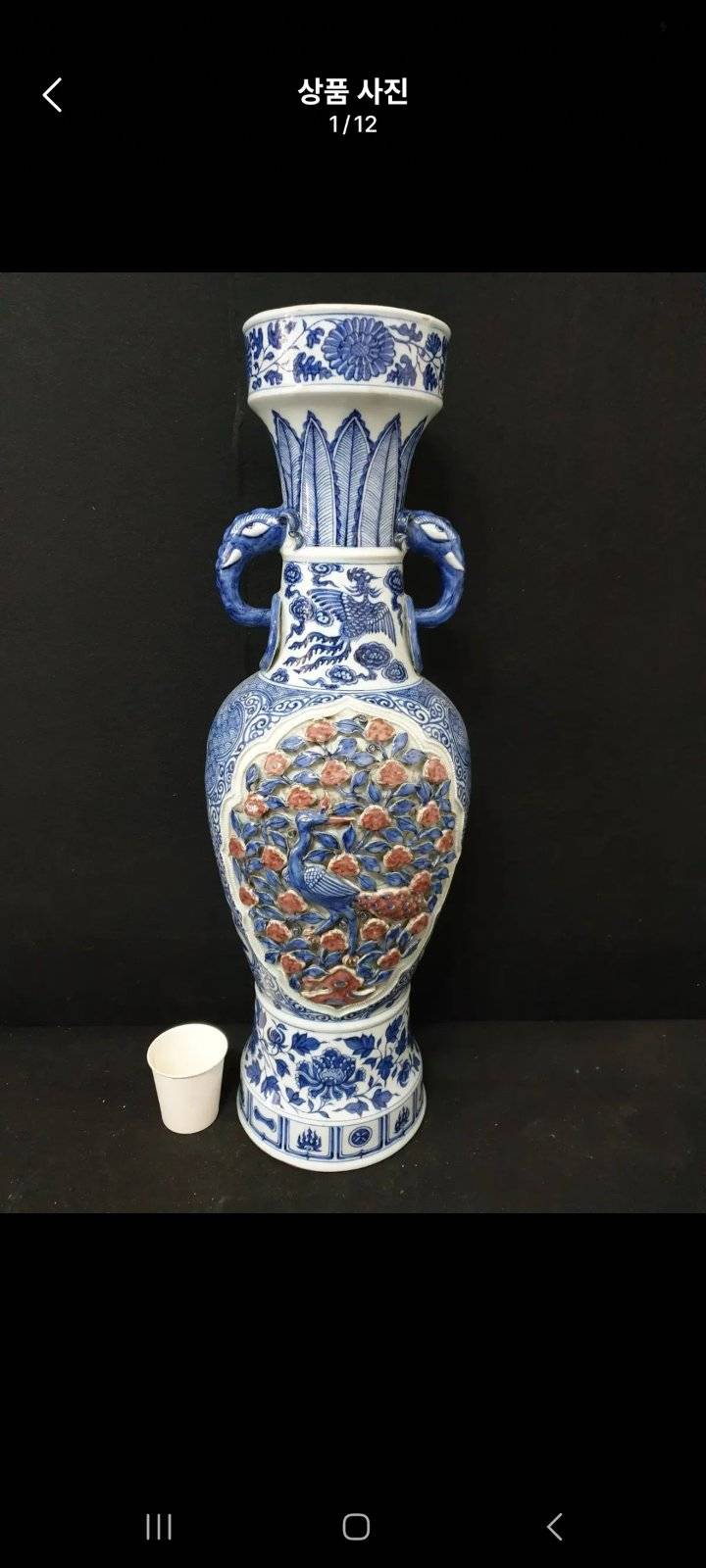
Chinese Blue and White Porcelain 'Peacock' Vase with Reticulated Openwork
Estimated value
$250 - $650Rarity
Average(4/10)Category
Ceramics & PotteryEra
Late 20th century (circa 1980-2000)Origin
ChinaAuthenticity
CHINESE BLUE AND WHITE PORCELAIN 'PEACOCK' VASE WITH RETICULATED OPENWORK: IDENTIFICATION
Large baluster-form porcelain vase featuring elephant-head handles and a distinctive reticulated (openwork) central panel. The decorative program utilizes underglaze cobalt blue painting combined with high-relief molded elements finished in underglaze copper-red (fading to brownish tones). The central scene depicts a peacock among blossoming branches, while the neck and base are decorated with traditional lotus scrolls, plantain leaves, and phoenix motifs. The vessel construction shows a multi-part assembly characteristic of large-scale 20th-century decorative production.
PRODUCTION & FIRING
SCARCITY
Typical antique shop fare. Requires some searching but regularly available. This is where most genuine antiques fall.
Typical Characteristics
- Standard antique shop items
- Regularly available
- Moderate collector interest
Confidence Factors
- The unglazed interior and footrim display modern mechanical smoothing rather than period-accurate hand-finishing
- Underglaze copper-red color consistency is typical of modern gas-fired kilns attempting to replicate wood-fire aesthetics
- Stylistic 'mashing' of Yuan, Ming, and Qing elements is a hallmark of late 20th-century decorative pieces
Expert review recommended. Consider consulting a specialist before making purchasing decisions.
CERAMICIST'S ASSESSMENT
Ceramics Historian & Kiln Specialist
Identification of the type and era is high due to visible manufacturing markers (interior throwing rills and copper-red behavior), though lack of a clear base mark prevents absolute factory attribution.
KEY EVIDENCE
- 1Reticulation (openwork) technique indicates a 'vase-within-a-vase' structure, a technically demanding process revived in the late 1900s.
- 2Elephant handles feature slip-cast characteristics rather than distinct hand-sculpted joinery.
- 3Footrim reveals a buff-colored, slightly gritty paste characteristic of modern-era Jingdezhen production.
- 4Copper-red transition to brown (liver-red) suggests a lack of oxygen control during the final firing stages.
UNCERTAINTIES
- •The internal swirl patterns visible in image 10 are typical of modern jiggering or manual wheel-throwing without subsequent interior smoothing.
- •The 'antiquing' on the footrim appears applied (staining/wash) rather than aged naturally through decades of shelf-wear.
WHAT WOULD IMPROVE CERTAINTY
- →Verify the presence or absence of a reign mark on the base (often unglazed in these types).
- →Check for UV-light fluorescence on the relief elements to ensure no cold-painted repairs are hiding in the openwork.
- →Perform a ring-test (tapping the rim) to check for a high-pitched resonance consistent with high-fired porcelain.
CONDITION & GRADE
Grading breakdown
The reticulation is remarkably intact given the fragility of the openwork; no significant chips noted on the delicate petal edges or elephant trunks.
Condition
Surface appears intact with no visible structural cracks or missing reticulated elements. The unglazed footrim shows brownish firing grit and industrial smoothing marks consistent with 20th-century finishing.
Weight & feel
Substantial and heavy, likely weighing between 4kg and 6kg, suggesting a thick-walled porcelain body typical of modern decorative kiln production.
CERAMICS MARKET VALUE
Updated: May 11, 2026
Similar large-scale reticulated vases have sold recently on platforms like LiveAuctioneers and Catawiki (2022-2024 range) for $300-$700 depending on height.
Who buys this
Interior designers looking for traditional focal points and collectors of late 20th-century Jingdezhen decorative porcelain.
What increases value
- •Intactness of the reticulated panels
- •Large scale (as indicated by the cup comparison)
- •Complexity of the elephant handle molding
What lowers value
- •Presence of hidden cracks in the lattice which significantly reduce value
- •Browning of copper-red often perceived as a firing defect by perfectionist collectors
What makes top-tier examples
- •Vibrant cherry-red instead of liver-brown in the copper areas
- •Clear, translucent glaze without greyish tinting
Grade & condition
Completeness of the mesh, intensity of the cobalt blue, and absence of modern glaze 'cinders' (impurities).
Rarity & demand
For informational purposes only, not a formal appraisal.
ABOUT CERAMICS & POTTERY
Pottery, porcelain, stoneware, earthenware, and kiln-fired objects.
Ceramics & Pottery value and rarity guideSHARE THIS CURIOSITY
Have your own curiosities to discover?
Scan Your Curiosity
COMMENTS