City curiosity guide
Scan monuments, architecture, and overlooked urban details, and instantly receive contextual insight about period, style, material, and historical significance.
What you can scan
From grand monuments to overlooked details, anything in the built environment that catches your eye.
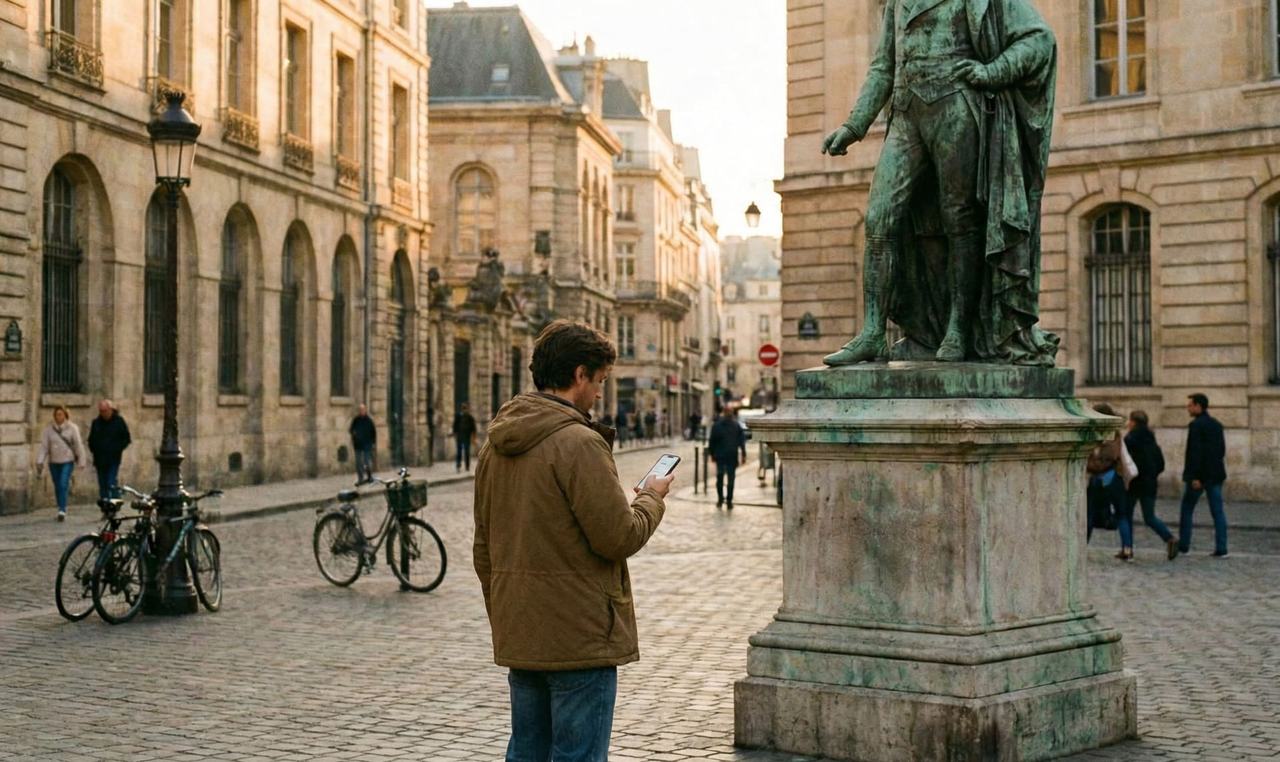
Public monuments and statues
War memorials, equestrian statues, civic sculptures, and commemorative landmarks. Learn about the artist, commissioning context, and stylistic tradition behind what you pass every day.
Architectural facades and decorative elements
Art Nouveau ironwork, Neo-Gothic gargoyles, Baroque cartouches, and modernist reliefs. Scan the details that most visitors never notice.
Historic buildings and structural details
Medieval brickwork, Renaissance arches, industrial-age steel, and post-war reconstruction. Understand the materials and methods behind the skyline.
Memorial plaques and inscriptions
Founding stones, historical markers, tribute tablets, and forgotten dedications. Decode dates, names, and events embedded in city walls.
Sculptures and street art
Contemporary installations, murals, abstract forms, and graffiti with cultural weight. Discover the artists and movements shaping public space.
Unique urban objects
Ornamental doors, hand-painted tiles, cast-iron railings, manhole covers, industrial relics, and architectural curiosities. The overlooked details that define a city's character.
How Curiosa analyzes urban objects
Five layers of analysis that transform a photograph into structured understanding.
Visual recognition of architectural and stylistic features
AI identifies decorative motifs, construction techniques, sculptural styles, and design periods, connecting what you see to established architectural and art-historical vocabularies.
Period plausibility comparison
Cross-referencing visual evidence against known historical timelines, establishing whether a building, monument, or detail plausibly belongs to its claimed era.
Material and technique context
Identifying stone types, metalwork methods, glazing techniques, and construction materials. The physical vocabulary that connects objects to their time and place of origin.
Cultural and historical reference mapping
Placing objects within broader cultural movements, political contexts, and artistic traditions, turning isolated details into connected narratives.
Explanation in clear, human-readable language
Every result is written for curious people, not art historians. No jargon walls, no academic gatekeeping, just clear context that deepens your understanding.
What makes this different
This is not a list of places to visit. It's a way to understand what you're already looking at.
Not a list of tourist highlights
No rankings, no star ratings, no crowd-generated recommendations. This is about understanding what you encounter, not following someone else's itinerary.
Not crowd-rated attractions
Curiosa doesn't aggregate opinions. It provides contextual analysis based on art history, architecture, and material culture, independent of popularity.
Focused on object-level understanding
Instead of telling you where to go, Curiosa helps you understand what's already in front of you, like a capital, a balustrade, or a particular type of stone.
Designed for curiosity-driven discovery
For people who stop walking because something caught their eye. Who wonder about the date carved above a doorframe. Who look up instead of ahead.
Encourages independent exploration
No guided routes, no audio tours, no algorithms telling you what's worth seeing. Your curiosity leads, the tool follows.
Curiosity layers
Every scan reveals multiple dimensions of context, building a richer picture of what you're observing.
Period context
When was this made? What era does it belong to? Understanding the historical moment that produced what you're looking at.
Style classification
Art Nouveau, Brutalist, Beaux-Arts, Deconstructivist. Identifying the design language and its place in architectural history.
Material insight
Limestone, wrought iron, glazed ceramic, cast bronze. What an object is made of reveals where it came from and how it was made.
Cultural significance
Why does this exist here? Who commissioned it? What does it represent? The human stories embedded in physical form.
Related historical movements or figures
Connecting objects to the architects, sculptors, movements, and political contexts that shaped them, building a web of understanding.
Save and build your travel archive
Every discovery becomes a permanent part of your personal collection, organized, searchable, and always accessible.
Save scanned monuments to your profile
Every scan becomes a permanent entry in your cabinet, documented with images, context, and AI-generated descriptions.
Build a personal curiosity map
Your collection becomes a record of where you've looked closely: cities, neighborhoods, and individual objects that caught your attention.
Create travel-based object collections
Group discoveries by trip, city, or theme: Art Deco Paris, Medieval Prague, Industrial Manchester, or any pattern you notice.
Add notes and reflections
Record your own observations, questions, and impressions alongside the AI analysis, building a personal research layer.
Revisit discoveries later
Come back to objects weeks or months later with fresh perspective. Your cabinet preserves context that memory alone cannot.
Ethical and respectful exploration
Cultural heritage deserves care, not consumption. These principles guide how we build and how we encourage you to explore.
Encouraging responsible engagement with heritage
Cultural objects deserve attention, not exploitation. Curiosa encourages observation, learning, and preservation, not extraction or commodification.
No intrusive scanning of restricted objects
Some objects and spaces have rules about photography and documentation. Curiosa respects institutional guidelines and local regulations.
No commercial exploitation of cultural sites
This tool is designed for personal learning and discovery. It does not facilitate commercial use, resale of cultural data, or tourism monetization.
Respect for preservation laws
Heritage protection exists for good reasons. Curiosa supports, never undermines, the legal and ethical frameworks that protect cultural patrimony.
Who this is for
For anyone who looks closer and wants to understand what they see.
Architecture enthusiasts
People who notice cornices, study floor plans, and recognize the difference between Palladian and Georgian. This tool adds depth to what you already see.
Cultural travelers
Travelers who seek meaning, not just destinations. Who want to understand the cities they visit through objects, details, and material culture.
History lovers
Anyone who reads plaques, visits local museums, and wonders what happened on this corner two hundred years ago.
Design students
Students of architecture, industrial design, urban planning, or art history, building visual literacy through real-world observation.
Urban explorers
People drawn to forgotten infrastructure, industrial remnants, adaptive reuse, and the layered history visible in every neighborhood.
Families wanting meaningful travel experiences
Parents looking for ways to make city walks engaging for children, turning observation into a shared activity of discovery.
Integrated with Curiosa
City scanning connects with the full research and archiving ecosystem.
Period plausibility analysis
Determine whether architectural elements and urban objects plausibly belong to their claimed historical period.
Learn moreObject dossiers
Every scanned monument or detail becomes a structured research document with images, context, material notes, and period analysis in one place.
Browse the archive
Explore objects scanned by the community across all categories - monuments, antiques, art, and more.
Learn morePersonal collection building
Your travel scans join your broader cabinet, monuments alongside antiques, street art alongside inherited objects.
Learn moreScan tips
Better photos lead to deeper analysis. Learn how to capture monuments, facades, and architectural details effectively.
Learn moreMuseum highlights
See curated examples of objects and what AI analysis reveals about them.
Learn moreExplore related tools
Other capabilities that connect to this workflow.
Walk slower. Look closer. Scan the world.
A way to see cities not as destinations, but as living collections.