
Blue and White Porcelain Crescent-Shaped Vessel
Estimated value
$450 - $1,200Rarity
Uncommon(5/10)Category
Ceramics & PotteryEra
Late 19th to early 20th centuryOrigin
ChinaVisual assessment
Photo analysis
Save to revisit in your watchlist. This does not add the object to your own collection.
Blue and White Porcelain Crescent-Shaped Vessel
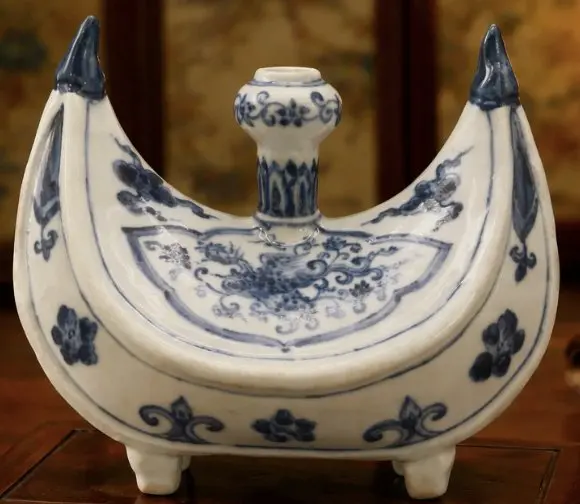
A crescent-shaped porcelain vessel with a central knopped neck, supported by four short cabriole-style feet. The body features underglaze cobalt blue decoration including a central phoenix (fenghuang) within a lobed cartouche, flanked by floral sprays and ruyi-head motifs. The horns of the crescent are capped with solid blue pigment. The underside reveals an unglazed, rectangular biscuit section, typical of kiln support contact points for complex molded shapes.
Related traditions
Persian Safavid
16th-17th Century
The 'Kashkul' or coco-de-mer shell bowl serving as a symbol of poverty and spiritual detachment.
Use and ceremony
Ming Dynasty
A specialized export commodity bridging Chinese craft and Islamic aesthetic requirements.
Modern Era
An 'orientalist' decorative object valued for its non-Western geometric silhouette.
Origins and context
This form is inspired by Islamic metalwork prototypes, specifically 'kashkuls' or beggar's bowls, which was a popular shape for Chinese export porcelain during the Ming and Qing dynasties (14th-18th centuries). However, the specific central spout configuration suggests this may be a 19th-century 'Malabar' or crescent-shaped kendhi/vase variant produced in Jingdezhen for the Southeast Asian or Middle Eastern markets. The use of 'heaping and piling' visual effects in the cobalt mimics early Ming styles but is likely a later stylistic revival.
Further details
The crescent shape, known as 'kashkul', originated as a literal coconut shell bowl used by Sufi dervishes in Persia before being transformed into luxury porcelain in China.
The unglazed base area was intentionally left raw to prevent the heavy, oddly-shaped vessel from fusing to the kiln floor during the 1300°C firing process.
Attribution and evidence
Identification of the form is certain, but the dating between late Qing (c. 1880) and early Republic (c. 1920) is difficult without tactile inspection of the paste grain.
Identifying details
- 1Molded crescent form with central knopped neck typical of export 'kendo' variants.
- 2Unglazed rectangular biscuit base area consistent with 19th-century Jingdezhen firing techniques.
- 3Presence of 'heaping and piling' in the underglaze cobalt mineral.
- 4Phoenix (fenghuang) motif executed in a folk-style typical of provincial export wares.
Open questions
- •The uniform whiteness of the slip in the unglazed area is occasionally seen in high-quality 20th-century reproductions.
- •The 'horns' show very little of the expected wear/chipping for a 150-year-old object.
Photographs that would help
- Close-up photo of the unglazed base in natural sunlight to check for iron-spotting.
- Transmitted light test through the spout to check body translucency.
- UV light scan to check for professional overpainting on the horns.
Terms in this record
- Heaping and Piling
- The dark spotting in blue-and-white porcelain caused by high concentrations of cobalt iron.
- Fenghuang
- The Chinese phoenix, representing grace and the empress.
- Biscuit
- Porcelain that has been fired once but not glazed; often seen on the foot or support points.
Wear and preservation
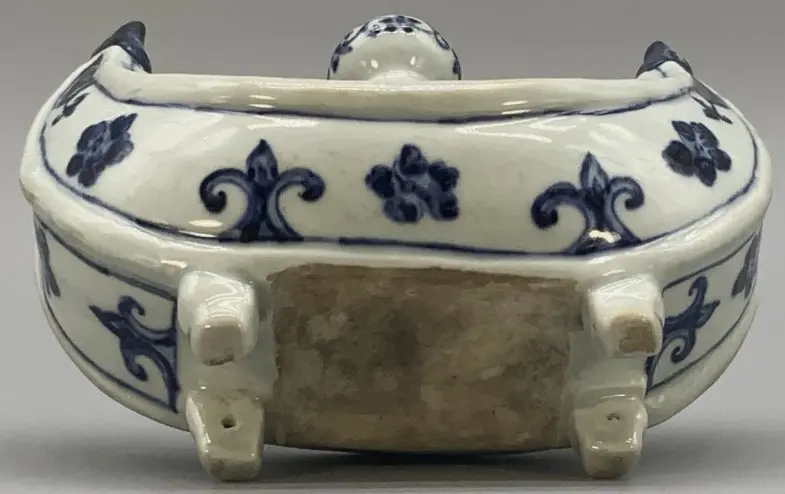
Assigned due to high integrity of the molded horns and central neck, though surface pitting and base oxidation prevent a 'Fine' or 'Excellent' rating.
Minor glaze abrasions are visible on the rim of the central spout. The unglazed base shows expected oxidation and firing grit typical of 19th-century provincial kiln conditions. No structural cracks are visible in the provided angles.
Glaze and painted decoration
The glaze exhibits a slight 'orange peel' texture with visible pitting along the lower curves. Cobalt blue shows 'heaping and piling' where the mineral concentrated during firing, creating dark, almost black spots within the blue.
Recorded physical details
Estimated at 800-1100 grams; the thick walls required for this molded form suggest a substantial, bottom-heavy feel in the hand.
Scarcity and surviving examples
Uncommon · 5/10 estimated rarity
This is a qualitative collection score, not a measured survival count, market percentile or proof of authenticity.
What the photographs establish
Interpretation of the photographs and supplied context. This does not authenticate the object.
- Shape is frequently reproduced in the late 20th century for the decorative market
- Surface pitting can be artificially induced with acid to mimic age
- Absence of a formal reign mark increases attribution difficulty
Value and its basis
Estimate recorded: May 11, 2026
How we estimate value
Estimate context (not a documented sale): Similar unmarked 19th-century crescent vases have sold at Christie's and Sotheby's 'Interiors' sales for $800-$1,500 depending on size.
Collectors and interest
Collectors of Chinese export porcelain and Islamic-market Asian ceramics.
What supports the estimate
- •The complexity of the molded crescent shape
- •Integrity of the fragile pointed 'horns'
- •Clarity of the phoenix central motif
What could change it
- •Hidden cracks at the base of the neck
- •Modern chemical aging of the glaze
- •Market saturation with late 20th-century copies
Comparing quality
- •Presence of a Kangxi or Qianlong reign mark (though rare on this form)
- •Vibrant sapphire-blue cobalt without excessive grey tones
The effect of condition
Chips to the points, spout rim condition, and smoothness of the orange-peel glaze.
Market interest
For informational purposes only, not a formal appraisal.
Related objects
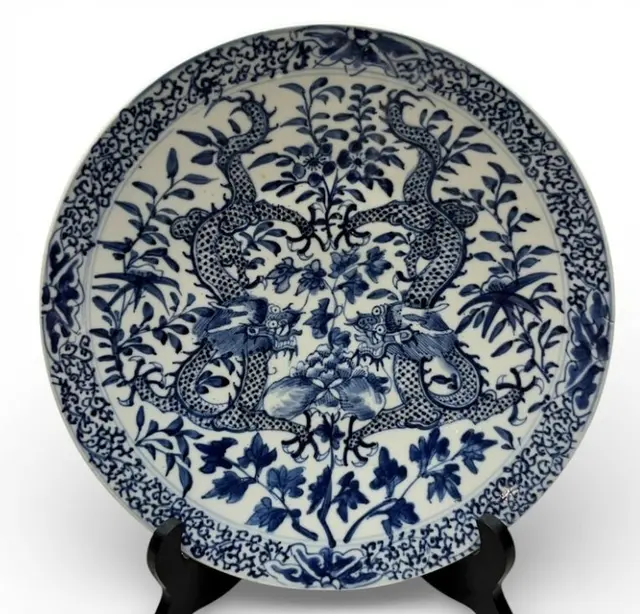
Chinese Blue and White Porcelain 'Dragon and Phoenix' Charger
Shared title details
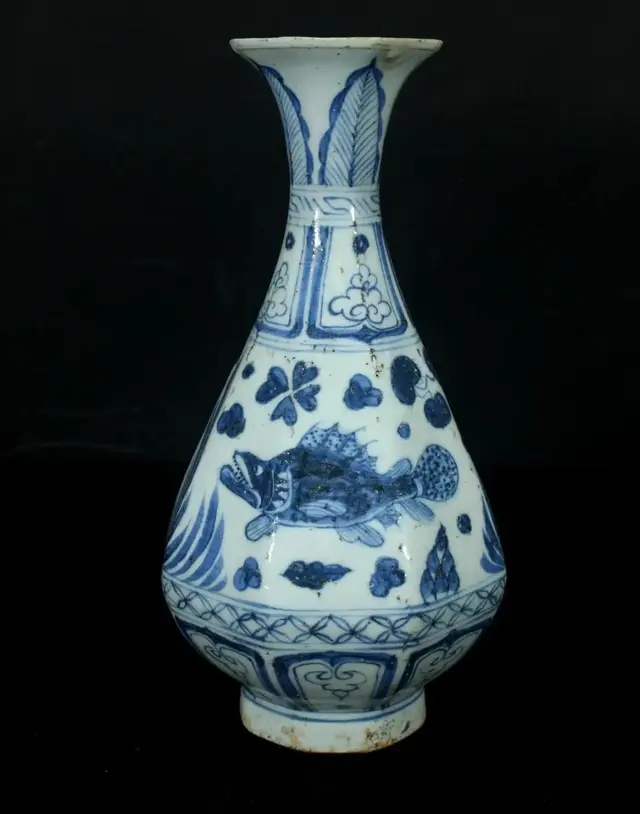
Octagonal Blue and White Pear-Shaped Vase (Yuhuchunping)
Shared title details
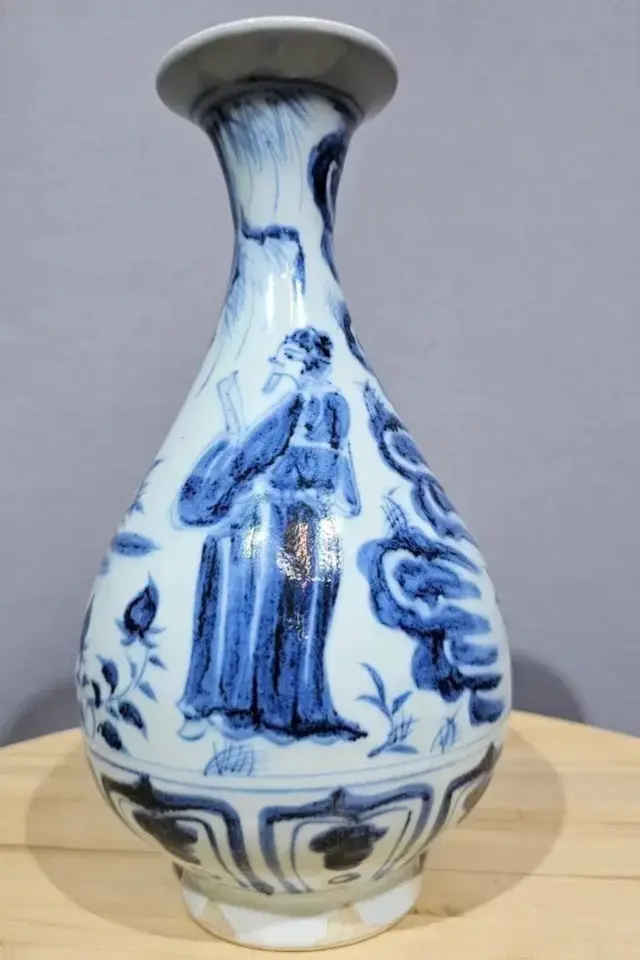
Blue and White Yuhuchunping (Pear-shaped Vase)
Shared title details
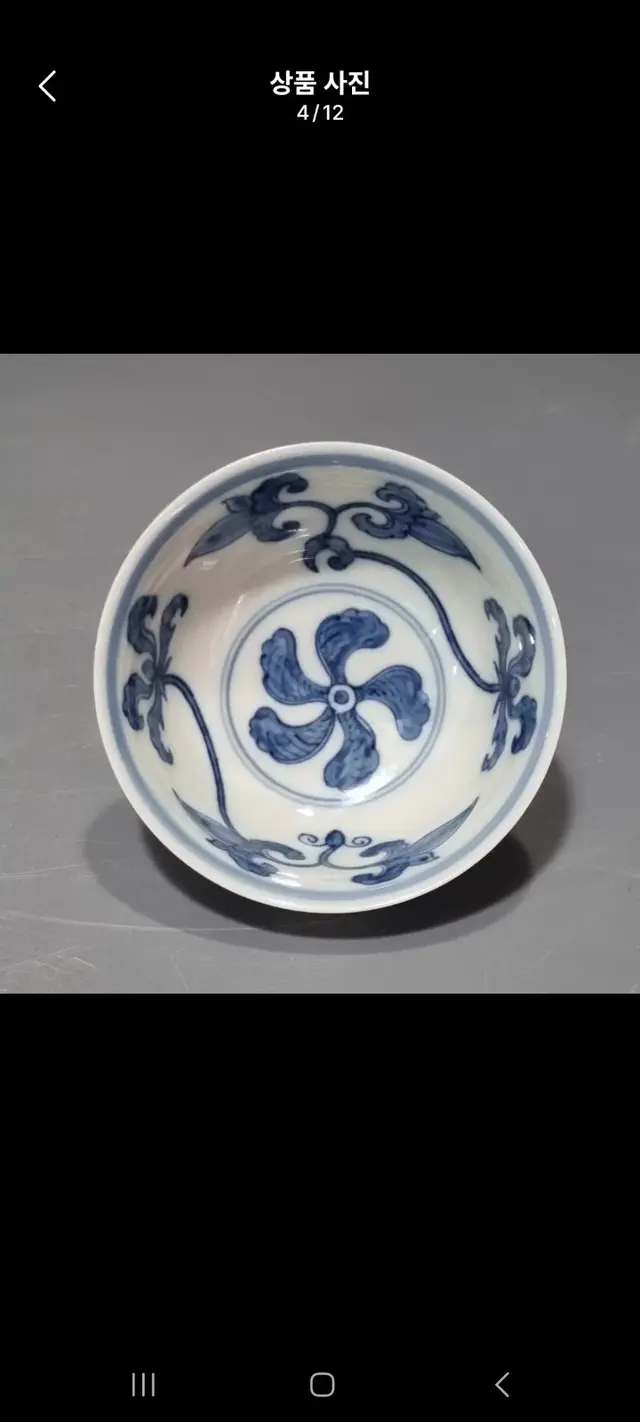
Blue and White Porcelain Small Bowl with Apocryphal Chenghua Mark
Shared title details
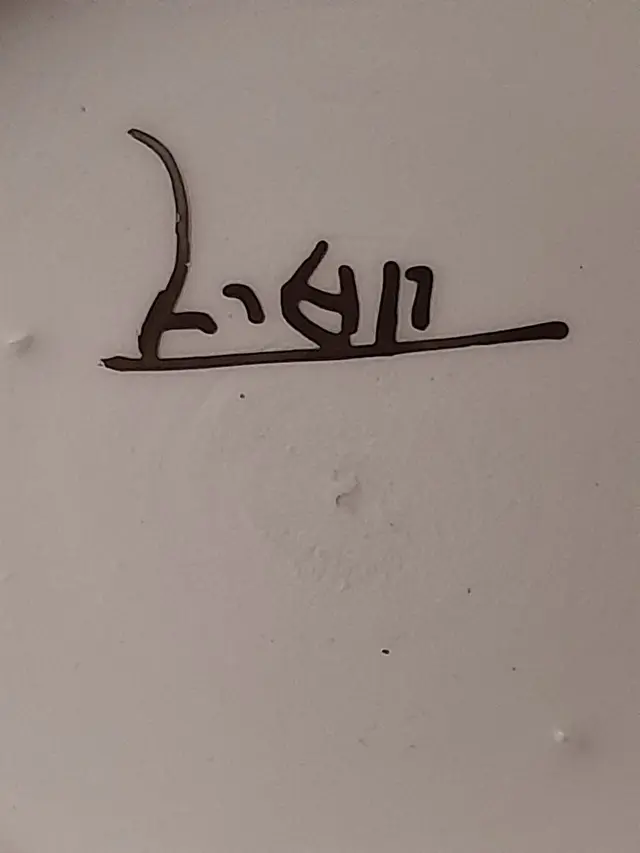
Porcelain Urn-Shaped Vase with Romantic Landscape Scene and Dark Blue Glaze
Shared title details
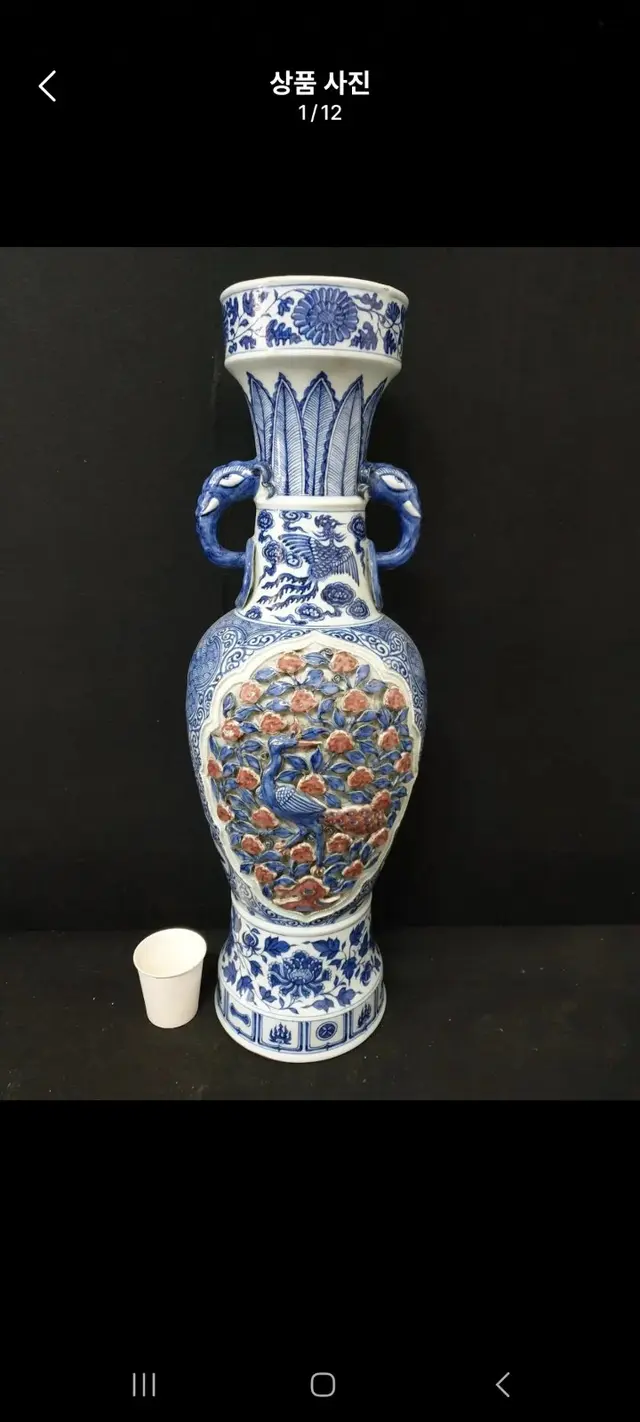
Chinese Blue and White Porcelain 'Peacock' Vase with Reticulated Openwork
Shared title details
Explore Ceramics & Pottery
Pottery, porcelain, stoneware, earthenware, and kiln-fired objects.
Ceramics & Pottery value and rarity guideShare this find
A place for your ceramics
Keep its photographs, maker’s marks and the story you know in one object record. Start with a photo.
Create an account for 10 free scans. No credit card needed.
Join the conversation
Recognise a detail or have a question? Add what you know and cite your source. Suggested corrections stay in the discussion for the owner or a moderator to review.
Sign in to leave a comment
Sign in