Inheritance evaluation for unique objects
Helping families make sense of unknown or undocumented objects through structured analysis, plain-language descriptions, and contextual research one object at a time.
Why inherited collections are difficult
Inheritance is not expertise.
Most heirs lack subject knowledge. The person who collected these objects, the person who understood their origins, value, and significance, is often no longer available to explain them. What remains are objects without context.
Documentation is frequently incomplete or missing entirely. Receipts, appraisals, provenance records, and even basic descriptions may never have existed, or may have been lost over decades of storage, moves, and family transitions.
Emotional attachment complicates decisions. Objects carry memories, family identity, and personal meaning that can make it difficult to assess them objectively, or to let go of pieces that may have little material value but enormous sentimental weight.
Time pressure leads to rushed outcomes. Estate timelines, tax deadlines, and family disagreements can push heirs toward hasty sales or uninformed decisions, often at significant financial or emotional cost. Understanding insurance readiness early in the process can prevent costly mistakes.
Curiosa helps slow things down. Not by making promises about value or authenticity, but by providing structured, clear, accessible documentation that turns inherited uncertainty into informed understanding. A structured appraisal can help prioritize which objects deserve expert attention, and rarity analysis reveals which pieces may hold unexpected market significance.
How Curiosa supports inheritance evaluation
Five layers of understanding that transform inherited confusion into structured clarity.
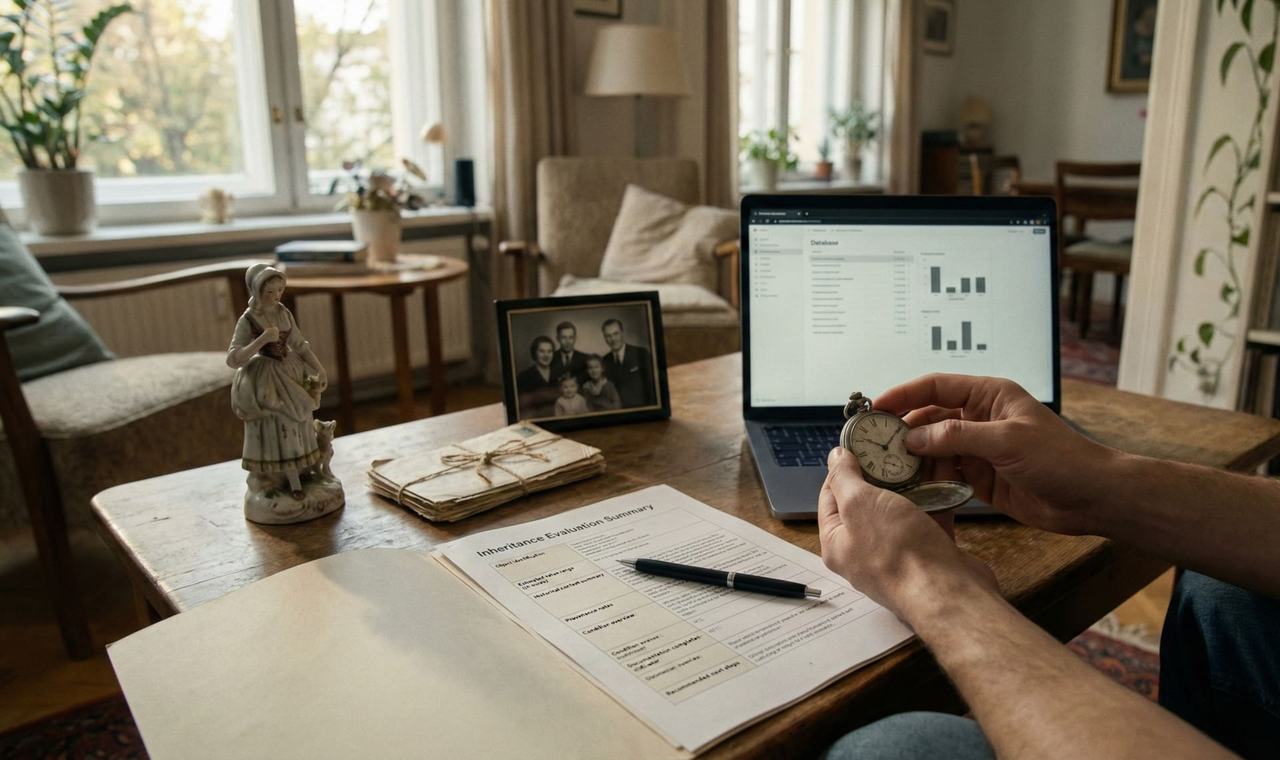
Object scanning and visual documentation
Structured multi-angle photography that captures identifying features, marks, condition, and scale, creating a clear visual record even when you don't know what you're looking at.
Plain-language object descriptions
AI-generated descriptions using accessible, consistent terminology that translates unfamiliar objects into language that families, advisors, and professionals can understand.
Provenance and period context
Where possible, establishing historical context, estimated era, origin, and ownership continuity, turning scattered family knowledge into structured research.
Authenticity and plausibility signals
Providing alignment indicators and risk signals, not verdicts. Helping identify which objects deserve closer expert attention and which are likely decorative or contemporary.
Condition and preservation notes
Documenting visible wear, damage, fragile elements, and conservation needs so you can prioritize care and make informed decisions about each object's future.
What Curiosa helps clarify
Not every inherited object needs the same level of attention. Structured analysis helps you prioritize.
Objects that appear historically significant
Items showing period-consistent materials, techniques, or maker indicators that suggest genuine historical or cultural value worth further research.
Objects that deserve expert review
Pieces where AI analysis identifies signals, positive or ambiguous, that warrant professional appraisal, authentication, or conservation assessment.
Objects likely decorative or contemporary
Items that analysis suggests are reproductions, mass-produced, or contemporary, reducing the pressure to seek expensive expert opinions for every piece.
Objects needing conservation or care
Pieces with visible deterioration, environmental vulnerabilities, or structural fragility that should be addressed before any other decisions are made.
Objects requiring better documentation
Items where the current information is too incomplete for any meaningful assessment, identifying what's missing before any evaluation can proceed.
Evaluation indicators and clarity layers
Reports focus on indicators, not verdicts. We highlight risk factors, but authentication remains the domain of human experts.
Context clarity
How well the object's historical context, period, and cultural background are understood. This is the foundation for any meaningful evaluation.
Research depth
How thoroughly the object has been analyzed across visual, material, and contextual dimensions, indicating confidence in the findings so far.
Documentation strength
Whether the visual and written record is sufficient for professional review, insurance consideration, or future research.
Risk and uncertainty indicators
Transparent flagging of ambiguities, gaps, or conflicting signals, so you know where certainty ends and further research begins.
Suggested next steps
Actionable recommendations, whether that means further research, expert consultation, insurance preparation, or simply careful preservation.
Who uses Curiosa for inheritance?
For families, advisors and individuals valuing and documenting inherited collections.
Heirs and family members
People who have inherited objects they don't fully understand, and need a calm, structured way to make sense of what they have.
Executors and estate managers
Professionals responsible for cataloging, distributing, or liquidating estate collections who need clear documentation and informed prioritization.
Legal and trust advisors
Attorneys and fiduciaries who need structured object information for estate settlements, tax assessments, or distribution decisions.
Families preserving collections
Families who want to understand and maintain inherited collections across generations, without pressure to sell or disperse.
Individuals inheriting unfamiliar objects
Anyone who has received objects outside their area of knowledge, and wants to understand what they have before deciding what to do.
How inheritance evaluation connects to other tools
Understanding, but estate distribution often requires multiple perspectives.
Provenance gap detection
Uncover ownership history gaps and document what's known about how inherited objects changed hands over time.
Learn morePeriod plausibility analysis
Determine whether inherited objects plausibly belong to their claimed era, separating genuine antiques from later reproductions.
Learn moreInsurance readiness
Transform inheritance documentation into structured records that insurers can actually assess for coverage consideration.
Learn moreFake detection & recognition
Identify authenticity signals and risk factors, helping prioritize which inherited pieces deserve expert authentication.
Learn moreLong-term collection archiving
Build a permanent digital record of inherited objects, preserving family history and supporting future research or decisions.
Full appraisal overview
Understand how identification, market context, rarity, and provenance analysis come together in a structured appraisal.
Learn moreEthical principles for inheritance
We help you figure out what comes next, without pressure.
Uncertainty is respected, not erased
When information is incomplete or ambiguous, the system says so clearly. We never fabricate certainty to make results look more impressive.
Emotional context is acknowledged
Inherited objects carry personal meaning beyond market value. The system respects this dimension and never reduces objects to transactions.
Users control pace and disclosure
You decide when to research, what to share, and how quickly to proceed. There are no timers, urgency cues, or pressure to act.
Understanding over outcomes
The system prioritizes helping you understand what you have, not pushing you toward selling, insuring, or authenticating before you're ready.
Explore related tools
Other capabilities that connect to this workflow.
Ready to evaluate your inherited objects?
Start for free. Understand what you've inherited.