
Chinese Export Porcelain Spaniel Figurine, Qing Dynasty, late 18th to mid-19th Century
Estimated value
$400 - $900Rarity
Average(4/10)Category
Ceramics & PotteryEra
circa 1800-1850Origin
ChinaVisual assessment
Photo analysis
Save to revisit in your watchlist. This does not add the object to your own collection.
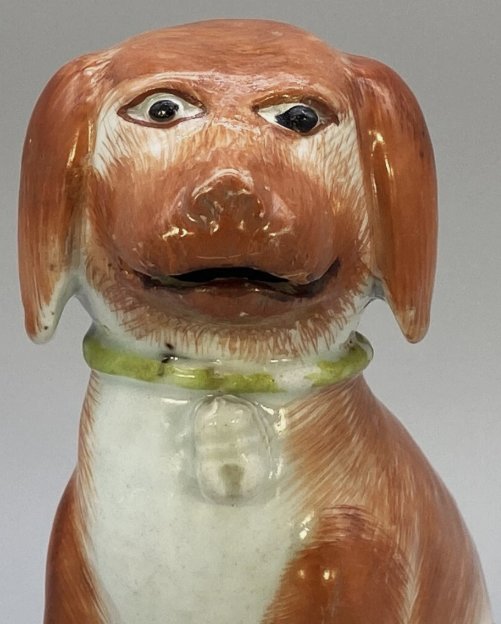
Chinese Export Porcelain Spaniel Figurine
A seated spaniel figurine executed in Chinese export porcelain, modeled with naturalistic fur detailing in iron-red overglaze enamel. The figure wears a molded green collar with a relief-decorated bell. The eyes are rendered with distinct black pupils against white enamel, a characteristic feature of Canton-origin animal exports of the Jiaqing to Daoguang periods. The unglazed base shows a granular paste with scattered iron spots and kiln debris consistent with 18th and 19th-century Jingdezhen production for the European market.
Related traditions
English Staffordshire
19th Century
The 'Wally Dog' or Staffordshire spaniel was the British ceramic counterpart to these Chinese export originals.
Use and ceremony
18th Century
Symbol of wealth and the exotic reach of the East India Companies
Modern Era
Traditional interior design element and object of specialized ceramic scholarship
Origins and context
During the 18th and 19th centuries, the Jingdezhen kilns produced vast quantities of animal figures, particularly dogs like this spaniel, to meet the 'Chinoiserie' demand in Europe. These were modeled after Western European breeds, such as King Charles Spaniels, often using imported prints as templates. This specific iron-red palette remained a staple of the export trade from approximately 1780 through the late Victorian era, though earlier examples from the Qianlong period (1736-1795) typically exhibit more refined molding and thinner potting than seen here.
Further details
The iron-red enamel used on these figures is derived from ferric oxide and was one of the most stable colors for overglaze decoration at the Jingdezhen kilns during the 19th century.
Export dog figures were frequently produced in pairs to be displayed on fireplace mantels in English and American homes, a fashion known as 'mantel dogs'.
Attribution and evidence
The material and decorative technique are highly consistent with 19th-century export porcelain, though the lack of a clear view of the interior cavity prevents a higher confidence level regarding the exact casting method.
Identifying details
- 1Iron-red stippling technique is consistent with Jingdezhen export palettes of the 1800-1850 period
- 2Unglazed base reveals a white, granular porcelain body rather than the buff earthenware found in modern fakes
- 3The iron spots (oxidation) on the base indicate a traditional charcoal or wood-fired kiln environment
- 4Molded bell and collar details align with standard cataloged export animal forms from the Canton trade
Open questions
- •Relatively thick glaze on the body can sometimes hide modern paste characteristics
- •The lack of visible 'crazing' (fine cracks) in the white glaze might suggest a later 19th-century or even early 20th-century date
Photographs that would help
- Examine the interior through the base hole with a borescope to check for modern slip-casting seams
- Test the green enamel under a UV light; modern enamels often fluoresce differently than period lead-glazes
- Weight the item; period pieces are often heavier than modern slip-cast versions due to thicker walls
Terms in this record
- Iron-red
- An overglaze enamel color derived from iron oxide, used extensively in Chinese ceramics since the Ming Dynasty.
- Jingdezhen
- Known as the 'Porcelain Capital' of China, the primary site of ceramic production for both imperial and export markets.
- Kiln Spots
- Small dark specks on the surface or base of porcelain caused by iron impurities reacting during firing.
Wear and preservation
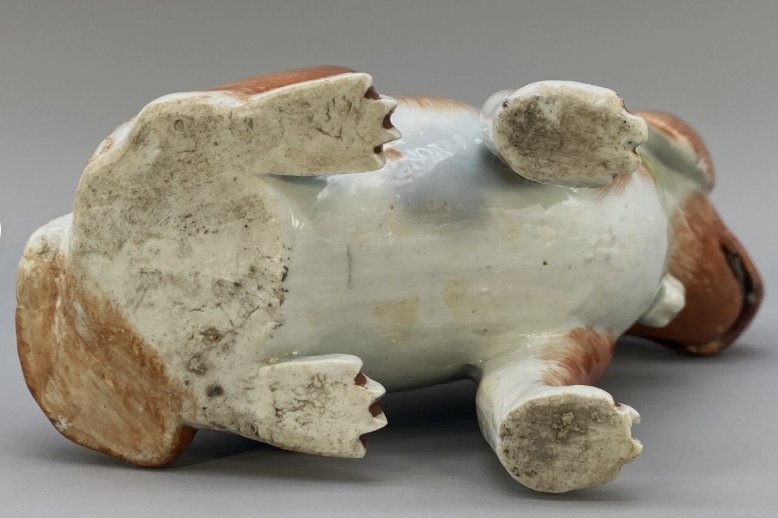
Scattered surface abrasions and minor enamel loss are visible on the ears and paws. The unglazed base shows significant surface dirt and legitimate age-related wear to the footrim, with no obvious signs of professional restoration under normal light.
Glaze and painted decoration
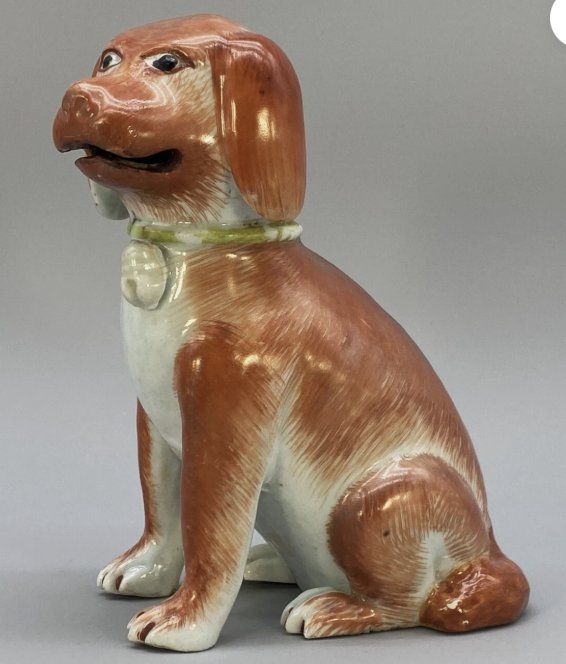
The glaze shows a slightly blueish tint known as 'yingqing' in some localized areas, with the iron-red fur stippling applied in a dry-brush overglaze technique. The green collar exhibits minor pitting and uneven enamel thickness typical of period lead-fluxed glazes.
Recorded physical details
The figure appears to be slip-cast or press-molded with a hollow interior, suggesting a weight of approximately 450 to 700 grams depending on wall thickness.
Scarcity and surviving examples
Average · 4/10 estimated rarity
This is a qualitative collection score, not a measured survival count, market percentile or proof of authenticity.
What the photographs establish
Interpretation of the photographs and supplied context. This does not authenticate the object.
- Proliferation of 20th-century reproductions from Hong Kong and Macau that mimic the iron-red palette
- Absence of 19th-century 'orange peel' glaze texture in some areas of the photograph
- The facial expression is somewhat atypical for early export pieces, leaning toward 19th-century provincial styles
Value and its basis
Estimate recorded: May 11, 2026
How we estimate value
Estimate context (not a documented sale): Similar export spaniels from the Jiaqing period have appeared at Christie’s and Sotheby’s London interiors sales between $600 and $1,200.
Collectors and interest
Collectors of Chinese Export porcelain and enthusiasts of 19th-century animalier ceramics.
What supports the estimate
- •Clarity of the iron-red fur stippling
- •Evidence of early 19th-century manufacturing (non-mechanical base)
- •Intactness of the ears and tail as these are frequent break points
What could change it
- •Any hidden cracks (hairlines) in the neck or paws
- •Evidence of being a mid-20th century Macau reproduction
- •Heavy enamel flaking on the face
Comparing quality
- •Finely detailed fur mimicking individual hairs
- •Height exceeding 8 inches
- •Authentic 18th-century provenance labels
The effect of condition
Condition of the overglaze enamels and lack of restoration to the extremities.
Market interest
For informational purposes only, not a formal appraisal.
Related objects
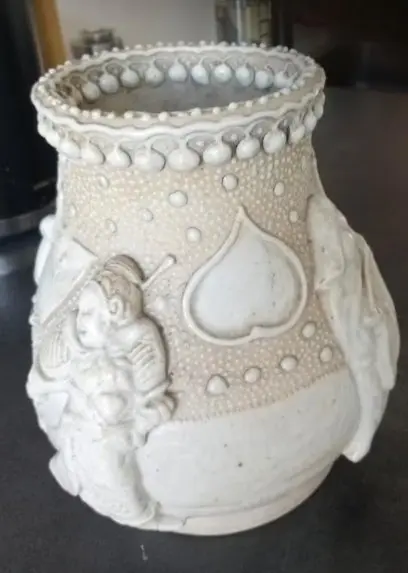
Chinese Shiwan Ware Figural Vase with Molded Luohan Relief, Late 19th Century
Shared title details

Chinese Famille Noire 'Scroll' Plate, Late Qing to Republic Period (1880-1920)
Shared title details
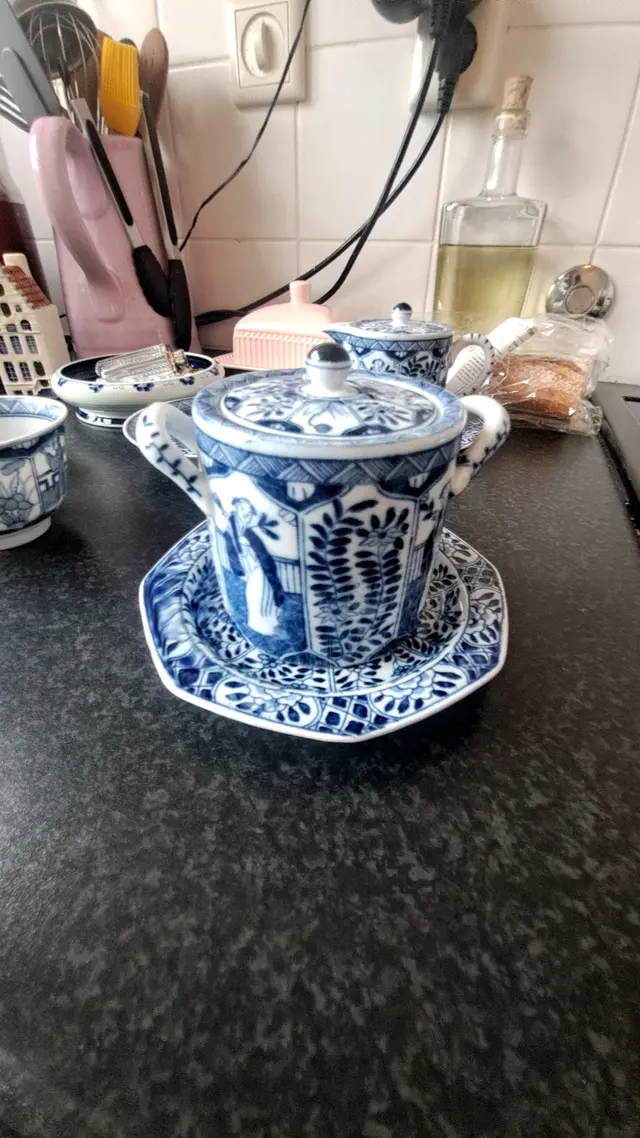
Chinese Blue & White Lidded Export Cup and Saucer, early 20th Century
Shared title details
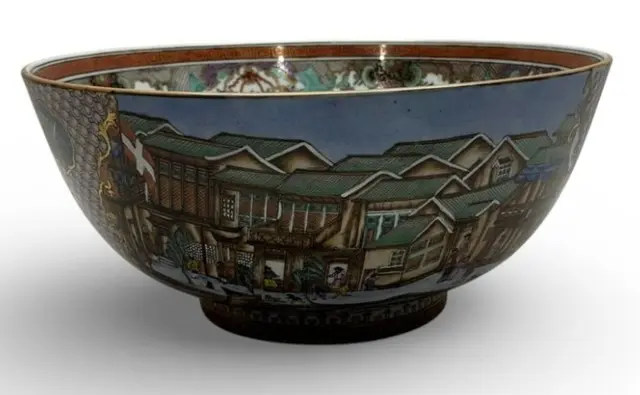
Chinese Export Porcelain 'Hong' Punch Bowl
Shared title details
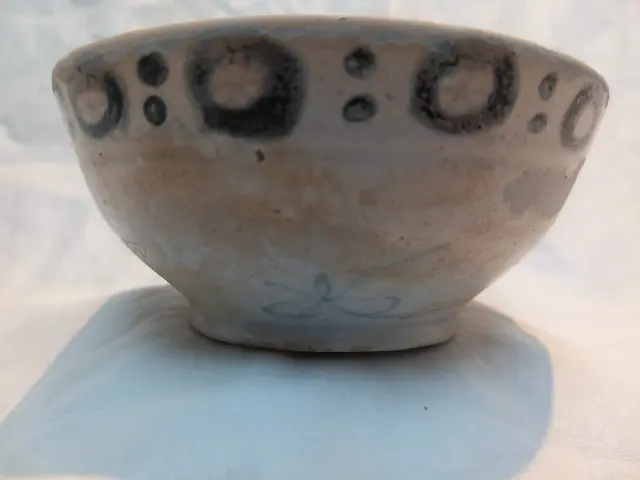
Chinese Blue and White 'Ring and Dot' Swatow Bowl, late Ming Dynasty (ca. 1570-1644)
Shared title details
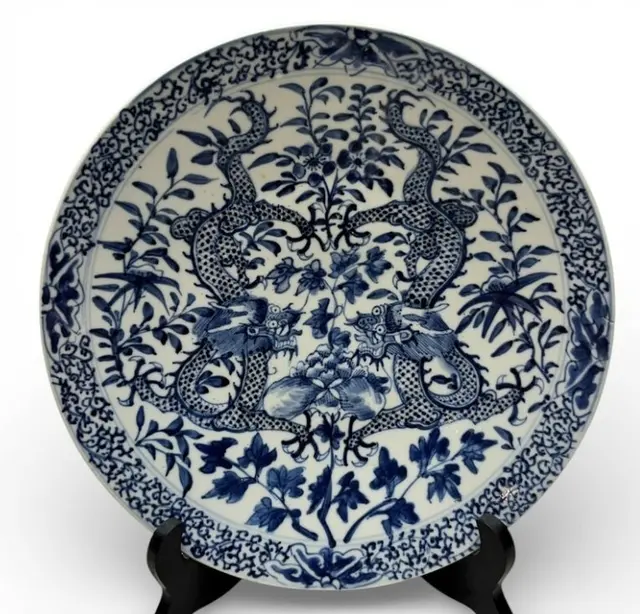
Chinese Blue and White Porcelain 'Dragon and Phoenix' Charger
Shared title details
Explore Ceramics & Pottery
Pottery, porcelain, stoneware, earthenware, and kiln-fired objects.
Ceramics & Pottery value and rarity guideShare this find
A place for your ceramics
Keep its photographs, maker’s marks and the story you know in one object record. Start with a photo.
Create an account for 10 free scans. No credit card needed.
Join the conversation