U.S. 1894-1898 Bureau Issues and 1908 Washington-Franklin Stamps
Estimated value
$1 - $5Rarity
Ordinary(3/10)Category
StampsBrand
Bureau of Engraving and PrintingEra
1894-1912Origin
United StatesAuthenticity
U.S. 1894-1898 BUREAU ISSUES AND 1908 WASHINGTON-FRANKLIN STAMPS: IDENTIFICATION
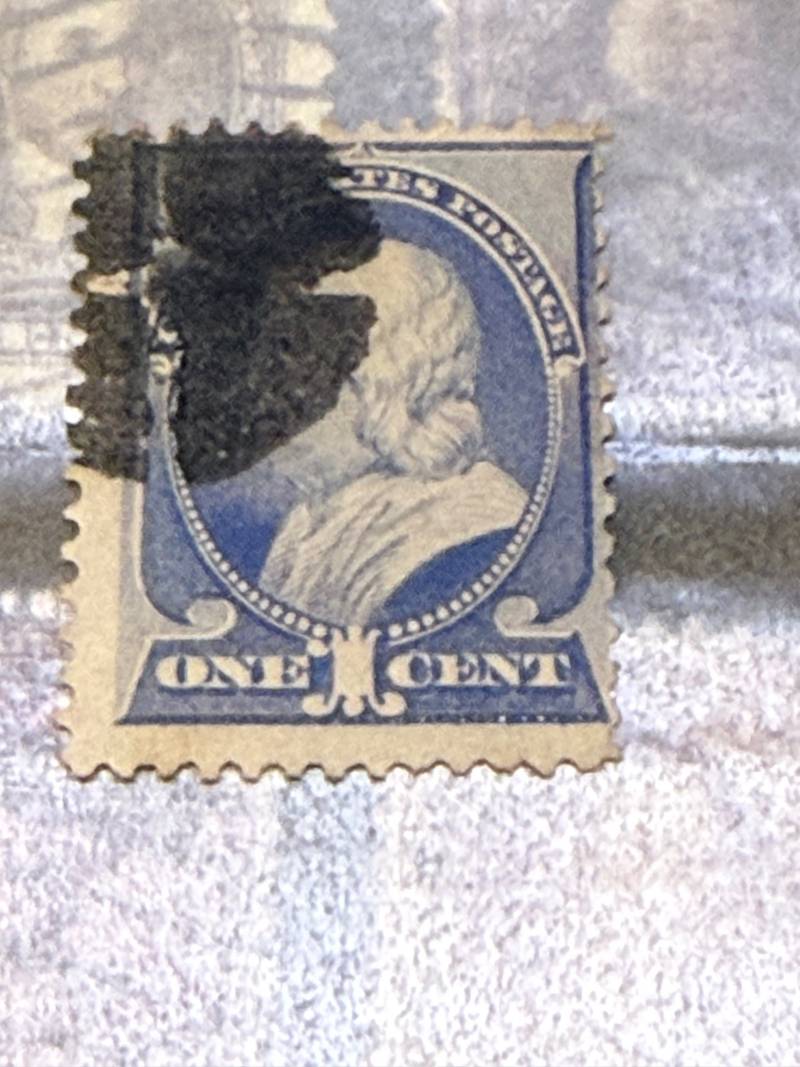
Three United States regular issue postage stamps showing signs of chemical alteration. The first is a 1-cent Benjamin Franklin from the 1908-1912 Washington-Franklin series, featuring a straight edge at the left margin and an unnatural blue hue. The second and third are 2-cent George Washington issues from the 1894-1898 First Bureau series, identifiable by the distinctive triangles in the upper corners. All three bear heavy black cork or killer cancellations.
POSTAL HERITAGE
PHILATELIC NOTES
The green ink used for the 1908 1-cent Franklin was composed of Prussian blue and chrome yellow; chemical cleaning often destroys the yellow component, leaving behind a blue 'changeling' stamp.
SCARCITY
Standard antiques commonly found at estate sales and flea markets. Plentiful supply meets modest demand.
Typical Characteristics
- Moderate production runs
- Common at estate sales
- Entry-level collectibles
Confidence Factors
PHILATELIST'S VERDICT
Philatelist
The engraved details, specific corner triangles on the 1894 issues, and characteristic Washington-Franklin frame confirm the exact issues, while the color anomalies perfectly align with known chemical reactions for these specific BEP inks.
KEY EVIDENCE
- 1Presence of upper-corner triangles on the 2-cent stamps isolates them as 1894-1898 First Bureau Issues.
- 2The 'U.S. POSTAGE' ribbon and Franklin profile identifies the 1-cent as a 1908-1912 Washington-Franklin issue.
WHAT WOULD IMPROVE CERTAINTY
- →Apply watermark fluid to the reverse to check for double-line or single-line USPS watermarks, which differentiates the 1894 from the 1895/1898 Bureau issues.
CONDITION & GRADE
Grading breakdown
Grades are severely limited by the heavy, design-obscuring cancellations, a straight edge on the 1-cent issue, and the chemical alteration of the original fugitive inks.
Condition
All three examples exhibit heavy, obliterating cancellations. The 1-cent Franklin displays a left-side straight edge, indicating it originated from the outer margin of a sheet or a booklet pane. The severe color deviations—specifically the 1-cent appearing blue instead of green, and one 2-cent appearing grayish-green instead of carmine—strongly indicate chemical alteration or severe environmental oxidation.
PHILATELIC VALUATION
Updated: Aug 27, 2026
- Market comparables from auctions & retail
- Condition, completeness & craftsmanship
- Current collector demand & trends
- Low = quick sale, high = patient seller
For informational purposes only, not a formal appraisal.
YOUR INPUT VS. SCAN
How your provided context compares with Curiosa.com scanner findings.
What Aligned
- User's assertion of USA origin perfectly matches the Bureau of Engraving and Printing designs.
- The 'Restored' condition noted by the user directly explains the unnatural colors, as chemical washing to remove stains often turns 19th-century green and carmine inks into blue or brown changelings.
What Conflicted
- While the base paper and printing are 'Original/Authentic', the chemical alteration has stripped the stamps of their original factory colors, making them reference copies rather than original-state collectibles.
ABOUT STAMPS
Rare stamps, postal history, first day covers, and philatelic treasures.
Stamps value and rarity guideSHARE THIS CURIOSITY
Have your own curiosities to discover?
Scan Your Curiosity
COMMENTS