
Small polychrome ceramic handled vessel fragment or miniature salt cellar
Select the photograph to look closer.
Estimated value
$20 - $80Rarity
Average(4/10)Category
Ceramics & PotteryEra
late 19th century to early 20th centuryOrigin
InternationalVisual assessment
Photo-based interpretation · not authenticated
Save to revisit in your watchlist. This does not add the object to your own collection.
SMALL POLYCHROME CERAMIC HANDLED VESSEL FRAGMENT OR MINIATURE SALT CELLAR: IDENTIFICATION
Handheld glazed ceramic object, roughly 8 to 10 cm across, with a white ground, hand-painted floral scrollwork in green, yellow, red, and black, and two upright terminal forms that read as animal or figural heads. The paste appears opaque rather than translucent, and the glaze surface shows a glossy finish with light edge wear on the projecting terminals.
Compare with other ceramic pieces in the archive: Blue and White Porcelain Crescent-Shaped Vessel, Arne Åse contemporary porcelain lidded vessel, Blue and White Porcelain Small Bowl with Apocryphal Chenghua Mark.
CROSS-CULTURAL PARALLELS
Related cultural context
Small domestic ceramic table wares with polychrome overglaze decoration were common in France and Germany from the 18th to 20th centuries.
White-ground, hand-painted floral and scroll ornament is a long-running maiolica convention, especially on small serving pieces.
Use & cultural context
- •Table service for salts, condiments, or small accompaniments at formal meals in the 19th century.
- •Display on mantelpieces or sideboards as a cabinet-piece in late Victorian and Edwardian interiors.
Meaning Through Time
Functional tableware could also serve as domestic decoration in middle-class interiors.
Small decorative ceramics increasingly moved from daily service use into display and collecting roles.
COLLECTOR NOTES
Small ceramic table accessories such as salts, napkin rings, and open-handled dishes were widely made in Europe between about 1870 and 1930, with many examples lacking factory marks.
SCARCITY
Average · 4/10 estimated rarity
This is a qualitative collection score, not a measured survival count, market percentile or proof of authenticity.
Visual assessment
Photographs alone cannot establish authenticity. The following analysis notes have not been independently verified; references to a match or confirmation are interpretations, not documentary evidence.
What photo analysis can and cannot establishANALYSIS NOTES
AI-assisted notes based on the photographs and supplied context. These are interpretations, not an examination by a human specialist or proof of authenticity.
The identification is moderately confident because the body, glaze, and overglaze decoration are consistent with a small decorative ceramic accessory, but the exact form and maker cannot be confirmed from one soft-focus image. Confidence stays at 0.62 because the base, interior, and marks are not visible.
Condition & estimated grade
A visual condition estimate. This is not a professional grading certificate.
Grading breakdown
Condition is hard to grade from a single angled photo. A base view and close-up of the footrim would be needed to assess chips, hairlines, glaze wear, and any repair fill.
Condition
Visible surface wear is limited to small edge losses or rubs at the projecting terminal tips, with no large cracks visible from this angle. The interior and underside are not shown, so hairlines, chips on the foot, or restoration cannot be excluded.
Weight & feel
Likely light to moderate in hand, probably under 300 g based on the palm-scale size and thin ceramic walls.
CERAMICS MARKET VALUE
Estimate recorded: Nov 7, 2026
- No documented comparable sales are shown for this estimate
- Condition, completeness & craftsmanship
- Demand assumptions may not reflect current transactions
- The range is an estimate, not an asking price or sale result
For informational purposes only, not a formal appraisal.
Related ceramics & pottery
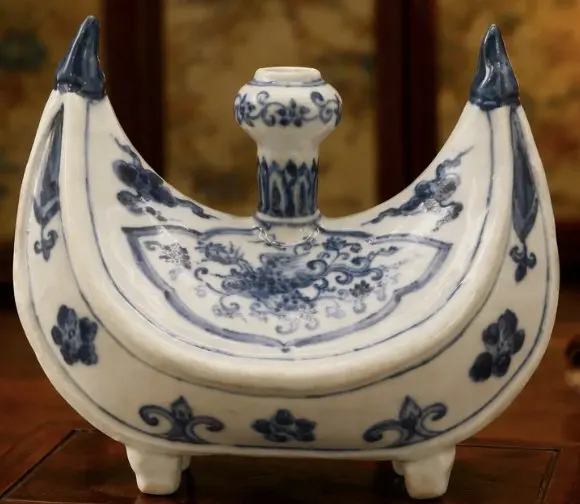
Blue and White Porcelain Crescent-Shaped Vessel
Same category
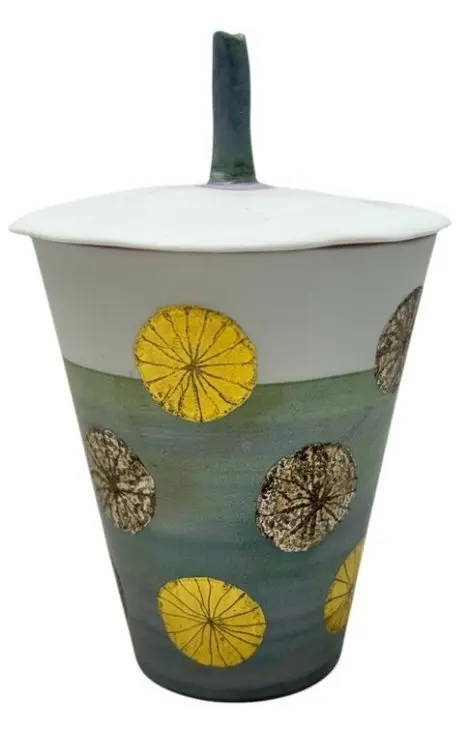
Arne Åse contemporary porcelain lidded vessel
Same category
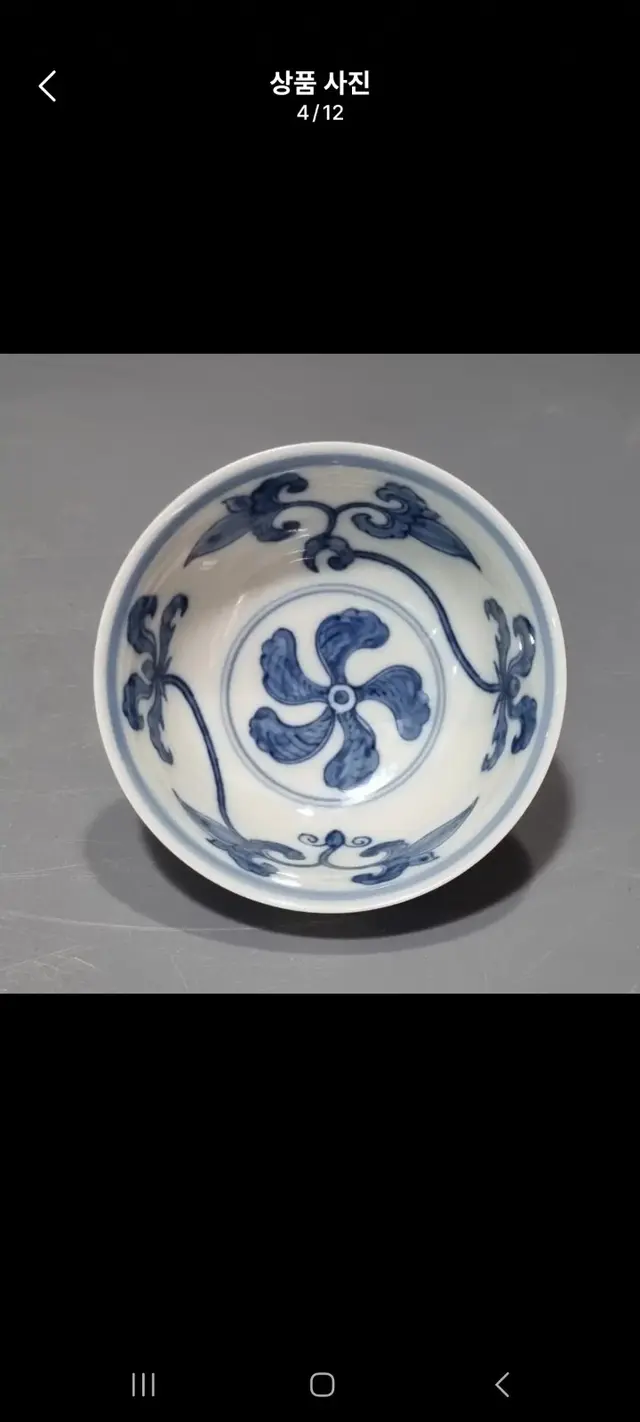
Blue and White Porcelain Small Bowl with Apocryphal Chenghua Mark
Same category
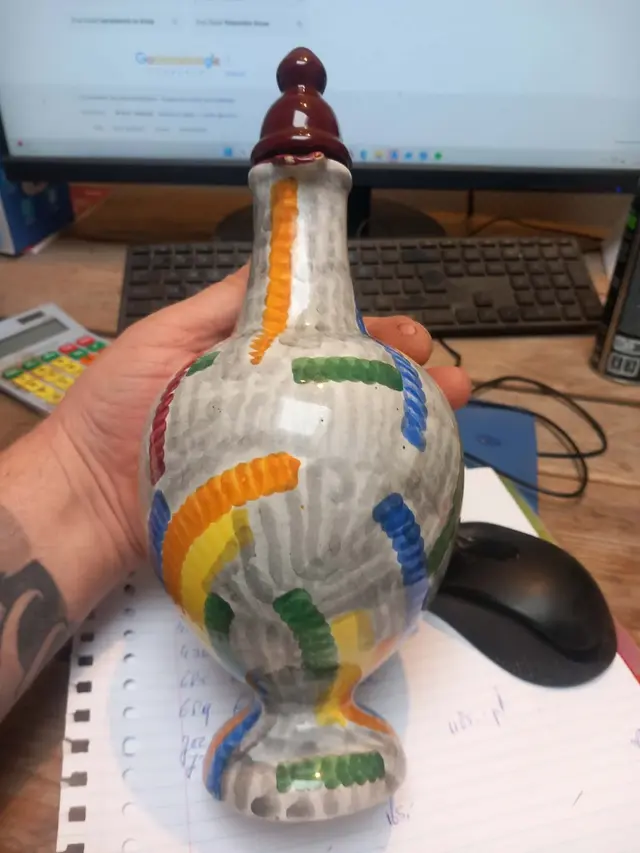
Mid-Century Modern Abstract Ceramic Decanter
Same category
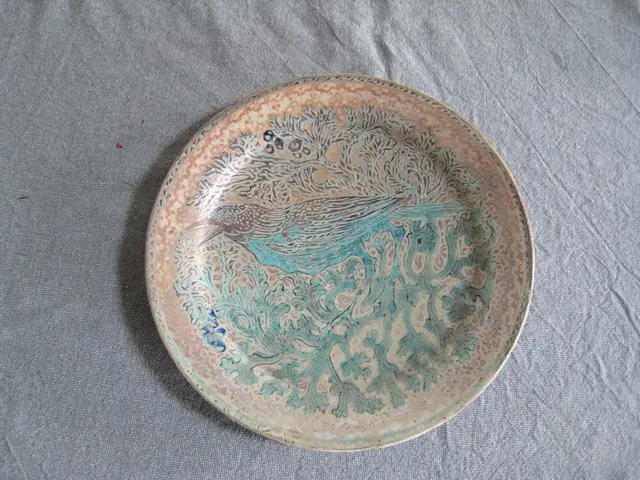
Hand-Decorated Ceramic Plate with Bird Motif
Same category
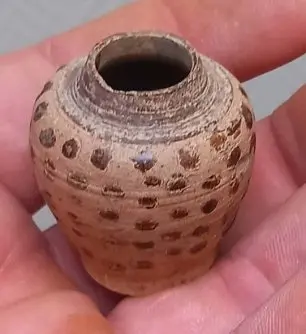
Chinese Song-style Miniature Jar with Iron-Spot Decoration
Same category
Explore Ceramics & Pottery
Pottery, porcelain, stoneware, earthenware, and kiln-fired objects.
Ceramics & Pottery value and rarity guideSHARE THIS CURIOSITY
What’s in your collection?
Keep its photographs, maker’s marks and the story you know in one object record. Start with a photo.
Create an account for 10 free scans. No credit card needed.
Community contributions