
Arne Åse contemporary porcelain lidded vessel
Estimated value
$850 - $1,800Rarity
Scarce(6/10)Category
Ceramics & PotteryBrand
Márta Nagy StudioEra
c. 1990-2005Origin
NorwayArtist / Creator
Arne ÅseVisual assessment
Photo analysis
Save to revisit in your watchlist. This does not add the object to your own collection.
Arne Åse contemporary porcelain lidded vessel
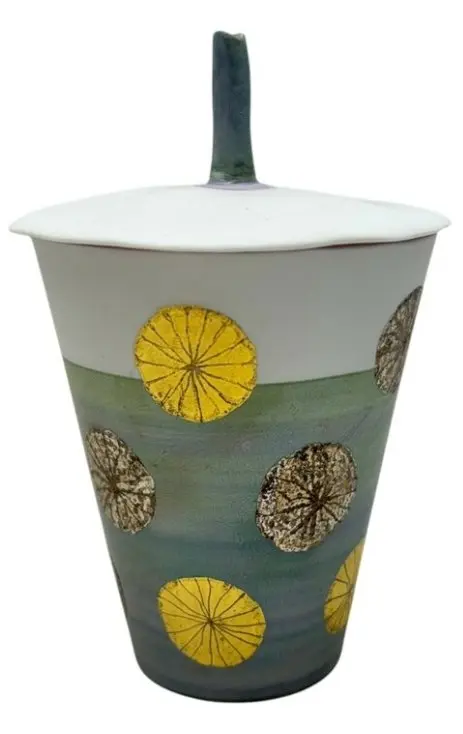
A tall, tapered porcelain vessel featuring an exceptionally thin, translucent body and a slightly irregular 'soft' lid with a vertical handle. The exterior decoration utilizes a watercolor-like staining technique in shades of celadon, teal, and lime green, punctuated by circular resists or sgraffito-etched 'citrus' or 'seed' motifs in bright yellow and bronze. The matte finish and high-fired porcelain body are hallmarks of late 20th-century Scandinavian experimental ceramics.
Related traditions
Scandinavian Modernism
Late 20th Century
The minimalist form and nature-inspired palette align with the post-war 'Design for Living' movement.
Use and ceremony
18th Century
Porcelain symbolized royal prestige and industrial perfection (white gold).
Modern Era
Porcelain shifted to signify individual artistic expression and fragile organic beauty.
Origins and context
Arne Åse (born 1940) is a Norwegian ceramicist who revolutionized the use of soluble metal salts on unglazed porcelain during the 1980s and 1990s. This specific piece reflects his research into watercolor techniques applied to ceramic surfaces at the National Academy of Art and Design in Oslo. His work moved porcelain away from industrial precision toward a more organic, painterly expression that honors the material's inherent translucency.
Further details
Arne Åse published 'Watercolour on Porcelain' in 1989, a seminal text detailing his method of painting with metal salts on bone dry porcelain before firing.
His works are held in permanent collections of major institutions including the Victoria and Albert Museum in London and the National Museum in Oslo.
Attribution and evidence
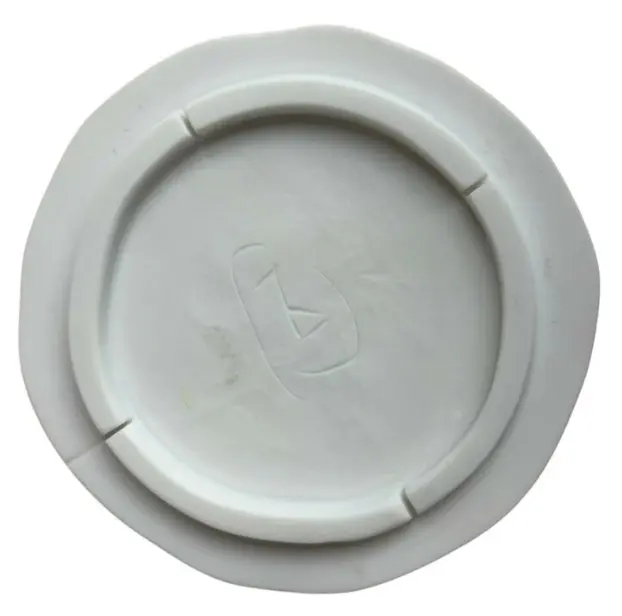
The maker's mark is clearly visible and the technique is highly specialized and synonymous with this specific studio artist.
Identifying details
- 1Incised cursive 'A' monogram on the inner lid rim is the standard studio mark for Arne Åse.
- 2The use of soluble metal salts creating a bleed-edge effect on unglazed porcelain is unique to his pioneered process.
- 3Translucency visible in the lid's thin periphery is consistent with high-fired Grolleg china clay bodies used by the artist.
- 4Form and motif (stylized seeds/citrus) match cataloged works from the 1990s.
Photographs that would help
- Check the base of the vessel for a secondary matching incised mark or date stamp.
- View the vessel against a strong light source to confirm the uniformity of wall thickness.
Terms in this record
- Metal Salts
- Chemical solutions used on raw clay that penetrate the body and change color during firing without adding a layer of glaze.
- Resist
- A technique where a material (like wax or a specific chemical) is applied to prevent color from being absorbed in certain areas.
Wear and preservation
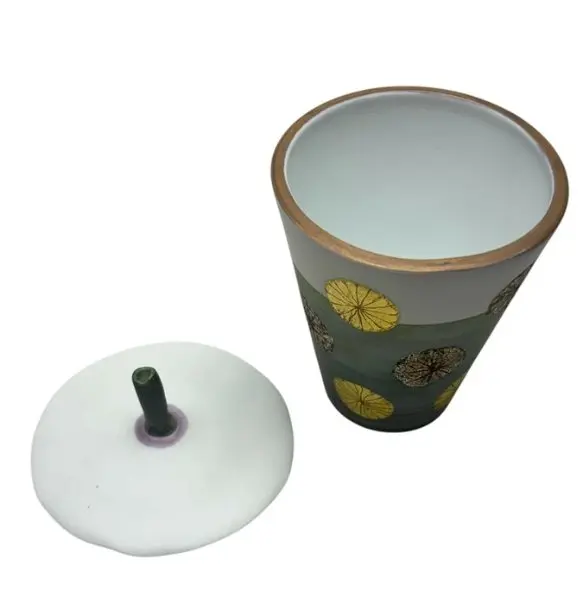
No visible chips, cracks, or surface abrasions; the delicate handle and lid edges are remarkably preserved, which is rare for such thin-walled porcelain.
The vessel appears structurally sound with no visible hairline fractures or rim chips; the lid flange remains intact with the distinctive cross-notched air vents visible on the underside.
Glaze and painted decoration
The surface exhibits a characteristic matte, biscuit-fired texture with zero-glaze 'stain' absorption, showing distinct pooling variations where the metal salts saturated the porous porcelain body.
Recorded physical details
Extremely lightweight and fragile, likely weighing less than 300 grams despite its volume, due to the artist's signature feather-thin throwing technique.
Scarcity and surviving examples
Scarce · 6/10 estimated rarity
This is a qualitative collection score, not a measured survival count, market percentile or proof of authenticity.
What the photographs establish
Interpretation of the photographs and supplied context. This does not authenticate the object.
- Clearly visible incised maker's mark on the underside of the lid consistent with Åse's studio practice
- Technically complex translucent porcelain and metal-salt staining is difficult to replicate for forgers
Value and its basis
Estimate recorded: May 10, 2026
How we estimate value
Estimate context (not a documented sale): Similar Arne Åse pieces have achieved $1,200-$2,000 at auction houses such as Maak Contemporary Ceramics and Bukowskis between 2021 and 2024.
Collectors and interest
Specialized collectors of Scandinavian studio pottery and international ceramic art institutions.
What supports the estimate
- •Provenance from a recognized gallery
- •Vibrancy of the yellow and teal saturation
- •Intact lid and handle (highly prone to breakage)
What could change it
- •Invisible 'ringing' cracks that diminish structural sound
- •Loss of lid
Comparing quality
- •Maximum translucency
- •Complex layering of more than three salt colors
- •Exhibiting large-scale dimensions
The effect of condition
Wall thinness uniformity, clarity of marks, and absence of firing cracks or 'dunting'.
Market interest
For informational purposes only, not a formal appraisal.
Related objects
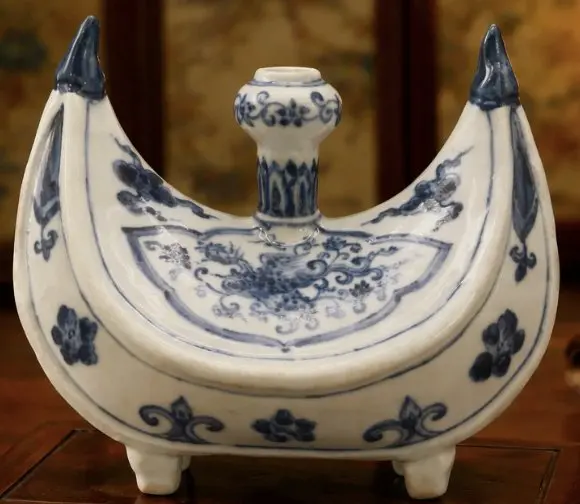
Blue and White Porcelain Crescent-Shaped Vessel
Shared title details
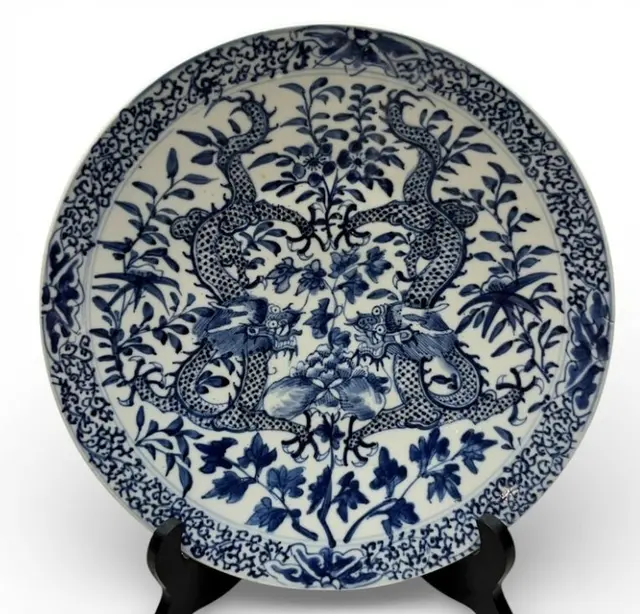
Chinese Blue and White Porcelain 'Dragon and Phoenix' Charger
Same category
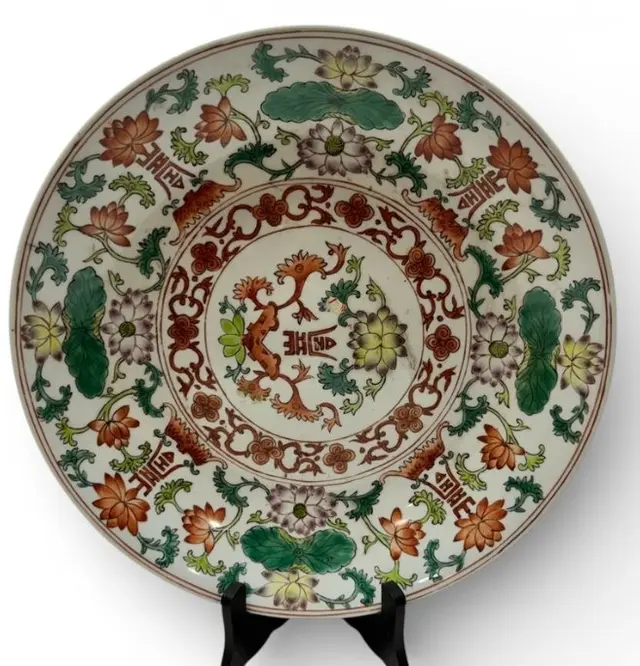
Chinese Wucai-style Famille Verte Porcelain Charger
Same category
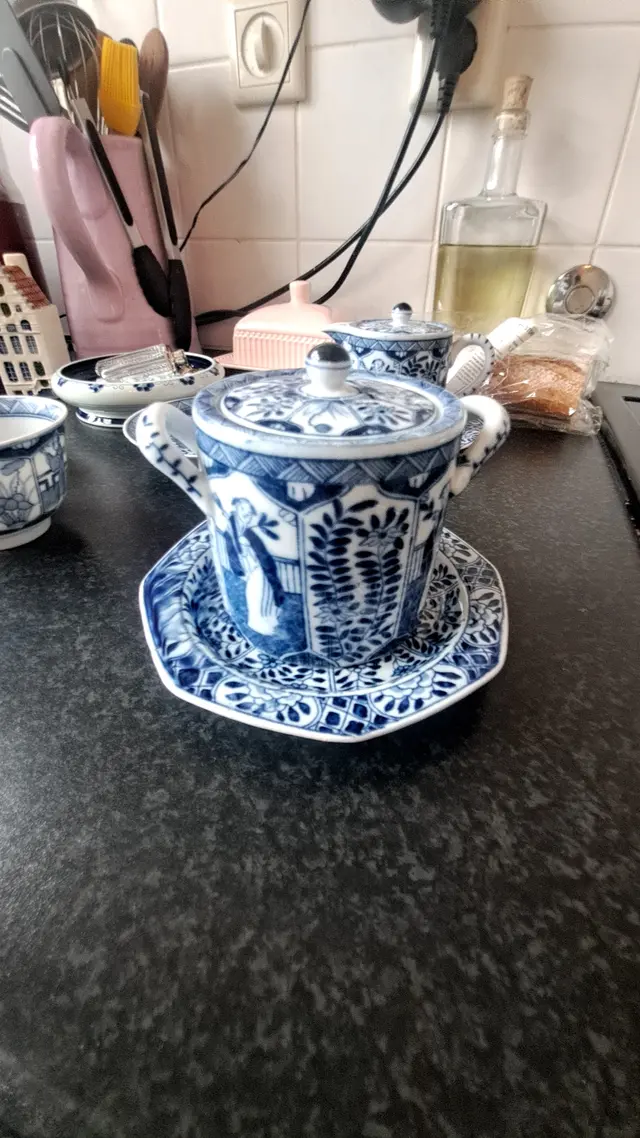
Chinese Blue & White Lidded Export Cup and Saucer, early 20th Century
Same category
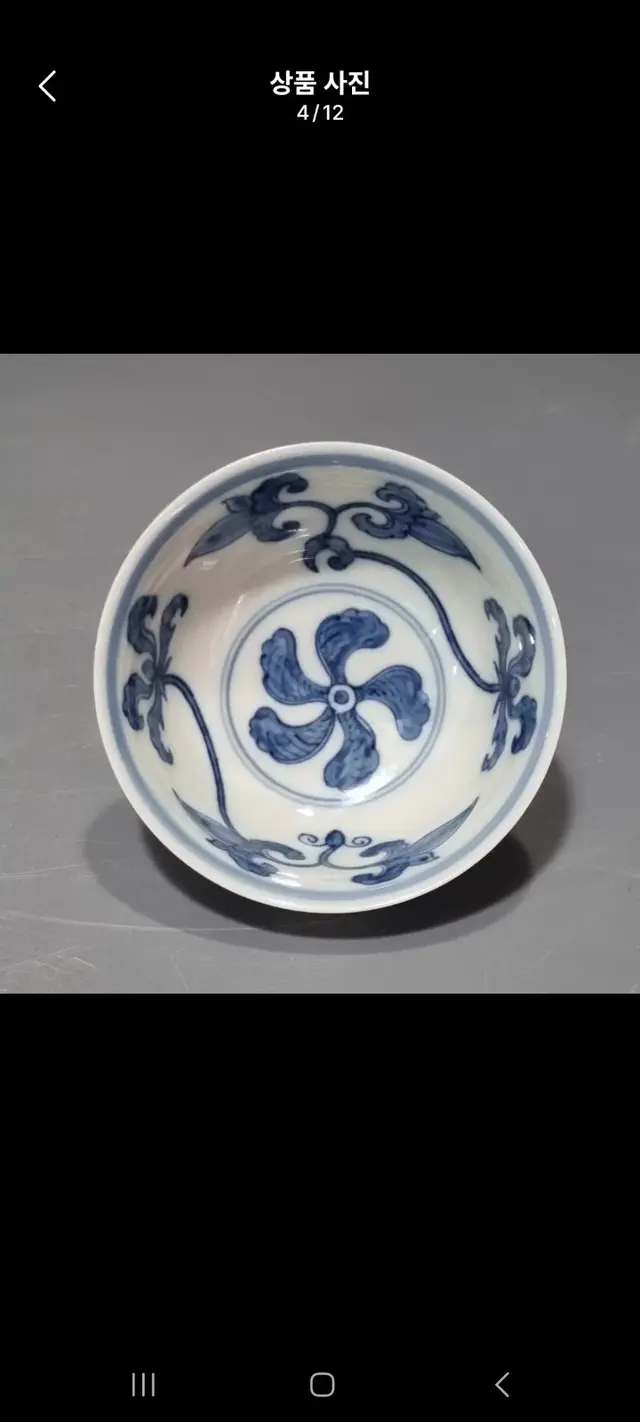
Blue and White Porcelain Small Bowl with Apocryphal Chenghua Mark
Same category
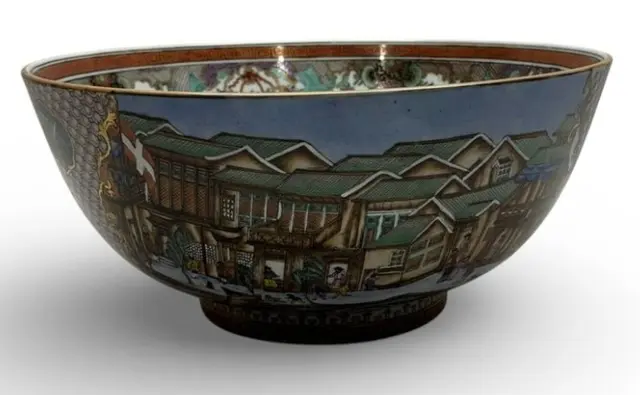
Chinese Export Porcelain 'Hong' Punch Bowl
Same category
Explore Ceramics & Pottery
Pottery, porcelain, stoneware, earthenware, and kiln-fired objects.
Ceramics & Pottery value and rarity guideShare this find
A place for your ceramics
Keep its photographs, maker’s marks and the story you know in one object record. Start with a photo.
Create an account for 10 free scans. No credit card needed.
Join the conversation