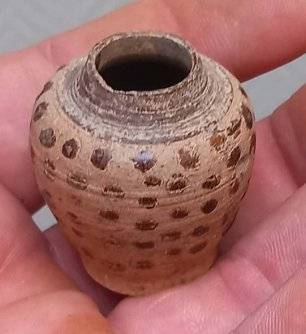
Chinese Song-style Miniature Jar with Iron-Spot Decoration
Estimated value
$80 - $250Rarity
Average(4/10)Category
Ceramics & PotteryEra
Song Dynasty or later (13th-19th Century)Origin
ChinaAuthenticity
CHINESE SONG-STYLE MINIATURE JAR WITH IRON-SPOT DECORATION: IDENTIFICATION
A miniature stoneware jar, appearing to be a functional water dropper or cosmetic vessel, featuring a buff-colored unglazed body with dark brown iron-oxide spots. The vessel is wheel-thrown, evidenced by the concentric striations on the exterior and the carved footrim. The form is a squat ovoid with a short, tapered neck and a slightly flared, unglazed foot characteristic of Southern Chinese kilns.
SCARCITY
Typical antique shop fare. Requires some searching but regularly available. This is where most genuine antiques fall.
Typical Characteristics
- Standard antique shop items
- Regularly available
- Moderate collector interest
Confidence Factors
- Song-style miniatures are frequently reproduced in Longquan and Jingdezhen for the modern souvenir market
- Visible surface dirt may be artificially applied to simulate age
- Wheel marks on the interior neck appear sharper than typically found on 800-year-old salvaged wares
CERAMICIST'S ASSESSMENT
Asian Art Specialist
The form and decoration are highly consistent with Cizao-ware miniatures from the Fujian province, though the prevalence of modern Song-style replicas requires caution without a physical examination of the clay texture.
KEY EVIDENCE
- 1Wheel-thrown stoneware body with concentric throwing lines.
- 2Deliberate application of iron-oxide spots in a rhythmic pattern.
- 3Recessed, unglazed footrim consistent with Southern Chinese kiln practices (e.g., Cizao kilns).
- 4Scale (approx. 4-5 cm) identifies it as a cosmetic or scholar's object.
UNCERTAINTIES
- •Uniformity of the spots suggests a highly standardized production, common in modern replicas.
- •Lack of salt corrosion or 'sea-wear' if it originated from a shipwreck context.
WHAT WOULD IMPROVE CERTAINTY
- →Macro photo of the base to examine clay body grain and kiln scar detail.
- →Inspect the interior with a borescope for historic sediment vs modern artificial aging.
- →Compare against known artifacts from the Nanhai No. 1 or Breaker Shoal shipwrecks.
CONDITION & GRADE
Grading breakdown
Noticeable surface abrasions and deep-seated grime; however, the structural integrity remains intact without major cracks or total loss of the neck.
Condition
Significant surface wear and dirt accumulation; minor chipping visible on the shoulder. The foot shows typical kiln grit and oxidation from historic firing.
CERAMICS MARKET VALUE
Updated: May 10, 2026
Who buys this
Specialist collectors of Chinese export ceramics or Song/Yuan dynasty scholars' objects.
What increases value
- •Authenticity confirmable to the Southern Song or Yuan period
- •Integrity of the neck and rim
- •Clarity and contrast of the iron spotting
What lowers value
- •Surface dirt masking modern repairs
- •High volume of identical modern replicas on the market
What makes top-tier examples
- •Clear, translucent glaze over the spots
- •Provenance linking it to a specific historical shipwreck
- •Refined, thin walls showing master-level wheel control
Grade & condition
Completeness of the rim, level of surface erosion, and color contrast of the spots determine value.
Rarity & demand
For informational purposes only, not a formal appraisal.
ABOUT CERAMICS & POTTERY
Pottery, porcelain, stoneware, earthenware, and kiln-fired objects.
Ceramics & Pottery value and rarity guideSHARE THIS CURIOSITY
Have your own curiosities to discover?
Scan Your Curiosity
COMMENTS