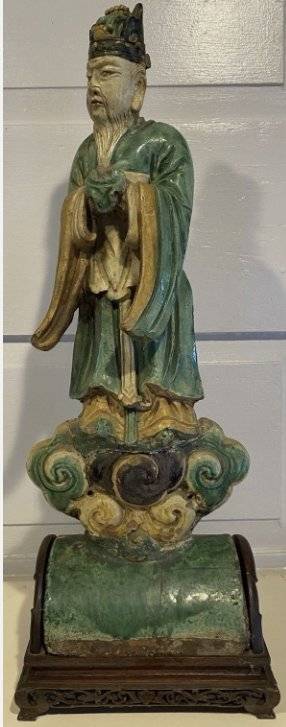
Chinese Shiwan Sancai Glazed Roof Tile Figure
Estimated value
$450 - $1,200Rarity
Average(4/10)Category
Ceramics & PotteryEra
Late 19th to early 20th centuryOrigin
ChinaAuthenticity
CHINESE SHIWAN SANCAI GLAZED ROOF TILE FIGURE: IDENTIFICATION
A molded stoneware figure of a Daoist immortal or celestial official, likely an attendant, standing atop a green-glazed ridge tile base. The figure is decorated in the Sancai (three-color) palette—green, amber-yellow, and off-white glazes—over a buff-to-greyish earthenware body. The figure wears traditional Ming-style robes with wide sleeves and a high official's headdress (futou). The base represents a 'cloud' form supporting the deity, integrated into a convex roof tile meant for architectural placement.
CROSS-CULTURAL PARALLELS
Where This Object Echoes
Onigawara (ogre tiles) serve a similar protective architectural function on temple ridge ends.
Ritual & Ceremonial Use
- •Consecration ceremonies for new temples where the 'eyes' of the roof guardians are ritually opened with vermilion ink.
Meaning Through Time
Magical guardians ensuring cosmic order and fire protection for timber-frame buildings.
Decorative interior objects sought for 'Chinoiserie' aesthetic and structural sculptural quality.
PRODUCTION & FIRING
SCARCITY
Typical antique shop fare. Requires some searching but regularly available. This is where most genuine antiques fall.
Typical Characteristics
- Standard antique shop items
- Regularly available
- Moderate collector interest
Confidence Factors
- Commonly reproduced in the mid-20th century for the export market using similar molds
- The uniform wear on the glaze may indicate artificial distressing or 'soil staining'
- The lack of heavy weathering expected from 100+ years of roof exposure
CERAMICIST'S ASSESSMENT
Ceramics Historian & Kiln Specialist
The form and glaze are highly characteristic of the type, but distinguishing a 19th-century original from a high-quality 1940s export piece requires tactile inspection of the clay body.
KEY EVIDENCE
- 1Sancai glaze distribution (green, amber, cream) consistent with Cantonese Shiwan traditions.
- 2Integrated ridge-tile base confirms architectural origin rather than a standard altar figure.
- 3Robed official style and headdress are typological for Ming/Qing transition period guardians.
- 4Presence of a modern carved wooden plinth suggests it entered the Western decorative market in the mid-20th century.
UNCERTAINTIES
- •The facial features appear somewhat soft, which could indicate a later cast from an older mold.
- •Absence of soot or typical environmental staining usually found on genuine ridge tiles.
WHAT WOULD IMPROVE CERTAINTY
- →Examine the interior of the hollow base for the color and texture of the unglazed paste.
- →Search for hand-incised characters or shop marks often found on the back or inside the base.
- →Use a UV light to check for repairs on the neck or hands, which are common breakage points.
CONDITION & GRADE
Condition
Visible losses to the glaze on the lower tile base and minor chips to the headdress edges. The wooden stand is a later secondary addition for interior display.
Weight & feel
Approximately 4 to 6.5 kg; the figure is likely hollow-cast stoneware meant to balance on a roof ridge without causing structural collapse.
CERAMICS MARKET VALUE
Updated: May 11, 2026
Who buys this
Collectors of Asian art, interior designers specializing in high-end eclectic antiques, and institutions focusing on Chinese folk art.
What increases value
- •Subject matter (highly sought-after deities increase value)
- •Preservation of the hands and head (most vulnerable areas)
- •Vibrancy of the green and amber glazes
What lowers value
- •Hidden structural repairs to the neck
- •Modern batch reproductions for the hotel decor market
- •Significant glaze flaking (shivering)
What makes top-tier examples
- •Presence of an incised maker or workshop mark on the back
- •Crisp modeling of the facial features showing hand-tooling after molding
Grade & condition
Completeness of the figure, degree of glaze loss, and authenticity of the age-patina on the unglazed sections.
Rarity & demand
For informational purposes only, not a formal appraisal.
ABOUT CERAMICS & POTTERY
Pottery, porcelain, stoneware, earthenware, and kiln-fired objects.
Ceramics & Pottery value and rarity guideSHARE THIS CURIOSITY
Have your own curiosities to discover?
Scan Your Curiosity
COMMENTS