
Tichelaar Makkum Delftware Wall Plate - 'NIN LJOGCHT SÛNDER SKAED'
Estimated value
$75 - $175Rarity
Average(4/10)Category
Ceramics & PotteryBrand
Royal Tichelaar MakkumEra
Mid-20th CenturyOrigin
NetherlandsVisual assessment
Photo analysis
Save to revisit in your watchlist. This does not add the object to your own collection.
Tichelaar Makkum Delftware Wall Plate - 'NIN
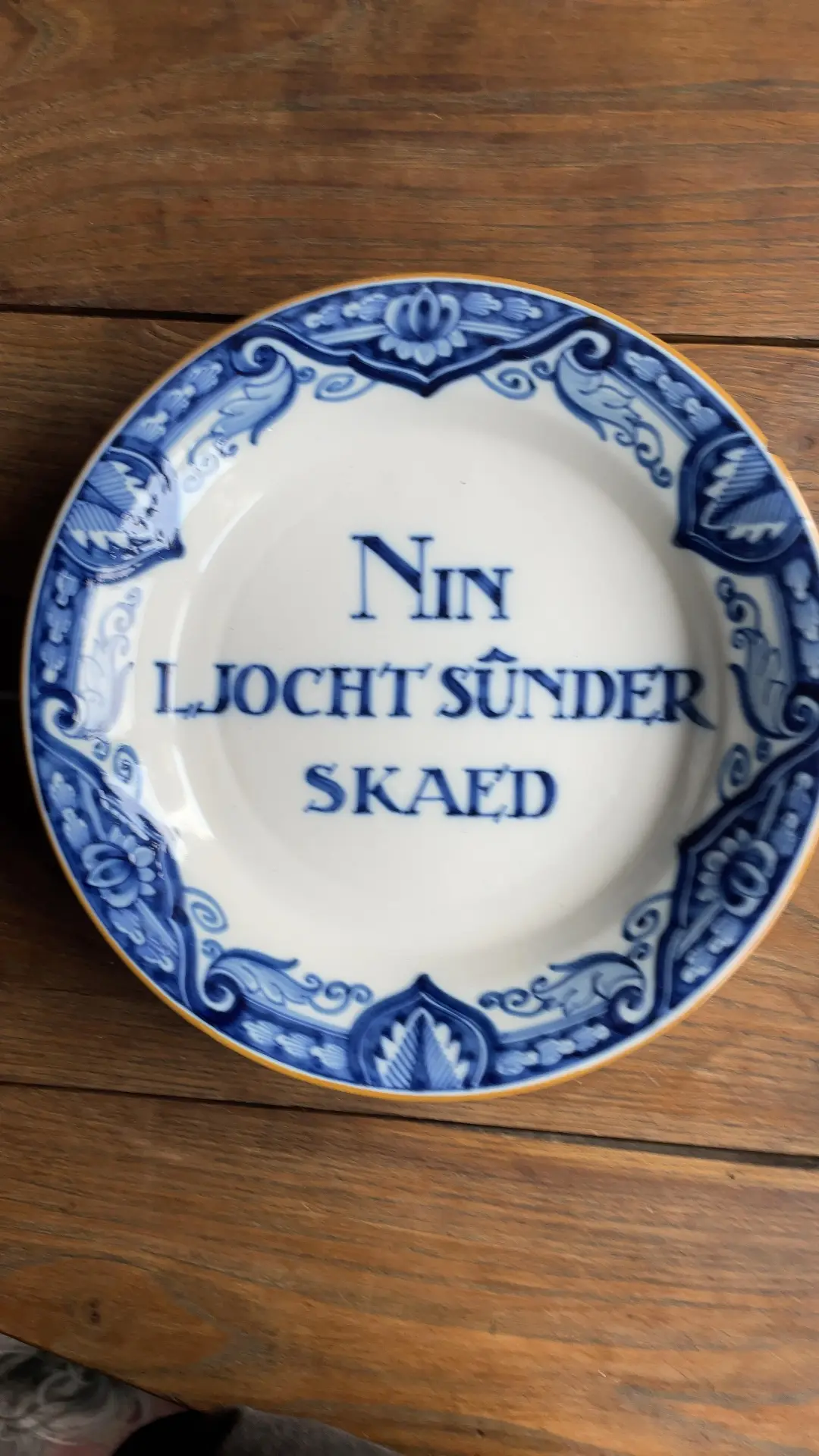
This is a ceramic wall plate, likely decorative, from the Dutch pottery Tichelaar Makkum. The central inscription, 'NIN LJOGCHT SÛNDER SKAED,' appears to be in Frisian, translating to 'No light without shadow.' The plate features classic Delftware-style hand-painted blue and white ornamentation around the rim, characterized by ornate scrolls and stylized foliage, with a golden-yellow rim. The reverse side clearly displays the 'Makkum' shield mark, indicating its origin from the Royal Tichelaar Makkum factory.
Related traditions
Dutch Golden Age
17th - 18th Century
The widespread popularity of Delftware was a direct response to the influx of blue and white Chinese porcelain into Europe, with Dutch potters developing local interpretations using tin-glazed earthenware.
Folk Art & Proverbs
18th - 20th Century
Decorative plates and tiles featuring proverbs or sayings were a common form of domestic art across many European cultures, providing both aesthetic appeal and moral instruction or reflection.
Use and ceremony
17th Century
Delftware, including items like this plate, initially symbolized wealth and exoticism due to its imitation of valuable Chinese porcelain.
19th - 20th Century
Delftware evolved to represent Dutch national identity and heritage, with factories like Tichelaar Makkum preserving traditional craftsmanship against industrialization.
Origins and context
The Tichelaar Makkum factory, Royal Tichelaar Makkum, is one of the oldest family businesses in the Netherlands, established in 1594 in Makkum, Friesland. They are famous for their traditional tin-glazed earthenware, often referred to as Delftware or 'Frisian pottery,' which utilizes hand-painting techniques and distinctive deep blue colors. Their products, ranging from domestic wares to decorative tiles and plates, often feature Frisian proverbs or cultural motifs. This type of plate with a proverb would have been popular as a household decoration or commemorative item, reflective of Dutch artistry and regional heritage.
Further details
Royal Tichelaar Makkum is one of the oldest continuously operating family businesses in the world, having been founded over 400 years ago.
The distinctive tin-glazed earthenware produced by Tichelaar Makkum and other Delftware factories is directly influenced by Chinese porcelain, which was sought after in Europe during the 17th century.
Attribution and evidence
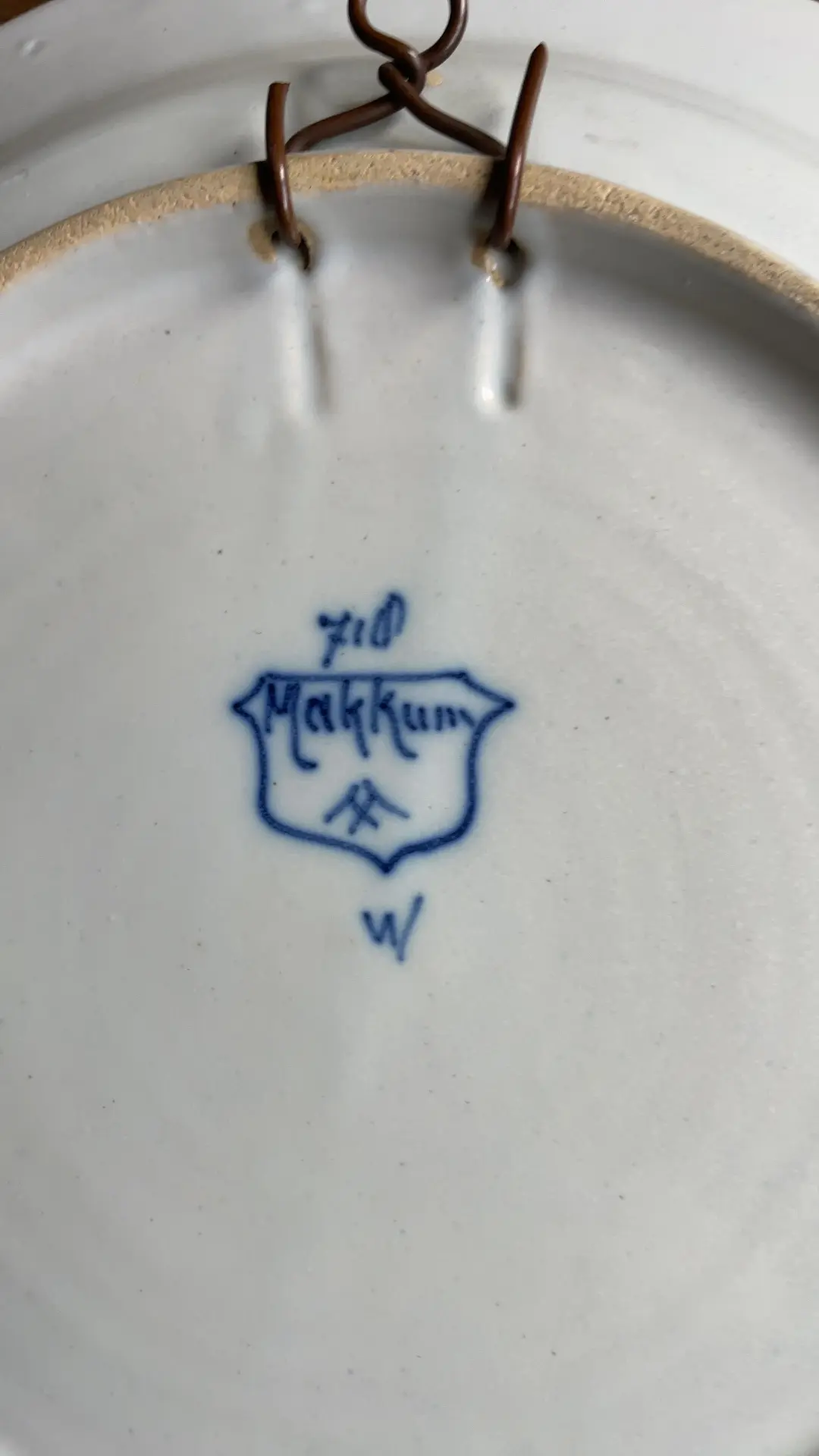
The clear and well-documented 'Makkum' mark, combined with the distinctive hand-painted Delftware style and Frisian inscription, provides strong evidence for the plate's origin and general period of manufacture. The consistency across all visual elements supports this high confidence level.
Identifying details
- 1Clear 'Makkum' shield mark on the reverse, identifying the manufacturer as Royal Tichelaar Makkum.
- 2Traditional blue and white hand-painted Delftware style, consistent with the factory's known production.
- 3Frisian inscription 'NIN LJOGCHT SÛNDER SKAED', a common motif on Tichelaar Makkum decorative pieces.
- 4The golden rim adds a touch of perceived luxury, often seen on later 19th and 20th-century decorative pieces.
Photographs that would help
- Researching specific Tichelaar Makkum catalogs or historical records to pinpoint the exact production date of this particular proverb plate.
- Examining the plate under UV light to check for any invisible repairs or restorations to the glaze or body.
- Measuring the plate's diameter to compare with known sizes of Makkum plates.
Terms in this record
- Delftware
- A type of tin-glazed earthenware, notably produced in the Netherlands from the 17th century, typically featuring blue and white decoration in imitation of Chinese porcelain.
- Tin Glaze
- An opaque, usually white, ceramic glaze that uses tin oxide to achieve its opaqueness, providing a stable surface for painting, especially for detailed cobalt blue designs.
- Hand-painted
- Decoration applied by brush to the ceramic surface, allowing for variations and artistic expression, as opposed to transfer printing or decal application.
- Kiln Evidence
- Visual cues on ceramic items, such as stilt marks, setter marks, or footrim characteristics, that indicate how the piece was fired in the kiln and can help date or attribute it.
Wear and preservation
The plate appears to be in very good condition with no visible chips, cracks, or significant crazing in the glaze. The hand-painted decoration shows no signs of wear or loss, and the golden rim appears intact. The mounting wire on the reverse indicates it was intended for display and has likely been well-preserved.
Glaze and painted decoration
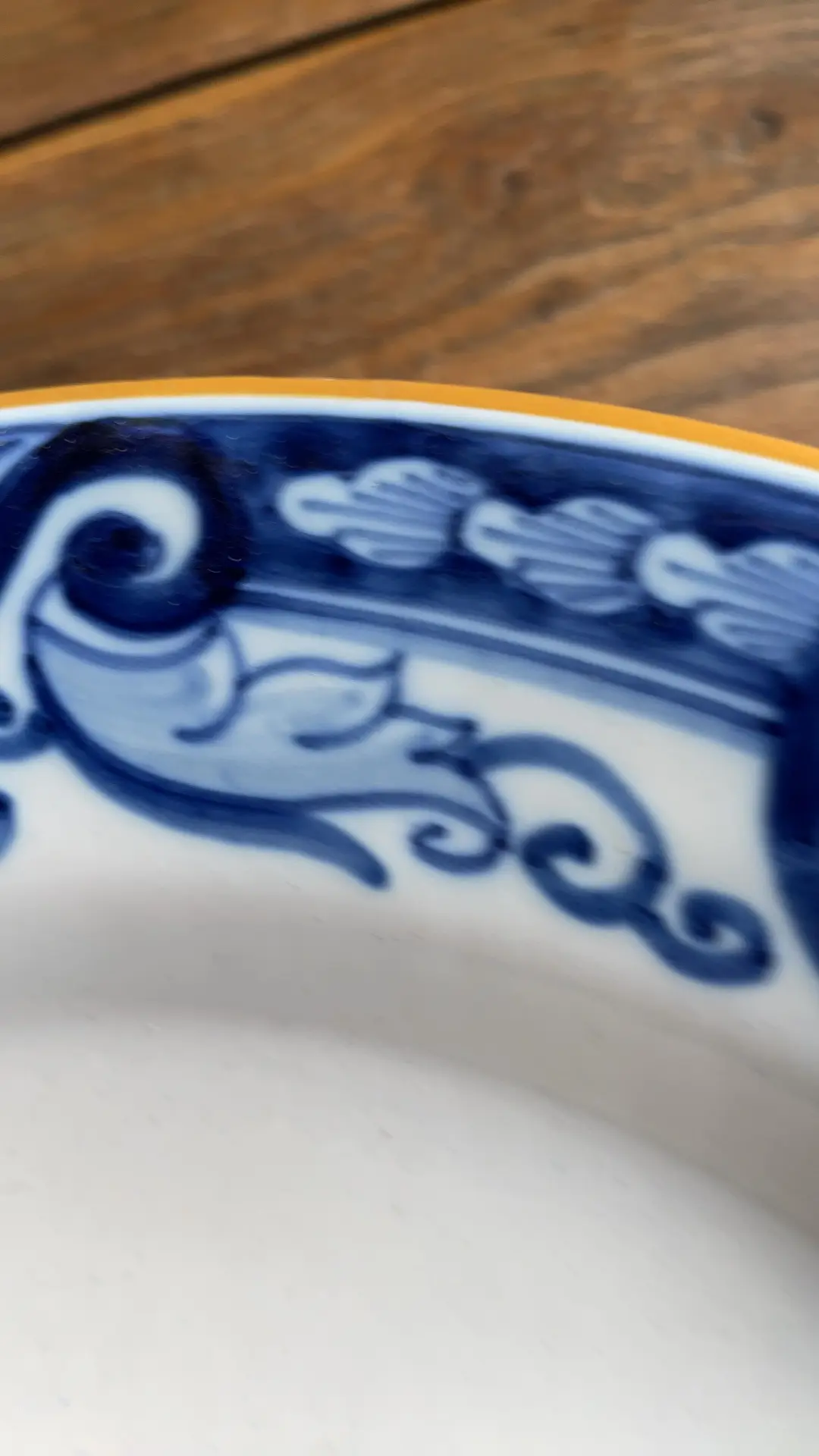
The surface is a smooth, high-gloss tin glaze, characteristic of Delftware, showcasing hand-painted cobalt blue decoration that exhibits some fine brushwork and slight variations in pigment depth. The central area is pristine white, contrasting with the detailed rim.
Recorded physical details
Based on its ceramic nature and size, it would likely feel moderately substantial, not overly heavy but with a solid ceramic heft, indicating robust earthenware construction.
Scarcity and surviving examples
Average · 4/10 estimated rarity
This is a qualitative collection score, not a measured survival count, market percentile or proof of authenticity.
What the photographs establish
Interpretation of the photographs and supplied context. This does not authenticate the object.
- The backstamp is a well-known and documented mark for Royal Tichelaar Makkum.
- The style of decoration and inscription is consistent with known products from the factory.
- The quality of the ceramic body and glaze is indicative of an established manufacturer.
Value and its basis
Estimate recorded: Feb 27, 2026
How we estimate value
- No documented comparable sales are shown for this estimate
- Condition, completeness & craftsmanship
- Demand assumptions may not reflect current transactions
- The range is an estimate, not an asking price or sale result
For informational purposes only, not a formal appraisal.
Related objects
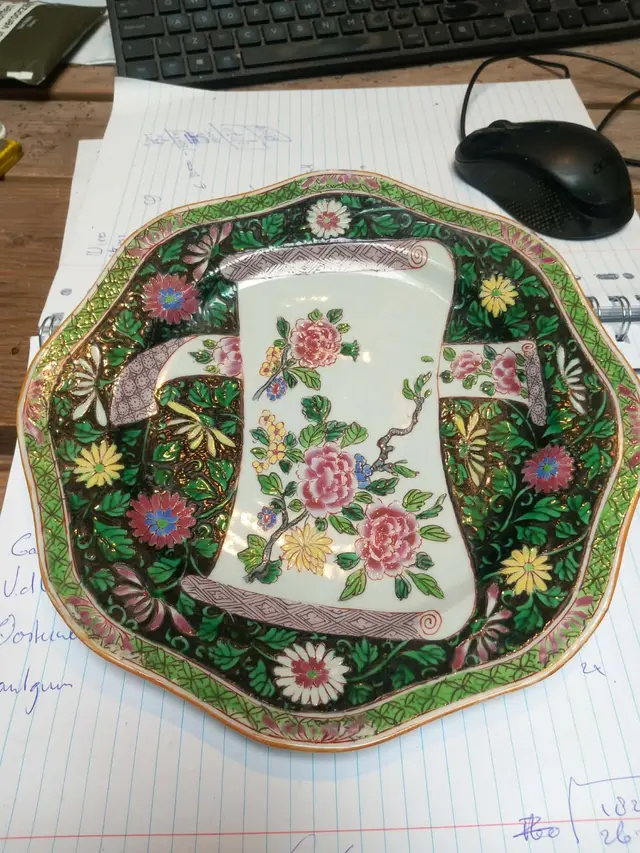
Chinese Famille Noire 'Scroll' Plate, Late Qing to Republic Period (1880-1920)
Same category
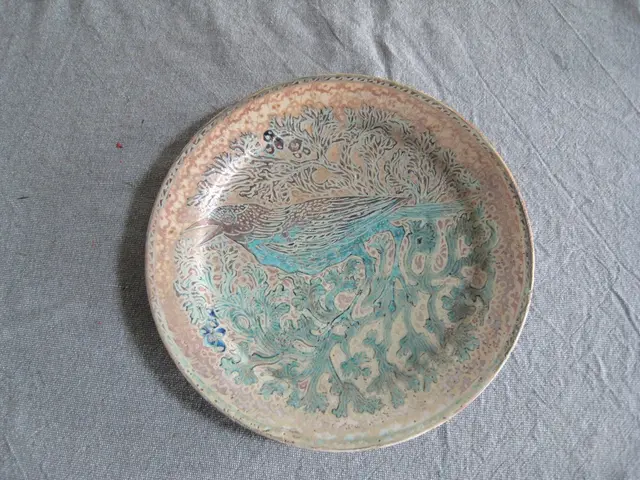
Hand-Decorated Ceramic Plate with Bird Motif
Same category
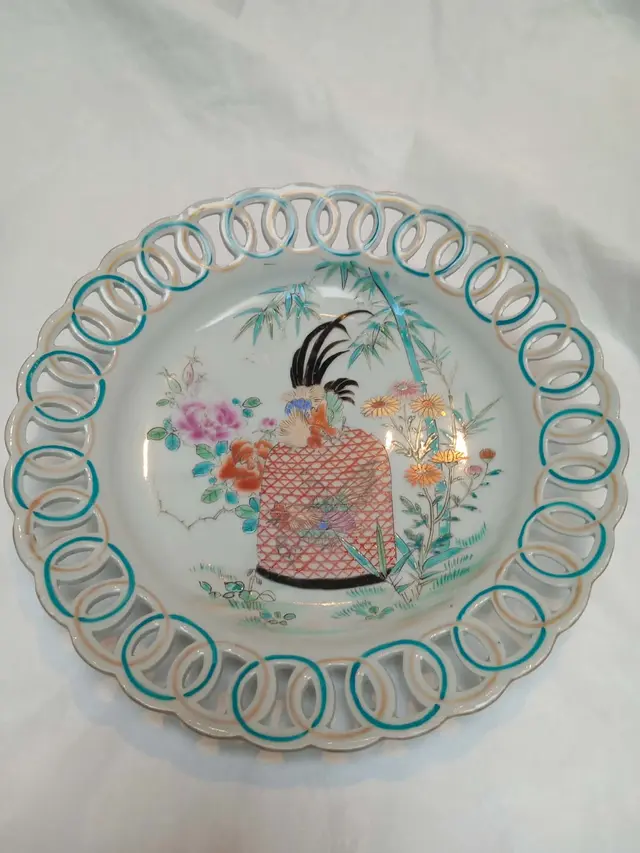
Meiji Period Arita Reticulated Porcelain Plate
Same category
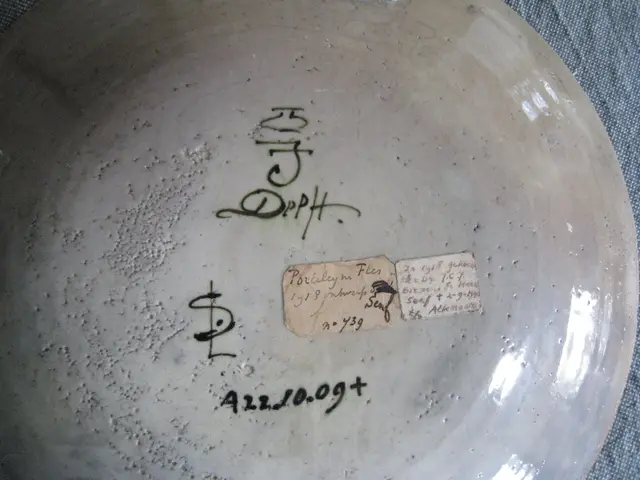
De Porceleyne Fles Delft Charger/Plate with Handwritten Marks
Same category
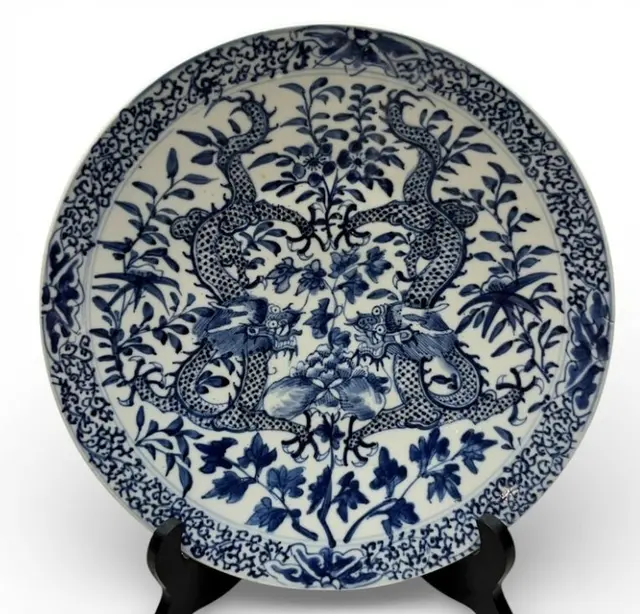
Chinese Blue and White Porcelain 'Dragon and Phoenix' Charger
Same category
Octagonal Blue and White Pear-Shaped Vase (Yuhuchunping)
Same category
Explore Ceramics & Pottery
Pottery, porcelain, stoneware, earthenware, and kiln-fired objects.
Ceramics & Pottery value and rarity guideShare this find
A place for your ceramics
Keep its photographs, maker’s marks and the story you know in one object record. Start with a photo.
Create an account for 10 free scans. No credit card needed.
Join the conversation