
De Porceleyne Fles Delft Charger/Plate with Handwritten Marks
Estimated value
$150 - $500Rarity
Uncommon(5/10)Category
Ceramics & PotteryBrand
De Porceleyne FlesEra
Early 20th Century (circa 1900-1930)Origin
NetherlandsArtist / Creator
Leon SenfVisual assessment
Photo analysis
Save to revisit in your watchlist. This does not add the object to your own collection.
De Porceleyne Fles Delft Charger/Plate
This appears to be the underside of a ceramic charger or plate, likely Delftware. What immediately catches my eye is the distinctive 'DP' monogram with a flourish and a single capital 'F' above it, a known mark for De Porceleyne Fles (The Porcelain Jar) factory in Delft, Netherlands. The hand-painted nature of the mark, rather than a transfer, suggests a period item from this factory. There are also several handwritten paper labels, one of which explicitly mentions 'Porceleyne Fles' and an 'n. 439', possibly an inventory or pattern number.
The glaze exhibits fine crazing and pinprick imperfections typical of traditional tin-glazed earthenware.
Related traditions
Chinese Porcelain
17th-18th Century
Delftware production in the Netherlands began in the 17th century, heavily influenced by the blue-and-white porcelain imported from China, particularly during the Ming Dynasty.
European Faience/Majolica
Renaissance to 19th Century
Tin-glazed earthenware, known as faience in France and majolica in Italy, was a widespread technique across Europe, allowing for vibrant painted decoration on an opaque white ground.
Use and ceremony
17th-18th Century
Delftware symbolized trade, innovation, and national pride in the Netherlands, offering a European equivalent to Asian imports.
Late 19th-Early 20th Century
During the Arts & Crafts movement and renewed interest in historical styles, Delftware became a symbol of traditional craftsmanship and national heritage, particularly for collectors.
Origins and context
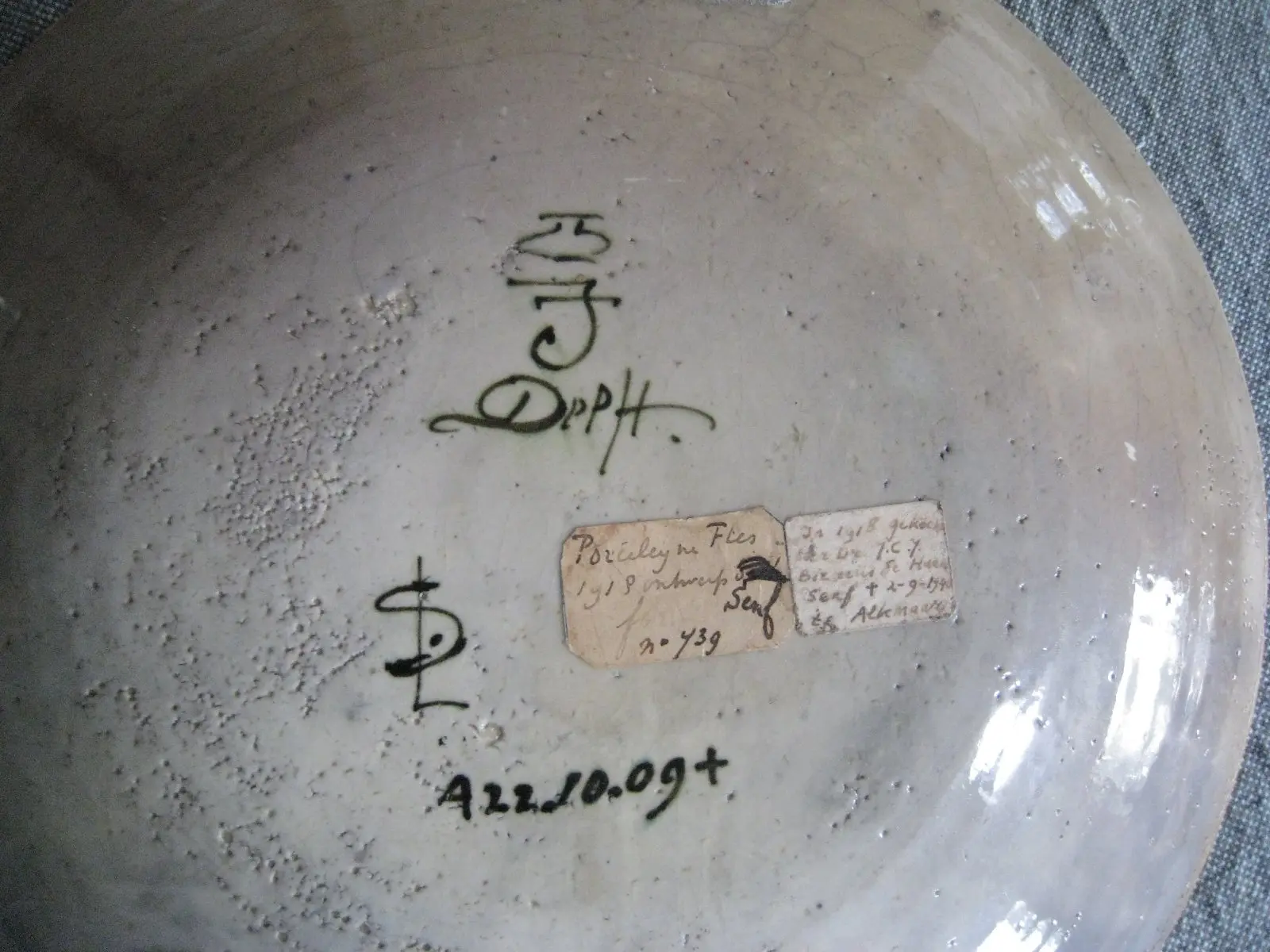
De Porceleyne Fles is one of the oldest and most respected Delftware factories, operating since 1653. During the late 19th and early 20th centuries, as the demand for traditional Delftware surged, the factory was revitalized under new leadership, focusing on high-quality decorative items that faithfully reproduced earlier styles or adapted them with an Art Nouveau influence. The marks visible here are consistent with the period following this revitalization. The paper labels, particularly one mentioning '1918' might refer to acquisition or documentation at that time, placing the item firmly within the early 20th century, a significant era for the factory's output.
Further details
Delftware was originally created in the Netherlands in the 17th century as a more affordable alternative to imported Chinese porcelain, often mimicking its blue and white aesthetics.
De Porceleyne Fles is the sole remaining Delftware factory from the 17th century that still produces hand-painted Delft Blue ceramics today.
Attribution and evidence
The visible factory mark is a strong indicator of the manufacturer, and the overall ceramic characteristics are consistent with Delftware of the perceived period. The paper labels provide additional contextual clues, leading to a high level of confidence in the identification of the maker and general era.
Identifying details
- 1Distinctive hand-painted 'DP' monogram with 'F' mark, consistent with De Porceleyne Fles Delft.
- 2Visible crazing and glaze imperfections typical of tin-glazed earthenware.
- 3Handwritten paper labels, one explicitly naming 'Porceleyne Fles' and mentioning '1918', suggesting early 20th-century documentation.
- 4The overall appearance and specific mark style align with known production from the factory's revitalization period.
Open questions
- •Image clarity for specific numerical details on the paper labels is limited, making precise dating or inventory verification difficult.
- •Without seeing the decorated face, assessing the specific pattern or artist at the factory level is speculative.
Photographs that would help
- Obtain clear, high-resolution images of the decorated face of the plate.
- Carefully photograph all paper labels and any other marks, preferably with a magnifying lens, to decipher all text.
- Measure the diameter of the plate for a more complete description.
- Examine the footrim for additional wear patterns or unglazed areas that can reveal body color and firing characteristics.
Terms in this record
- Delftware
- A type of tin-glazed earthenware, typically decorated in blue and white, produced in Delft, Netherlands, from the 17th century onwards, often mimicking Chinese porcelain.
- Crazing
- A network of fine cracks that appear on the surface of a ceramic glaze, often resulting from differences in the expansion and contraction rates between the clay body and the glaze during firing or over time.
- Tin-glazed earthenware
- Earthenware pottery covered with an opaque white glaze containing tin oxide, which provides a suitable surface for painted decoration.
- Pinpricks
- Small, pin-sized holes in the glaze surface of ceramics, often caused by gases escaping from the clay body during firing.
Wear and preservation
The surface shows clear crazing, which is a network of fine cracks in the glaze, common with older earthenware due to differing expansion rates of the body and glaze. There are also signs of surface grime and age-related discoloration, along with visible paper labels, suggesting minimal intervention or restoration.
Glaze and painted decoration
The underside presents a creamy, off-white tin glaze with visible crazing, hinting at the earthenware body beneath. Scattered pinprick imperfections and slight variations in glaze thickness are present, indicative of the hand-glazing process. There's also some rough, gritty texture in places, possibly from kiln residue or under-fired glaze.
Recorded physical details
Based on the typical construction of Delftware plates of this size, it would likely feel substantial but not overly heavy, consistent with tin-glazed earthenware.
Scarcity and surviving examples
Uncommon · 5/10 estimated rarity
This is a qualitative collection score, not a measured survival count, market percentile or proof of authenticity.
What the photographs establish
Interpretation of the photographs and supplied context. This does not authenticate the object.
- Delftware marks are well-documented, and the visible artist's mark ('DP' with 'F' above) appears consistent with known De Porceleyne Fles marks.
- The glaze characteristics, including crazing and pinpricks, are typical of antique tin-glazed earthenware.
- The presence of period paper labels further supports the age and potential provenance.
Value and its basis
Estimate recorded: Feb 27, 2026
How we estimate value
- No documented comparable sales are shown for this estimate
- Condition, completeness & craftsmanship
- Demand assumptions may not reflect current transactions
- The range is an estimate, not an asking price or sale result
For informational purposes only, not a formal appraisal.
Related objects
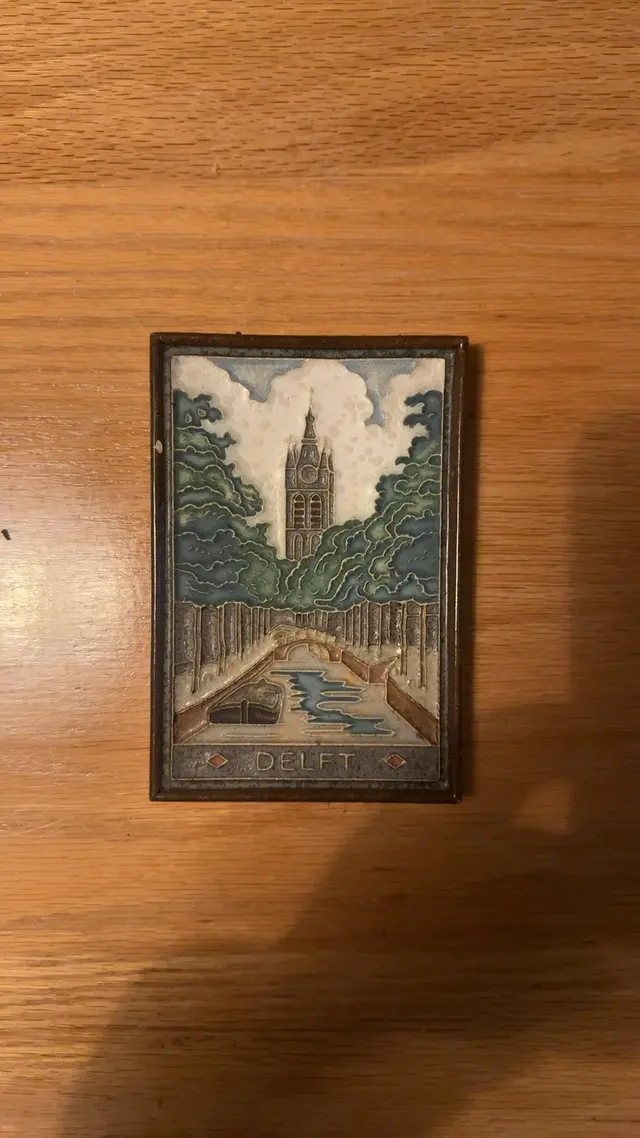
De Porceleyne Fles Cloisonné Tile of Oude Kerk, Delft
Same brand: De Porceleyne Fles
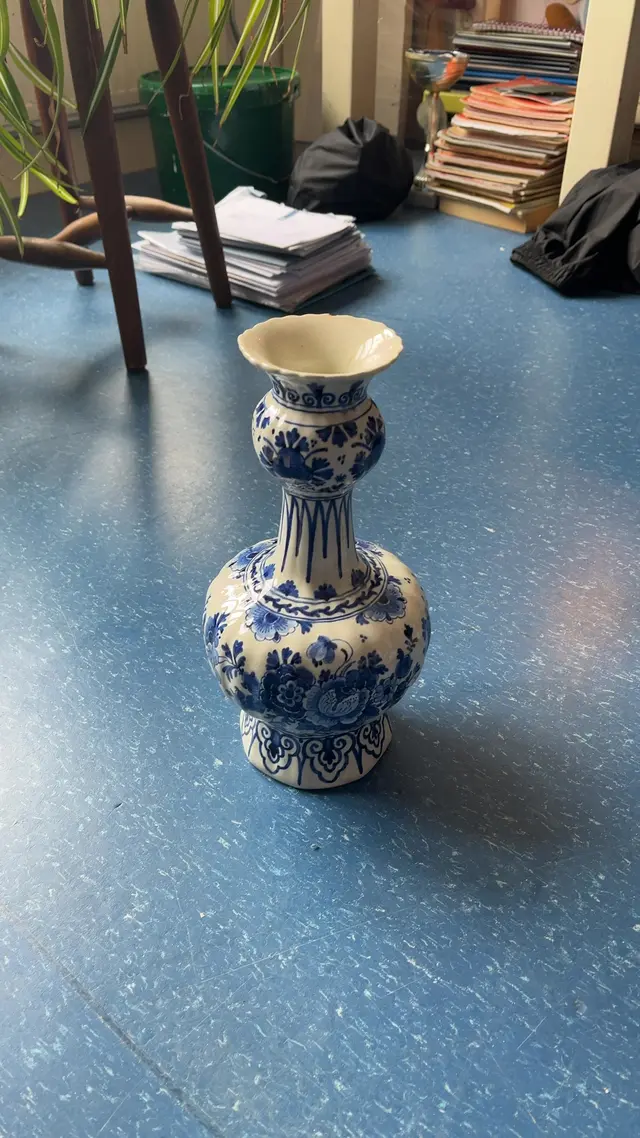
De Porceleyne Fles (Royal Delft) Garlic-Mouth Vase
Shared title details
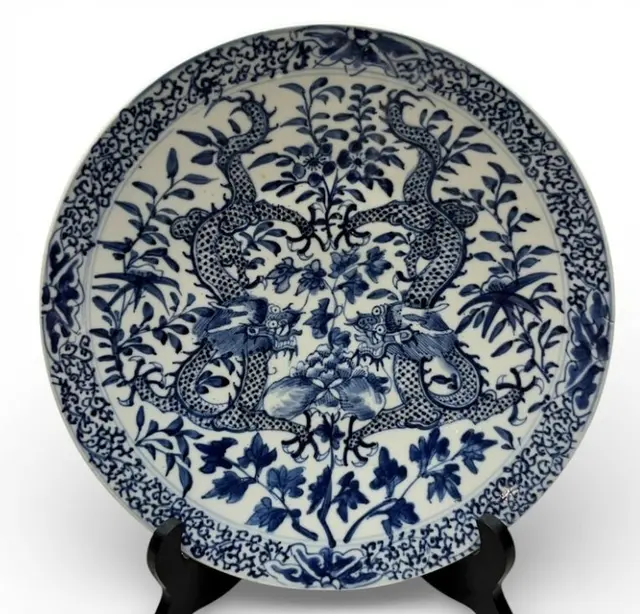
Chinese Blue and White Porcelain 'Dragon and Phoenix' Charger
Same category
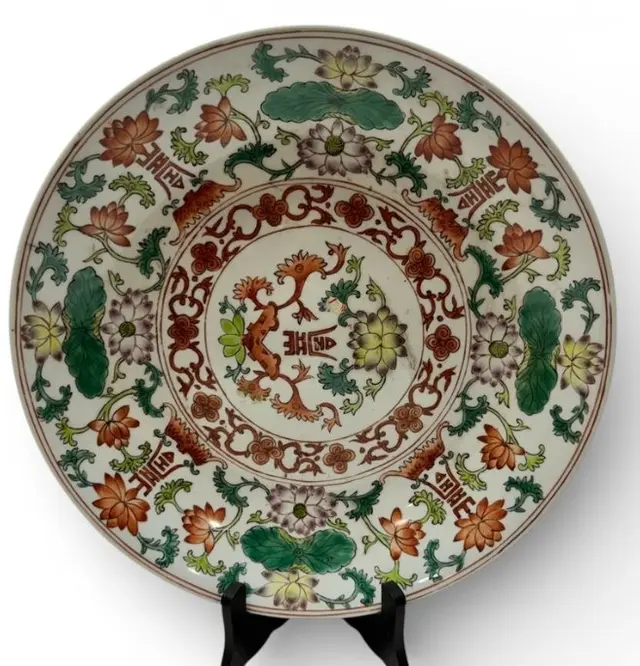
Chinese Wucai-style Famille Verte Porcelain Charger
Same category
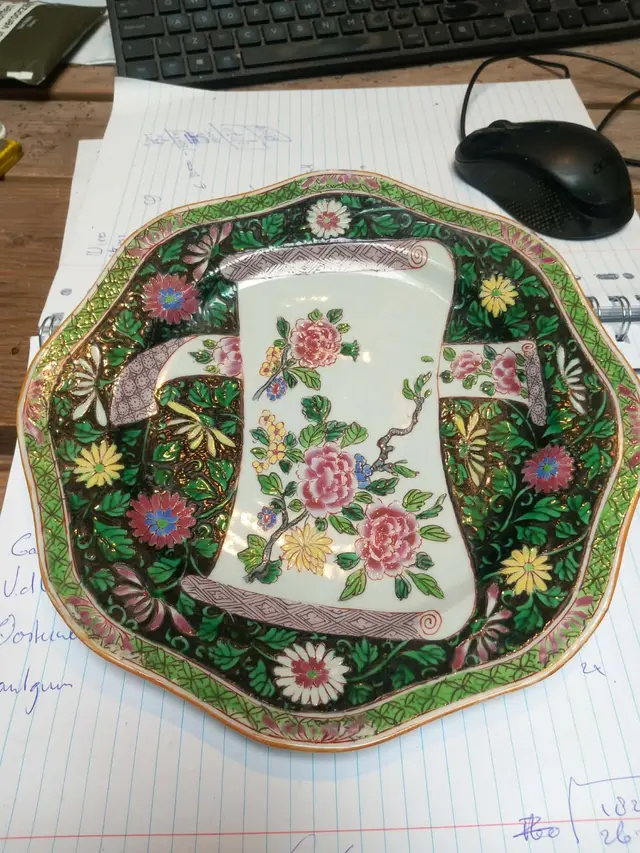
Chinese Famille Noire 'Scroll' Plate, Late Qing to Republic Period (1880-1920)
Same category
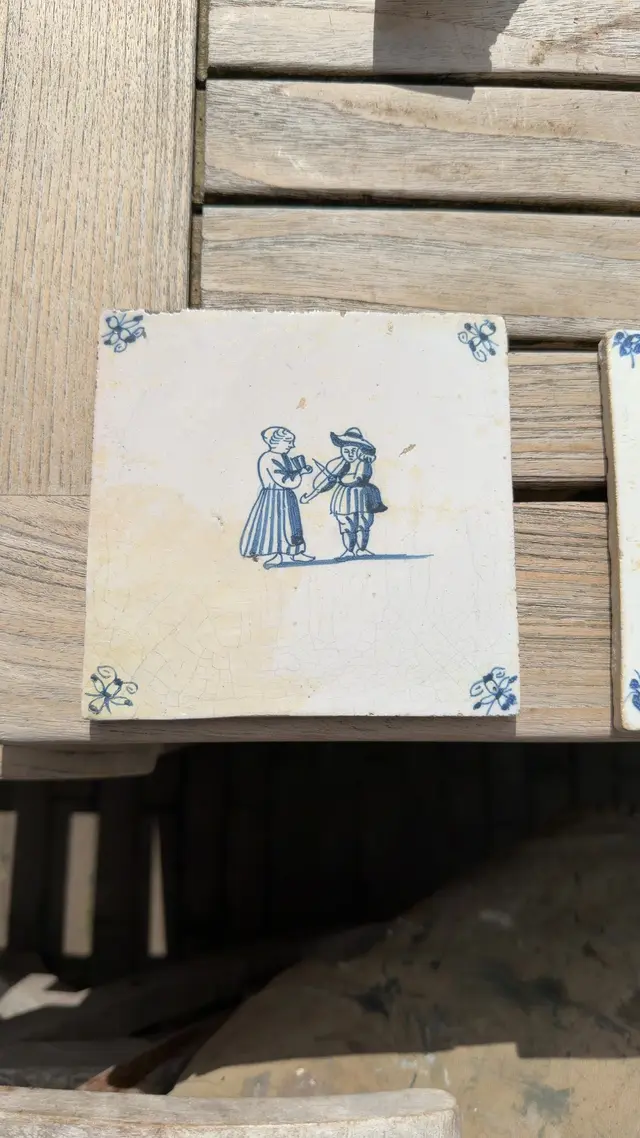
Delft Blue Tin-Glazed Earthenware Tile
Same category
Explore Ceramics & Pottery
Pottery, porcelain, stoneware, earthenware, and kiln-fired objects.
Ceramics & Pottery value and rarity guideShare this find
A place for your ceramics
Keep its photographs, maker’s marks and the story you know in one object record. Start with a photo.
Create an account for 10 free scans. No credit card needed.
Join the conversation