Curiosa
Sign InTry a scan

Japanese Meiji-Era Reticulated 'Dai Nippon' Arita Plate

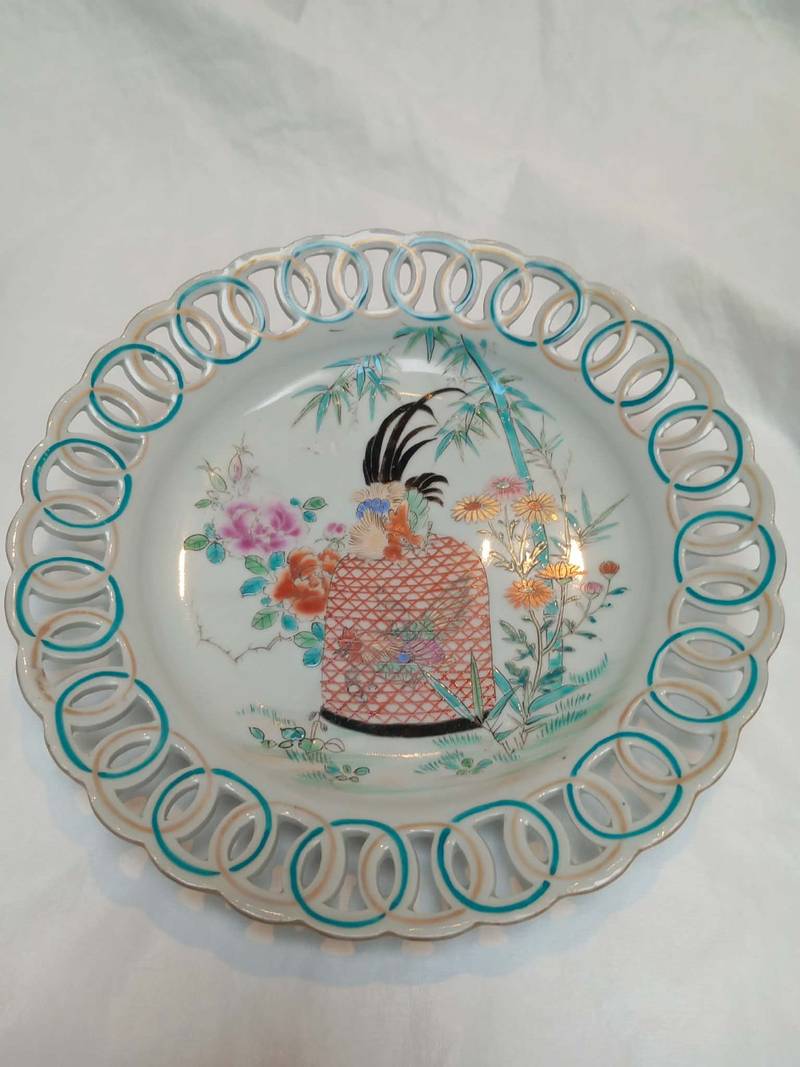
Vintage Japanese porcelain plate with pierced border, painted with roosters, bamboo, and flowers, marked Dai Nippon. - view 1
1/3

Estimated value

$45 - $85

Rarity

Average(4/10)

Era

Late Meiji Period (c. 1890-1910)

Origin

🇯🇵 Japan

Authenticity

Very High(90%)
7

KILN TO COLLECTION: JAPANESE MEIJI-ERA RETICULATED 'DAI NIPPON' ARITA PLATE

A Japanese export porcelain plate featuring a hand-cut reticulated (pierced) interlaced border. The central reserve is decorated in polychrome overglaze enamels and gilding, depicting a classic vignette of a rooster perched atop a bamboo woven basket, with a hen inside, surrounded by stylized chrysanthemums and bamboo. The reverse bears a six-character iron-red overglaze mark arranged in three columns. The rightmost column clearly reads '大日本' (Dai Nippon / Great Japan), while the central column indicates '肥前' (Hizen), the historical province encompassing the Arita kilns.

CLAY ACROSS CULTURES

Where This Object Echoes

Chinese Qing Dynasty19th Century

The reticulated rim technique was heavily utilized in Chinese Canton export wares of the same period, indicating a shared, competitive response to Western market demands.

Ritual & Ceremonial Use

  • Display in Victorian and Edwardian domestic interiors as a marker of cosmopolitan taste and the 'Aesthetic Movement'.

Meaning Through Time

Meiji Period

An assertion of emerging modern Japanese national identity ('Dai Nippon') on the global trade stage.

Mid-20th Century to Present

A recognizable collectible representing the historical convergence of Eastern craft and Western consumer demand.

FROM KILN TO COLLECTOR

During the Meiji period (1868-1912), the Japanese ceramic industry shifted heavily toward export to supply a booming Western appetite for 'Japonisme'. The use of the 'Dai Nippon' (Great Japan) mark became prevalent during this era as an expression of national pride and an identifier on ...
During the Meiji period (1868-1912), the Japanese ceramic industry shifted heavily toward export to supply a booming Western appetite for 'Japonisme'. The use of the 'Dai Nippon' (Great Japan) mark became prevalent during this era as an expression of national pride and an identifier on international markets. This practice largely ceased after the implementation of Western tariff regulations (such as the US McKinley Tariff Act of 1890, though old stock and some continuing lines persisted) began dictating that imported goods be marked in English with their country of origin. This piece perfectly encapsulates the aesthetic tailored for the late 19th and early 20th-century European and American markets.

KILN-SIDE SECRETS

1

In Japanese Shinto mythology, the rooster is a sacred bird associated with Amaterasu, the sun goddess, as its morning call was said to have lured her out of the heavenly rock cave to return light to the world.

2

Creating the reticulated 'pie-crust' rims required immense skill; artisans had to pierce the porcelain body while it was in a leather-hard state before firing, risking the delicate lattice collapsing in the high heat of the kiln.

HOW SCARCE IS IT?

Average55-70%
CommonLegendary

Typical antique shop fare. Requires some searching but regularly available. This is where most genuine antiques fall.

Typical Characteristics

  • Standard antique shop items
  • Regularly available
  • Moderate collector interest

Confidence Factors

  • The presence of kiln grit on the foot rim and the specific bluish pooling of the clear glaze are difficult-to-fake hallmarks of period production.
  • The 'Dai Nippon' marking is era-correct and generally not a target for modern reproduction, as the piece's value does not warrant sophisticated forgery.
How does authenticity detection work?

CERAMICIST'S ASSESSMENT

Asian Art Specialist

East Asian Art Expert

The combination of the era-specific 'Dai Nippon' mark, the regional 'Hizen' identifier, the motif, and the manufacturing characteristics (glaze pooling, foot rim) provides a highly consistent and verifiable profile for late Meiji export ceramics.

KEY EVIDENCE

  • 1Red overglaze '大日本' (Dai Nippon) and '肥前' (Hizen) marks on the reverse.
  • 2Hand-cut reticulated border characteristic of late 19th/early 20th-century export taste.
  • 3Slight bluish-green tint to the pooled glaze on the base, typical of period kilns.
  • 4Palette of iron red, yellow, pink, and green enamels indicative of the Arita region.

WHAT WOULD IMPROVE CERTAINTY

  • Use a magnifying loop to examine the black outlines (kotsugaki) of the rooster for hand-painted fluidity under the enamels.
  • A macro photograph of the left-most column of characters on the base could yield the specific artisan or workshop name.

CONDITION & GRADE

Condition

Very good antique condition. The overglaze enamels show minor rubbing and surface wear consistent with age, particularly on the gilt elements. The unglazed foot rim exhibits typical firing grit and mild shelf wear. No obtrusive chips or cracks are visible in the delicate pierced lattice.

Surface

The piece exhibits a smooth, high-fired porcelain body. The clear glaze on the reverse shows slight pooling with a faint bluish-green tint characteristic of reductive firing in traditional Japanese kilns. The obverse features tactile, slightly raised overglaze enamels in typical Arita/Imari regional palettes, with fine black outlines (kotsugaki) and mild gilding.

Weight & feel

Standard density for high-fired porcelain of this diameter; the reticulated rim makes it marginally lighter than a solid plate of identical dimensions, favoring display over heavy utilitarian use.

CERAMICS MARKET VALUE

$45 - $85

Updated: Apr 2, 2026

Who buys this

Collectors of Japanese export ceramics, designers furnishing traditional or eclectic interiors, and buyers interested in late Meiji 'Japonisme' artifacts.

What increases value

  • The complexity and condition of the reticulated rim (breakage severely lowers value)
  • Vibrancy and preservation of the overglaze enamels, particularly the gilt highlights
  • The specific 'Dai Nippon' mark, which provides definitive historical dating framing

What lowers value

  • Any hairline cracks in the delicate pierced lattice
  • General market softening for common export ceramics compared to highly pedigreed domestic Japanese market items

What makes top-tier examples

  • Exceptional painting detail extending beyond the central reserve
  • Identification of a highly regarded specific workshop (e.g., Koransha, Fukagawa) rather than a generic provincial maker

Grade & condition

Condition of the pierced rim, intact enamel/gilt, and absence of firing cracks or modern repairs.

Rarity & demand

AverageModerate demandModerate liquidity
Browse similar ceramics objects

For informational purposes only, not a formal appraisal.

CONTEXT ANALYSIS

How your provided context compares with Curiosa.com scanner findings.

What Aligned

  • User stated 'japan' - The 'Dai Nippon' and 'Hizen' marks definitively confirm Japanese origin.
  • User stated '1900' - The visual evidence and 'Dai Nippon' mark perfectly align with the late Meiji era (circa 1890-1910).
  • User stated 'Minor wear' - Supported by the visual assessment of the enamels and foot rim.

FROM THE CABINET OF

BR

bruinsma

The Connoisseur55 items

COMMENTS

No comments yet. Be the first to share your thoughts!

Sign in to leave a comment

ABOUT CERAMICS & POTTERY

Pottery, porcelain, stoneware, earthenware, and kiln-fired objects.

Ceramics & Pottery value and rarity guide

SHARE THIS CURIOSITY

Have your own curiosities to discover?

Scan Your Curiosity