
Photomechanical Reproduction of Nikolai Astrup Woodcut
Estimated value
$10 - $30Rarity
Common(2/10)Category
Prints & PostersEra
Mid to late 20th Century (Reproduction of a 1900-1928 original)Origin
NorwayArtist / Creator
Nikolai AstrupVisual assessment
Photo analysis
Save to revisit in your watchlist. This does not add the object to your own collection.
Photomechanical Reproduction of Nikolai Astrup Woodcut
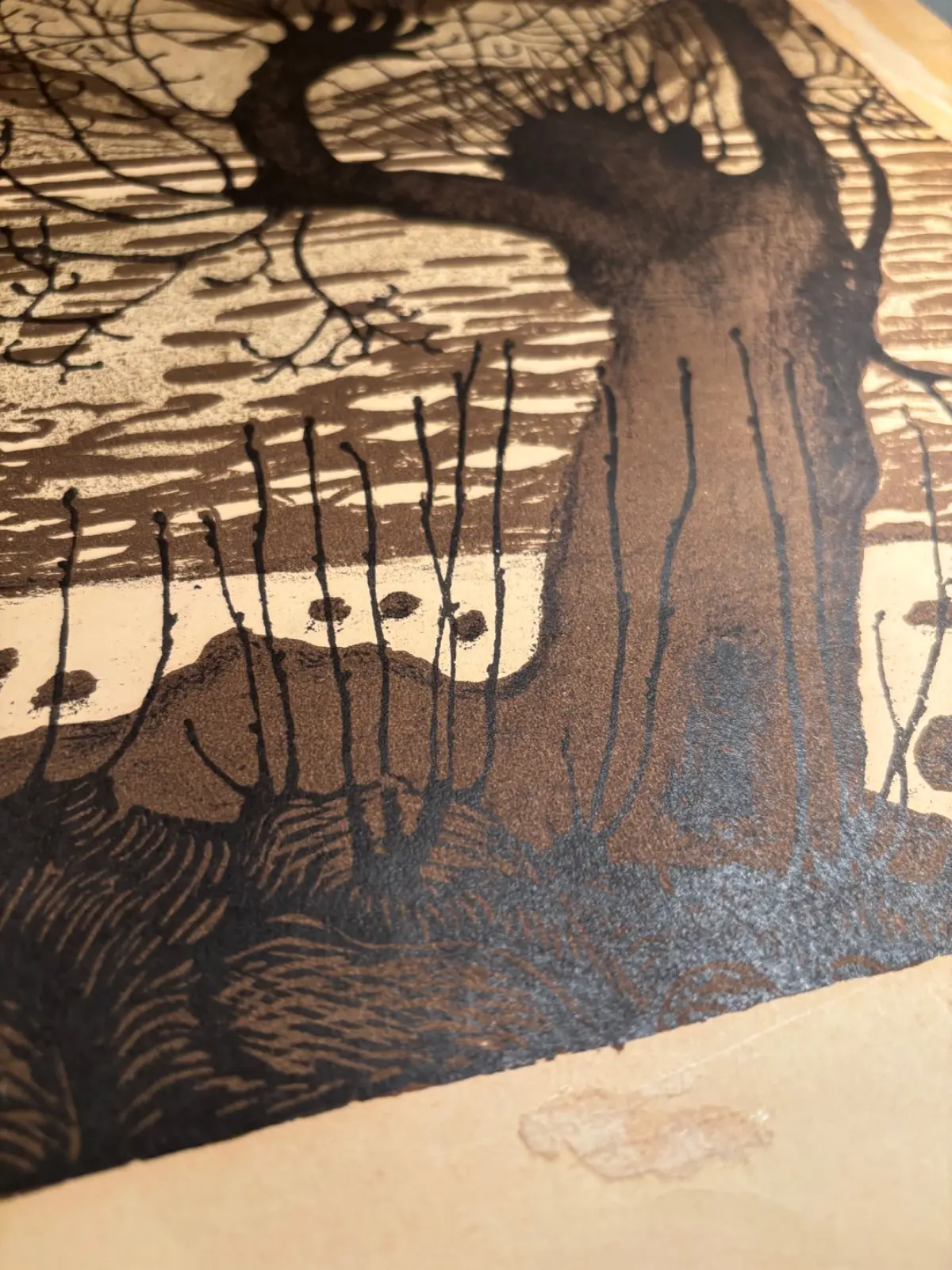
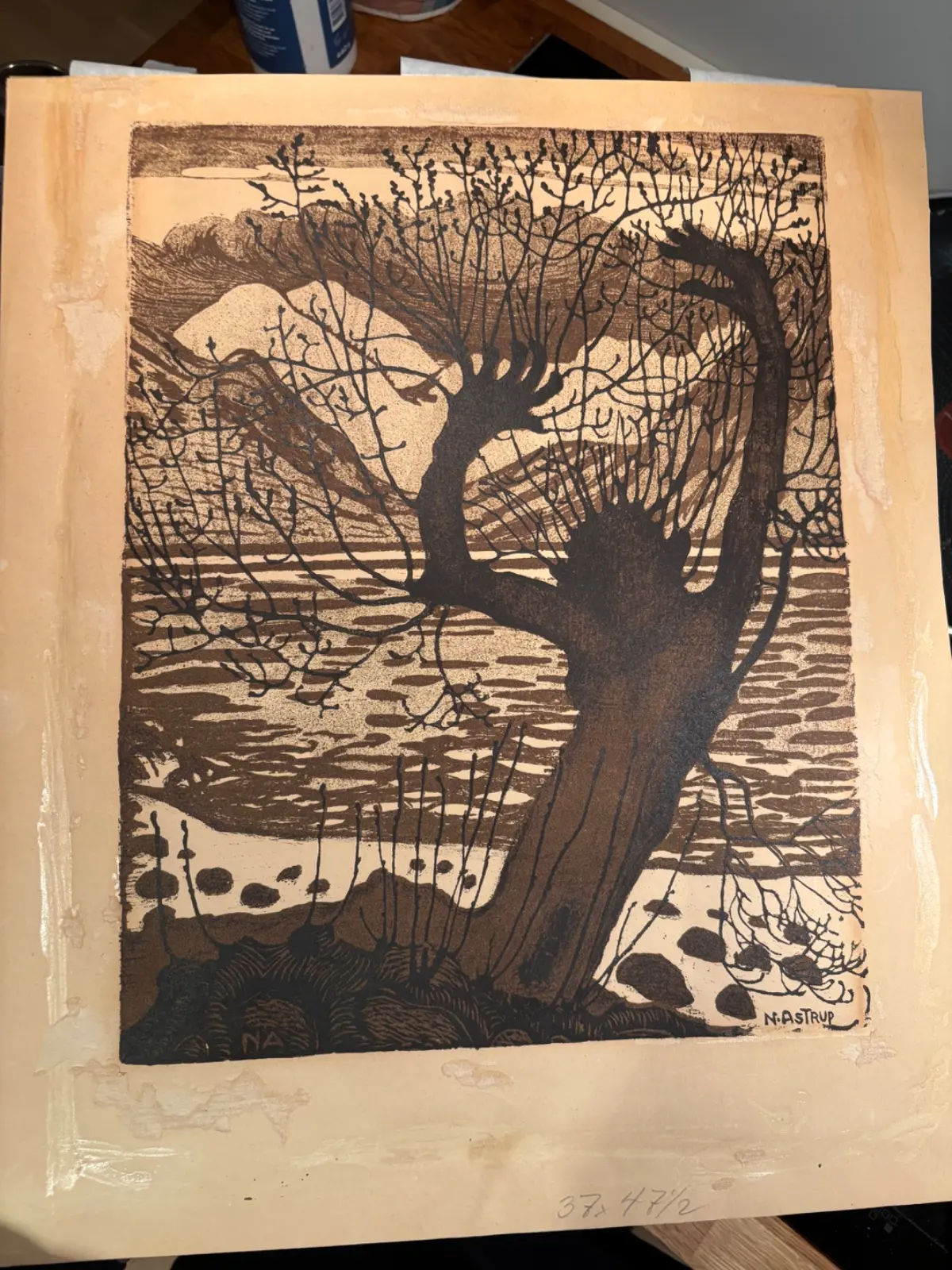
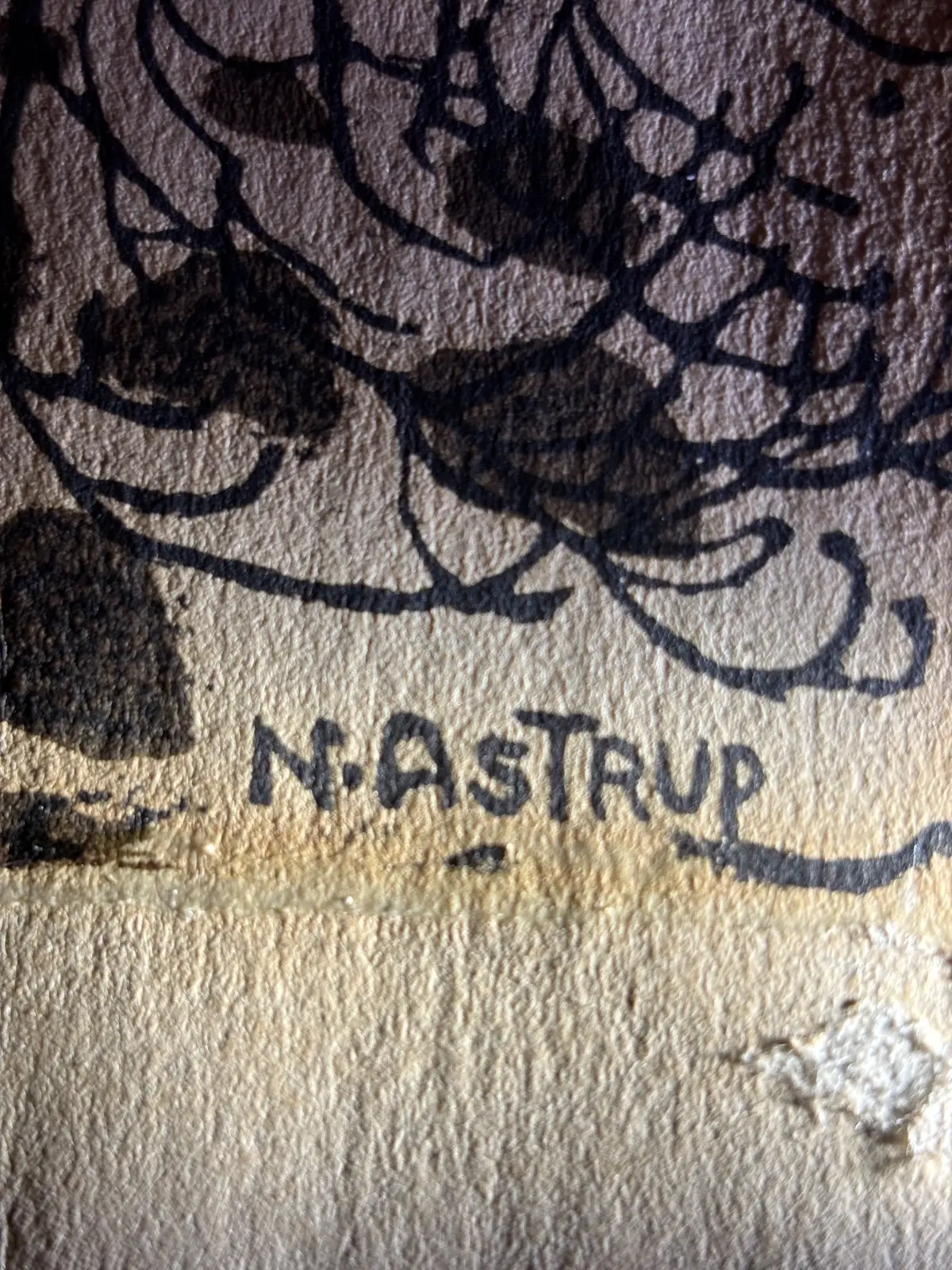
This is a photomechanical reproduction of a landscape woodcut by Norwegian artist Nikolai Astrup, likely depicting his well-known pollarded willow ('seljekall') motif. Close-up examination (Image 2) reveals a distinct, regular halftone dot matrix within the lighter brown ink areas, confirming this is an offset lithographic reproduction rather than a hand-pulled relief print. The signature 'N. ASTRUP' in the lower right is printed within the image matrix (plate-signed) rather than applied by hand in pencil. The paper support is mounted or previously mounted, with handwritten dimensions '37x 47 1/2' in pencil along the bottom edge.
Related traditions
Japanese Ukiyo-e
Edo Period (1603-1867)
Astrup was heavily influenced by Japanese woodblock prints, adopting their flattened perspectives and strong compositional outlines, which he then applied to traditional Norwegian landscapes.
Origins and context
Nikolai Astrup (1880–1928) was a central figure in Norwegian neo-romanticism, known for deeply atmospheric depictions of his native Jølster. His original woodcuts were highly experimental; he rarely pulled identical editions, instead heavily hand-coloring each impression with oils or watercolors, effectively blurring the boundary between printmaking and painting. Because his original graphic works are exceptionally scarce and often achieve prices exceeding $50,000 at Norwegian auction houses like Blomqvist, his most famous motifs were widely reproduced as commercial offset prints in the mid-to-late 20th century for the domestic decorative market.
Attribution and evidence
The macro photograph provided (Image 2) clearly shows the mechanical dot structure in the ink, which is absolute proof of photomechanical reproduction rather than traditional relief printmaking.
Wear and preservation
The sheet exhibits severe margin damage, characterized by extensive skinning, delamination, and adhesive residue along all four outer edges, likely from forceful removal from a previous backing board or mat. The central printed image remains mostly intact, though the structural integrity of the border is highly compromised.
Paper and printing
The paper surface exhibits a flat, uniform ink layer devoid of the physical impression (embossing or debossing) characteristic of relief printing. A commercial halftone dot structure is visible under magnification in the tonal areas.
Scarcity and surviving examples
Common · 2/10 estimated rarity
This is a qualitative collection score, not a measured survival count, market percentile or proof of authenticity.
What the photographs establish
Interpretation of the photographs and supplied context. This does not authenticate the object.
What photo analysis can and cannot establishValue and its basis
Estimate recorded: Oct 11, 2026
How we estimate value
- No documented comparable sales are shown for this estimate
- Condition, completeness & craftsmanship
- Demand assumptions may not reflect current transactions
- The range is an estimate, not an asking price or sale result
For informational purposes only, not a formal appraisal.
The collector’s account
Supporting details
- Artist identification: Motif and printed signature correctly point to Nikolai Astrup.
- Origin: The artwork originates from Norway, representing the Norwegian landscape.
Where the account differs
- Medium: User questioned if it was a handmade wood print; visual evidence (halftone dots) confirms it is a photomechanical reproduction.
- Time Period: While the original image dates to 1900-1928, this specific offset reproduction was likely manufactured decades later.
- Condition: User stated 'minor wear', but the margins show severe skinning and paper loss.
Related objects
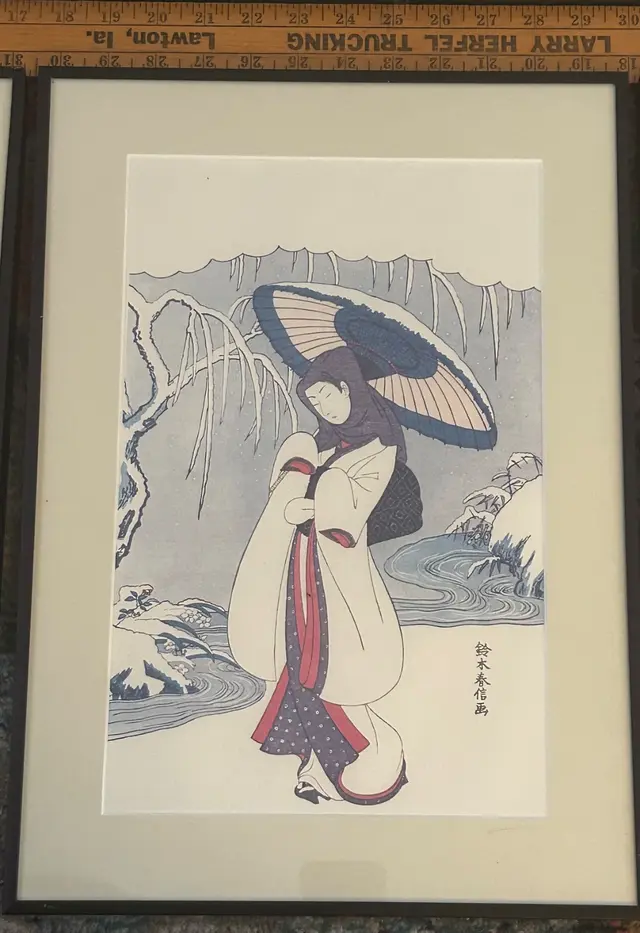
Reproduction Woodblock Print after Suzuki Harunobu: Woman Walking in the Snow
Same category
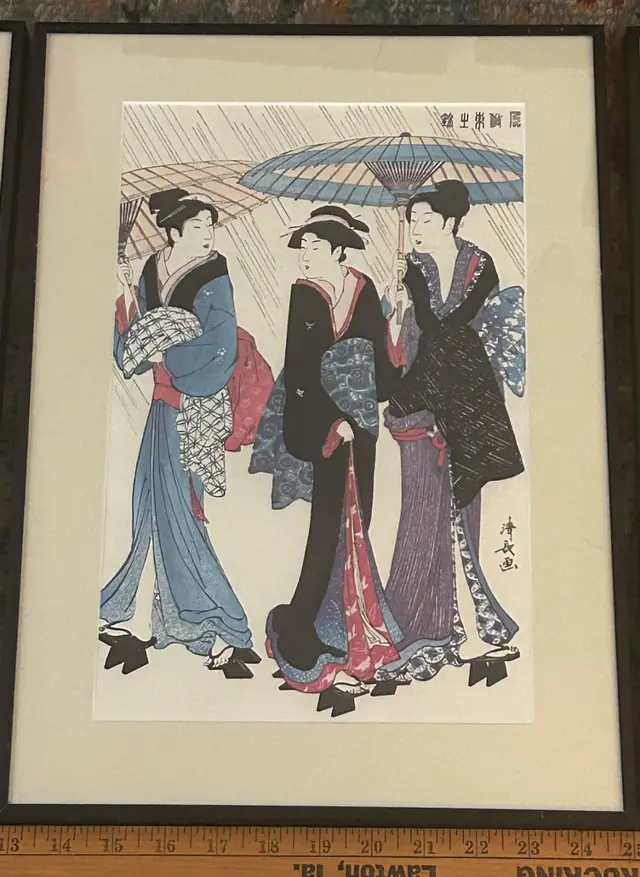
Showa-Era Woodblock Reproduction: Right Panel of 'Sudden Shower at the Mimeguri Shrine' by Torii Kiyonaga
Same category
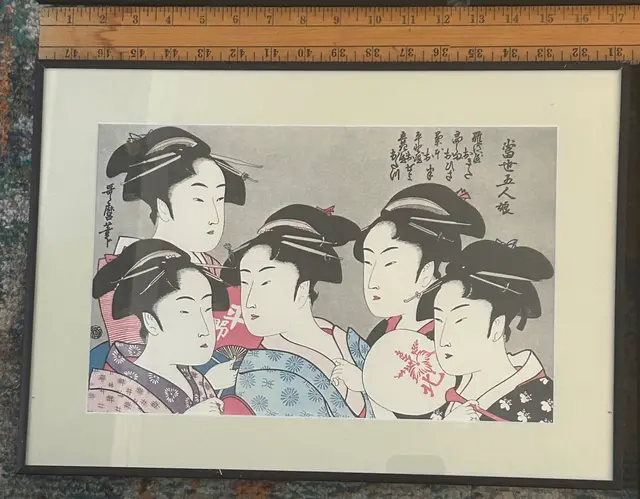
Offset Lithograph Reproduction of Kitagawa Utamaro's 'Tosei Gonin Musume'
Same category

Złota Tarka Old Jazz Meeting 1982 Poster by Ryszard Górecki
Same category
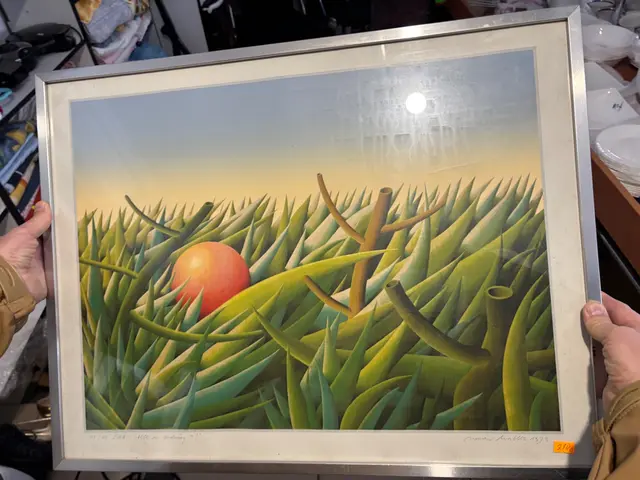
Norman Skaller - 'After An Awakening' Serigraph
Same category
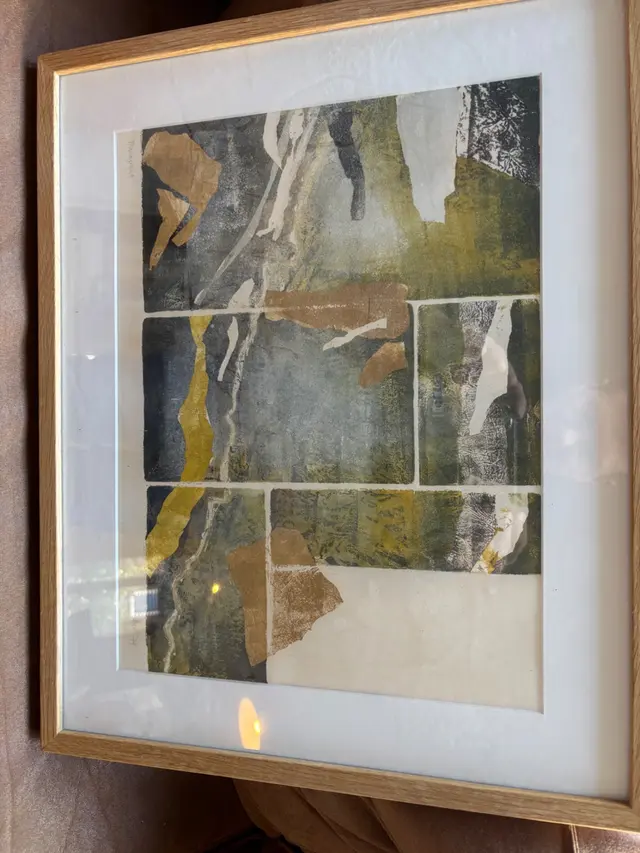
Abstract Mixed Media Print ('Monoprint')
Same category
Explore Prints & Posters
Vintage prints, posters, advertising signs, and graphic art.
Prints & Posters value and rarity guideShare this find
A place for your prints
Keep its photographs, maker’s marks and the story you know in one object record. Start with a photo.
Create an account for 10 free scans. No credit card needed.
Join the conversation
Recognise a detail or have a question? Add what you know and cite your source. Suggested corrections stay in the discussion for the owner or a moderator to review.
Sign in to leave a comment
Sign in