
Manner of Rembrandt van Rijn - A Young Woman Sleeping, Pen and Brush in Bistre (Ink Wash Drawing)
Estimated value
$50 - $250Rarity
Ordinary(3/10)Category
PaintingsEra
Mid-20th Century (reproduction or study)Origin
NetherlandsArtist / Creator
Rembrandt van RijnVisual assessment
Photo analysis
Save to revisit in your watchlist. This does not add the object to your own collection.
Manner of Rembrandt van Rijn - A
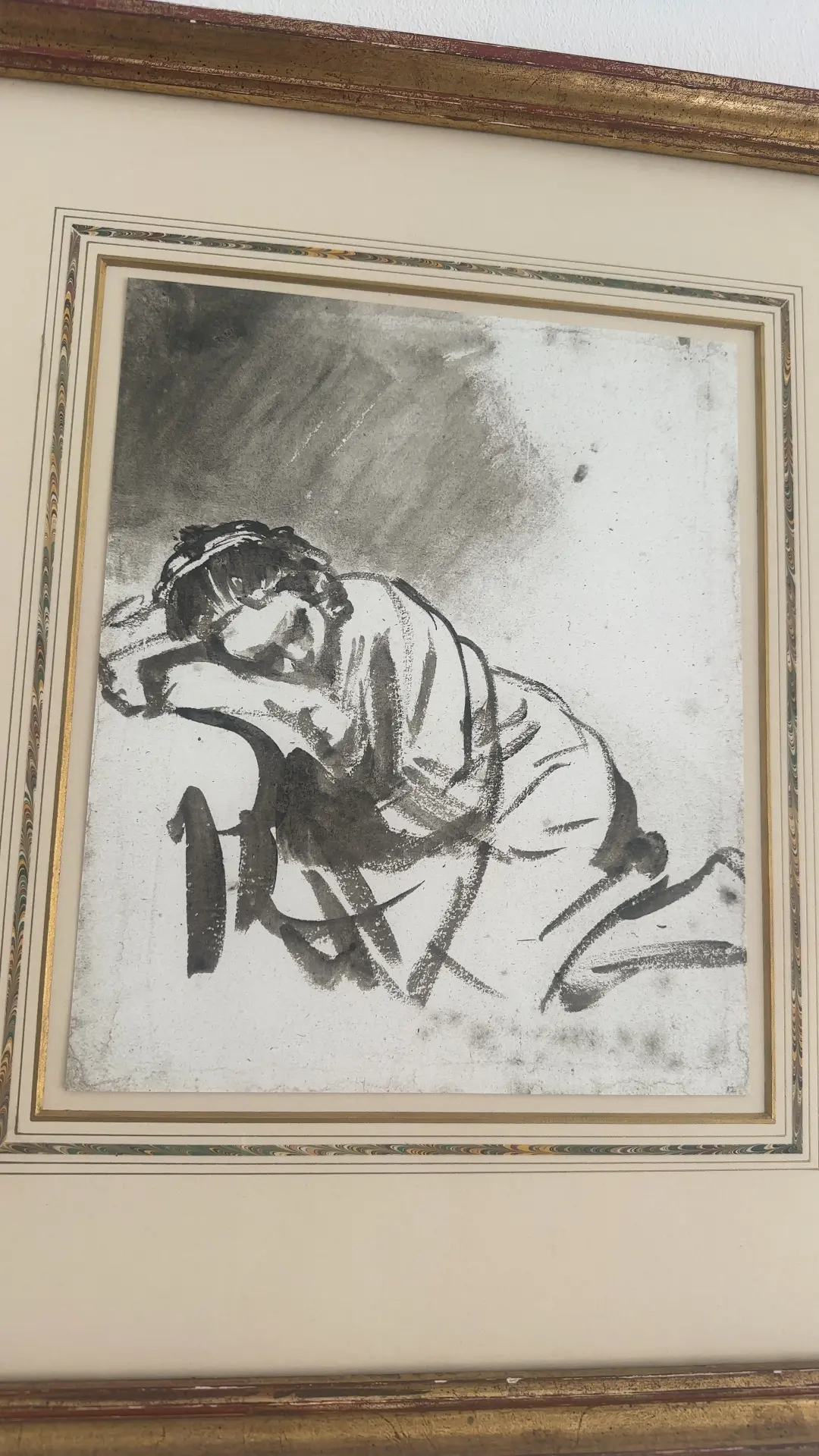
This monochromatic work on paper is a stylistic emulation of the famous 1654 drawing 'A Young Woman Sleeping' (Hendrickje Stoffels) housed in the British Museum. The composition features a woman leaning forward on her arms in a resting pose. Executed with a broad quill or reed pen and heavy ink wash, the piece attempts to replicate the master's signature economy of line and dramatic tonal contrast. The support appears to be a heavy, slightly textured paper, possibly of 19th or early 20th-century manufacture, presented in a decorative frame with a marbled paper inlay mat, common in mid-20th-century framing practices.
Related traditions
Dutch Golden Age
17th Century
The trend toward naturalistic, domestic intimacy over heroic or religious subjects.
Use and ceremony
1950s
A symbol of cultural literacy and 'Old World' sophistication in domestic interior design.
Origins and context
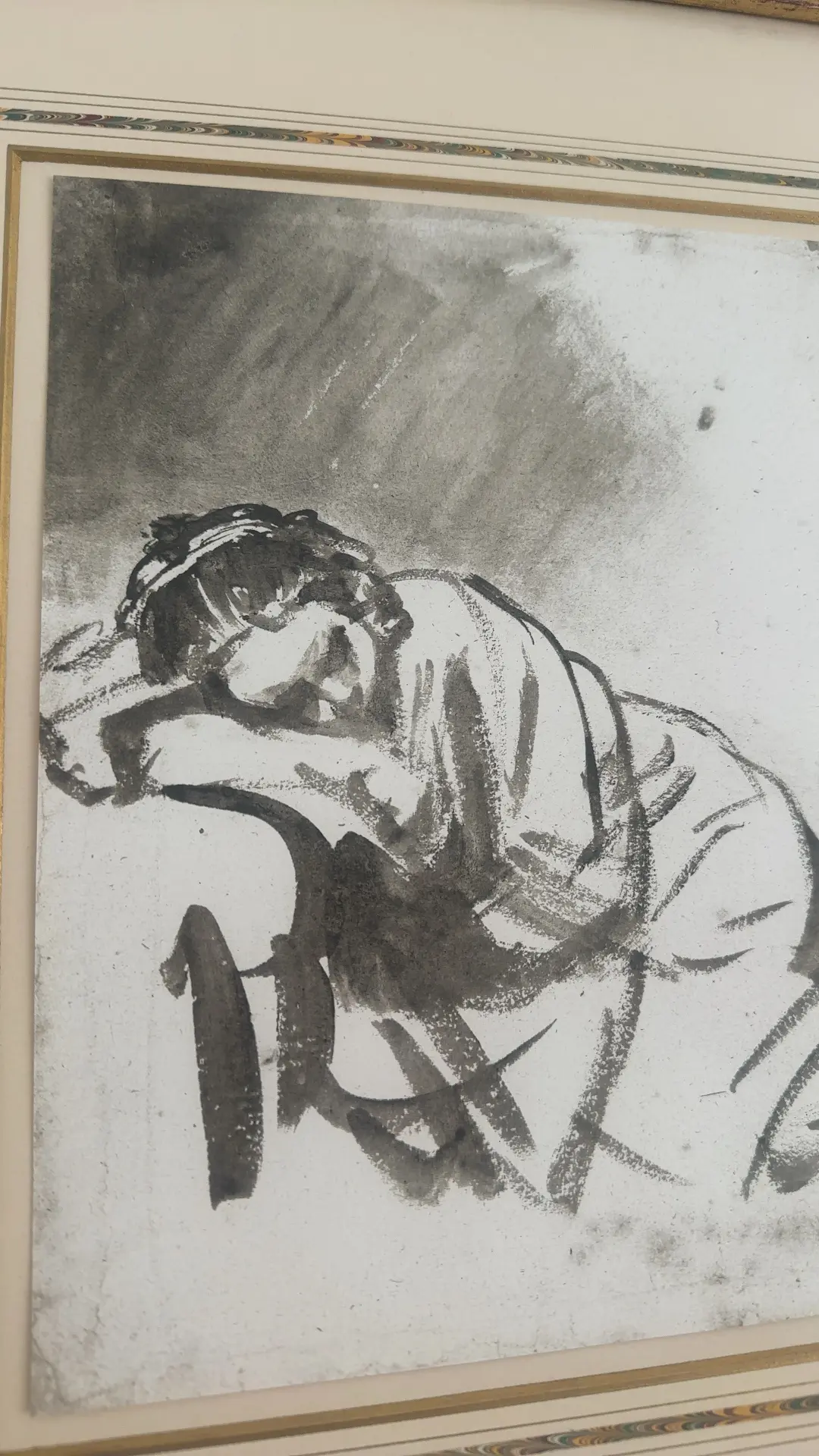
The original drawing by Rembrandt van Rijn, dated circa 1654, represents the height of his mature period where he moved away from detailed cross-hatching toward bold, gestural ink washes. Because of the high status of this specific work in art history, it has been a standard subject for student copies and professional reproductions for over two centuries. The framing and matting style, specifically the narrow marbled paper border within the mat, suggests this particular object was prepared for display between 1940 and 1970, a period when Rembrandt's drawings were heavily popularized through high-quality facsimile prints and study copies.
Further details
The original 1654 drawing was likely a study of Hendrickje Stoffels, Rembrandt's longtime companion and model after the death of his wife Saskia.
Bistre ink, frequently used in these styles, is historically made from the soot of charred wood, typically beechwood, mixed with water and gum arabic.
Attribution and evidence
High confidence in the identification of the subject matter and the assessment that this is a later study or reproduction, given the original's permanent museum status.
Identifying details
- 1Compositional match to 'A Young Woman Sleeping' (c. 1654) by Rembrandt.
- 2Broad, static ink lines suggest a hand following an existing image rather than creating from life.
- 3Presence of foxing indicates some age, but not the 350+ years required for a period original.
- 4Framing assembly—specifically the marbled matting—points to a 20th-century decorative provenance.
Open questions
- •The artwork is a known composition of one of the world's most famous drawings; original is documented in a museum collection.
- •Lack of 'crustiness' or specific tonal warmth typical of aged iron-gall or period bistre ink.
Photographs that would help
- Remove from frame to inspect paper for watermarks or manufacturer stamps.
- Examine under 10x magnification to determine if the 'drawing' is a high-quality collotype or facsimile print.
- Check the reverse of the backing board for gallery or framer labels.
Terms in this record
- Bistre
- A brown pigment made from wood soot, used as a wash in Old Master drawings.
- Foxing
- Age-related brown spots on paper caused by mold or iron oxidation.
- Manner of
- A work executed in the style of a master but not by their hand, often from a later period.
Wear and preservation
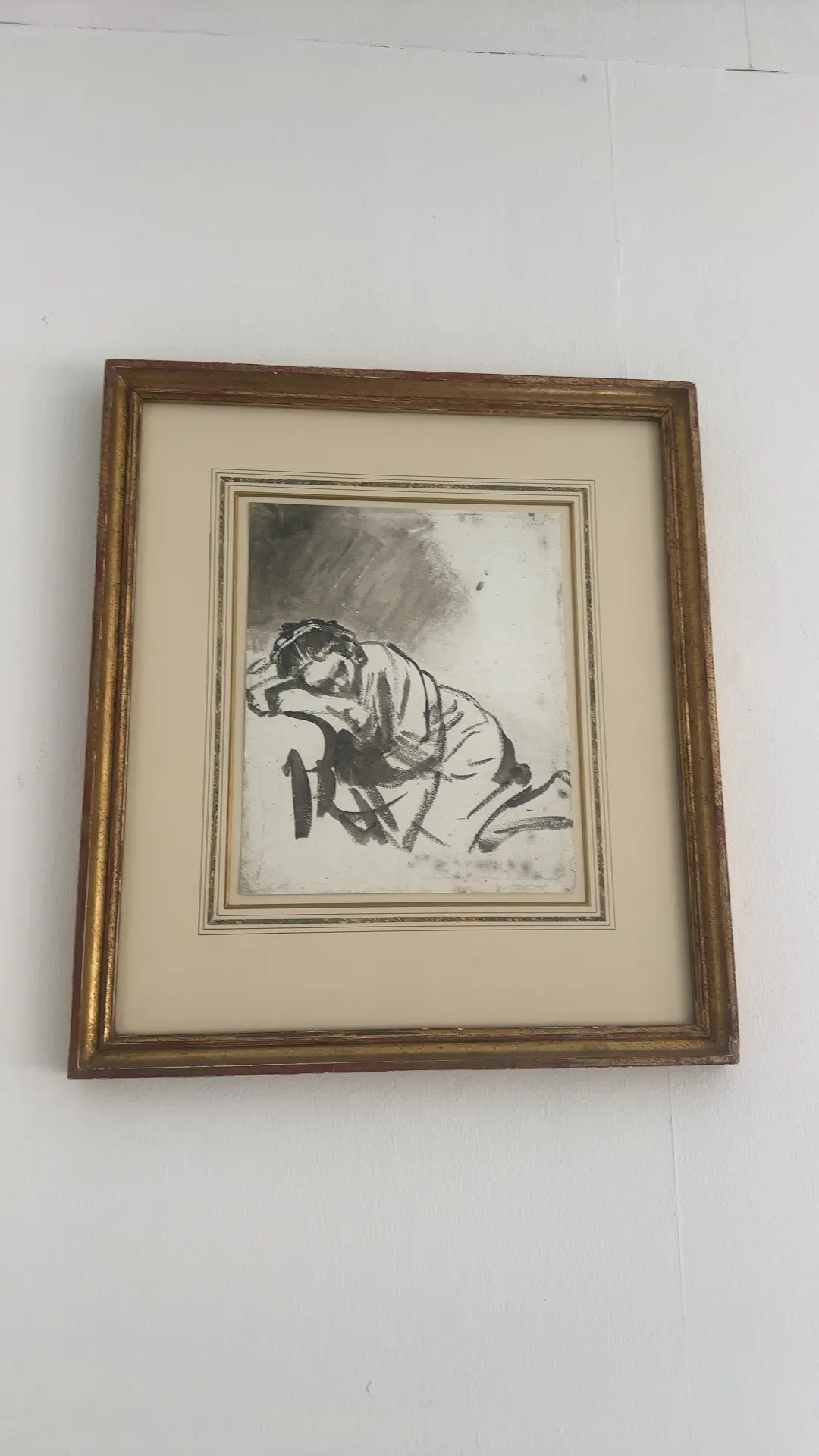
Visible foxing across the upper right and lower edges of the paper substrate; frame is intact but exhibits standard age-related patina; matting shows no significant acid burning.
The paper displays visible foxing and atmospheric spotting consistent with oxidative aging. There is a slight waviness to the sheet suggesting it is not fully laid down. The frame shows minor edge wear and loss of gilding on the miters.
Scarcity and surviving examples
Ordinary · 3/10 estimated rarity
This is a qualitative collection score, not a measured survival count, market percentile or proof of authenticity.
What the photographs establish
Interpretation of the photographs and supplied context. This does not authenticate the object.
- Object is a direct copy of a world-famous masterpiece in the British Museum collection (Inventory 1895,0915.1279)
- Ink handling lacks the characteristic 'searching' line quality and precise wash control of a 17th-century original
- Framing materials and matting style are definitively 20th-century
Value and its basis
Estimate recorded: May 10, 2026
How we estimate value
Estimate context (not a documented sale): Modern facsimiles and 'style-of' drawings typically achieve $50-$200 at regional sales such as Skinner or Hindman.
Collectors and interest
Interior decorators seeking an Old Master aesthetic or students of art history interested in classical technique.
What supports the estimate
- •Attractiveness of the framing and matting
- •Size suitability for domestic display
- •Skill level of the draughtsman (if not a print)
What could change it
- •High probability of being a photographic or mechanical facsimile
- •Condition issues like foxing can deter top-dollar decorative buyers
Comparing quality
- •Documented 18th-century provenance
- •Evidence of hand-laid 17th-century paper
- •Verification that the medium is hand-applied ink rather than a print
The effect of condition
Paper integrity, severity of foxing, and the quality/period of the frame.
Market interest
For informational purposes only, not a formal appraisal.
Related objects
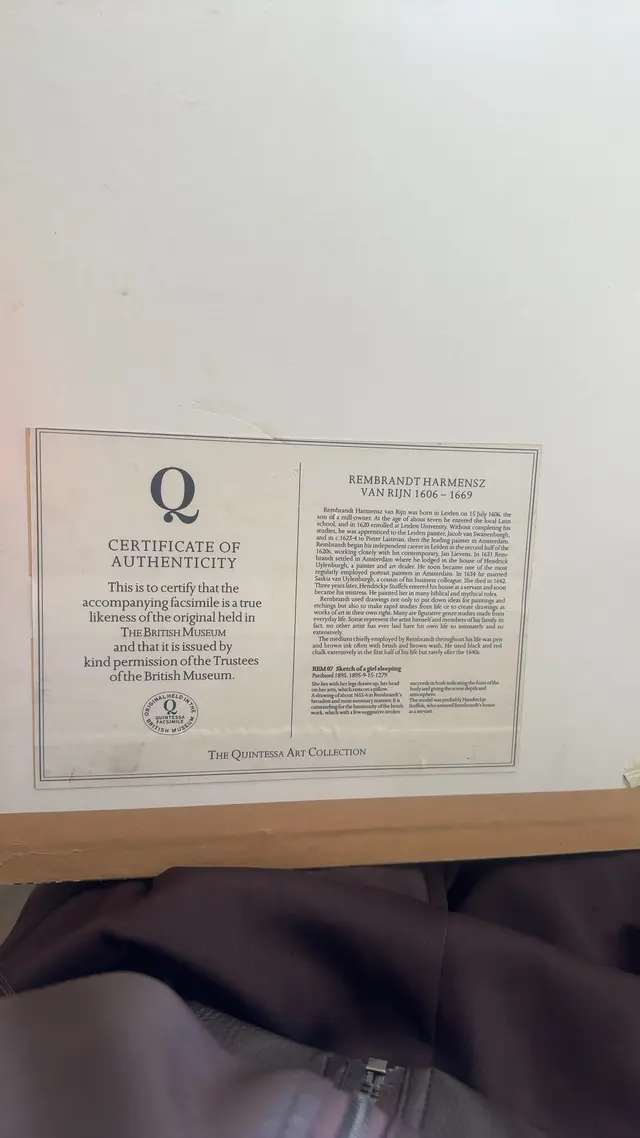
Rembrandt van Rijn (after) - A Girl Sleeping (Hendrickje Stoffels), Facsimile Print
Same maker: Rembrandt van Rijn
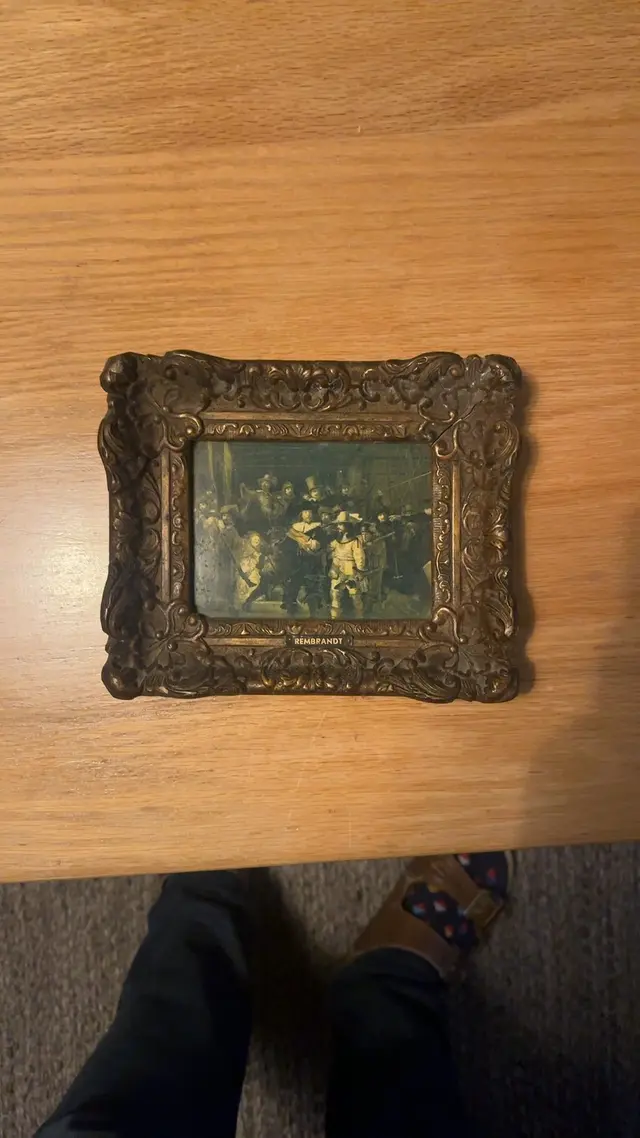
Miniature Print of Rembrandt's 'The Night Watch' in Rococo-Style Frame
Same maker: Rembrandt van Rijn
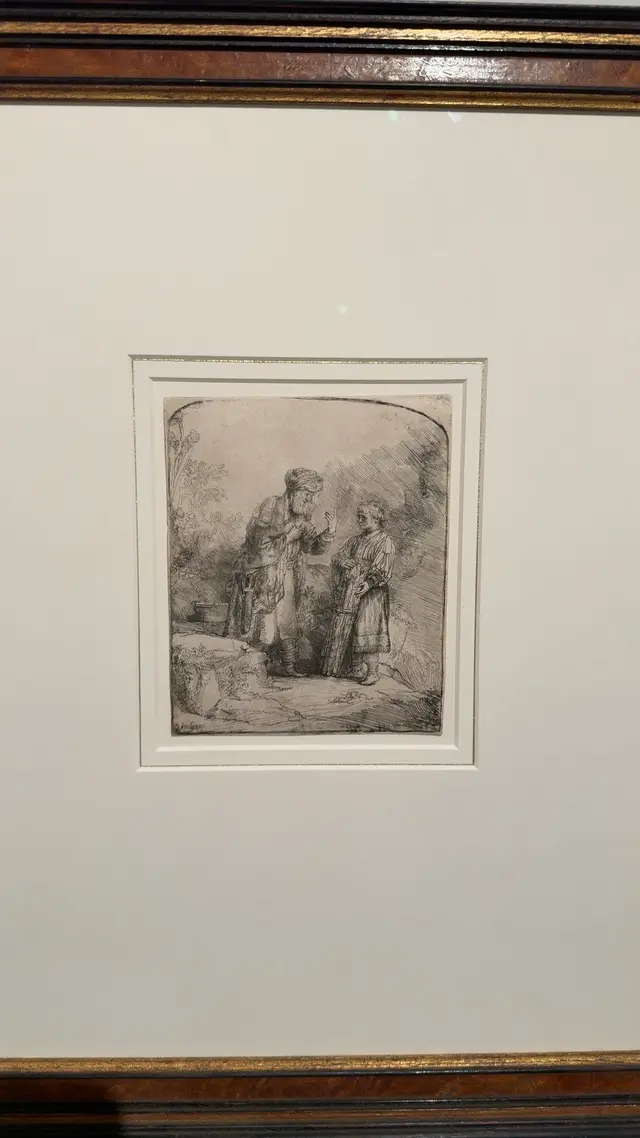
Abraham and Isaac, print after Rembrandt
Same maker: Rembrandt van Rijn
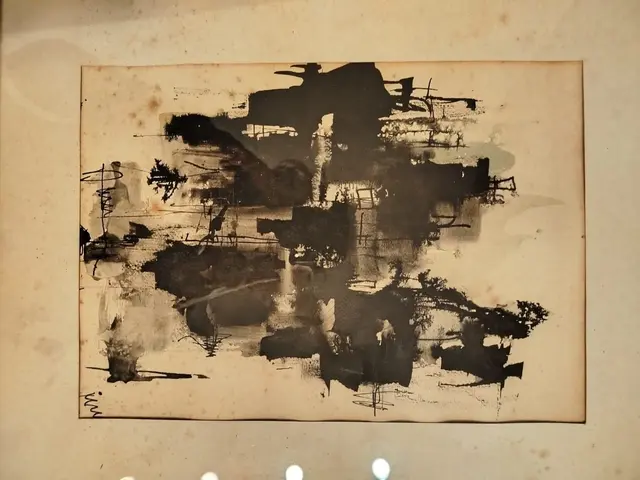
Mid-Century Abstract Ink Wash Drawing, Dated 1963
Shared title details
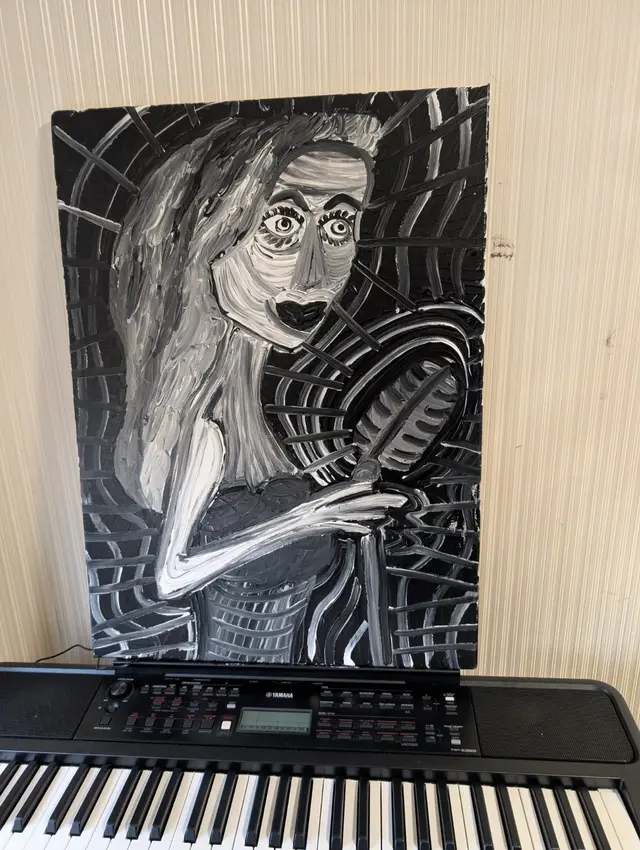
Contemporary Figurative Painting of a Woman with a Microphone
Same category
Manner of Hieronymus Bosch, Grotesque Hybrid Figure, Tempera or Acrylic on Burlap, c. 1970–2010
Same category
Explore Paintings
Oil paintings, watercolors, acrylics, and painted works on canvas, panel, and paper.
Paintings value and rarity guideShare this find
A place for your paintings
Keep its photographs, maker’s marks and the story you know in one object record. Start with a photo.
Create an account for 10 free scans. No credit card needed.
Join the conversation