
Contemporary Figurative Painting of a Woman with a Microphone
Estimated value
$100 - $500Rarity
Average(4/10)Category
PaintingsEra
Post-1980Origin
InternationalArtist / Creator
George KlausVisual assessment
Photo analysis
Save to revisit in your watchlist. This does not add the object to your own collection.
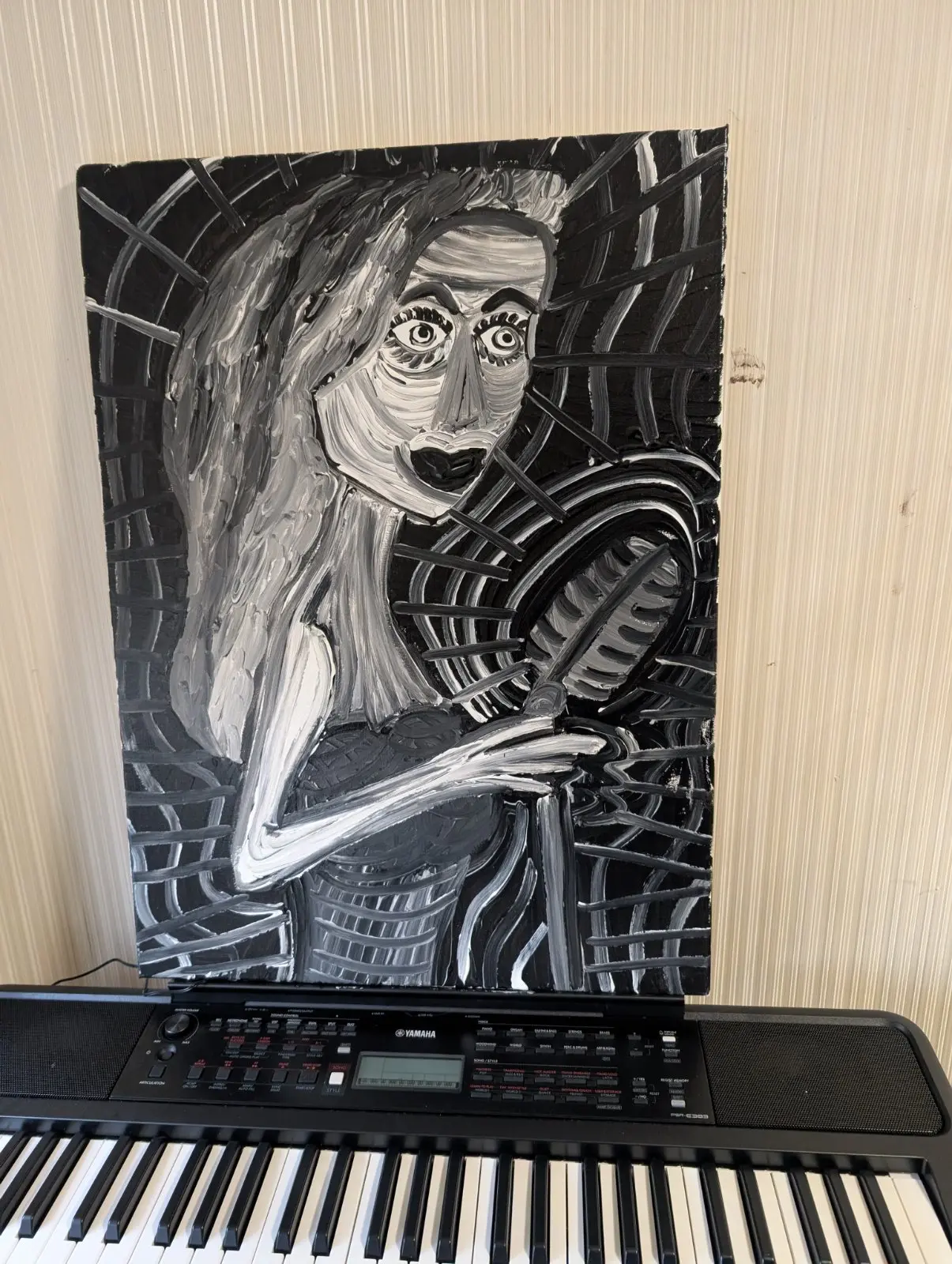
Contemporary Figurative Painting of a Woman
This appears to be a modern figurative painting, executed with a robust impasto technique in a monochrome palette of black, white, and various shades of grey. The work depicts a stylized female figure, possibly a singer, holding a vintage-style microphone. The expressive brushwork and distorted features suggest an influence from Expressionist or Neo-Expressionist artistic movements, focusing on emotion and psychological intensity rather than precise anatomical representation. The background features dynamic, radiating or concentric lines that add to the sense of movement and perhaps sonic vibration, enhancing the composition's overall dramatic effect.
Related traditions
German Expressionism
Early 20th Century
The emotional intensity, distorted figures, and bold brushwork recall artists like Ernst Ludwig Kirchner or Franz Marc, who sought to express inner feelings rather than 외적 reality.
Neo-Expressionism
Late 20th Century
The return to large-scale, raw painting, often with figurative or mythological subjects, by artists such as Jean-Michel Basquiat or Julian Schnabel, which emerged in the late 20th century.
In the exhibition space
Early 20th Century
During the rise of Expressionism, such bold and emotionally charged works were often seen as a rebellion against academic tradition and a reflection of societal anxieties.
Contemporary Art (Post-1980s)
Works in this style often explore identity, psychological states, and the human condition in a more personal and individualistic manner, sometimes engaging with popular culture or media representations.
Origins and context
The expressive and somewhat raw aesthetic of this painting places it within a long tradition of figurative art that prioritizes emotional impact over classical realism. Echoes of early 20th-century Expressionism can be discerned, particularly in the use of strong brushstrokes and heightened emotionality. In the late 20th and early 21st centuries, there's been a resurgence of figurative painting, often reinterpreting historical styles with contemporary themes and techniques. This particular work seems to tap into the stylistic freedom seen in contemporary art, where traditional boundaries of representation are often challenged or outright broken.
Further details
Impasto, the technique used here with thick layers of paint, was notably pioneered by artists like Vincent van Gogh to add texture and expression, and continues to be favored by many contemporary painters.
The use of a limited, monochromatic palette often forces an artist to focus entirely on form, texture, and tonal contrast, pushing the boundaries of visual storytelling without the aid of color.
Attribution and evidence
My confidence is good for the medium, technique, and general stylistic period, given the clear visual evidence of impasto acrylic on canvas. However, the absence of any identifying marks limits accurate artist attribution.
Identifying details
- 1Visible impasto technique indicating thick application of paint.
- 2Monochromatic palette of black, white, and grey tones.
- 3Figurative subject matter depicting a stylized female figure with a microphone.
- 4Expressive and somewhat distorted features, typical of Expressionist or Neo-Expressionist influences.
- 5Unframed canvas, suggesting a contemporary presentation.
Open questions
- •Lack of visible signature or artist's mark.
- •No discernible provenance information from the imagery.
- •The style, while distinct, is not attributable to a specific, widely known artist without further evidence.
Photographs that would help
- Examine the reverse of the canvas for any labels, inventory numbers, or artist''s signature/stamp.
- Photograph the texture of the paint surface under raking light to better understand the impasto techniques.
- Inquire about the artist or any history of acquisition.
- Compare the style to known contemporary artists working in similar expressive, monochromatic modes.
Terms in this record
- Impasto
- A technique used in painting, where paint is laid on an area of the surface (usually a canvas) in very thick layers, usually thick enough that the brushstrokes or palette knife marks are visible, creating texture.
- Monochrome
- A painting or drawing executed in shades of a single color, usually grey, black, or sepia; or one that consists of variations on a single hue.
- Expressionism
- A modernist movement, initially in poetry and painting, originating in Germany at the beginning of the 20th century. Its typical trait is to present the world solely from a subjective perspective, distorting it radically for emotional effect in order to evoke moods or ideas.
Wear and preservation
The painting appears to be in very good condition, with no visible tears, abrasions, or loss of pigment. The edges of the canvas seem clean, suggesting it is either unframed or in a simple floating frame not visible here. The impasto elements are intact, indicating no recent physical damage.
Scarcity and surviving examples
Average · 4/10 estimated rarity
This is a qualitative collection score, not a measured survival count, market percentile or proof of authenticity.
What the photographs establish
Interpretation of the photographs and supplied context. This does not authenticate the object.
- Absence of any visible signature or identifying marks makes artist attribution impossible from images alone.
- The style, while expressive, is not unique enough to immediately suggest a specific, well-documented artist.
- Many contemporary artists produce works in this style, making definitive identification challenging without provenance.
Value and its basis
Estimate recorded: Feb 27, 2026
How we estimate value
- No documented comparable sales are shown for this estimate
- Condition, completeness & craftsmanship
- Demand assumptions may not reflect current transactions
- The range is an estimate, not an asking price or sale result
For informational purposes only, not a formal appraisal.
Related objects
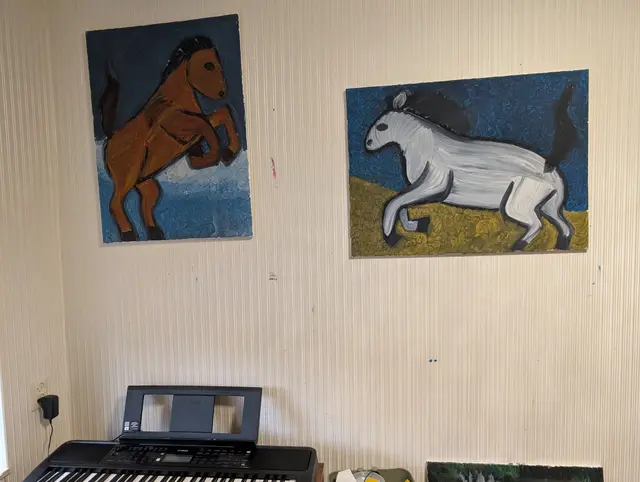
Pair of Folk Art Style Horse Paintings
Same maker: George Klaus
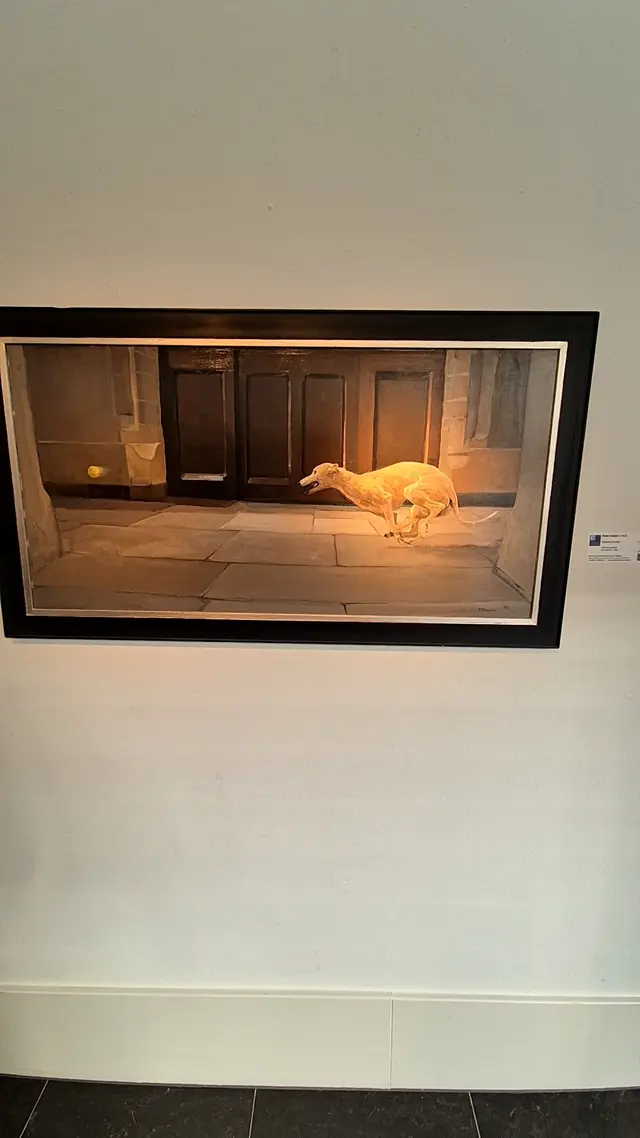
Contemporary Oil Painting of a Running Whippet or Greyhound
Shared title details
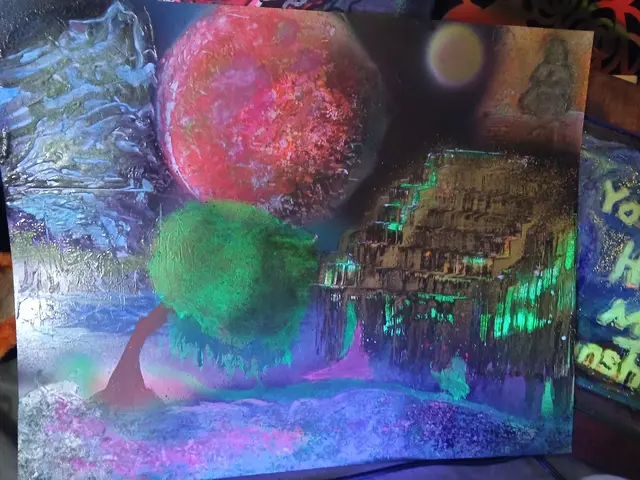
Contemporary Aerosol Space Landscape Painting
Shared title details
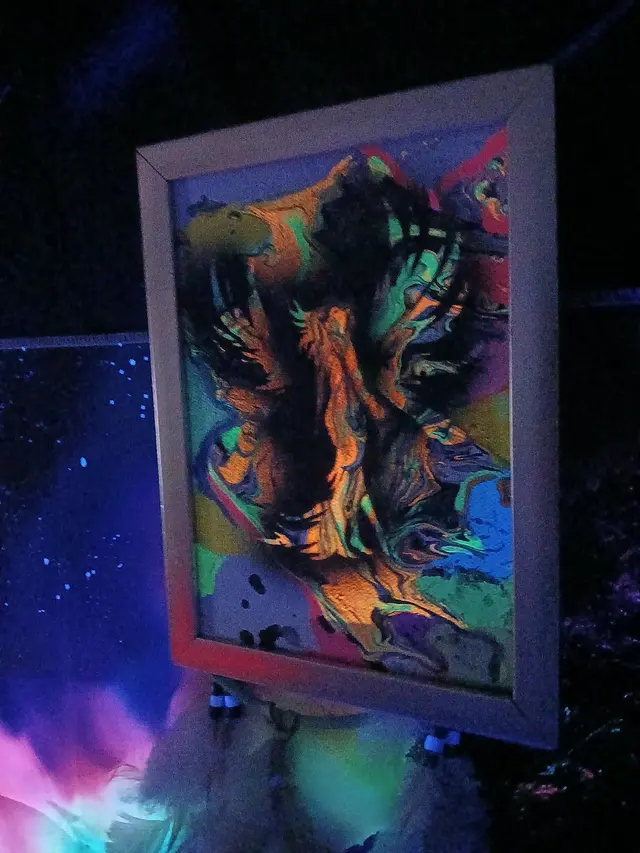
Contemporary Fluorescent Fluid Acrylic Painting by Dash Rodgerz
Shared title details
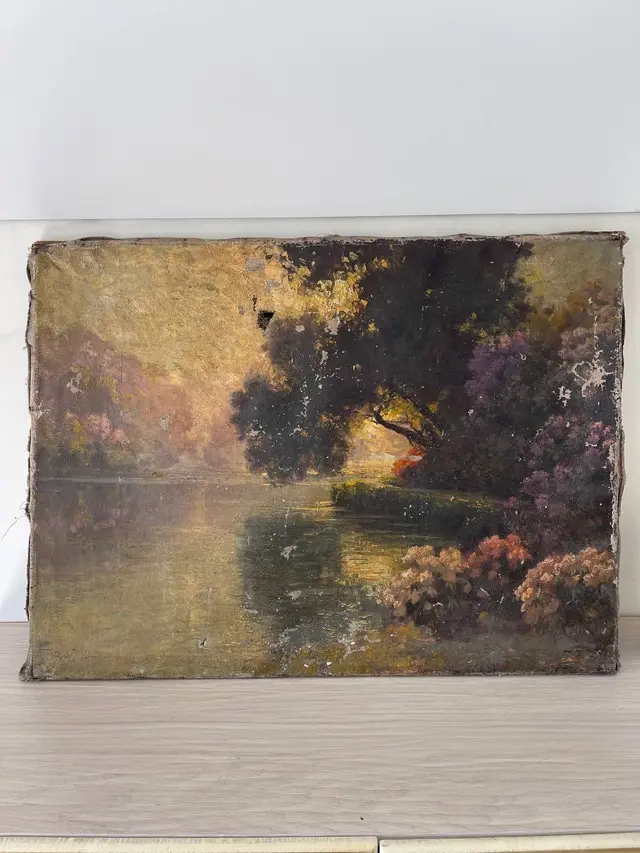
Unstretched Turn-of-the-Century Austrian Landscape Oil Painting
Same category
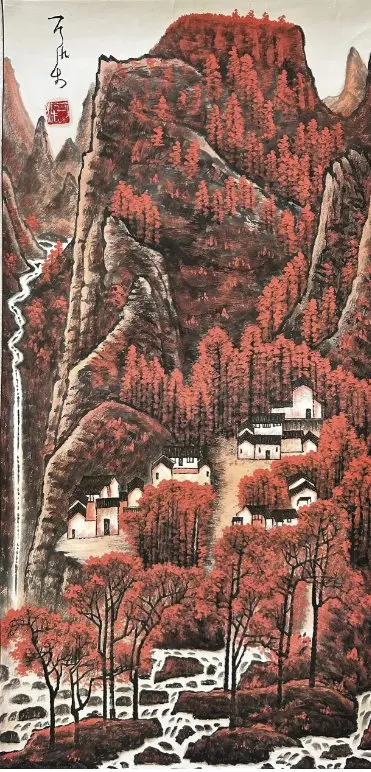
Chinese Shanshui Landscape Painting in the Style of Li Keran
Same category
Explore Paintings
Oil paintings, watercolors, acrylics, and painted works on canvas, panel, and paper.
Paintings value and rarity guideShare this find
A place for your paintings
Keep its photographs, maker’s marks and the story you know in one object record. Start with a photo.
Create an account for 10 free scans. No credit card needed.
Join the conversation