
Sancai-style Ewer with Molded Decoration
Estimated value
$150 - $450Rarity
Average(4/10)Category
Ceramics & PotteryEra
Late 19th to early 20th CenturyOrigin
ChinaVisual assessment
Photo analysis
Save to revisit in your watchlist. This does not add the object to your own collection.
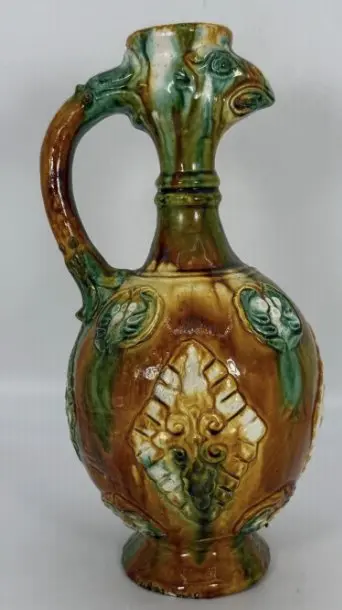
Sancai-style Ewer
This ceramic ewer features a globular body, high neck, and a sculpted spout that terminates in a stylized zoomorphic form, possibly representing a dragon or phoenix. The exterior is decorated with applied molded medallions and scrolling leaf motifs under a lead-based glaze. The tri-color palette consists of green (copper oxide), amber-brown (iron oxide), and a creamy white ground, characteristic of the 'Sancai' (three-color) tradition. Visible crazing is present across the glazed surface, and the interior demonstrates a coarse, unglazed earthenware body.
Related traditions
Sassanid Empire
3rd-7th Century AD
The ewer shape with a handle and high neck originates from Persian silver and gold vessels imported into China via Silk Road trade routes.
Use and ceremony
Tang Dynasty
Symbol of high status and wealth reserved for the imperial elite and aristocracy.
Early 20th Century
Decorative export art intended for Western interiors and orientalist collections.
Origins and context
The Sancai technique reached its zenith during the Tang Dynasty (618–907 AD) in China, primarily for funerary wares (mingqi). This specific form, with its tall neck and zoomorphic spout, draws stylistic inspiration from Central Asian metalwork and the Silk Road exchange. However, the surface characteristics and high-gloss lead glaze suggest this example likely dates to the late 19th or early 20th century, a period when Chinese potteries increased production of archaic styles to satisfy European and American market demand for Export wares (Christie's 2021).
Further details
The green color in Sancai glazes is achieved through copper oxide, while the amber and brown tones come from firing iron oxide at approximately 800°C to 1000°C.
During the Tang Dynasty, lead-glazed ceramics like this were used exclusively for tomb burials because the lead content made them toxic for daily liquid consumption.
Attribution and evidence
The stylistic markers clearly identify the type as Sancai-style, but the lack of macroscopic wear and the high-gloss preservation shift the attribution toward a later 19th/20th-century production rather than an archaeological Tang piece.
Identifying details
- 1Classic green, amber, and cream 'three-color' lead glaze palette.
- 2Molded floral/foliate medallions applied to the vessel body.
- 3Presence of fine crazing (crackling) across the glazed surface.
- 4Unglazed, coarse earthenware visible in the interior neck and base.
- 5Form inspired by Central Asian metalware types.
Open questions
- •The uniformity of the glaze dripping may indicate modern fabrication.
- •Lack of burial encrustation or authentic mineralized patination on the surface.
Photographs that would help
- Provide a sharp photograph of the underside of the footrim to check for kiln marks or raw paste characteristics.
- Inspect the surface under UV light to identify any hidden repairs or modern composite fillers.
- Conduct a 'tap test' to check the resonance for hairline cracks not visible to the eye.
Terms in this record
- Sancai
- A lead-glazed polychrome ceramic style using copper and iron oxides to create green and amber tones.
- Crazing
- A network of fine cracks in the glaze caused by differing contraction rates between the clay body and the glaze during cooling.
- Appliqué
- A decorative technique where molded clay motifs are attached to the surface of a vessel before firing.
Wear and preservation
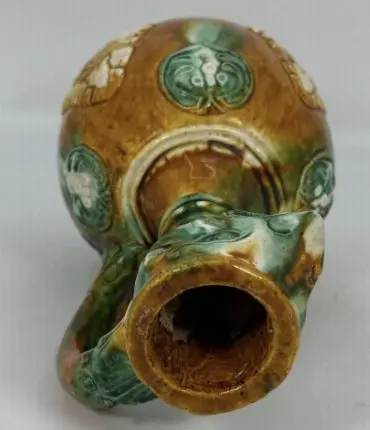
Glaze integrity is compromised at the high-wear footrim area; however, the molded appliqués on the body remain largely intact without major losses.
Significant flaking and glaze loss are visible along the footrim. The interior neck shows accumulated debris and staining consistent with age and typical storage conditions.
Glaze and painted decoration
The surface displays a high-gloss lead glaze with extensive fine crazing and pooling of the amber glaze at the base of the molded medallions.
Recorded physical details
Based on the coarse earthenware wall thickness visible in the neck, the vessel likely weighs between 600g and 900g and feels balanced toward the base.
Scarcity and surviving examples
Average · 4/10 estimated rarity
This is a qualitative collection score, not a measured survival count, market percentile or proof of authenticity.
What the photographs establish
Interpretation of the photographs and supplied context. This does not authenticate the object.
- Sancai glazes are frequently reproduced using modern spray techniques that mimic historical dripping.
- The high-gloss finish lacks the characteristic 'silvering' or iridescent degradation often found on Tang-era archaeological finds.
- Construction of the handle attachment suggests later manufacturing logic than authentic 8th-century examples.
Value and its basis
Estimate recorded: May 11, 2026
How we estimate value
Estimate context (not a documented sale): Similar Sancai-glazed ewers from the late 19th century have realized between $200 and $600 at auction houses like Sotheby's and regional Asian art specialists.
Collectors and interest
Collectors of Qing Dynasty and Early Republic period export ceramics, and interior designers focusing on Chinoiserie aesthetics.
What supports the estimate
- •Integrity of the zoomorphic spout
- •Vibrancy of the green and amber glaze contrast
- •Absence of structural cracks in the neck and handle
What could change it
- •Large chips on the footrim impact the stability and value
- •If determined to be a late 20th-century souvenir, value drops significantly to under $50
Comparing quality
- •Evidence of authentic burial patina
- •Complex, multi-layered molded decoration
- •Detailed hand-finishing on the zoomorphic elements
The effect of condition
Condition grade is primarily determined by glaze loss, the presence of chips on the rims/handle, and the clarity of the molded motifs.
Market interest
For informational purposes only, not a formal appraisal.
Related objects
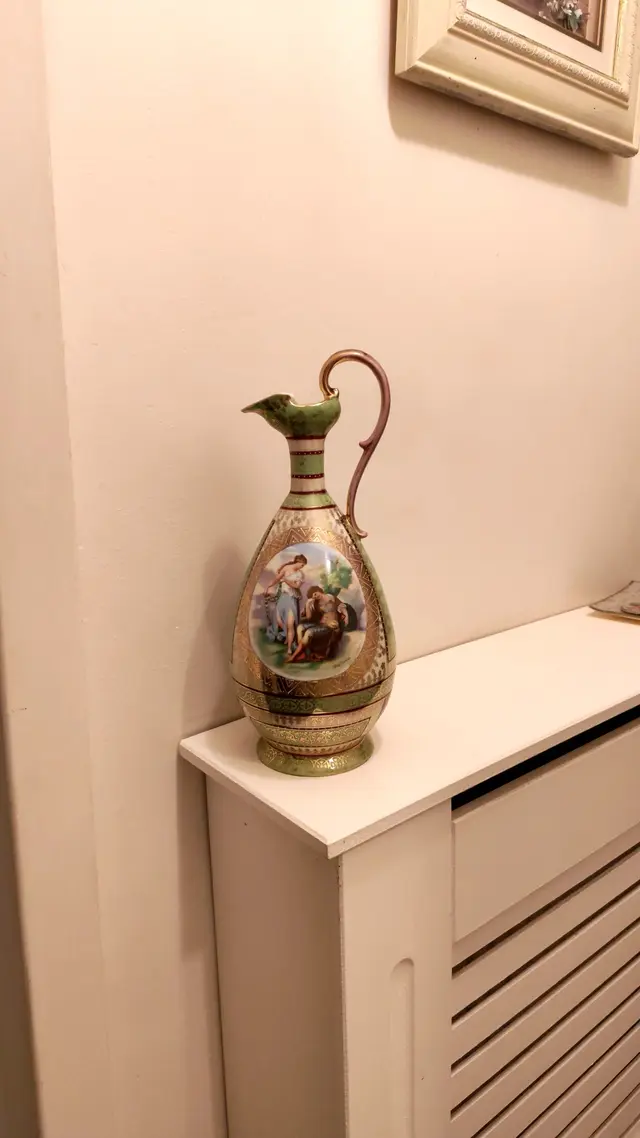
Austrian Ewer in Neo-Classical Style
Shared title details
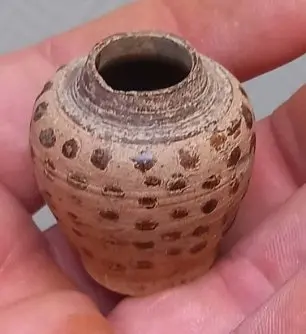
Chinese Song-style Miniature Jar with Iron-Spot Decoration
Shared title details
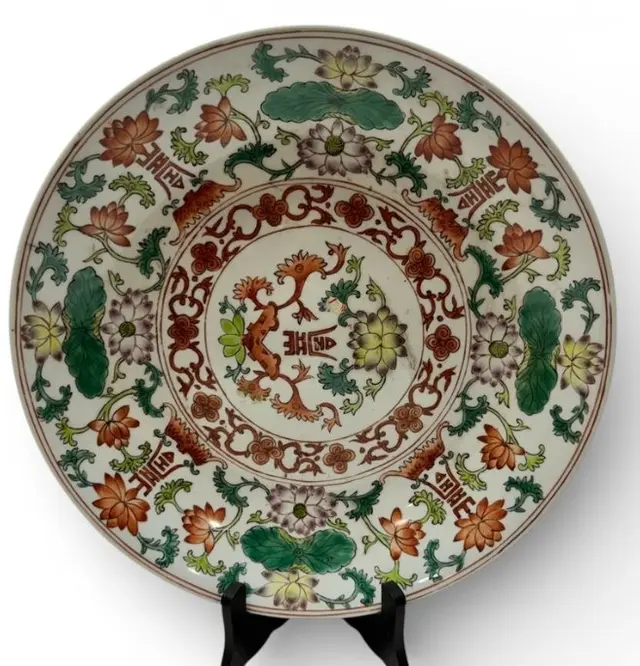
Chinese Wucai-style Famille Verte Porcelain Charger
Same category
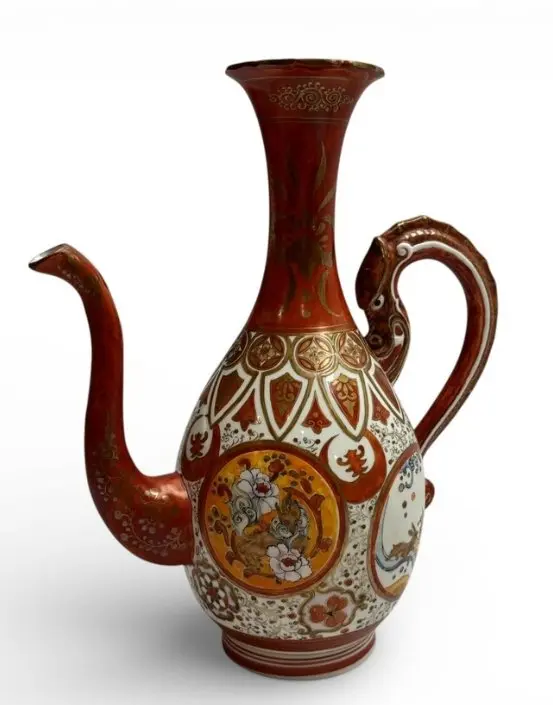
Kutani Ware Ewer with Dragon Handle
Same category
Chinese Blue and White 'Three Friends of Winter' Stem Cup, Ming Style
Same category
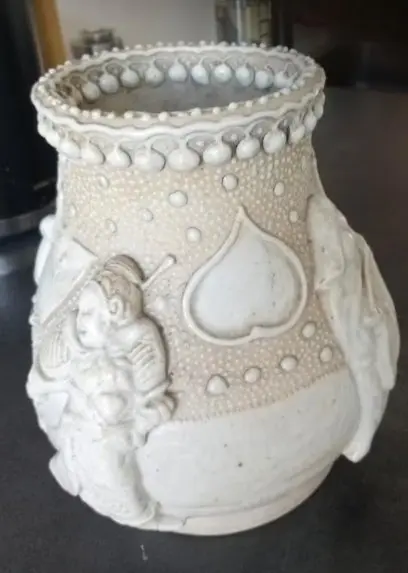
Chinese Shiwan Ware Figural Vase with Molded Luohan Relief, Late 19th Century
Same category
Explore Ceramics & Pottery
Pottery, porcelain, stoneware, earthenware, and kiln-fired objects.
Ceramics & Pottery value and rarity guideShare this find
A place for your ceramics
Keep its photographs, maker’s marks and the story you know in one object record. Start with a photo.
Create an account for 10 free scans. No credit card needed.
Join the conversation
Recognise a detail or have a question? Add what you know and cite your source. Suggested corrections stay in the discussion for the owner or a moderator to review.
Sign in to leave a comment
Sign in