
Royal Delft Blauw Handwerk Decorative Plate
Estimated value
$20 - $60Rarity
Ordinary(3/10)Category
Ceramics & PotteryBrand
Royal Delft Blauw HandwerkEra
Mid-20th Century to Contemporary (c. 1950 - 2000s)Origin
NetherlandsVisual assessment
Photo analysis
Save to revisit in your watchlist. This does not add the object to your own collection.
Royal Delft Blauw Handwerk Decorative Plate
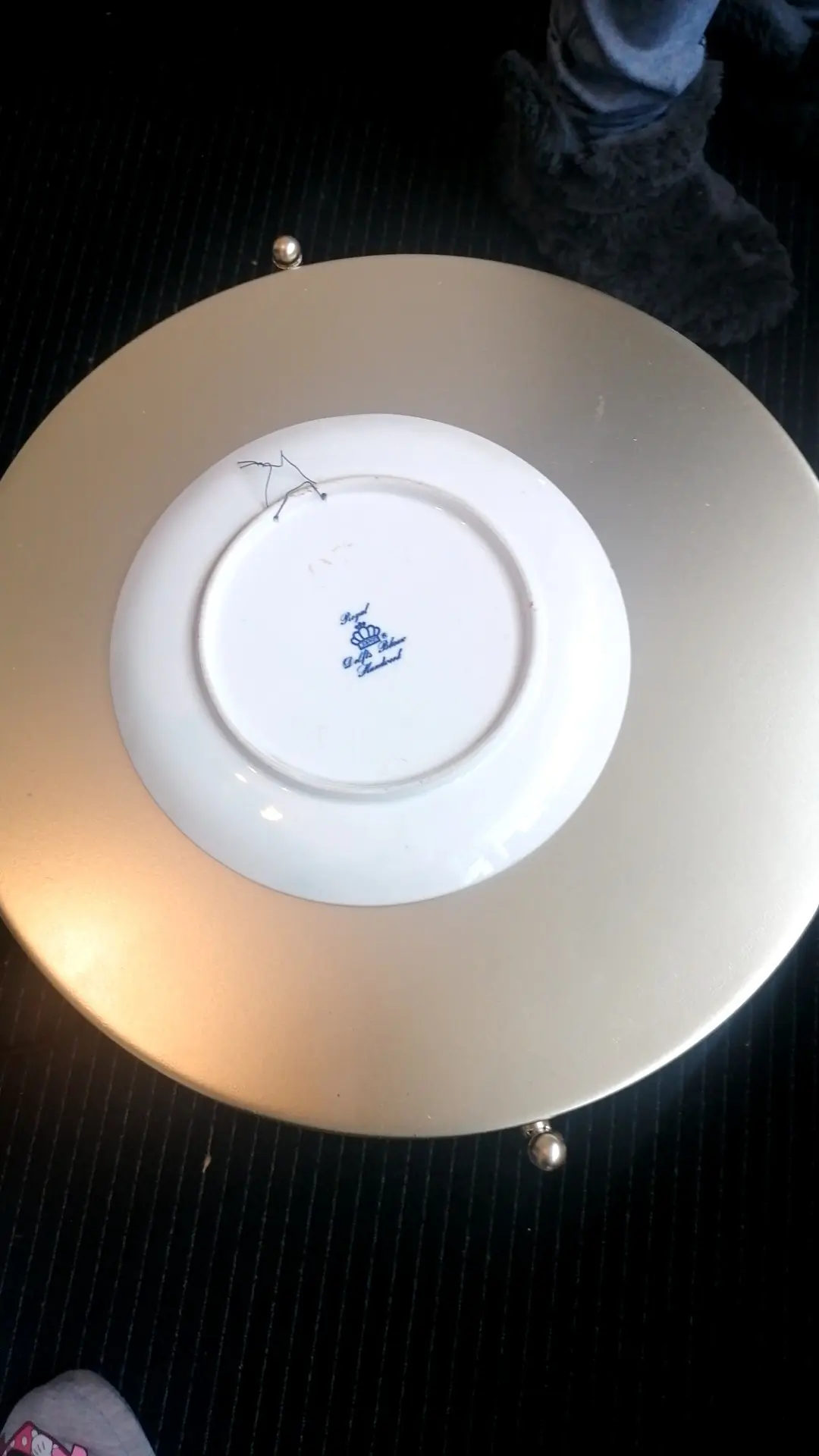
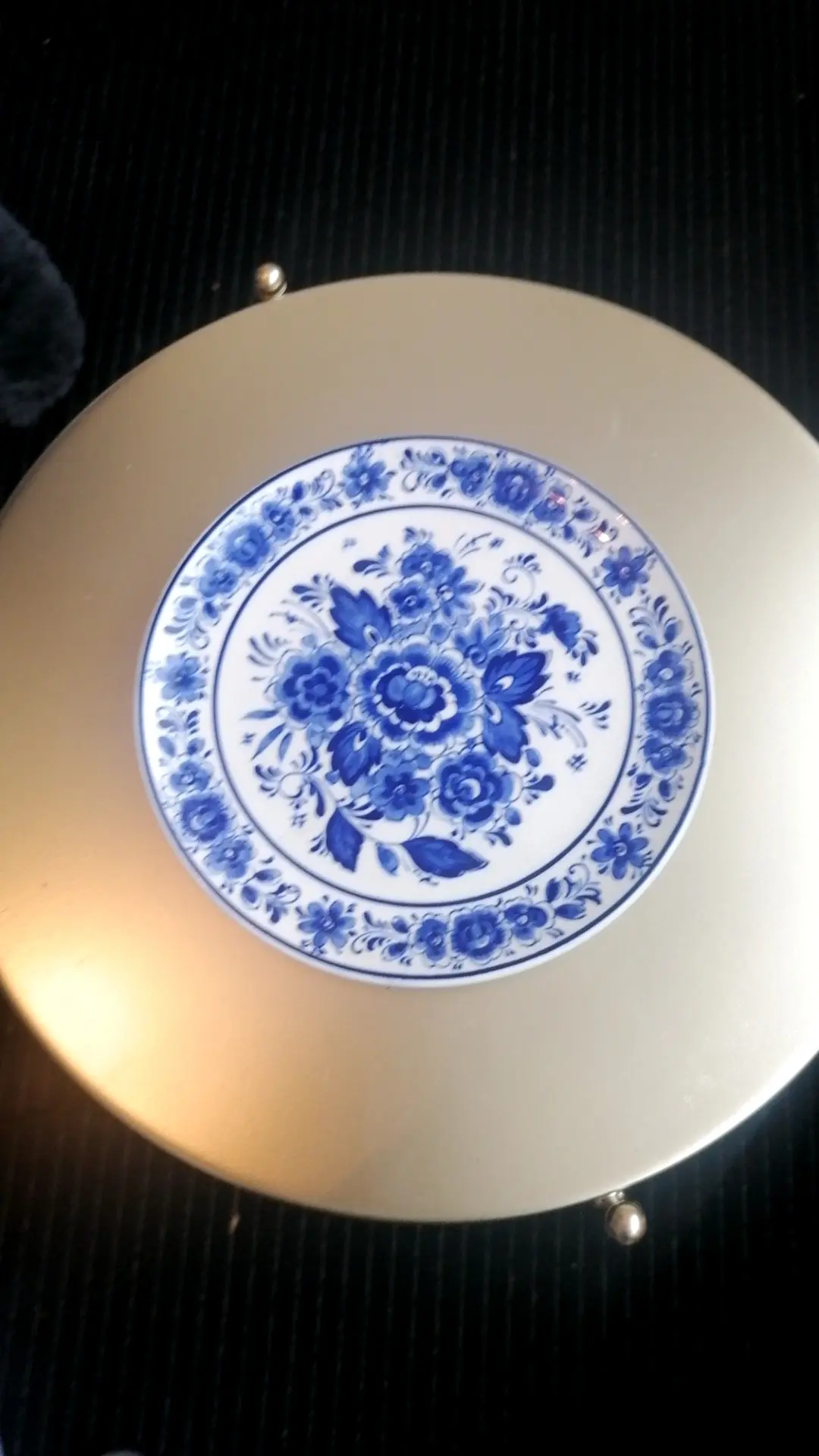
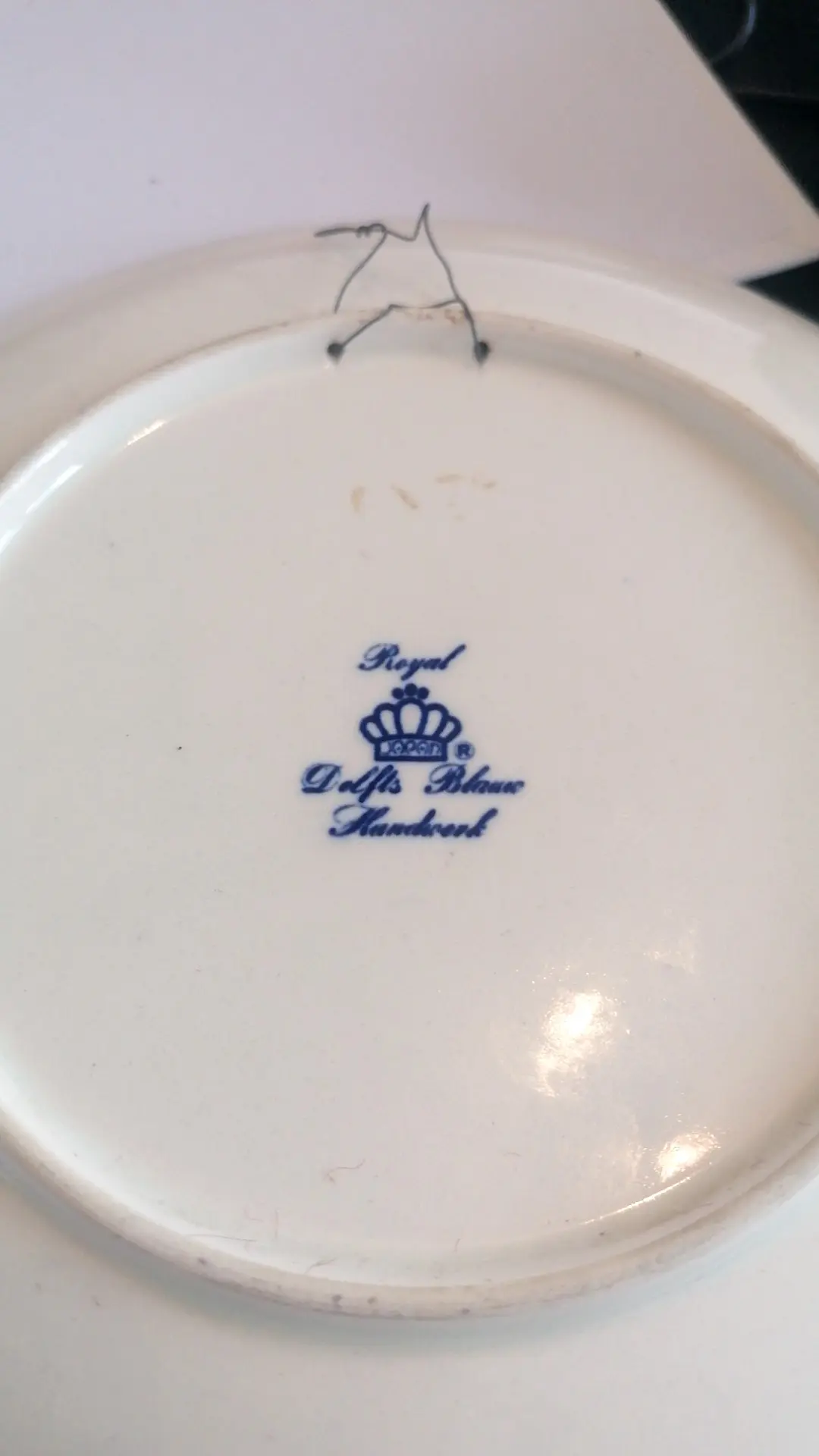
This appears to be a decorative ceramic plate, hand-painted in the traditional blue and white Delft style. The central motif features a stylized floral arrangement, primarily roses and leaves, encircled by a border of smaller floral elements. The reverse shows a clear maker's mark: 'Royal Delft Blauw Handwerk' surmounted by a crown symbol, indicating production from a Dutch factory specializing in Delftware, likely within the last century. The wire hanger suggests its intended use as a wall decor piece.
Related traditions
Chinese Porcelain
14th-18th Century
The original inspiration for blue and white ware, especially during the Ming and Qing dynasties, which Dutch Delftware emulated and adapted.
European Faience/Majolica
16th-19th Century
Other European tin-glazed earthenware traditions that developed independently or in influence from Delftware, such as those from Italy, France, and England.
Use and ceremony
17th Century
Symbol of wealth and sophistication, initially an imitation of luxury Chinese imports.
18th-19th Century
Becomes a staple of Dutch identity, a decorative item for middle-class homes, and later, a canvas for nationalist imagery.
20th-21st Century
Largely produced as decorative tourist souvenirs or affordable home decor, maintaining traditional aesthetics but often machine-assisted in execution.
Origins and context
Delftware, particularly its blue and white pieces, gained prominence in the Netherlands during the 17th century as an affordable alternative to imported Chinese porcelain. Factories in Delft adapted Chinese motifs and developed their own distinctive styles, often featuring landscapes, genre scenes, and elaborate floral patterns. While the 'Royal' prefix and 'Delft Blauw' suggest a connection to this historical tradition, many contemporary manufacturers continue to produce items in this revered style, often for the tourist or decorative market.
Further details
The distinctive blue hue of Delftware was originally achieved by grinding cobalt oxide, which turns vibrant blue upon firing at high temperatures.
Although often associated with windmills and tulips, early Delftware frequently depicted Asian-inspired scenes, demonstrating the global exchange of artistic ideas during the Dutch Golden Age.
Attribution and evidence
Confidence is high due to the clear maker's mark and distinctive style, which firmly identify it as a piece of Delftware. The exact era and confirmation of hand-painting versus transfer would require further visual evidence.
Identifying details
- 1The prominent 'Royal Delft Blauw Handwerk' mark on the reverse indicates the manufacturer and style.
- 2The hand-painted floral decoration is characteristic of Delftware, although mass-produced modern versions often use transfers.
- 3The overall form factor and presence of a wire hanger suggest its primary function is decorative display rather than utilitarian use.
- 4The 'Royal' prefix in the mark often denotes a modern company with royal charter or historic connection, rather than a 17th-century origin.
Open questions
- •Without additional images of the footrim and careful inspection of the brushwork under magnification, it's difficult to definitively confirm 'Handwerk' (hand-work) as opposed to a hand-finished transfer print, a common practice in later Delft-style production.
- •The exact age cannot be determined without a specific date code or deeper factory mark analysis not visible here.
Photographs that would help
- Obtain a high-resolution close-up of the footrim for evaluation of wear and glaze application.
- Inspect the decoration under magnification to distinguish true hand-painting from hand-finished transfer prints.
- Check for any additional incised or impressed marks on the base.
- If possible, research 'Royal Delft Blauw Handwerk' to pinpoint the specific factory and its production dates.
Terms in this record
- Delftware
- A style of tin-glazed earthenware, typically white with blue decoration, originating in Delft, Netherlands, in the 17th century. It famously imitated Chinese porcelain.
- Underglaze Decoration
- Decoration applied to pottery directly on the biscuit (fired but unglazed) body and then covered with a transparent ceramic glaze, which makes the decoration resistant to wear.
- Footrim
- The raised edge on the underside of a ceramic object that provides stability and raises the body of the piece off the surface, protecting it from wear.
- Crazing
- A fine network of cracks that appear on the surface of a ceramic glaze, often due to differences in thermal expansion rates between the glaze and the body, or simply a sign of age.
Wear and preservation
The plate appears to be in very good condition with no visible chips, cracks, or significant wear to the glaze or painted decoration. The wire hanger is slightly bent but functional.
Glaze and painted decoration
The plate exhibits a glossy, white tin-glazed ceramic surface, adorned with hand-painted underglaze blue decoration. The glaze appears uniform with no obvious crazing visible from the images. The raised footrim on the reverse is unglazed.
Recorded physical details
Based on its size and ceramic material, it likely has a moderate and solid weight, typical for a decorative wall plate.
Scarcity and surviving examples
Ordinary · 3/10 estimated rarity
This is a qualitative collection score, not a measured survival count, market percentile or proof of authenticity.
What the photographs establish
Interpretation of the photographs and supplied context. This does not authenticate the object.
- Clearly visible and recognizable manufacturer's mark.
- Style consistent with known contemporary Delftware reproductions/souvenirs.
- Common decorative object, not typically subject to high-value forgery.
Value and its basis
Estimate recorded: Feb 27, 2026
How we estimate value
- No documented comparable sales are shown for this estimate
- Condition, completeness & craftsmanship
- Demand assumptions may not reflect current transactions
- The range is an estimate, not an asking price or sale result
For informational purposes only, not a formal appraisal.
Related objects
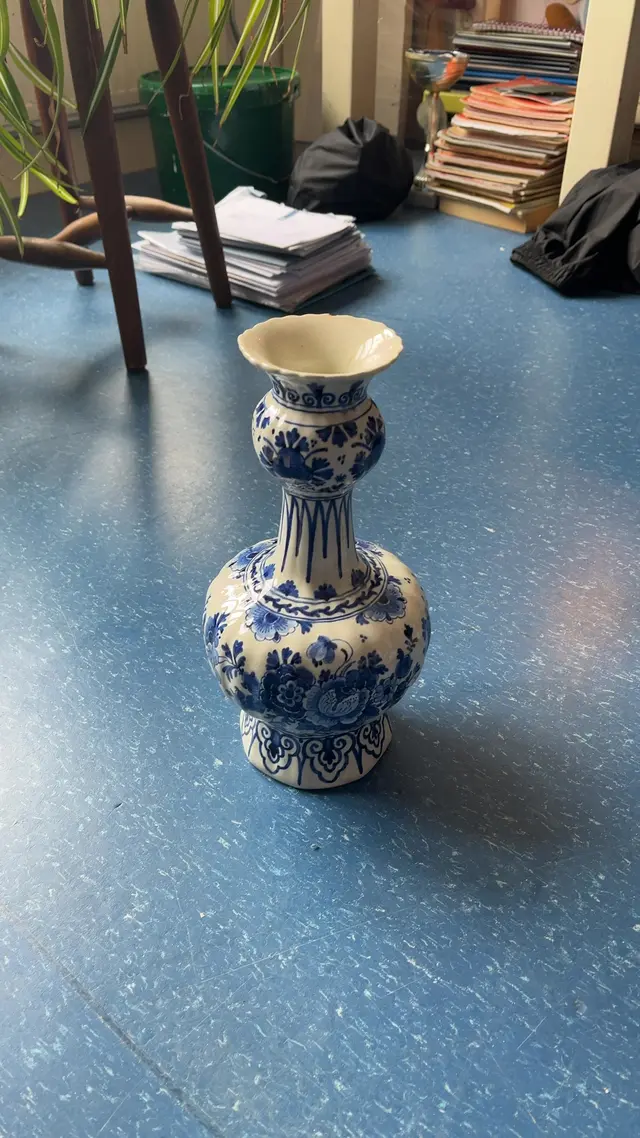
De Porceleyne Fles (Royal Delft) Garlic-Mouth Vase
Shared title details
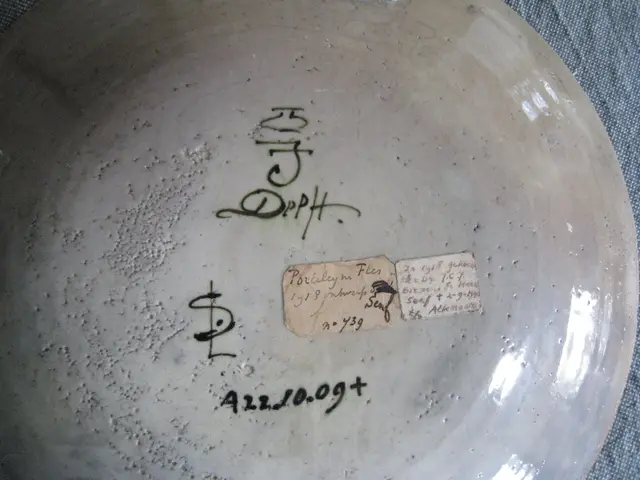
De Porceleyne Fles Delft Charger/Plate with Handwritten Marks
Shared title details
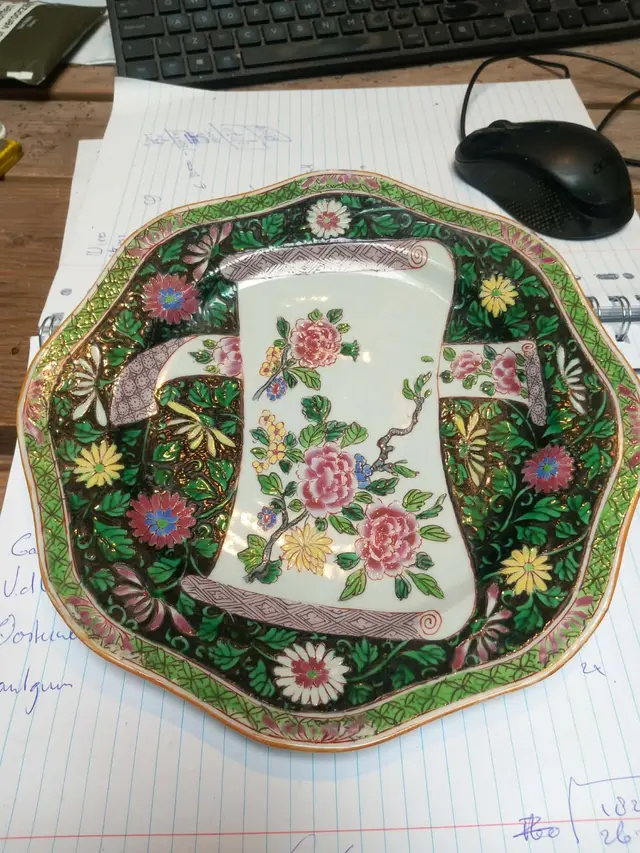
Chinese Famille Noire 'Scroll' Plate, Late Qing to Republic Period (1880-1920)
Same category
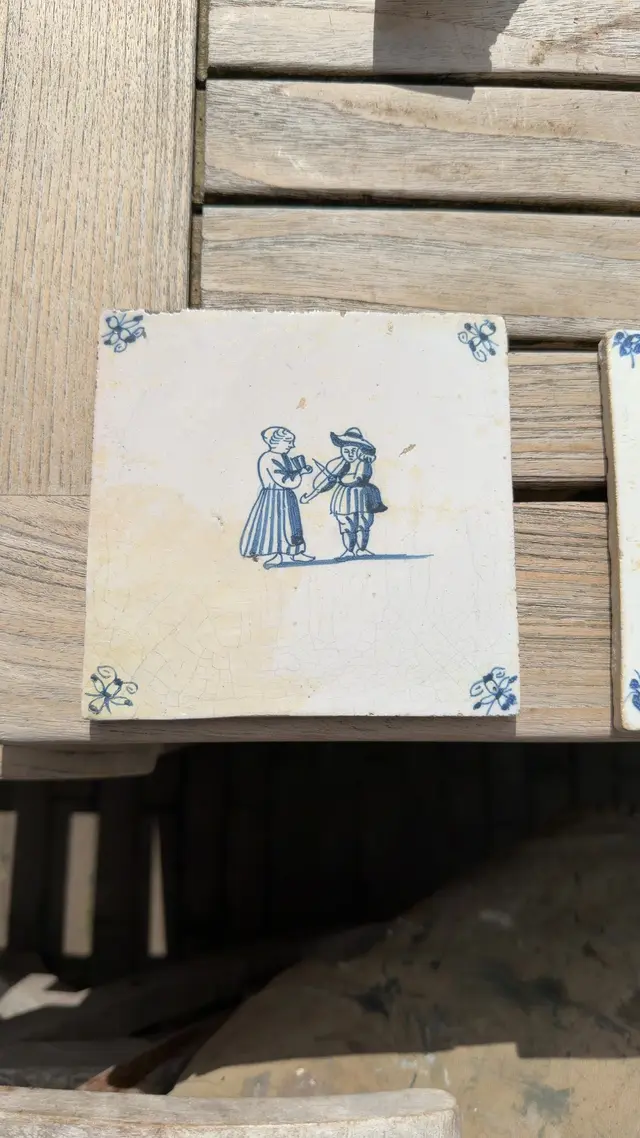
Delft Blue Tin-Glazed Earthenware Tile
Same category
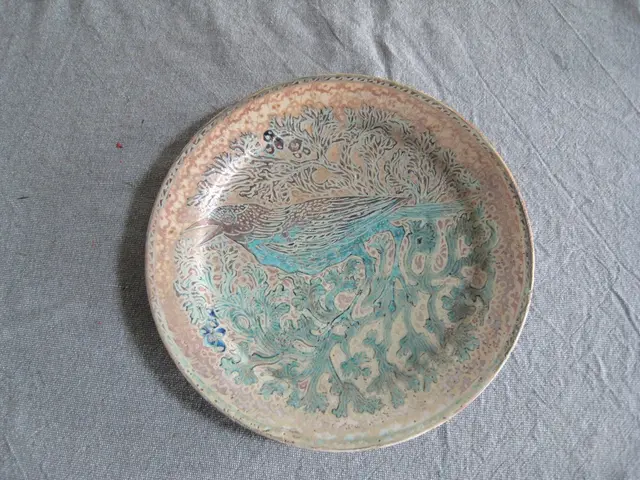
Hand-Decorated Ceramic Plate with Bird Motif
Same category
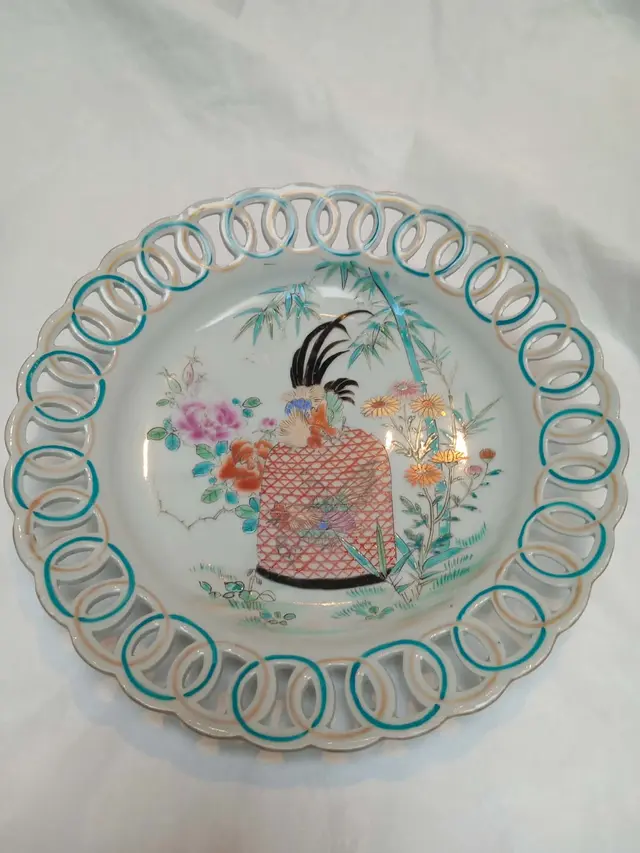
Meiji Period Arita Reticulated Porcelain Plate
Same category
Explore Ceramics & Pottery
Pottery, porcelain, stoneware, earthenware, and kiln-fired objects.
Ceramics & Pottery value and rarity guideShare this find
A place for your ceramics
Keep its photographs, maker’s marks and the story you know in one object record. Start with a photo.
Create an account for 10 free scans. No credit card needed.
Join the conversation