
De Porceleyne Fles
Operating in Delft since 1653, this manufacturer remains the final surviving factory from the original 17th-century Dutch ceramic boom. Known globally as Royal Delft, the firm secured a royal warrant in 1919 and currently maintains a secondary market where specialized 19th-century 'Pijnacker' polychrome pieces regularly command prices exceeding €3,500 at European auctions.
Explore 2 objects2 objects
1–2 of 2 objectsPage 1 of 1
About De Porceleyne Fles
On this page
Items
2
Main category on this page
Ceramics & Pottery
Highest rarity on this page
Rare
Collectors on this page
2
Estimates on this page
$45 - $500
Four ceramics that defined the Royal Delft technical revival
The 1892 Signature Blue Delft Vase
This 1892 piece transitioned the factory from industrial earthenware back to traditional tin-glaze techniques, featuring the signature jar, initials JT, and Delft city mark.
Show 3 moreShow less
The Peace Palace Cloisonné Tile Series
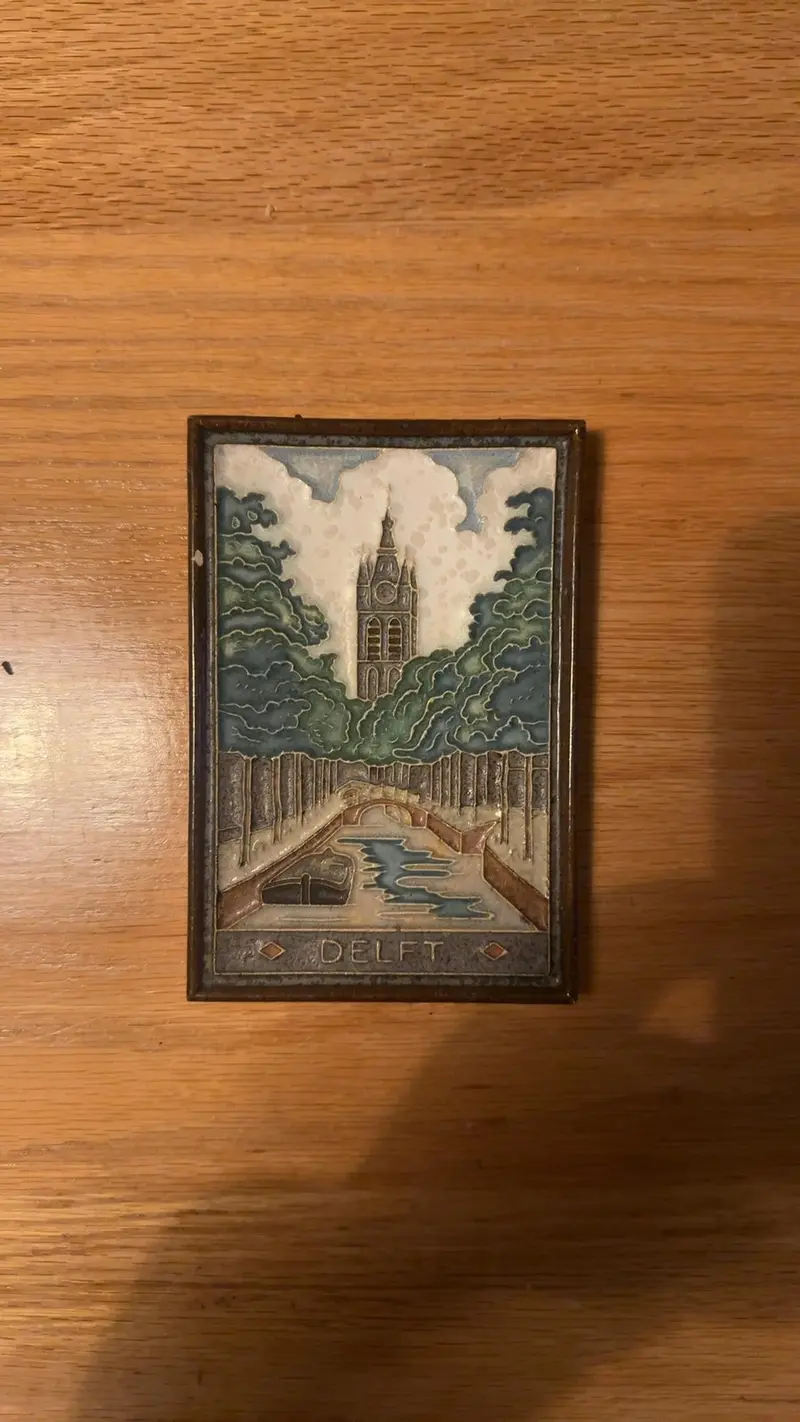
Originally released in 1907 to commemorate the opening of the Peace Palace in The Hague, these architectural tiles utilize a multi-colored enamel technique that prevents different glazes from mixing during firing.
The 1915 Rembrandt-Style Portrait Charger
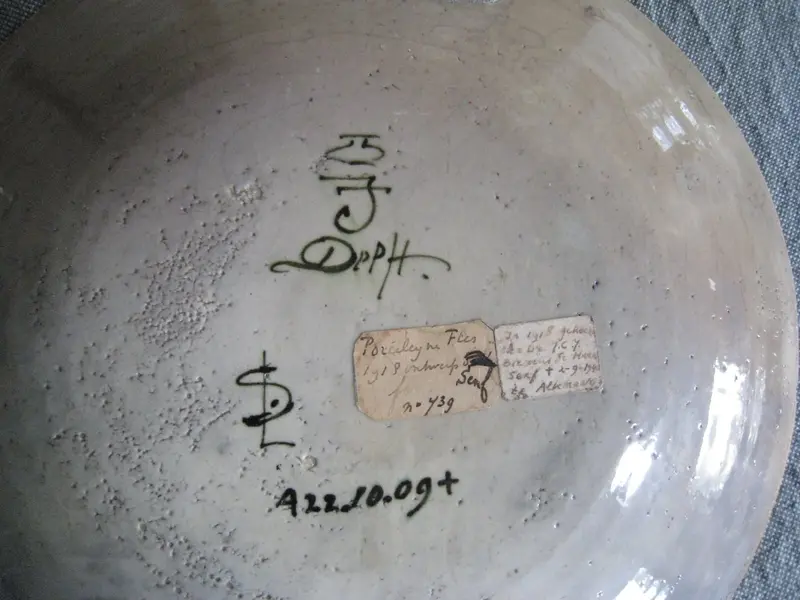
A 41cm wide hand-painted plate from 1915 sold at a 2023 auction for €1,200, showcasing the specific year-code letters used to identify the painter and date of production.
The Jacoba Lusterware Collection
Produced between 1900 and 1920, this specific line utilized a metallic luster glaze developed by chemist Adolf Lecomte to compete with French Art Nouveau ceramics.