How do I read pottery and porcelain marks?
Ceramic marks identify the manufacturer, date, and sometimes the decorator or pattern. The most systematic mark is the Meissen crossed swords (introduced 1720, with period variations documented in reference books). Sèvres used interlaced L's with date letters (1753 to 1793) and later crowned monograms. English factories used a variety of marks: Chelsea (anchor), Derby (crown), Worcester (crescent), and Wedgwood (impressed name). Chinese reign marks on porcelain indicate the dynasty and emperor, but later copies frequently used earlier reign marks as a mark of respect. The key references are 'Kovel's Dictionary of Marks' for a broad overview, 'Godden's Encyclopaedia of British Pottery and Porcelain Marks' for British ceramics, and 'A Dictionary of Chinese Ceramics' for Asian wares.
What makes Chinese export porcelain valuable?
Chinese export porcelain was produced at Jingdezhen and Dehua specifically for Western markets from the 16th to 19th centuries. Value depends on age, decorative complexity, and condition. Armorial porcelain (bearing the coat of arms of an European family) commands premiums of 2,000 to 50,000 dollars per piece because each service was custom-ordered. Famille rose and famille verte enameled export wares from the Qianlong period (1736 to 1795) sell for 500 to 10,000 dollars per piece. Blue and white Kraak porcelain from the Ming dynasty (16th to 17th century) is highly at 1,000 to 20,000 dollars. Canton ware from the 19th century is more accessible at 100 to 1,000 dollars. Complete dinner services multiply per-piece values significantly.
Is studio pottery a good collecting category?
Studio pottery has seen strong appreciation since the 2000s as institutional recognition has grown. Works by Lucie Rie (1902 to 1995) have reached over 100,000 dollars at auction, up from 5,000 to 10,000 dollars in the 1990s. Bernard Leach pieces sell for 1,000 to 50,000 dollars. Shoji Hamada works command 2,000 to 30,000 dollars. Hans Coper pieces regularly exceed 50,000 dollars. American studio potters like Peter Voulkos (3,000 to 100,000 dollars) and George Ohr (2,000 to 30,000 dollars) have strong markets. The collecting strategy is similar to contemporary art: buy works by emerging and mid-career potters directly from exhibitions (500 to 5,000 dollars) before institutional recognition drives prices up. Look for pieces shown in galleries, not craft fairs.
How do I detect repairs and restoration on ceramics?
UV light is the most useful tool: most adhesives and fill materials fluoresce differently from the original ceramic body. Hold the piece under a long-wave UV lamp in a dark room: repairs appear as bright spots or lines against the darker fluorescence of original material. Run your fingernail over surfaces to feel for fill material (which is often slightly softer or smoother than the original glaze). Tap the piece gently: a clear ring indicates intact ceramic, while a dull thud can indicate cracks or restored areas. Check rims and handles especially carefully, as these are the most commonly damaged and repaired areas. For valuable pieces, a blacklight examination should be standard before any purchase above 500 dollars.
What American art pottery is most collectible?
Rookwood Pottery (Cincinnati, 1880 to 1967) is the most consistently collected American art pottery. Standard glaze pieces with floral decoration sell for 200 to 2,000 dollars, while rare Vellum glaze landscape pieces by artists like Ed Diers and Carl Schmidt reach 5,000 to 30,000 dollars. Grueby Pottery (Boston, 1894 to 1920) with distinctive matte green glazes sells for 1,000 to 30,000 dollars. George Ohr (the 'Mad Potter of Biloxi,' 1857 to 1918) produces the most extreme price range: small pieces sell for 2,000 to 5,000 dollars, while major sculptural works have exceeded 60,000 dollars. Newcomb College pottery (New Orleans) and Marblehead Pottery (Massachusetts) are also strong. The market values hand-decorated over production pieces, and artist attribution increases value.
What are the most valuable types of tiles?
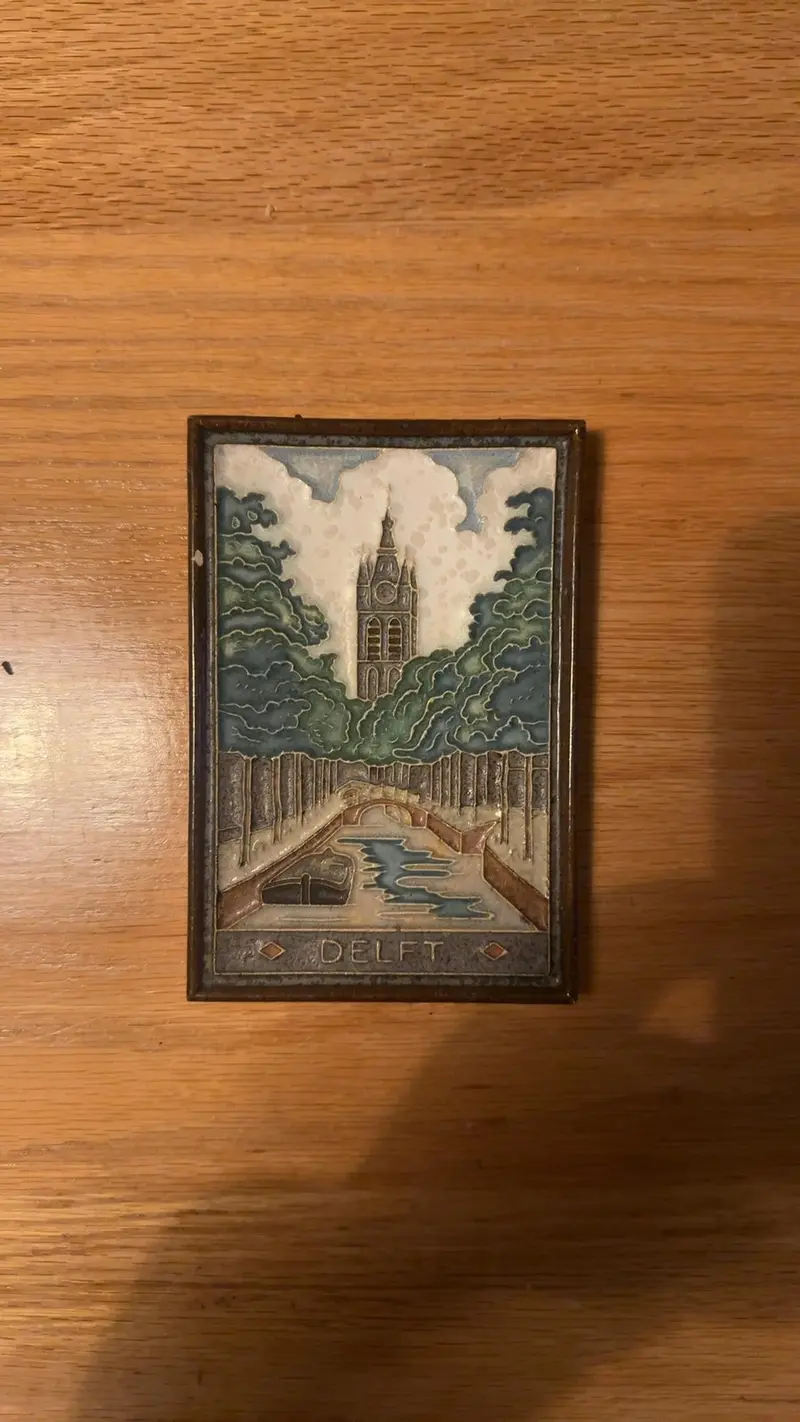
Iznik tiles (Ottoman Turkey, 15th to 17th century) are the most valuable ceramic tiles, with individual examples selling for 5,000 to over 500,000 dollars depending on design complexity and condition. Panels of tiles in situ (installed in historical buildings) are protected cultural property. Dutch Delft tiles from the 17th and 18th centuries are more accessible at 50 to 500 dollars each, with rare figural scenes and polychrome examples reaching 1,000 to 5,000 dollars. William De Morgan tiles (Arts and Crafts movement, London, 1872 to 1907) sell for 200 to 5,000 dollars. Persian and Moroccan zellige tilework fragments command 100 to 2,000 dollars. Victorian encaustic floor tiles by Minton and Maw are collected at 20 to 200 dollars each, with complete border patterns and rare designs bringing more.