
Traditional Javanese Brass Makuta (Theatrical Headdress)
Visual assessment
Photo analysis
Save to revisit in your watchlist. This does not add the object to your own collection.
Traditional Javanese Brass Makuta
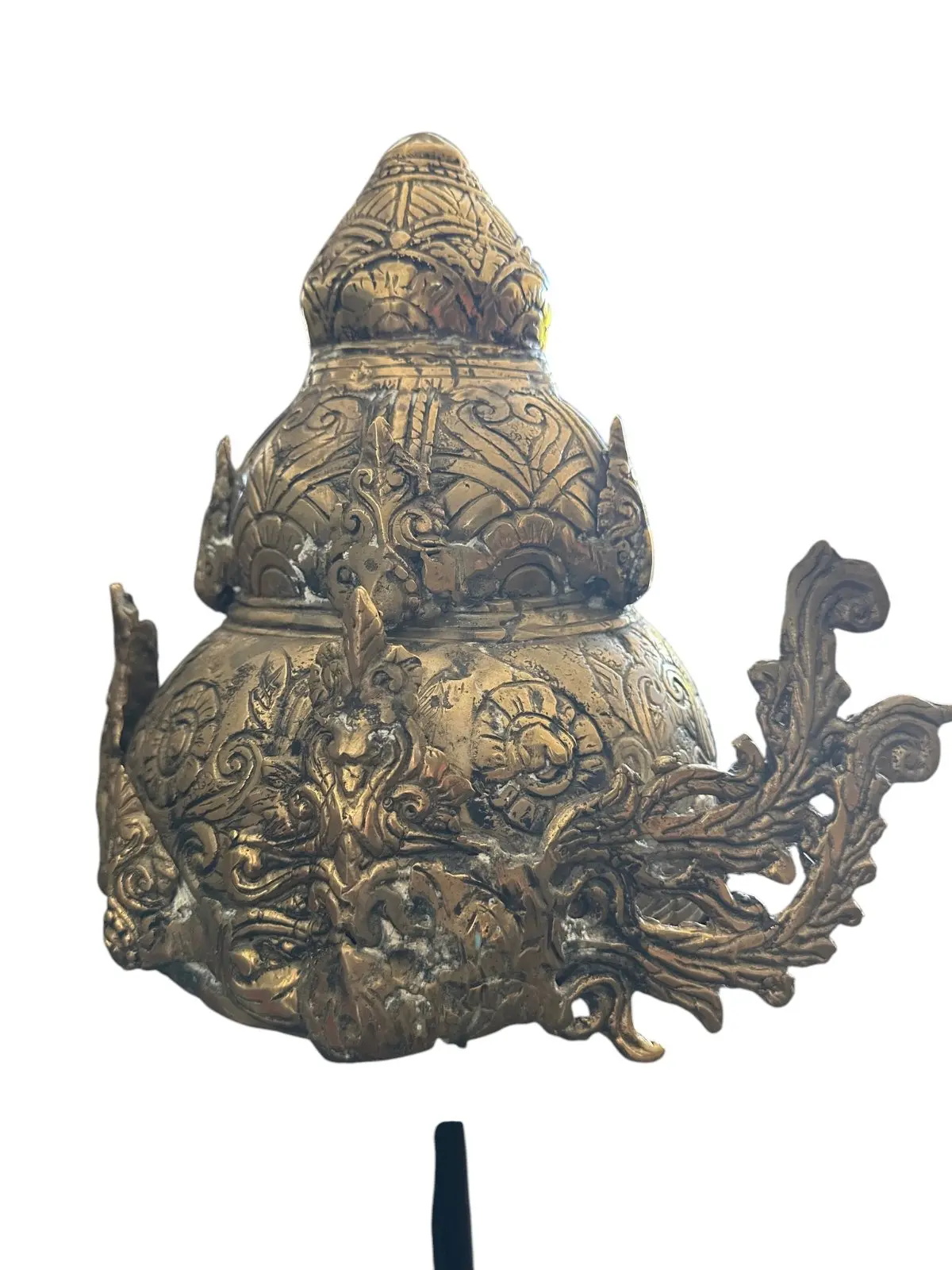
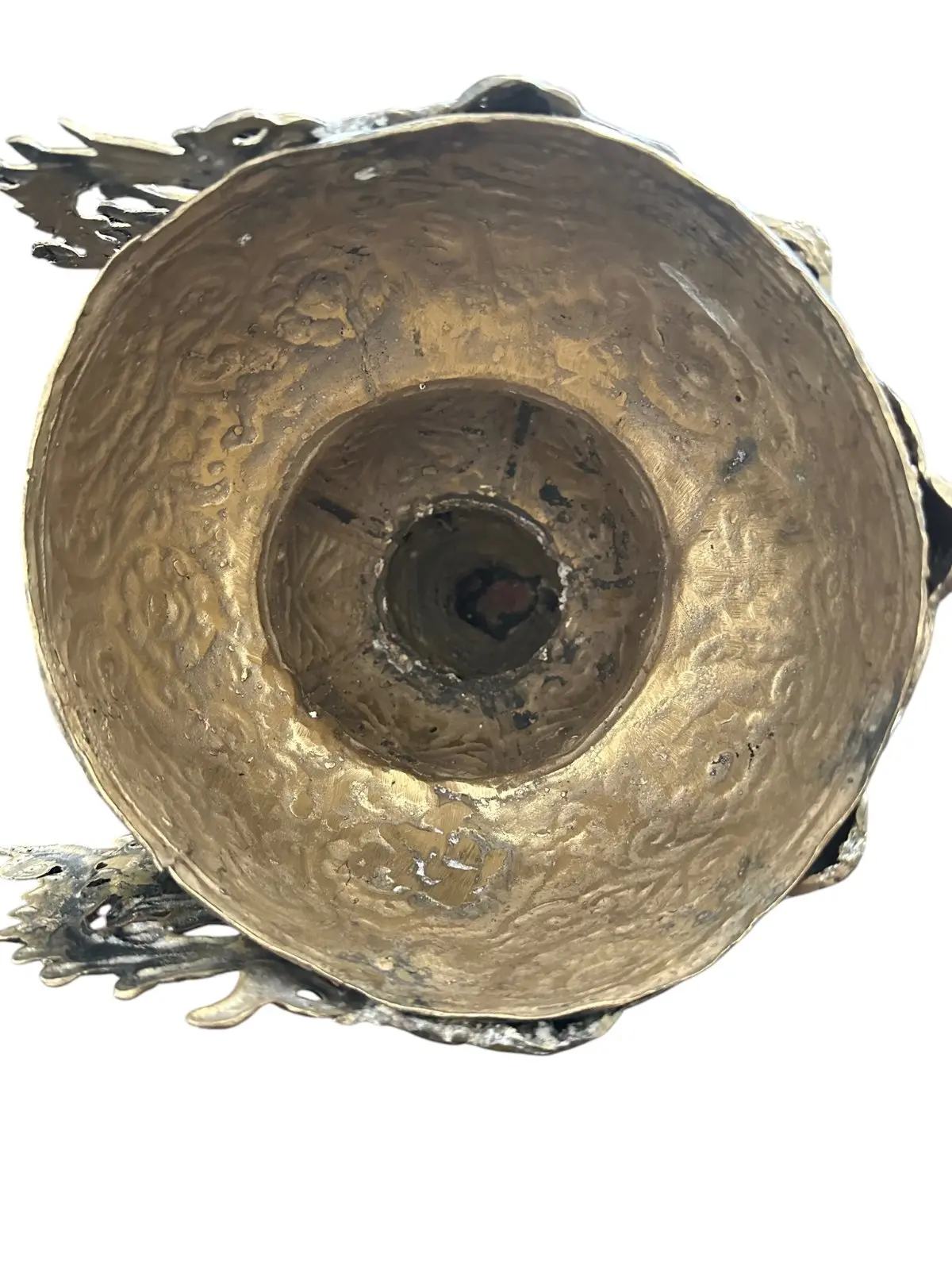
A tiered brass headdress constructed using repoussé and chasing techniques on sheet metal. The exterior displays deep chased sulur (vine) motifs and projecting side wings known as sumping. The unpolished interior exposes the reverse hammer strikes, a central brazed seam, and visible oxidation typical of mid-to-late 20th-century Indonesian metalworking shops.
Related traditions
Thai Royal Court
Rattanakosin period (1782-present)
The Chada and Mongkut headdresses utilize a similarly tiered, conical stupa-like silhouette to denote divine right.
Use and ceremony
Late 20th Century
Transitioned from exclusive royal and theatrical use to widespread production as interior decorative arts for the export market.
Origins and context
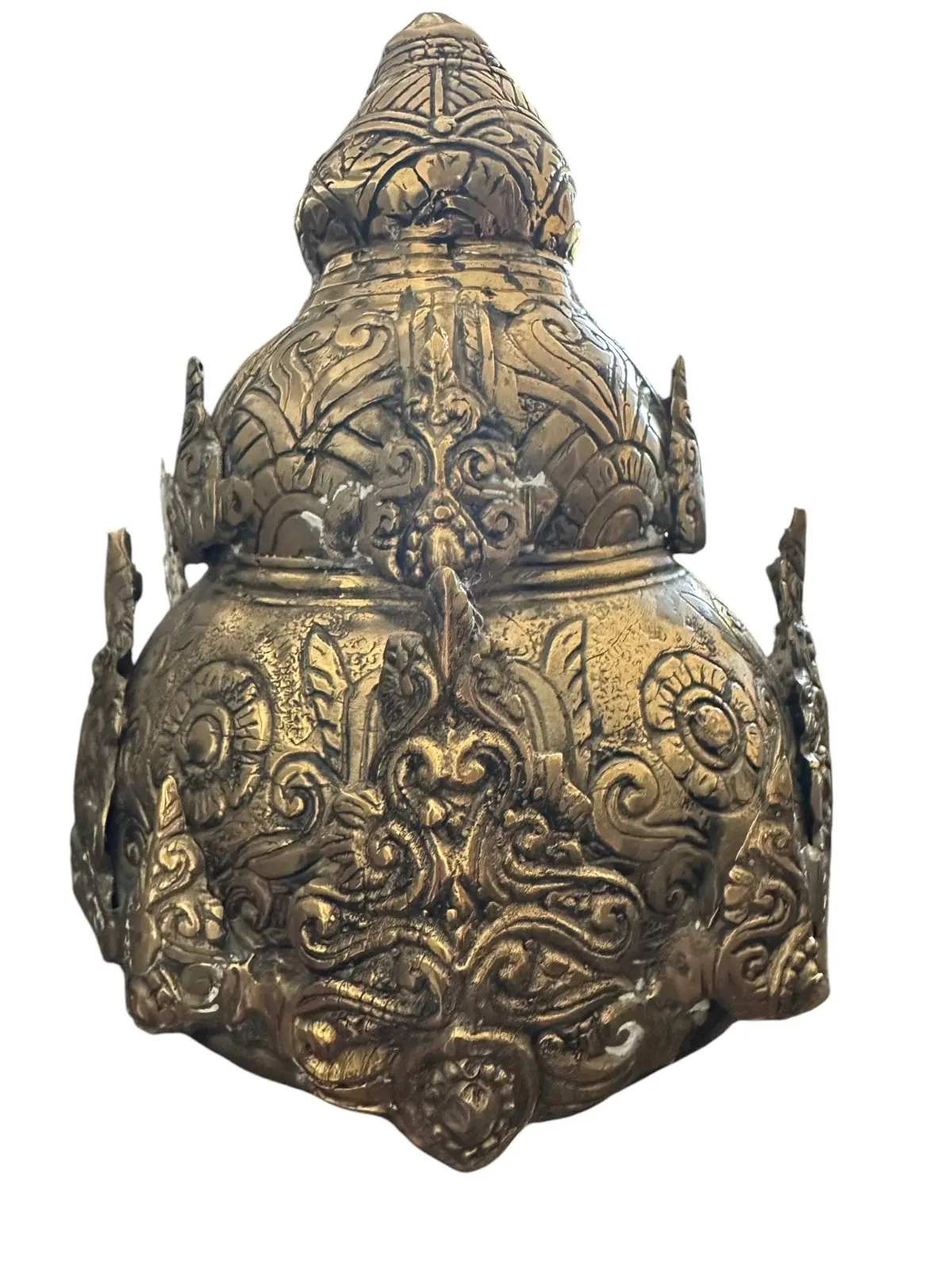
The Makuta (crown) form originates from 13th-16th century Majapahit Hindu-Buddhist iconography. In the royal courts of Yogyakarta and Surakarta, this specific tiered profile is assigned to mythological kings and deities like Prabu Kresna in Wayang Wong dance dramas. While mid-20th-century artisan workshops in Java cast these in brass for decorative display, actual performance pieces from that era were cut from lighter buffalo hide.
Further details
Sotheby's and Christie's ethnographic sales classify similar metal Javanese crowns under 'decorative arts' rather than 'ritual antiquities' due to their post-1950 production timelines.
Attribution and evidence
Clear visibility of the interior construction methods and surface oxidation allows for precise identification of the technique and approximate era, though exact workshop attribution within Java is not possible without maker stamps.
Photographs that would help
- Measure the exact interior diameter to confirm if it matches average human head proportions (approx 55-60cm circumference) or is strictly scaled for statuary
Wear and preservation
The exterior exhibits intentional darkening with raised areas rubbed bright, alongside scattered green copper oxidation spots near the lower rim. White polishing compound residue remains trapped in the chased recesses, and minor edge deformation is visible on the projecting side elements.
Materials and construction
The exterior brass surface features a dual-tone finish with raised convex surfaces polished to a bright yellow-gold, contrasting against artificially darkened recesses containing calcium carbonate polishing residue.
Recorded physical details
Constructed from hammered sheet brass, generating an estimated weight between 1.0 to 1.5 kg, making it significantly lighter than solid cast metalwork of similar volume.
Scarcity and surviving examples
Average · 4/10 estimated rarity
This is a qualitative collection score, not a measured survival count, market percentile or proof of authenticity.
What the photographs establish
Interpretation of the photographs and supplied context. This does not authenticate the object.
What photo analysis can and cannot establishValue and its basis
Estimate recorded: Aug 20, 2026
How we estimate value
- No documented comparable sales are shown for this estimate
- Condition, completeness & craftsmanship
- Demand assumptions may not reflect current transactions
- The range is an estimate, not an asking price or sale result
For informational purposes only, not a formal appraisal.
The collector’s account
Supporting details
- User identified the origin as Indonesia and the primary material as brass, which matches the visible repoussé sheet metal and traditional Javanese sulur motifs.
Where the account differs
- User referred to this as the 'Crown of Java Man'; however, 'Java Man' designates an 1891 Homo erectus fossil discovery, whereas this is a Makuta representing classical Javanese mythological figures.
- User stated the condition is 'Mint', but visual evidence shows trapped polishing compound and green oxidation indicative of mid-to-late 20th-century age and handling.
Related objects
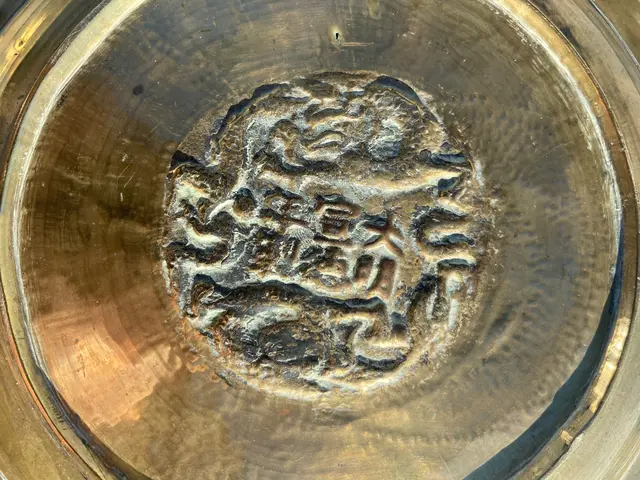
Chinese Brass 'Dragon' Dish with Apocryphal Mark
Same category
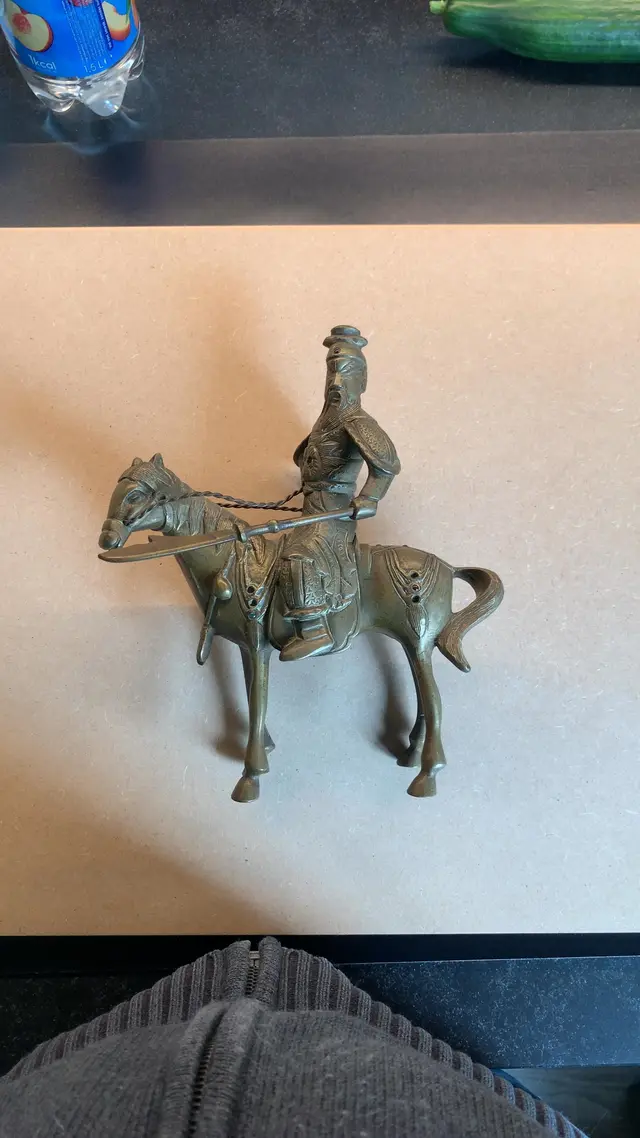
Chinese Cast Brass Figure of Guan Yu on Horseback
Same category
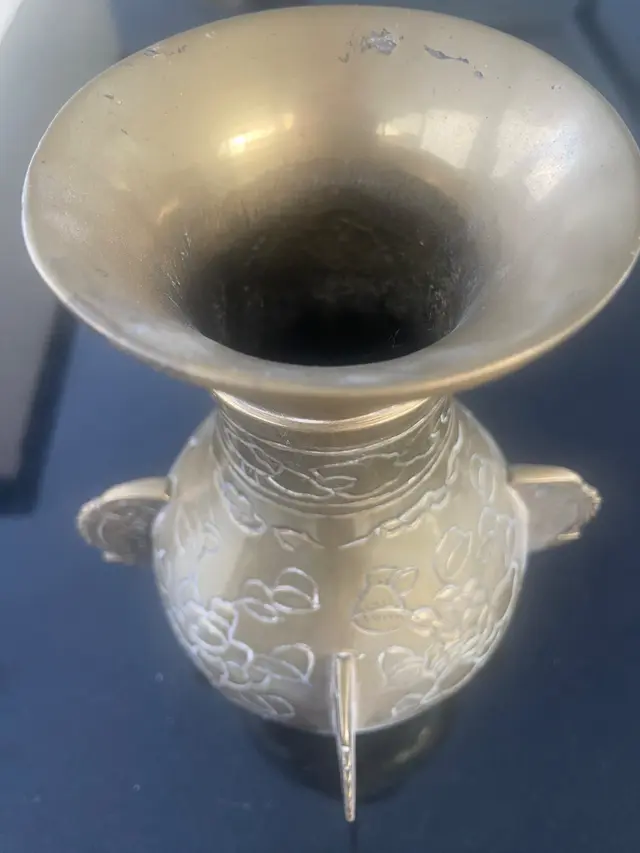
Chinese Brass 'Gu-style' Vase with Floral and Geometric Engravings
Same category
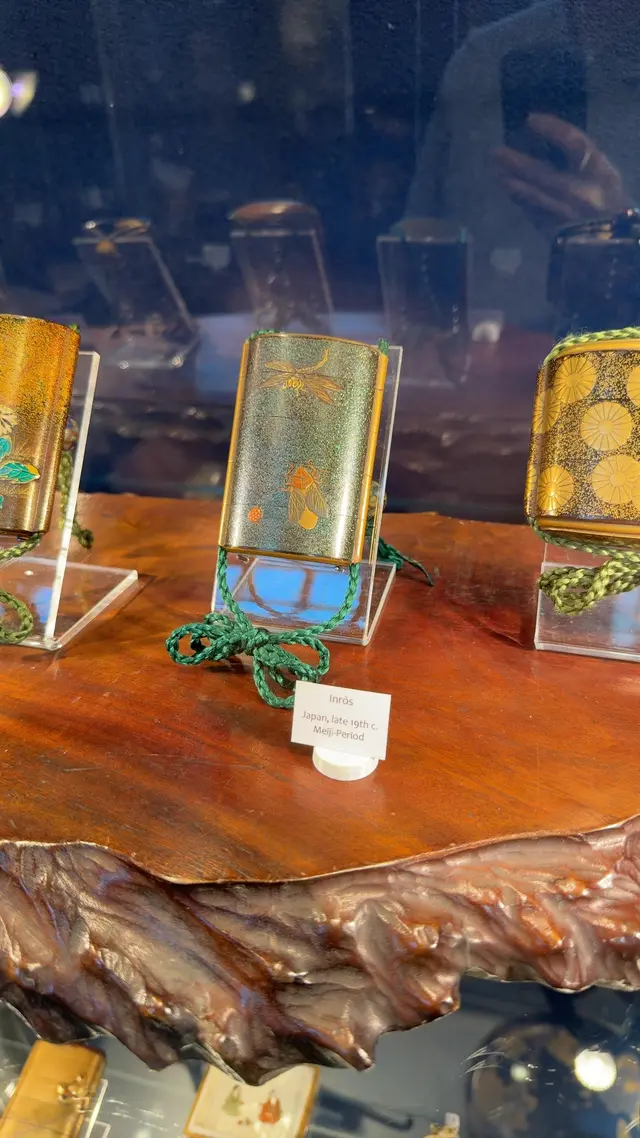
Japanese insect-decorated lacquer inrō
Same category
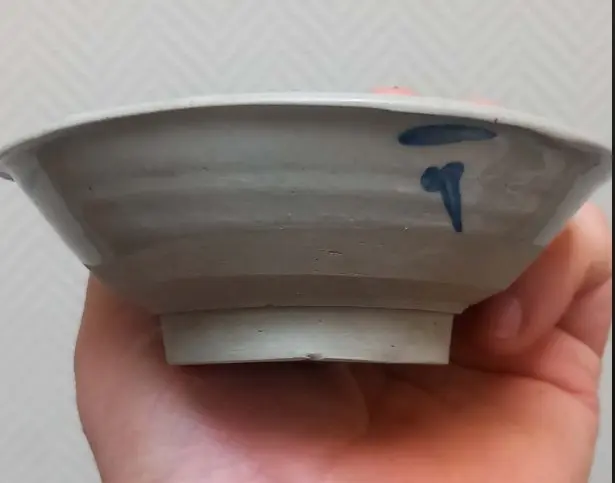
Chinese Blue and White Provincial 'Swatow' Ware Bowl, Zhangzhou Kilns, Late Ming Dynasty
Same category
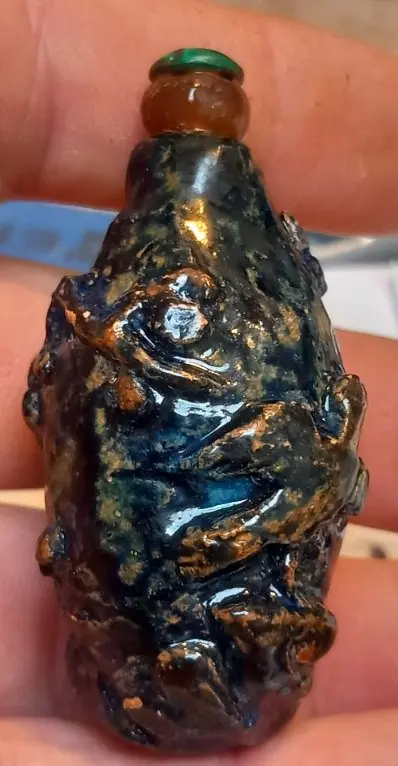
Chinese Molded Lapis-Style Glass Snuff Bottle, Late 19th to Early 20th Century
Same category
Explore Asian Art
Chinese, Japanese, Korean, and other Asian art and antiques.
Asian Art value and rarity guideShare this find
A place for your asian
Keep its photographs, maker’s marks and the story you know in one object record. Start with a photo.
Create an account for 10 free scans. No credit card needed.
Join the conversation (1)
Wow! Amazing!
Sign in to leave a comment
Sign in