Chinese Brass 'Dragon' Dish with Apocryphal Mark
Estimated value
$100 - $300Rarity
Average(4/10)Category
Asian ArtEra
Early 20th Century to Mid-20th CenturyOrigin
ChinaAuthenticity
CHINESE BRASS 'DRAGON' DISH WITH APOCRYPHAL MARK: IDENTIFICATION
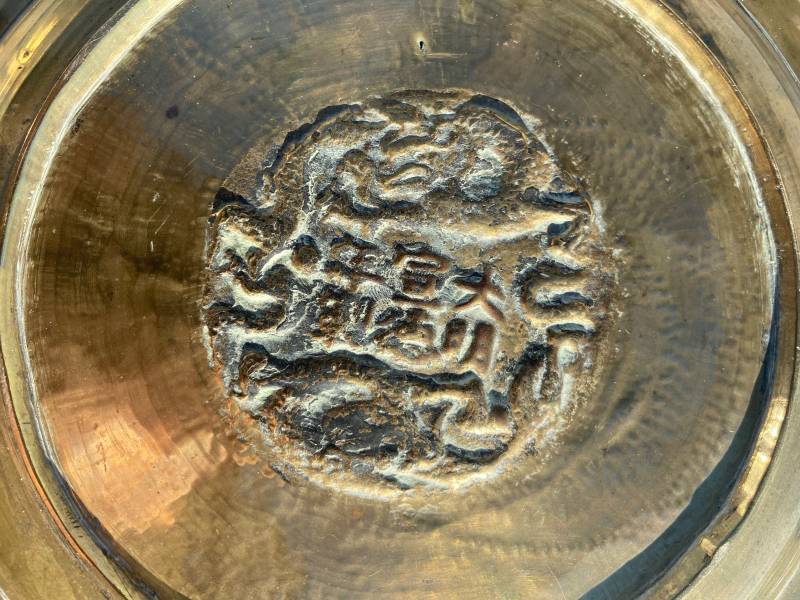
This is a circular brass dish, likely intended for decorative use, featuring extensive repoussé work. The primary motif on the obverse is a finely detailed, five-clawed dragon encircling a central boss, which is itself decorated with a geometric pattern. The border is adorned with Greek key (meander) patterns and auspicious cloud motifs. The reverse features a raised central mark, deeply recessed into the brass, which appears to be a stylized Imperial reign mark. The overall presentation is characteristic of Chinese brassware produced for both domestic and export markets.
SCARCITY
Typical antique shop fare. Requires some searching but regularly available. This is where most genuine antiques fall.
Typical Characteristics
- Standard antique shop items
- Regularly available
- Moderate collector interest
Confidence Factors
- The reign mark on the reverse appears heavily stylized and difficult to decipher clearly from the image, often indicative of an apocryphal mark from a later period.
- Brassware of this type with traditional motifs was mass-produced for export, making it challenging to attribute to a specific workshop or exact period without further examination.
- The quality of the repoussé is good, but not exceptional enough to immediately suggest Imperial workshop production.
Expert review recommended. Consider consulting a specialist before making purchasing decisions.
ASIAN ART SCHOLAR'S TAKE
Asian Art Specialist
The visual evidence clearly indicates Chinese decorative brassware with traditional motifs. My confidence in the 'estimated era' and 'authenticity risk' is moderate due to the ambiguity of the mark, which is a common challenge with such items. Further clarity on the mark would refine the assessment.
KEY EVIDENCE
- 1The primary material is brass, exhibiting typical patination and oxidation for its age.
- 2The obverse features a prominent five-clawed dragon motif, a classic symbol of Chinese imperial power and good fortune.
- 3The reverse has a deeply impressed, highly stylized character mark which appears to be an apocryphal reign mark rather than an authentic one.
- 4Decorative elements include traditional Greek key (meander) patterns and cloud motifs, common in Chinese art.
- 5The repoussé technique is clearly visible, shaping the metal from the reverse to create the raised design on the front.
UNCERTAINTIES
- •The reign mark on the reverse is indistinct and highly stylized, which often suggests it is a decorative or apocryphal mark rather than a genuine imperial one.
- •The overall quality, while good, doesn't immediately suggest a high-end Imperial workshop, but rather commercial production typical of the early to mid-20th century.
WHAT WOULD IMPROVE CERTAINTY
- →A magnified close-up image of the reign mark on the reverse would be crucial for any attempt at translation or identification.
- →Examination of the foot-rim (if any) and overall construction to assess the manufacturing techniques and potential age.
- →Comparison with known examples of documented Chinese brassware from different periods to pinpoint stylistic nuances.
- →Consider material analysis to confirm the composition of the alloy more precisely if there are doubts about it being brass.
CONDITION & GRADE
Condition
The dish exhibits clear signs of age and use, including overall oxidation, verdigris buildup in relief details, and some surface scratches consistent with handling and environmental exposure. No significant dents or structural damage are immediately apparent.
ASIAN ART VALUATION
Updated: Feb 27, 2026
- Market comparables from auctions & retail
- Condition, completeness & craftsmanship
- Current collector demand & trends
- Low = quick sale, high = patient seller
For informational purposes only, not a formal appraisal.
ABOUT ASIAN ART
Chinese, Japanese, Korean, and other Asian art and antiques.
Asian Art value and rarity guideSHARE THIS CURIOSITY
Have your own curiosities to discover?
Scan Your Curiosity
COMMENTS