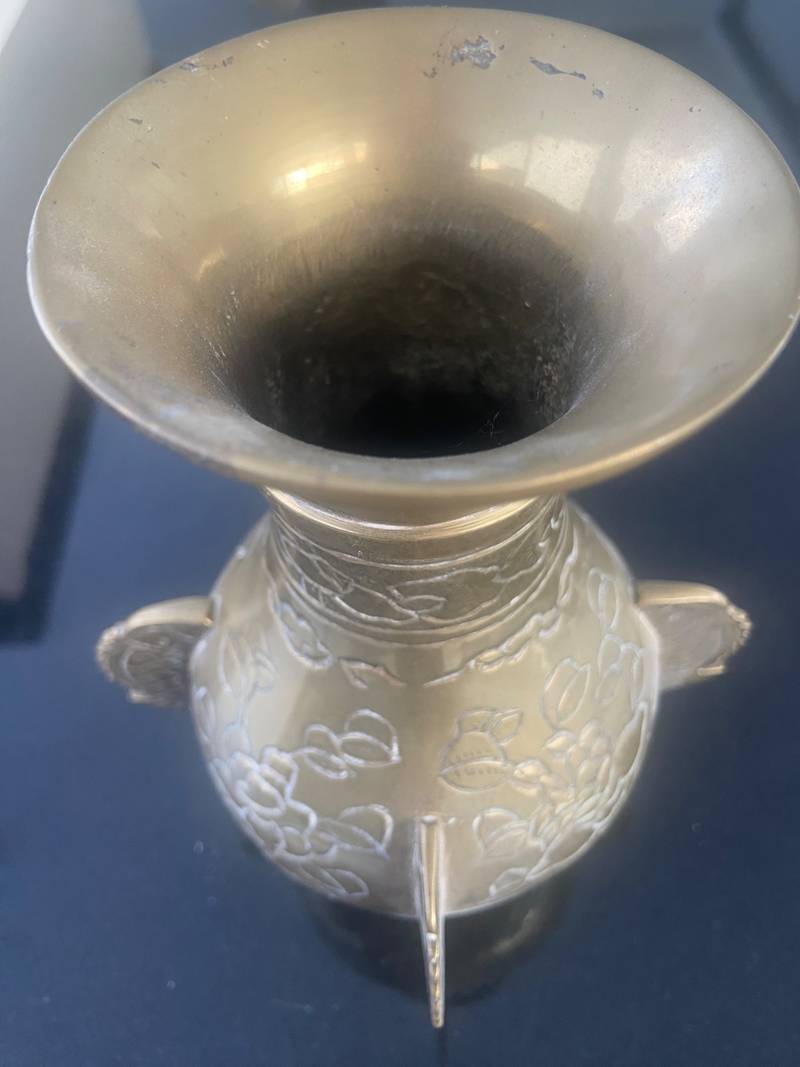
Chinese Brass 'Gu-style' Vase with Floral and Geometric Engravings
Estimated value
$80 - $250Rarity
Average(4/10)Category
Asian ArtEra
Late 19th Century - Mid 20th CenturyOrigin
ChinaAuthenticity
CHINESE BRASS 'GU-STYLE' VASE WITH FLORAL AND GEOMETRIC ENGRAVINGS: IDENTIFICATION
This appears to be a Chinese brass vase, styled after ancient 'Gu' bronze ritual vessels, characterized by its flared mouth and foot. The body is decorated with engraved or etched patterns, featuring floral motifs, possibly peonies or chrysanthemums, alternating with stylized cloud patterns. The base shows a recessed square mark, likely intended to mimic an imperial reign mark or maker's stamp, common on decorative brassware from the late Qing Dynasty to the Republican period.
CROSS-CULTURAL PARALLELS
Where This Object Echoes
The 'Gu' form is a direct stylistic reference to archaic bronze ritual vessels, signifying a connection to a long and esteemed history of Chinese art.
The combination of archaic forms with more contemporary (for the time) floral and cloud motifs became a hallmark of later Qing and Republican period decorative brass and porcelain.
Ritual & Ceremonial Use
- •While originally used for ritualistic pouring of wine, later decorative interpretations like this piece would have been used for display, perhaps holding incense sticks or simply as an ornamental object in a scholar's studio or domestic setting.
Meaning Through Time
The Gu vessel was deeply symbolic, serving as a sacred implement for communing with ancestors during important state and family rites.
As archaic forms were reinterpreted, they often shed their direct ritualistic function to become objects of scholarly appreciation, aesthetic beauty, or commercial export, symbolizing a reverence for antiquity rather than active ritual use.
SCARCITY
Typical antique shop fare. Requires some searching but regularly available. This is where most genuine antiques fall.
Typical Characteristics
- Standard antique shop items
- Regularly available
- Moderate collector interest
Confidence Factors
- The square base mark is unclear and appears to be a decorative element rather than a precise, legible reign mark, which is common on later reproductive pieces.
- Without clearer images of the mark and closer inspection of the crafting techniques, it's difficult to distinguish a genuine antique from a more recent decorative reproduction.
- Brassware with 'ancient' styles was heavily produced in the 20th century as tourist items or general home decor.
Expert review recommended. Consider consulting a specialist before making purchasing decisions.
ASIAN ART SCHOLAR'S TAKE
Asian Art Specialist
The identification of the object's form and material as a Chinese brass 'Gu-style' vase is clear. However, precise dating and definitive authentication as a genuine antique versus a later decorative piece are limited by the quality and angles of the available imagery, particularly regarding the base mark.
KEY EVIDENCE
- 1The flared mouth and foot, identifying it as a 'Gu-style' vessel.
- 2Material appears to be brass, indicated by the metallic luster and patina characteristics.
- 3Engraved floral and cloud motifs are typical of late Qing to Republican era decorative arts.
- 4The indistinct square base mark suggests a decorative convention rather than an imperial reign mark.
UNCERTAINTIES
- •The legibility and authenticity of the base mark cannot be determined from the images provided.
- •The extent of surface restoration or alteration cannot be assessed clearly.
WHAT WOULD IMPROVE CERTAINTY
- →Obtain a high-resolution, well-lit photograph of the base mark for transcription and analysis.
- →Examine the interior of the vase and the pontil/manufacturing marks on the base more closely to assess construction methods.
- →Provide dimensions (height, mouth diameter, foot diameter) for better comparison to known examples.
- →Consult with a brass and bronze specialist regarding the specific alloy and methods of patina application.
CONDITION & GRADE
Condition
The vase shows general surface wear and some scratches consistent with handling and age. The patina is uneven, suggesting it may have been selectively cleaned or handled. The interior shows residue, possibly from original use or previous display.
ASIAN ART VALUATION
Updated: Feb 27, 2026
- Market comparables from auctions & retail
- Condition, completeness & craftsmanship
- Current collector demand & trends
- Low = quick sale, high = patient seller
For informational purposes only, not a formal appraisal.
ABOUT ASIAN ART
Chinese, Japanese, Korean, and other Asian art and antiques.
Asian Art value and rarity guideSHARE THIS CURIOSITY
Have your own curiosities to discover?
Scan Your Curiosity
COMMENTS