
Pale green stone elephant carving
Estimated value
$25 - $150Rarity
Ordinary(3/10)Category
ArtEra
Undetermined; an antique date is not establishedVisual assessment
Photo analysis
Save to revisit in your watchlist. This does not add the object to your own collection.
Pale green stone elephant carving
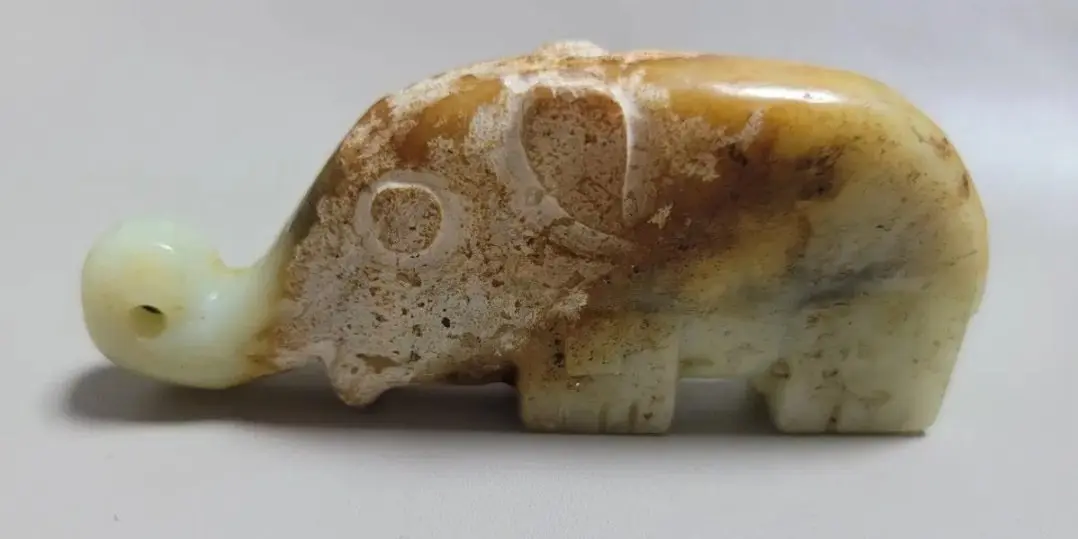
A curled, pierced trunk identifies this compact elephant carving, whose body is reduced to a rounded back, an outlined ear and short block-like legs. Incised lines divide the feet into toes. The pale green, partly translucent material resembles jade, but its mineral identity is unconfirmed. The trunk opening could accommodate a cord, although suspension rather than simple decoration is not established.
Attribution and evidence
The two views consistently identify one elephant carving, but they do not establish its material, maker, origin or date. The rarity assessment refers cautiously to the general decorative carving type, not a verified historical variant.
Identifying details
- 1Photo 1: the curled trunk, large outlined ear and short legs support identification as an elephant.
- 2Photo 1: an opening passes through the curled trunk, providing a possible attachment point.
- 3Photo 2: the narrow view establishes a three-dimensional carving rather than a flat silhouette.
Open questions
- •Surface discoloration should not be treated as proof of antiquity.
- •Neither a specific cultural attribution nor a sacred or ceremonial function is established.
Photographs that would help
- Photograph the opposite broad face and underside in diffuse light, including any marks or damaged edges.
- Provide measured dimensions and any documented purchase history or earlier attribution.
- If a jade or antique attribution affects the intended transaction, obtain non-destructive material identification and a specialist assessment before cleaning.
Wear and preservation
The assessment concerns visible preservation only; the cause and depth of the altered areas remain unresolved.
The elephant's main outline and curled trunk appear intact. Rough white patches interrupt the polished surfaces, particularly around the head and along the narrow edge. Minor edge irregularities are visible, but the photographs do not resolve whether these are chips or features of the carving. The opposite broad face is not shown.
Materials and construction
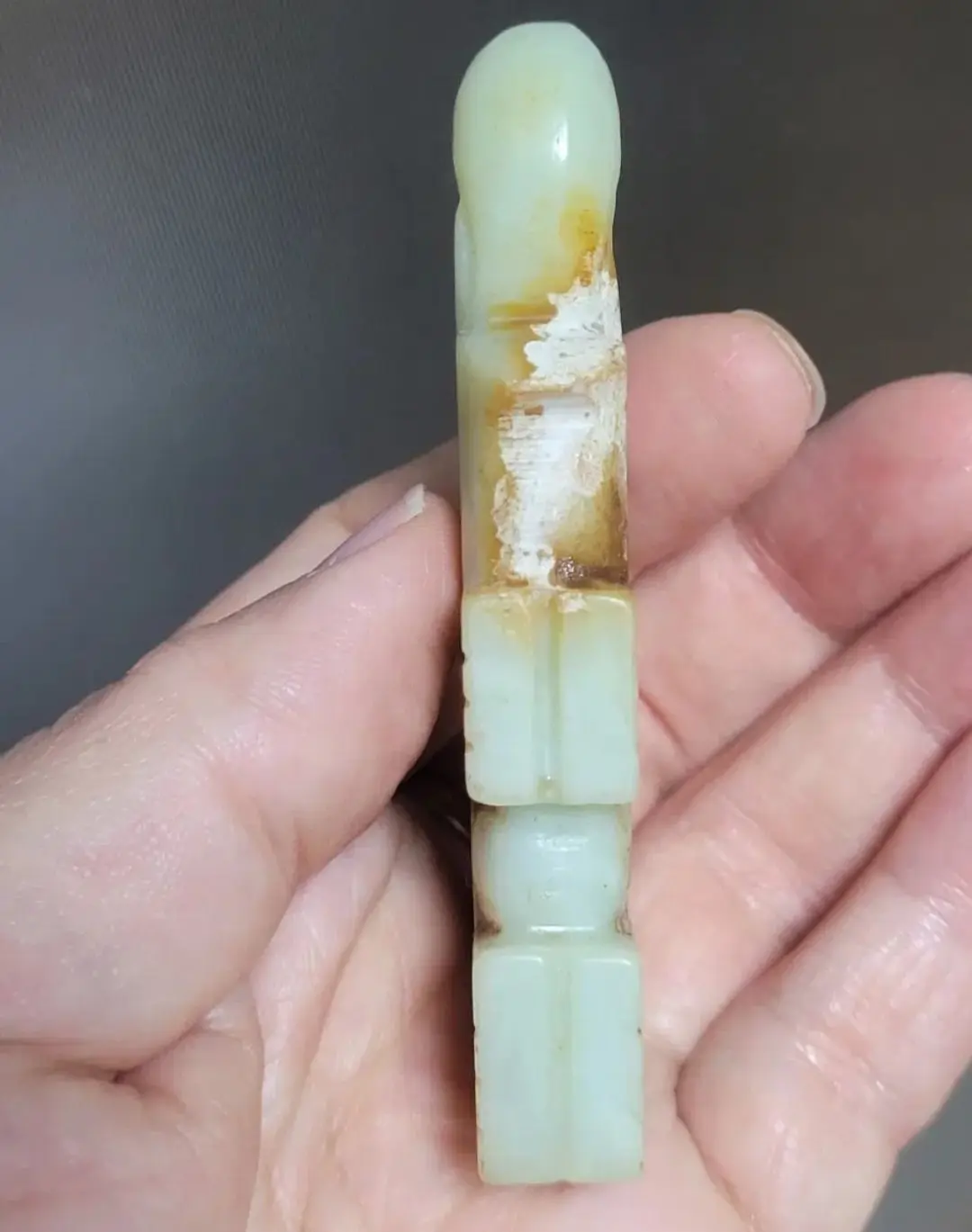
Smooth, reflective green areas contrast with extensive brown mottling and irregular whitish, granular-looking patches. The narrow view shows parallel grooves across some white areas. These textures do not establish whether the discoloration is natural, applied or associated with surface alteration.
Scarcity and surviving examples
Ordinary · 3/10 estimated rarity
This is a qualitative collection score, not a measured survival count, market percentile or proof of authenticity.
What the photographs establish
Interpretation of the photographs and supplied context. This does not authenticate the object.
- Jade-like appearance is not a mineral identification.
- The brown and white surface effects cannot establish age or burial history.
- No maker's mark, dated inscription or provenance documentation is supplied.
Value and its basis
Estimate recorded: Nov 24, 2026
How we estimate value
Collectors and interest
Buyers of small animal carvings and decorative stone objects are the most plausible audience under the present identification.
What supports the estimate
- •Recognizable elephant form with an intact curled trunk
- •Confirmation of a desirable carving stone could increase interest
What could change it
- •The indicative estimate assumes an unattributed decorative stone carving, without an antique or jade premium.
- •Applied discoloration, softer substitute material or concealed damage could reduce value.
- •No supplied market records support a researched appraisal.
Comparing quality
- •Documented material identity and credible age attribution
- •Well-preserved carving details and an unaltered surface
The effect of condition
Value depends on the integrity of the trunk opening, feet and edges, together with the extent of surface loss or treatment. The conditional range reflects the unconfirmed material and missing opposite-face view.
Market interest
For informational purposes only, not a formal appraisal.
Related objects
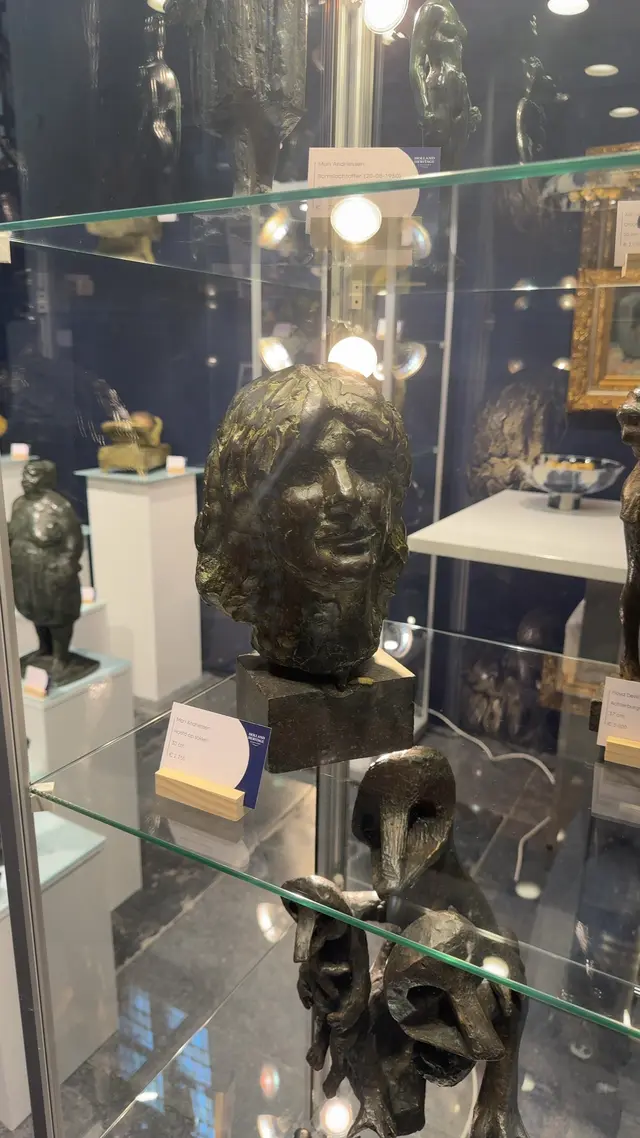
Mari Andriessen (Dutch, 1897-1979) - Hoofd op Sokkel, Bronze, c. 1950-1970
Same category
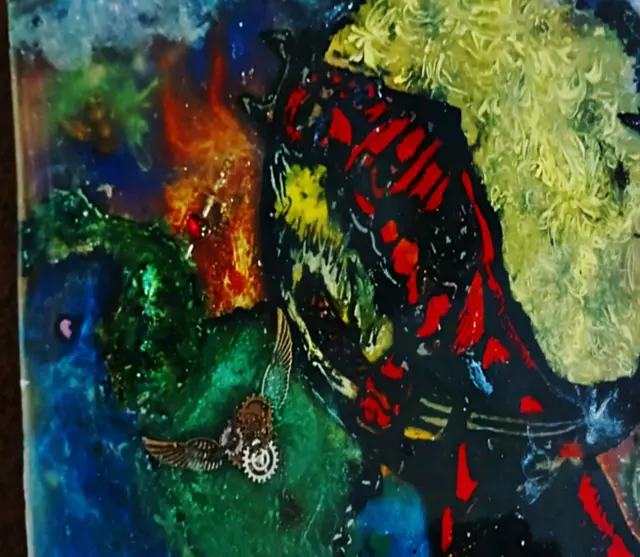
Contemporary Mixed Media Resin Assemblage with Samurai Silhouette and Steampunk Elements, c. 2020-2026
Same category
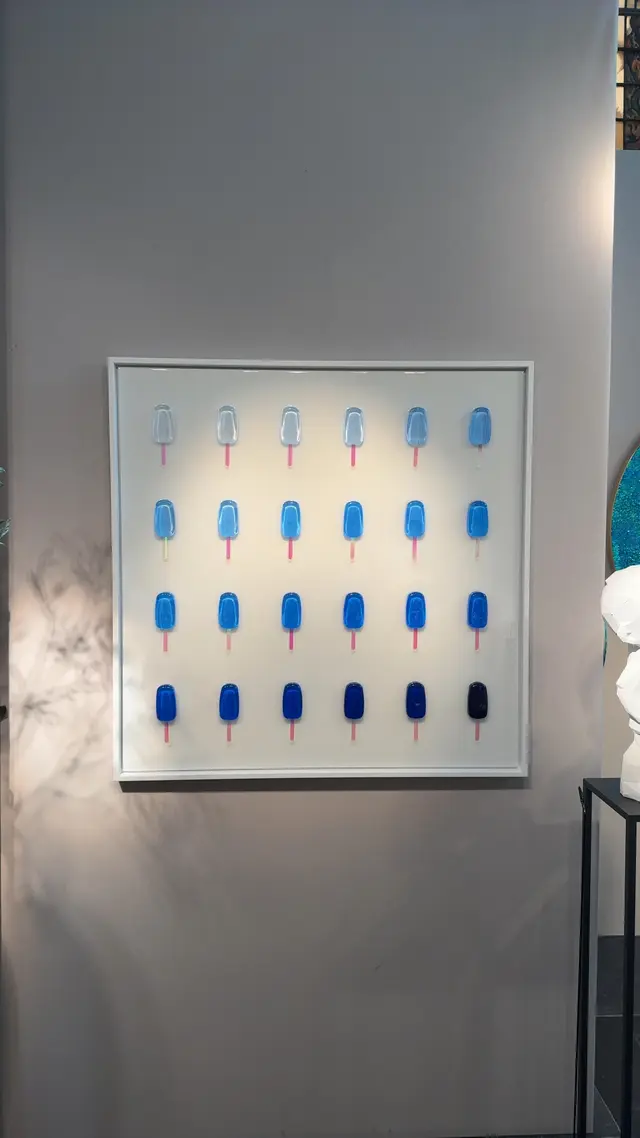
Contemporary Mixed Media 'Popsicle' Wall Sculpture
Same category
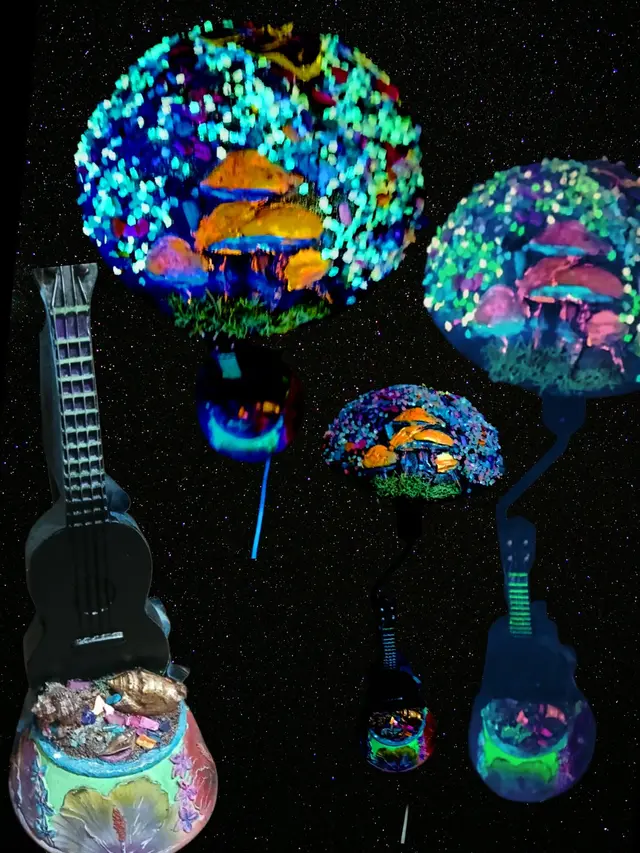
Dash Rodgerz Mixed-Media Blacklight Sculpture with Ukulele and Mushroom Motif
Same category
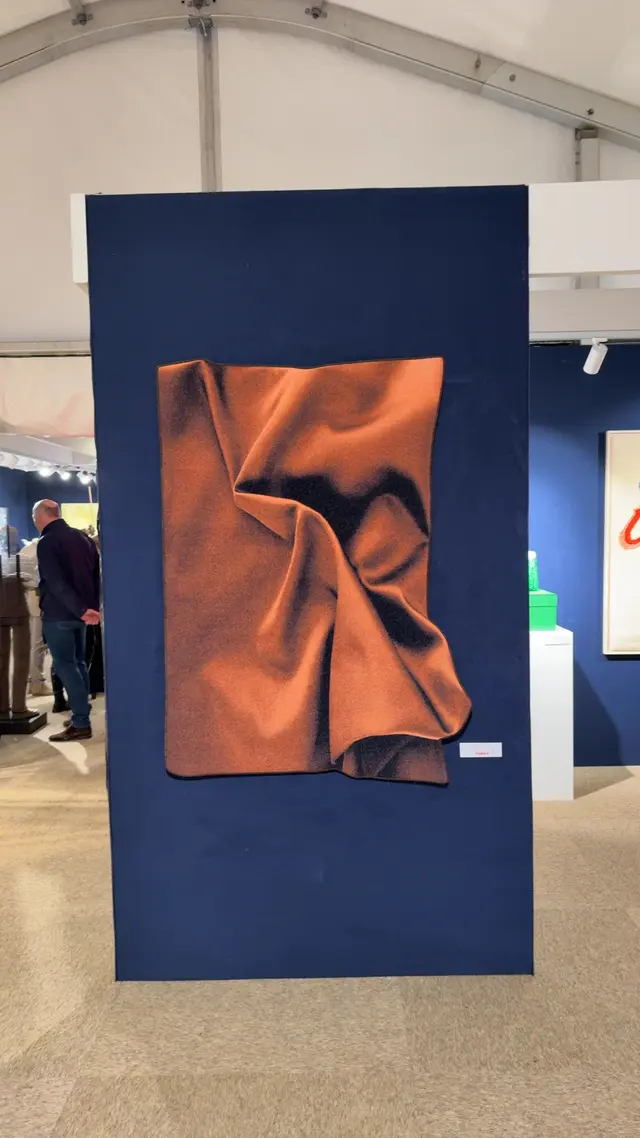
Canela Brown, textile wall artwork, labeled Celia Hadeler
Same category
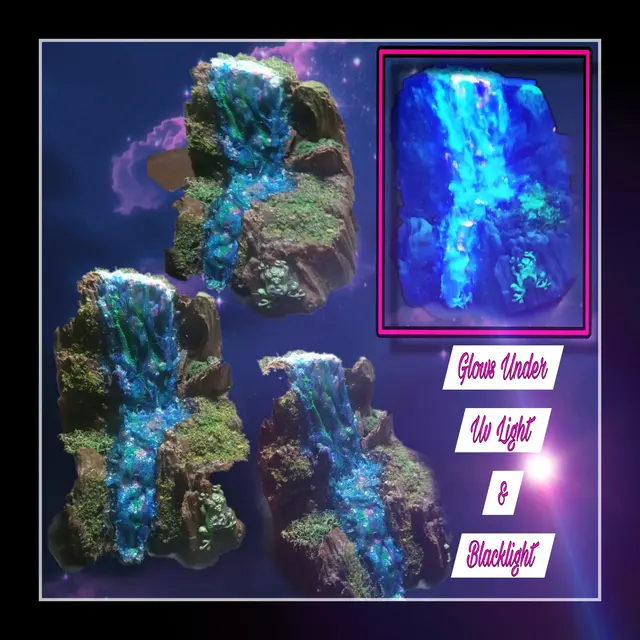
Dash Rodgerz Fluorescent Resin Waterfall Diorama Sculpture
Same category
Share this find
A place for your art
Keep its photographs, maker’s marks and the story you know in one object record. Start with a photo.
Create an account for 10 free scans. No credit card needed.
Join the conversation
Recognise a detail or have a question? Add what you know and cite your source. Suggested corrections stay in the discussion for the owner or a moderator to review.
Sign in to leave a comment
Sign in