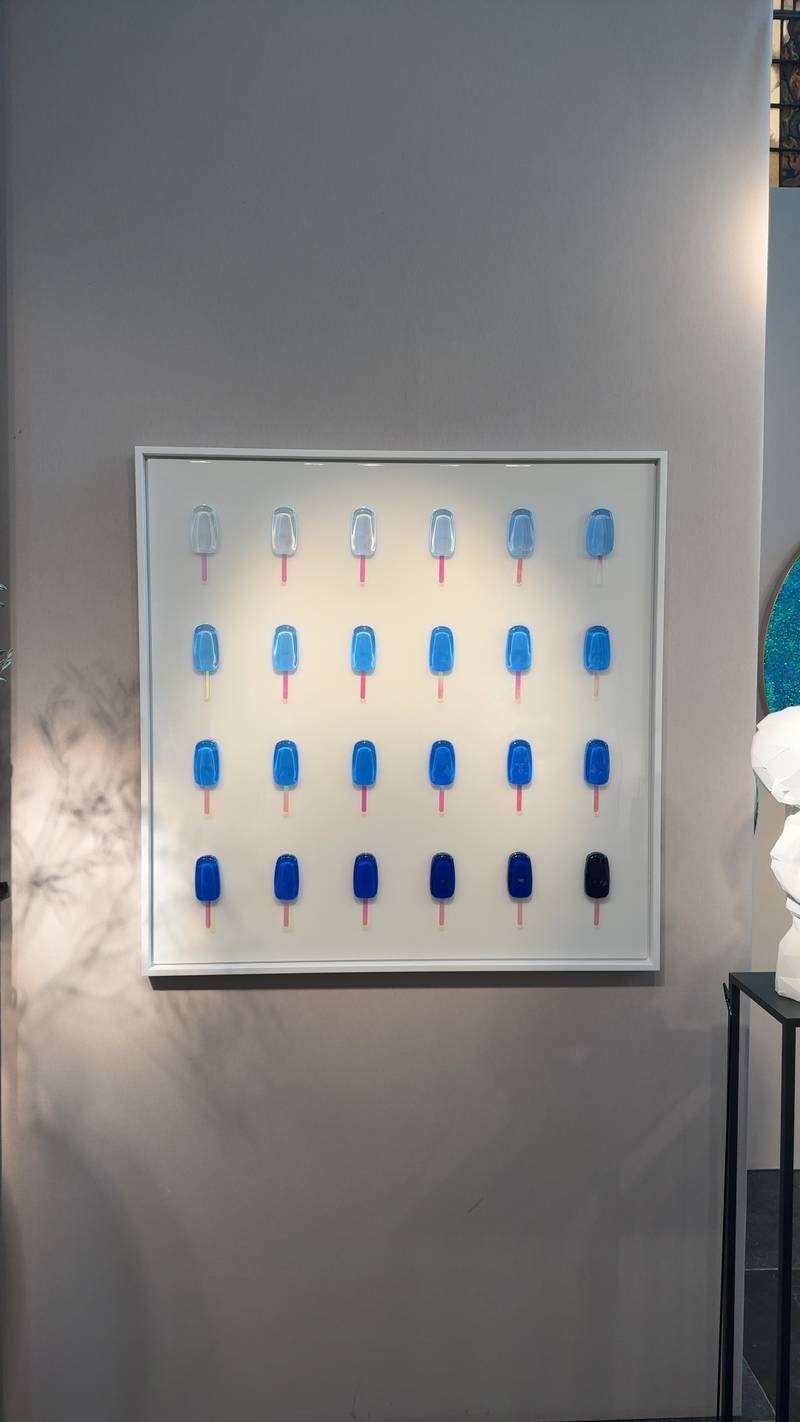
Contemporary Mixed Media 'Popsicle' Wall Sculpture
Estimated value
$800 - $2,500Rarity
Average(4/10)Type
Museum ObjectCategory
ArtEra
c. 2010-2024Origin
InternationalArtist / Creator
L'OriginalAuthenticity
CONTEMPORARY MIXED MEDIA 'POPSICLE' WALL SCULPTURE: IDENTIFICATION
A contemporary three-dimensional wall artwork presenting an arranged grid of twenty-four cast resin or acrylic 'popsicles' set against a stark white background. The piece is structured in four rows of six, with the frozen treats exhibiting a chromatic progression from pale, translucent ice blue at the top left to a deep, opaque navy or black at the bottom right. The 'sticks' appear to be uniform, possibly wood or painted resin, protruding from the base of each cast form. The entire composition is encased within a white shadowbox frame, glazed to protect the three-dimensional elements.
SCARCITY
Typical antique shop fare. Requires some searching but regularly available. This is where most genuine antiques fall.
Typical Characteristics
- Standard antique shop items
- Regularly available
- Moderate collector interest
Confidence Factors
- This is a contemporary decorative artwork where the visual impact is the primary value driver, minimizing the risk of deliberate forgery.
- Lack of a visible signature or attribution in the provided images makes 'authenticity' relate more to material description than artist verification.
THE ART SPECIALIST'S TAKE
Museum-Trained Art Historian
The material, style, and presentation are clearly identifiable as contemporary cast resin wall art. The confidence score reflects certainty in the object type, but lacks specific artist attribution due to absence of visual evidence.
KEY EVIDENCE
- 1Grid arrangement of 24 cast forms.
- 2High-gloss translucent material consistent with cast resin or acrylic.
- 3Shadowbox presentation typical for contemporary dimensional wall art.
- 4Gradient color scheme moving from light translucent blue to opaque dark blue/black.
UNCERTAINTIES
- •No signature, gallery label, or artist attribution is visible in the provided images, limiting conclusive valuation to its decorative market appeal rather than established fine art auction precedent.
WHAT WOULD IMPROVE CERTAINTY
- →Inspect the reverse of the frame for artist signatures, gallery labels, or edition numbers.
- →Examine the lower corners of the white backing board (beneath the glass) for signature or date.
CONDITION & GRADE
Grading breakdown
Surface integrity is high; colors remain vibrant and intentional, with no visible structural flaws in the frame or mounting.
Condition
The piece appears in excellent presentation condition. No visible scratches on the glazing, and the cast elements are uniform in their finish without apparent yellowing or separation from the backing.
ART MARKET VALUATION
Updated: May 11, 2026
Similar uncredited contemporary resin Pop Art works typically sell in the $800-$2,500 range at design-focused auctions or modern furniture retailers.
Who buys this
Interior designers and collectors of contemporary pop-inspired decor seeking bold, colorful statement pieces.
What increases value
- •Artist attribution (if discovered upon further inspection).
- •Condition of the resin (absence of yellowing or cracking).
- •Scale and visual impact.
What lowers value
- •Lack of recognizable artist attribution caps value at structural/decorative levels.
- •Potential for the casting material to yellow if exposed to direct UV light over time.
What makes top-tier examples
- •Clear attribution to a recognized contemporary sculptor (e.g., Peter Anton).
- •Flawless casting with complex color gradients.
Grade & condition
Absence of scratches on the glazing, stability of the mounted elements, and color fidelity of the resin casts.
Rarity & demand
For informational purposes only, not a formal appraisal.
SHARE THIS CURIOSITY
Have your own curiosities to discover?
Scan Your Curiosity
COMMENTS