Curiosa
Sign InTry a scan

Celia Hadeler - 'Canela Brown' Textile Artwork
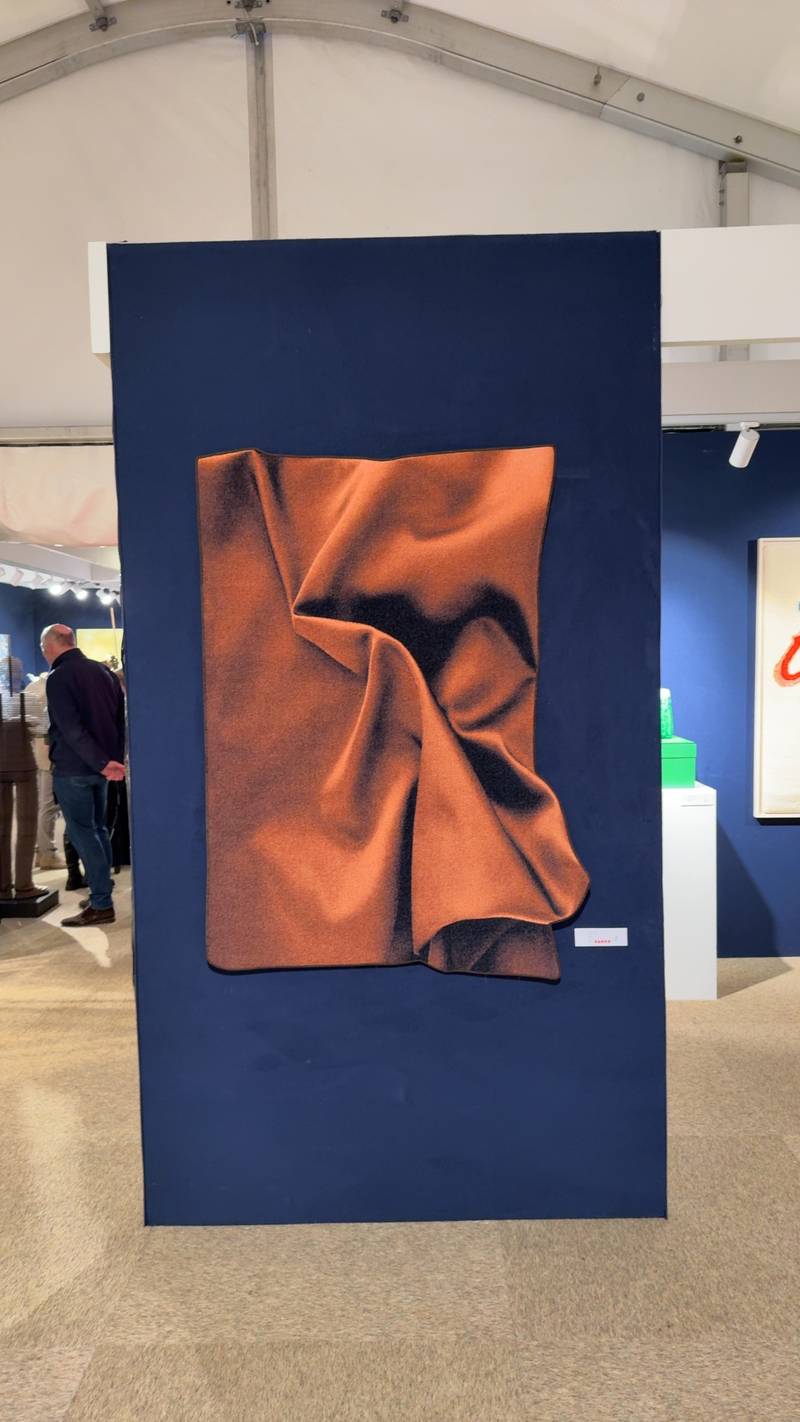
Contemporary textile art by Celia Hadeler, 'Canela Brown', featuring draped brown fabric on a dark blue panel, displayed at an art gallery. - view 1
1/3

Estimated value

$4,000 - $6,000

Rarity

Rare(7/10)

Category

Art

Brand

Van Buul Gallery (Exhibitor)

Era

2020s

Origin

🇩🇪 Germany

Artist / Creator

Celia Hadeler

Authenticity

Very High(95%)
47

CELIA HADELER - 'CANELA BROWN' TEXTILE ARTWORK: ARTIST ANALYSIS & VALUATION

This appears to be a contemporary artwork, specifically a 'textile' piece as indicated by the accompanying label. The artwork itself features a large, rectangular fabric element, likely felt or a similar material with a soft pile, in a warm 'Canela Brown' (cinnamon brown) hue. It is dramatically draped and folded, creating deep shadows and highlights that emphasize its texture and sculptural qualities. The piece is mounted on a larger, dark blue panel, contrasting sharply with the brown textile and serving to present it as a framed, singular art object. The intentional folds suggest a dynamic, almost living presence within the static medium.

ECHOES ACROSS THE ART WORLD

Where This Object Echoes

Minimalist Art1960s-present

The artwork's focus on material, form, and light/shadow, stripped of excessive narrative, resonates with the tenets of Minimalism from the mid-20th century.

Post-Minimalist Sculpture1960s-1970s

The use of soft, pliable materials and the exploration of gravity and drape as sculptural elements echo works by artists like Robert Morris and Eva Hesse.

Ritual & Ceremonial Use

  • •The 'ritual' of gallery exhibition and silent contemplation, where an everyday material like fabric is recontextualized as a subject of aesthetic contemplation.
  • •The conceptual act of creating form and meaning from the most rudimentary material manipulation, mirroring practices in traditional crafts and textiles but elevated to fine art.

Meaning Through Time

Pre-20th Century

Textiles were predominantly functional (clothing, blankets, tapestries) or decorative surfaces (embroidery).

Mid-20th Century onwards

Textiles began to be explored for their inherent sculptural qualities, texture, and conceptual potential, challenging traditional definitions of fine art.

THROUGH THE ARTIST'S ERA

Textile art, while having ancient roots in functional crafts, has evolved significantly in the 20th and 21st centuries to become a recognized medium in contemporary fine art. Artists increasingly explore textiles not merely as a surface for imagery, but as a primary sculptural and conceptual ...
Textile art, while having ancient roots in functional crafts, has evolved significantly in the 20th and 21st centuries to become a recognized medium in contemporary fine art. Artists increasingly explore textiles not merely as a surface for imagery, but as a primary sculptural and conceptual element. This work, with its emphasis on texture, form, and shadow created from a simple draped fabric, aligns with modernist and minimalist tendencies from the mid-20th century, which often brought common materials into the gallery space, elevating their inherent aesthetic qualities. The clean presentation on a contrasting panel is also characteristic of contemporary exhibition practices for such works.

HIDDEN IN PLAIN SIGHT

1

The use of 'Canela Brown' as a primary color for this textile piece refers to cinnamon, a spice with a rich history, once as valuable as gold, which evokes warmth, earthiness, and a subtle exoticism.

2

The art of textile draping, as seen in this work, has deep historical parallels in ancient Greek and Roman sculpture, where skillful rendering of fabric folds was crucial to conveying movement and emotion in static figures.

HOW SCARCE IS IT?

Rare90-95%
CommonLegendary

Exceptional items that serious collectors actively seek. Only a handful appear at major auctions each year.

Typical Characteristics

  • Few examples at auction yearly
  • Specialist dealer networks
  • Strong collector competition

Confidence Factors

  • Artist and gallery explicitly identified on the label.
  • Presented in a gallery setting, suggesting established authenticity.
  • Contemporary art less prone to historical reproduction issues.
How does authenticity detection work?

THE ART SPECIALIST'S TAKE

Museum-Trained Art Historian

Connoisseur

My confidence is high due to the clear gallery label providing explicit details about the artist, title, medium, dimensions, and gallery, which aligns perfectly with the visual evidence of a contemporary textile artwork.

KEY EVIDENCE

  • 1Gallery label explicitly identifies the artist (Celia Hadeler), title ('Canela Brown'), medium ('Textile'), dimensions (110x150 cm), and gallery (Van Buul Gallery), along with a price in Euros.
  • 2The artwork itself is an abstract composition of meticulously draped and folded brown textile mounted on a dark blue background panel.
  • 3The aesthetic aligns with contemporary art trends exploring textural and sculptural qualities of everyday materials.
  • 4The clean presentation indicates it is a finished art piece.
  • 5The label also indicates the piece has been sold, as there are red stickers over the price.

UNCERTAINTIES

  • •Without direct visual access to the reverse of the work, we cannot verify stretcher details, specific mounting techniques, or additional labels that might provide deeper provenance.

WHAT WOULD IMPROVE CERTAINTY

  • →Request a high-resolution image of the reverse of the artwork to check for any hidden labels, artist's notes, or previous exhibition stickers.
  • →Inquire about the exhibition history and previous ownership of this specific piece from the Van Buul Gallery to establish full provenance.
  • →If possible, a physical inspection to ascertain the precise type of textile and its conservation state.

CONDITION & GRADE

Condition

The textile appears to be in excellent condition, with no visible signs of wear, tears, stains, or fading. The folds seem to be intentionally set and stable. The mounting on the dark panel also appears pristine.

Surface

The textile surface displays a soft, velvety pile, possibly felt or a closely cropped shearling, creating a nuanced visual texture that captures light and shadow effectively. The deliberate draping forms smooth, undulating ridges and valleys that are integral to the artwork's composition.

Weight & feel

Given its dimensions and the nature of textile art, I would anticipate this piece to be relatively lightweight, primarily comprising the fabric weight itself and the mounting board or panel.

ART MARKET VALUATION

$4,000 - $6,000

Updated: Feb 27, 2026

  • Market comparables from auctions & retail
  • Condition, completeness & craftsmanship
  • Current collector demand & trends
  • Low = quick sale, high = patient seller

For informational purposes only, not a formal appraisal.

FROM THE CABINET OF

The Collector

The Collector

Relic Hunter•111 items

COMMENTS

No comments yet. Be the first to share your thoughts!

Sign in to leave a comment

ABOUT ART

Paintings, drawings, sculptures, and original artistic works.

Art value and rarity guide

SHARE THIS CURIOSITY

Have your own curiosities to discover?

Scan Your Curiosity