
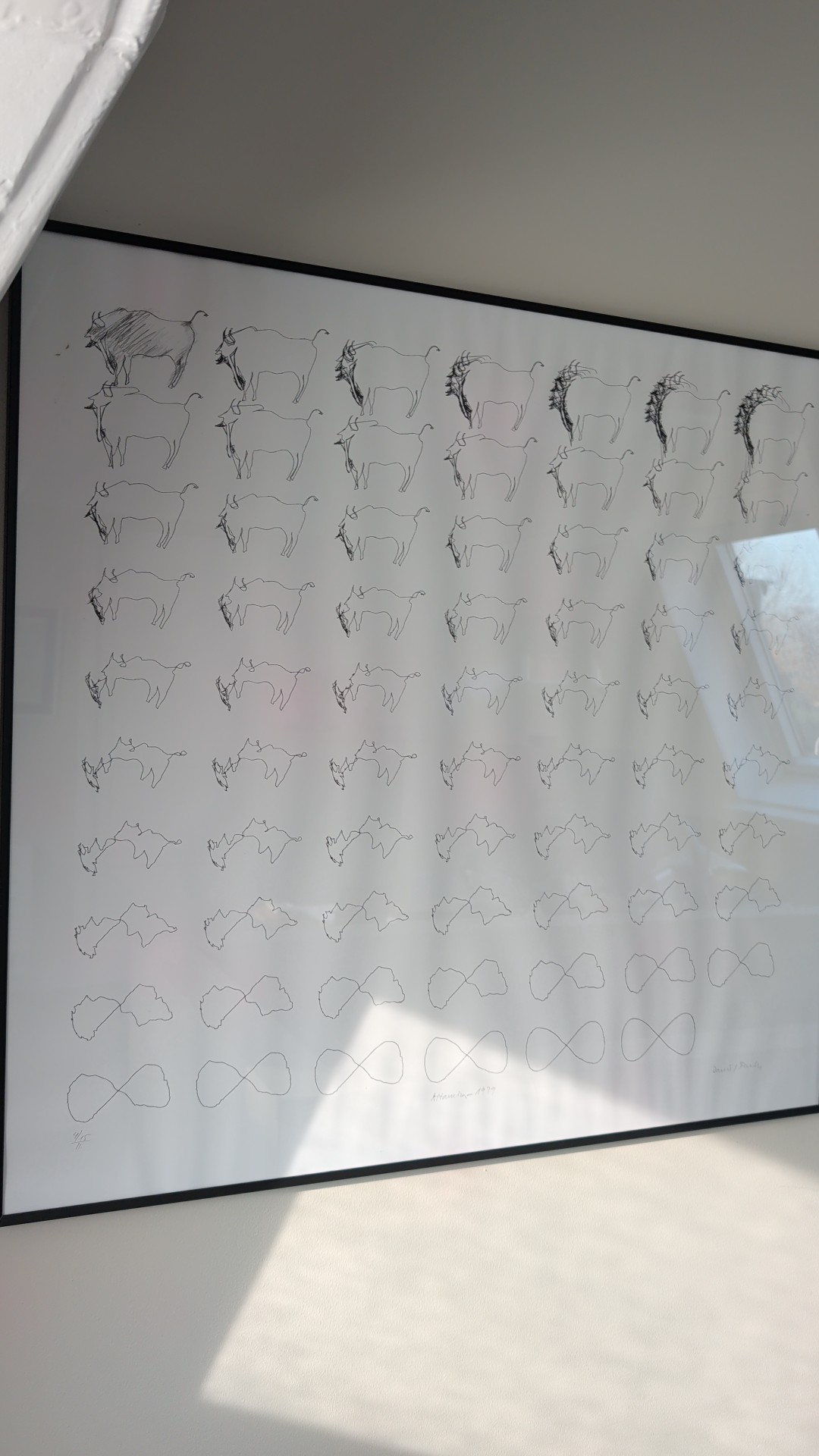
Daniel Fischer (Slovak, born 1950) - Altamira 1979, likely signed limited edition print after an algorithmic drawing
Estimated value
$600 - $1,800Rarity
Uncommon(5/10)Category
Prints & PostersEra
1979Origin
SlovakiaArtist / Creator
Daniel FischerVisual assessment
Photo-based interpretation · not authenticated
Save to revisit in your watchlist. This does not add the object to your own collection.
DANIEL FISCHER (SLOVAK, BORN 1950) - ALTAMIRA 1979, LIKELY SIGNED LIMITED EDITION PRINT AFTER AN ALGORITHMIC DRAWING: IDENTIFICATION
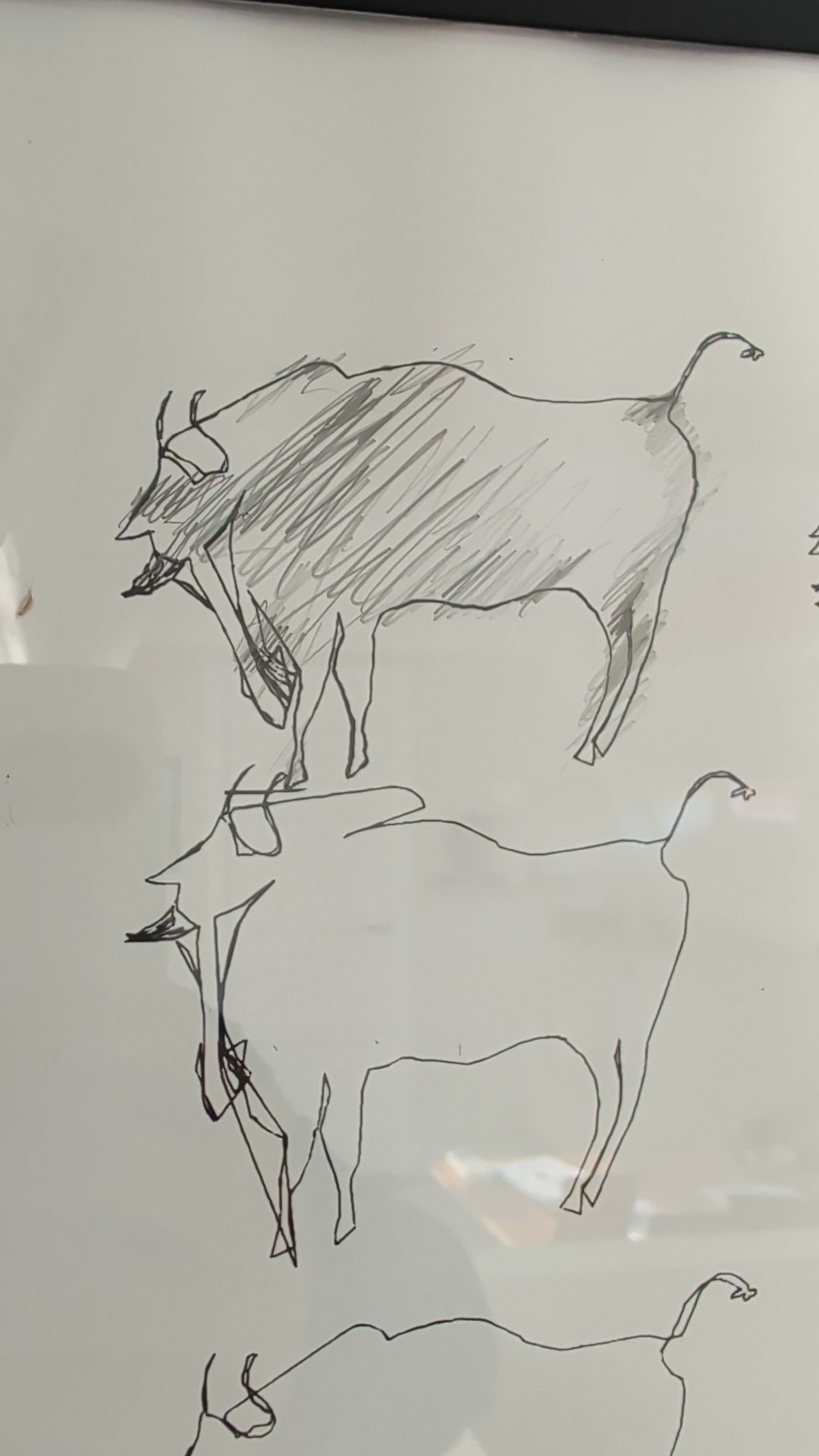
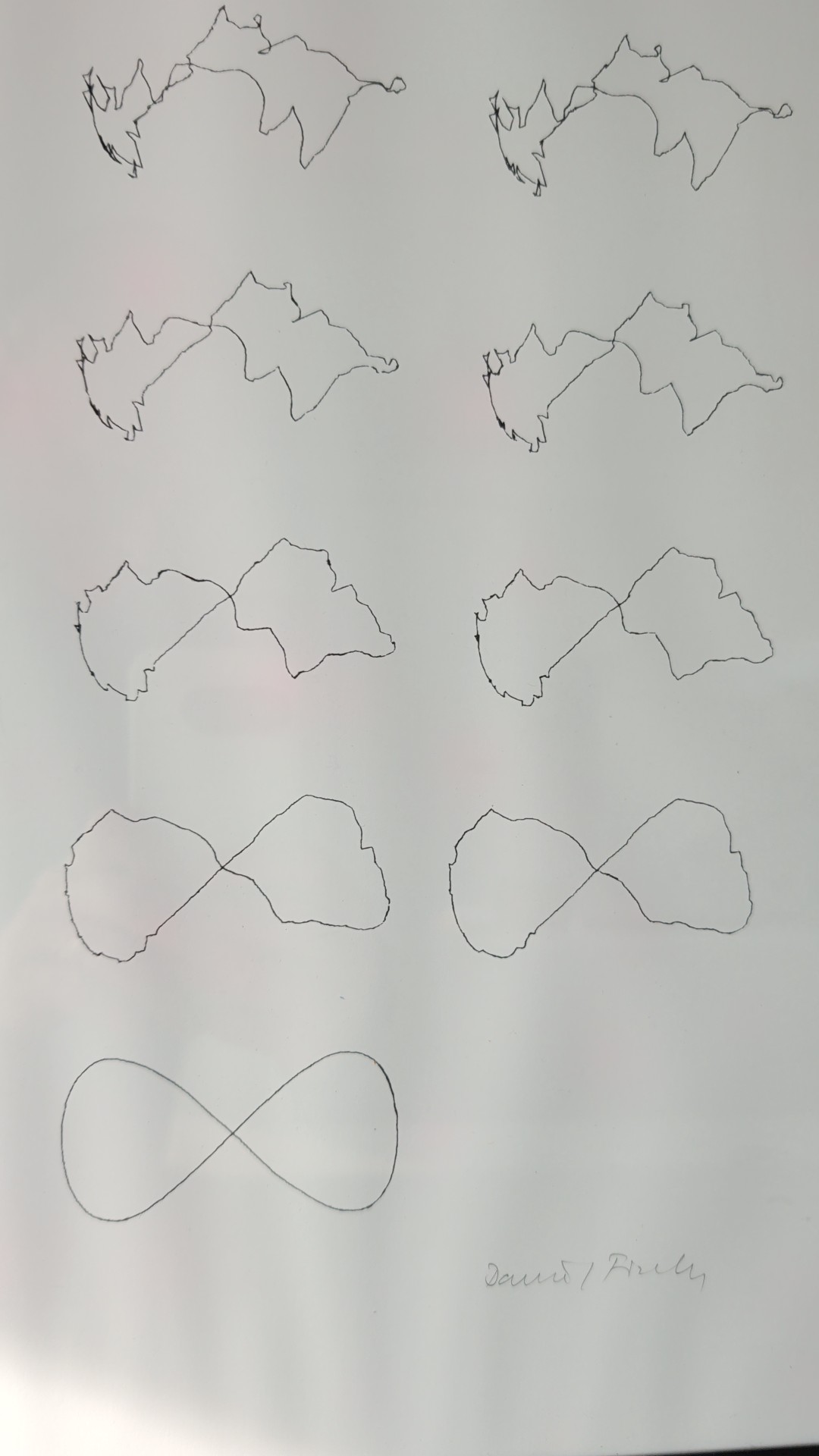
Framed monochrome graphic work on white paper showing a grid of sequential line transformations from a horned bovine profile at upper left to an infinity symbol at lower margin. The sheet appears to be a print or plotter-like line drawing rather than a hand-painted work, with a pencil signature at lower right and an edition notation at lower left that reads as a fraction but is not fully legible in the photographs. The visible title inscription at lower center appears to read "Altamira 1979," which supports an identification as a late 20th-century conceptual or algorithmic graphic print.
Compare with other prints in the archive: Norman Skaller - 'After An Awakening' Serigraph, Wiesław Wałkuski - 'Śpiewy po rosie' (1982) Polish Film Poster, Offset Lithograph, First Edition, Rembrandt van Rijn (after) - A Girl Sleeping (Hendrickje Stoffels), Facsimile Print.
CROSS-CULTURAL PARALLELS
Related cultural context
The opening animal form refers to the Altamira cave paintings in Cantabria, dated broadly between about 36,000 and 14,000 years ago in current archaeological literature.
The serial transformation format parallels rule-based image sequences used by conceptual artists and computer-art practitioners after 1968 exhibitions such as Cybernetic Serendipity in London.
Use & cultural context
- •The Altamira reference invokes prehistoric image-making associated in scholarship with animal representation in cave sanctuaries dated to the Upper Paleolithic, though exact ritual use remains debated.
Meaning Through Time
The bison or buffalo image functioned as an animal representation within cave art traditions dated roughly 36,000 to 14,000 years ago.
The infinity sign became a mathematical notation after John Wallis printed it in 1655.
By 1979, a sequence from cave animal to infinity could operate as a conceptual diagram about visual reduction, continuity, and algorithmic transformation.
PRINT LINEAGE
Algorithmic and computer-assisted art had an established European avant-garde by the 1968 exhibition Cybernetic Serendipity in London, and artists in Central Europe were also exploring rule-based image generation by the late 1970s. A 1979 work that converts the Altamira bison motif into an infinity
Read full storyShow less
sign fits the conceptual language of post-1960s systems art, where serial transformation and notation often displaced painterly facture. The reference to Altamira anchors the image to Upper Paleolithic cave painting in Cantabria, Spain, while the infinity sign introduces a modern mathematical symbol that became common in conceptual graphics after the 1960s.
COLLECTOR NOTES
The Altamira cave paintings in Cantabria entered modern art history after their 1879 publication by Marcelino Sanz de Sautuola, and their authenticity was publicly accepted in 1902 after years of dispute.
The infinity symbol, ∞, was introduced in print by the English mathematician John Wallis in 1655 in De sectionibus conicis.
SCARCITY
Uncommon · 5/10 estimated rarity
This is a qualitative collection score, not a measured survival count, market percentile or proof of authenticity.
Visual assessment
Photographs alone cannot establish authenticity. The following analysis notes have not been independently verified; references to a match or confirmation are interpretations, not documentary evidence.
What photo analysis can and cannot establishANALYSIS NOTES
Detail selected by photo analysis. Check it against the full photograph.
AI-assisted notes based on the photographs and supplied context. These are interpretations, not an examination by a human specialist or proof of authenticity.
Confidence is supported by the visible title area, the apparent signature, and the clear image structure that matches the user's description of an algorithmic transformation. Confidence remains below 0.85 because glare obscures the edition mark, the exact print medium, and the full signature form.
OBSERVATIONS & INTERPRETATIONS
- 1Lower-center inscription appears to read "Altamira 1979," which aligns with the user-supplied title and date.
WHAT WOULD IMPROVE CERTAINTY
- →Check for a catalogue raisonne entry, exhibition checklist, or artist archive reference for a work titled Altamira from 1979.
Condition & estimated grade
A visual condition estimate. This is not a professional grading certificate.
Grading breakdown
Paper margins and line work appear stable in the available views, and no major creases, tears, or staining are evident. Glare from glazing limits assessment of planar distortion, hinge condition, and any subtle discoloration at the edges.
Condition
The sheet appears generally clean behind glazing, with no clearly visible tears or foxing in the photographed areas. Strong window reflections obscure parts of the paper surface, so minor cockling, abrasion, or mat burn cannot be excluded from these images. The black modern frame appears structurally straight, with no obvious corner loss visible from the front.
PRINT MARKET VALUATION
Estimate recorded: Nov 7, 2026
- No documented comparable sales are shown for this estimate
- Condition, completeness & craftsmanship
- Demand assumptions may not reflect current transactions
- The range is an estimate, not an asking price or sale result
For informational purposes only, not a formal appraisal.
COLLECTOR’S STORY
Bought in 2022 at a Forbes event in Prague, to support the Dobry Anjel foundation (financial relief for families with severely ill members). Target price was €10k, I bought it for €5k in pristine condition.
YOUR INPUT VS. SCAN
How the supplied context compares with the visual analysis. Agreement between these inputs does not independently verify a claim.
What Aligned
- User stated Daniel Fischer is the artist, and the lower-right pencil signature appears consistent with the surname Fischer in the photographed sheet.
- User stated the concept morphs the Altamira animal image into an infinity symbol, and the visible composition clearly presents a sequential transformation from a bovine outline at upper left to repeated infinity forms at the bottom.
- User stated the date is 1979, and the lower-center inscription appears to read "Altamira 1979" in the photograph.
- User stated the artist is Slovak, and assigning SK as origin is plausible for Daniel Fischer's authorship, although no publisher line or national imprint is visible on the front.
Related prints & posters
Norman Skaller - 'After An Awakening' Serigraph
Same category
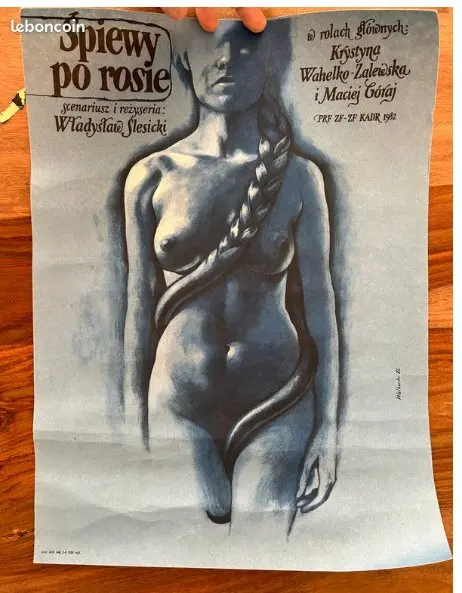
Wiesław Wałkuski - 'Śpiewy po rosie' (1982) Polish Film Poster, Offset Lithograph, First Edition
Same category
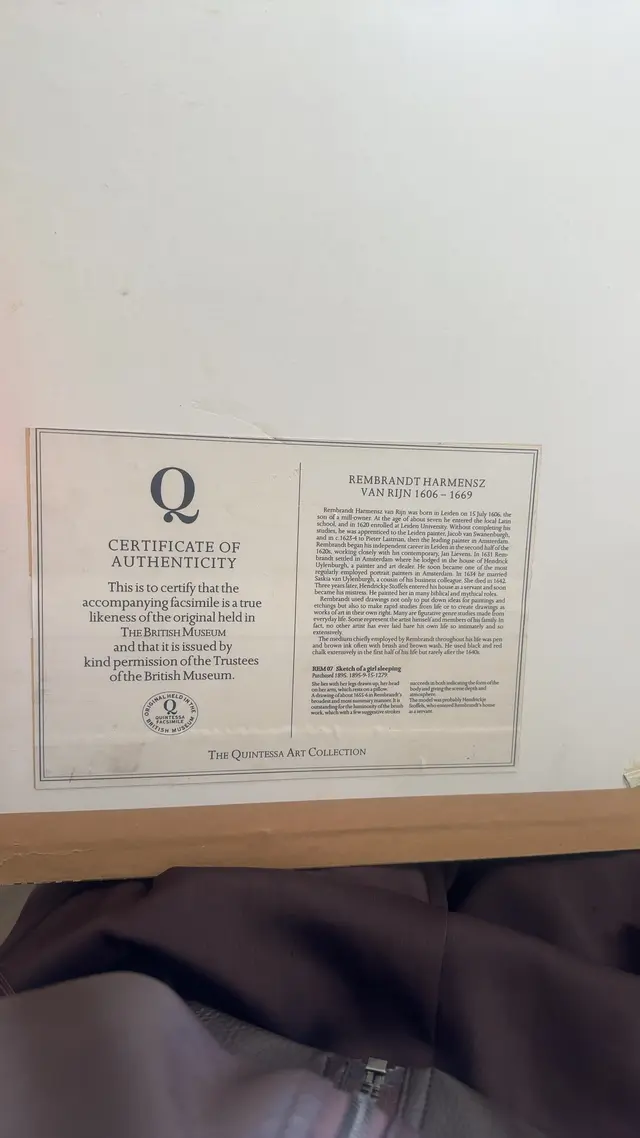
Rembrandt van Rijn (after) - A Girl Sleeping (Hendrickje Stoffels), Facsimile Print
Same category

Reproduction Woodblock Print after Suzuki Harunobu: Woman Walking in the Snow
Same category
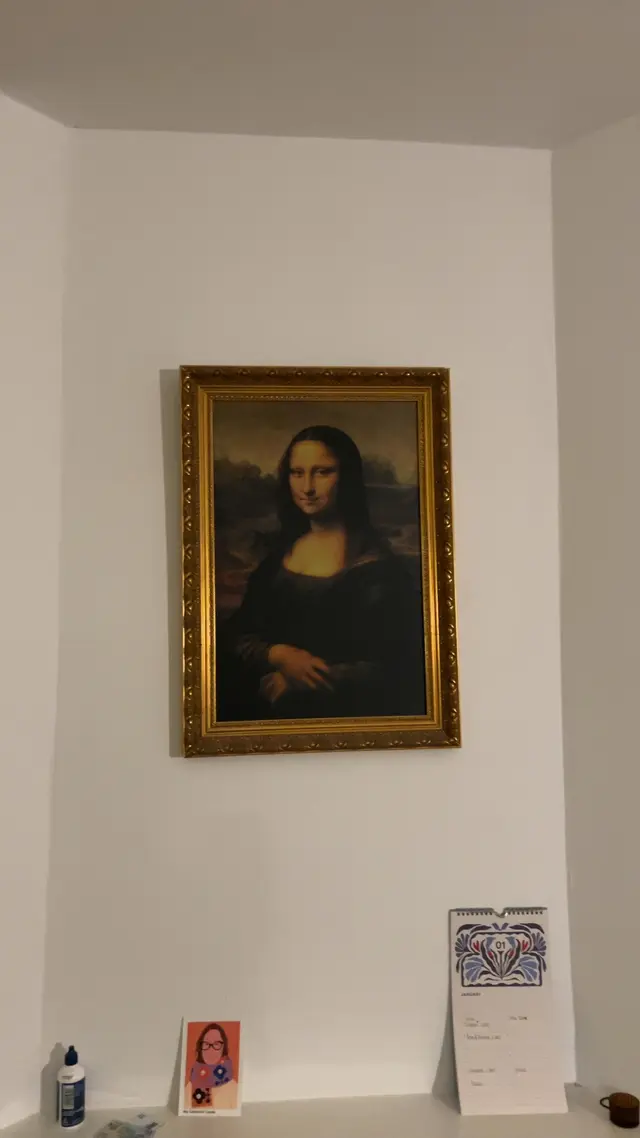
Mona Lisa Decorative Print after Leonardo da Vinci (20th Century)
Same category
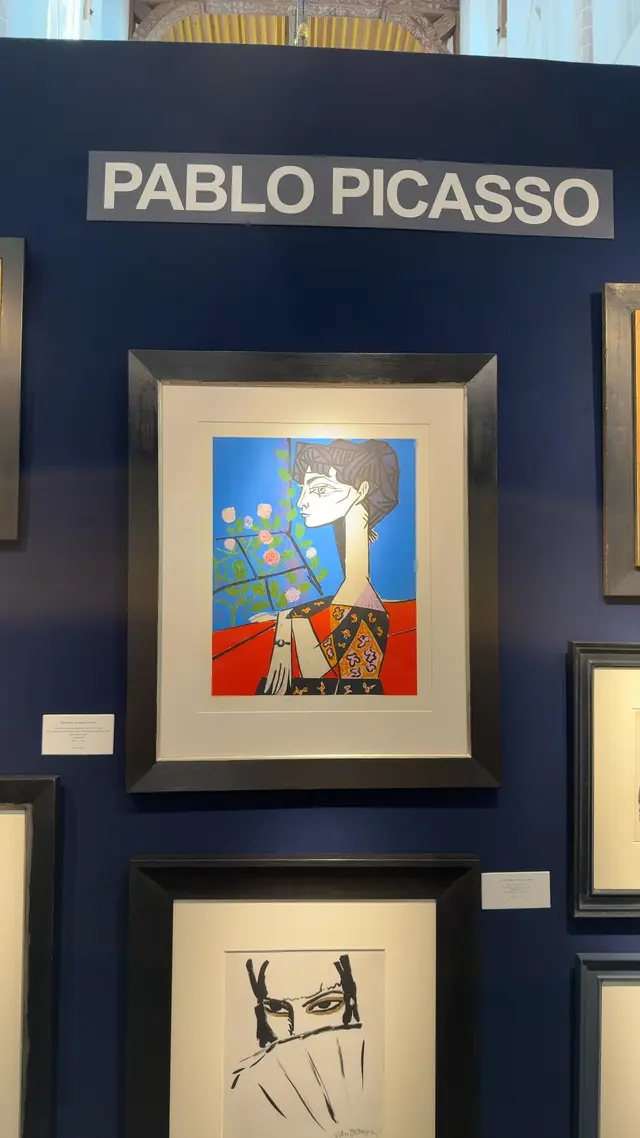
Femme à la Fenêtre (Woman at the Window), after Pablo Picasso
Same category
Explore Prints & Posters
Vintage prints, posters, advertising signs, and graphic art.
Prints & Posters value and rarity guideSHARE THIS CURIOSITY
What’s in your collection?
Keep its photographs, maker’s marks and the story you know in one object record. Start with a photo.
Create an account for 10 free scans. No credit card needed.
Community contributions