
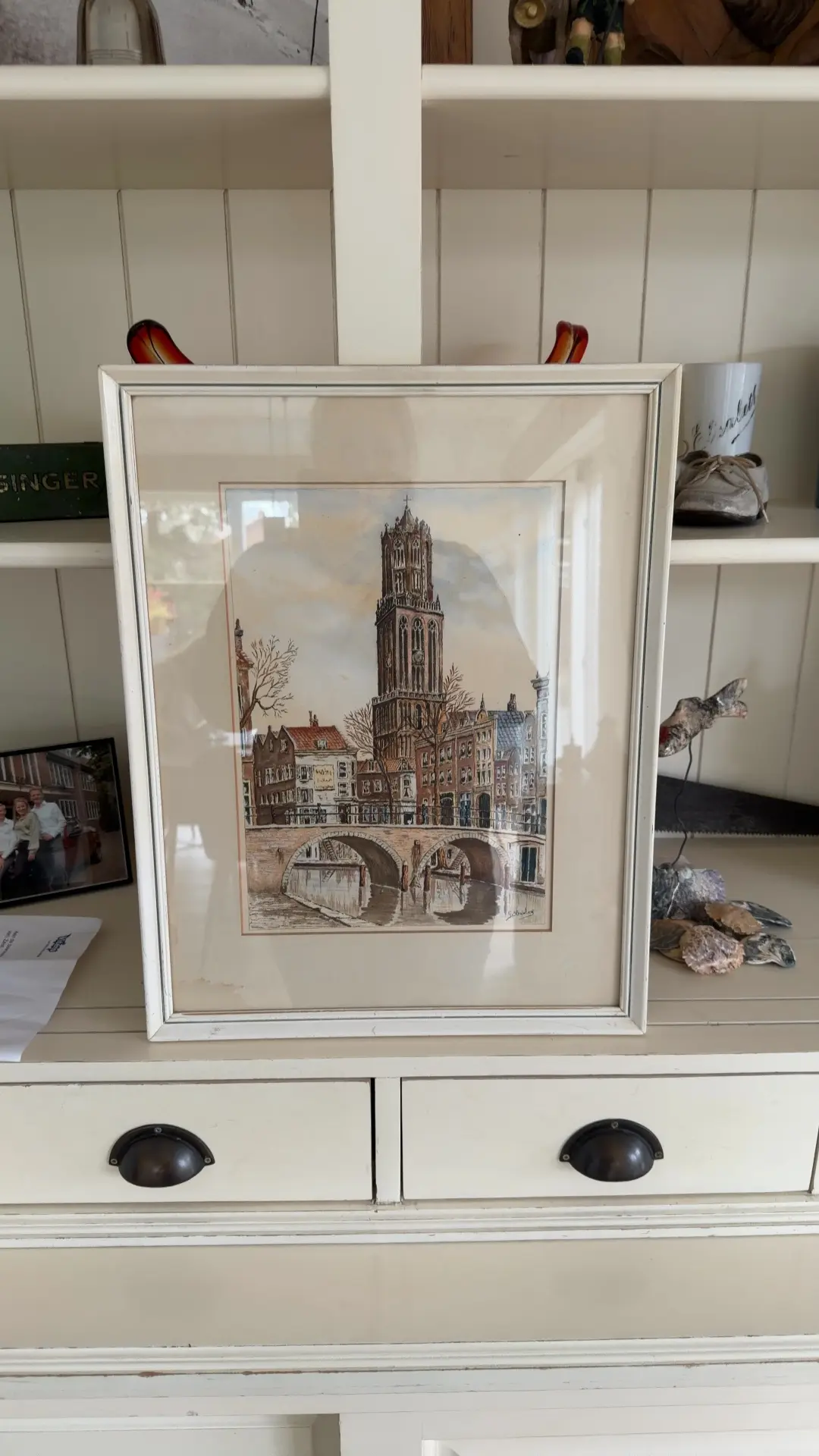
Cathedral Tower (Domtoren), Utrecht Watercolour
Estimated value
$100 - $400Rarity
Average(4/10)Category
PaintingsEra
Mid-20th Century (1940s-1970s)Origin
NetherlandsArtist / Creator
G. StraalmanVisual assessment
Photo analysis
Save to revisit in your watchlist. This does not add the object to your own collection.
Cathedral Tower
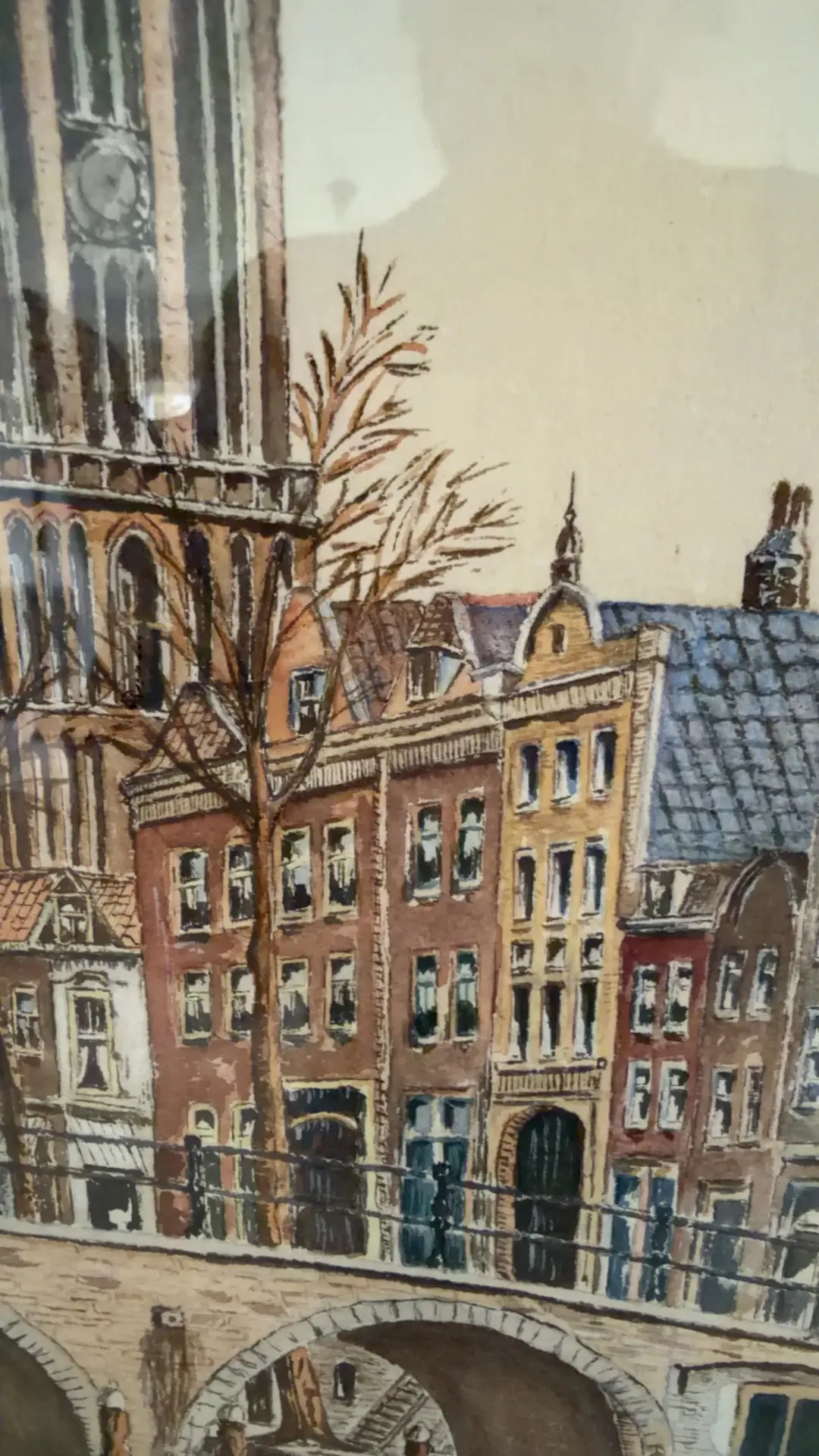
This appears to be a framed watercolour painting depicting the Domtoren (Cathedral Tower) of Utrecht, Netherlands, alongside canals and traditional Dutch canal houses. The style suggests a picturesque, possibly mid-20th century, rendering of a classic European cityscape. The limited palette and distinct brushwork, especially in the architectural details and water, point to a skilled hand working within the watercolor medium.
Related traditions
Dutch Realism (Golden Age to 20th Century)
17th Century to present
The tradition of depicting everyday life, cityscapes, and landscapes with meticulous detail and a sense of atmosphere. Watercolour artists often follow in this vein, capturing architectural accuracy.
Use and ceremony
19th Century
Watercolour transitioned from primarily a preparatory sketching medium to a respected art form in its own right, valued for its luminosity and expressiveness.
Post-WWII onwards
Depictions of historic European city centers, often rebuilt or preserved, took on added significance as symbols of resilience, heritage, and continuity.
Origins and context
Watercolour as a medium gained significant popularity from the 18th century onwards, especially for landscape and architectural studies due to its portability and ability to capture light and atmosphere with immediacy. Dutch cityscapes, particularly those featuring canals and architecture like the Domtoren, have been a favored subject for artists for centuries, reflecting the enduring appeal of the Netherlands' unique urban fabric.
Further details
The Domtoren in Utrecht is the tallest church tower in the Netherlands, standing at 112.5 meters (368 feet), and its construction began in 1321, taking over 300 years to complete.
Utrecht's unique wharf cellars and canals were historically used for storage and provide a distinctive architectural element often captured in cityscapes like this.
Attribution and evidence
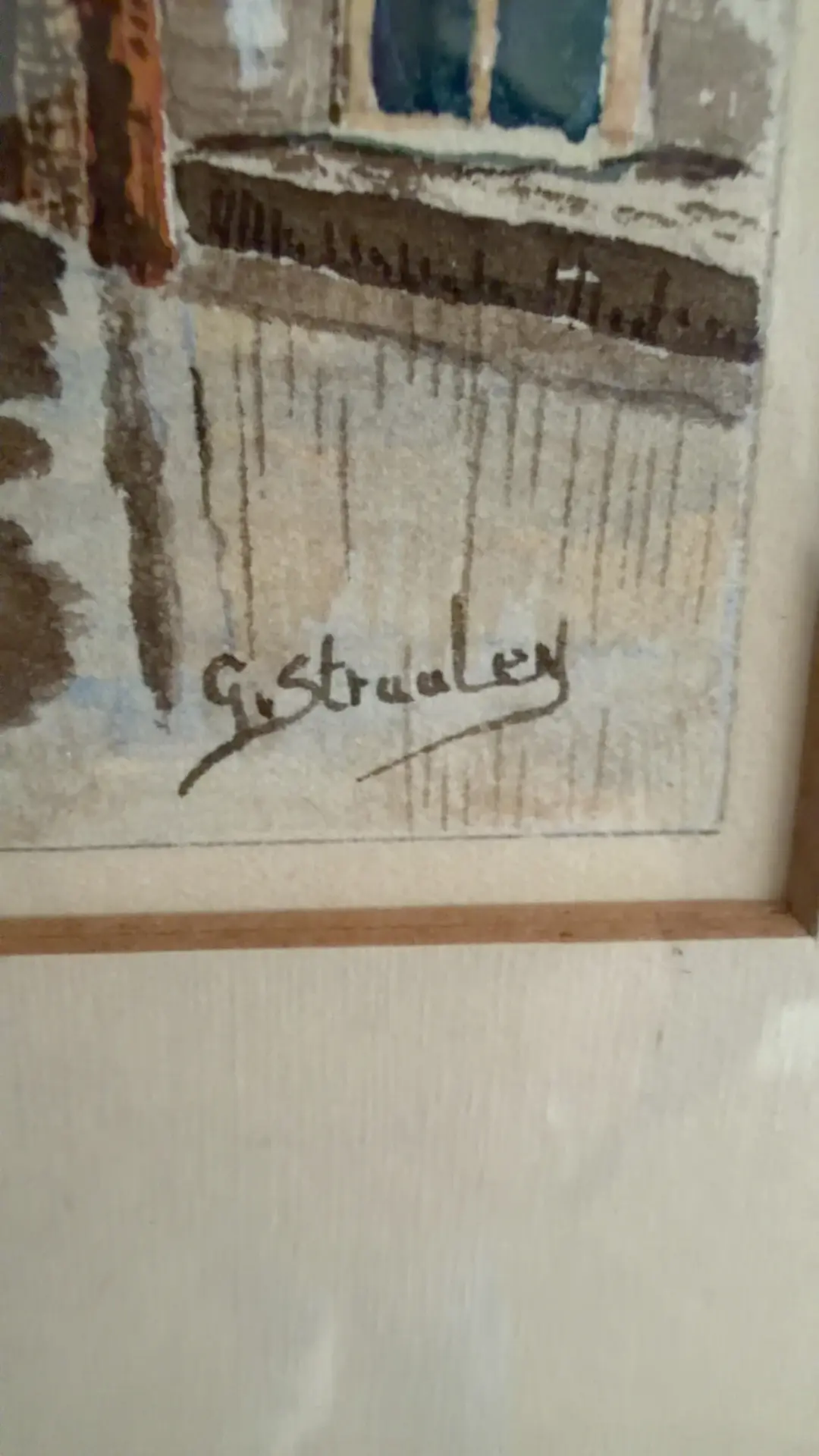
Confidence is good as the subject, medium, and general era are clear, and a signature is present. However, deeper research into the artist and an out-of-frame inspection would elevate certainty significantly.
Identifying details
- 1The distinctive architectural subject, the Domtoren of Utrecht, is clearly identifiable.
- 2The medium is unequivocally watercolour, characterized by its translucent quality and visible brushstrokes.
- 3A legible signature 'G. Straalman' is present in the lower right corner.
- 4The style, depicting a familiar locale with picturesque qualities, suggests a regional artist working in the mid-20th century.
Open questions
- •Without further research into 'G. Straalman', it is difficult to determine if this is a known artist or a hobbyist.
- •The exact age of the paper and potential for acid-induced discoloration are not fully discernible through the glass.
Photographs that would help
- A clearer, higher-resolution photograph of the signature for precise identification.
- Examine the reverse of the frame and artwork for any labels, inscriptions, or gallery stamps.
- A photograph out of the frame to assess paper condition and any potential foxing or acid burn.
- Research the artist 'G. Straalman' through Dutch art directories or auction records to establish their oeuvre and market presence.
Terms in this record
- Watercolour
- A painting method in which the pigments are suspended in a water-based solution, typically on paper, known for its transparency and luminosity.
- Domtoren
- The iconic Gothic bell tower of St. Martin's Cathedral in Utrecht, Netherlands, a prominent architectural landmark and frequent subject in art.
- Foxing
- Age-related spots or discoloration on paper and old books, typically reddish-brown, caused by a combination of humidity, acid, and sometimes fungal growth.
Wear and preservation
The painting itself appears to be in good condition with no obvious signs of significant fading or damage. The frame, however, shows some signs of wear, particularly along the edges and corners, suggesting minor abrasions or scuffs typical of age and handling. The matting inside the frame also appears to be slightly discolored or aged.
Scarcity and surviving examples
Average · 4/10 estimated rarity
This is a qualitative collection score, not a measured survival count, market percentile or proof of authenticity.
What the photographs establish
Interpretation of the photographs and supplied context. This does not authenticate the object.
- Signature is clearly visible and consistent with an artist's hand.
- Subject matter is a common choice for regional artists.
- The medium and style align with typical art market offerings of the presumed era.
Value and its basis
Estimate recorded: Feb 27, 2026
How we estimate value
- No documented comparable sales are shown for this estimate
- Condition, completeness & craftsmanship
- Demand assumptions may not reflect current transactions
- The range is an estimate, not an asking price or sale result
For informational purposes only, not a formal appraisal.
Related objects
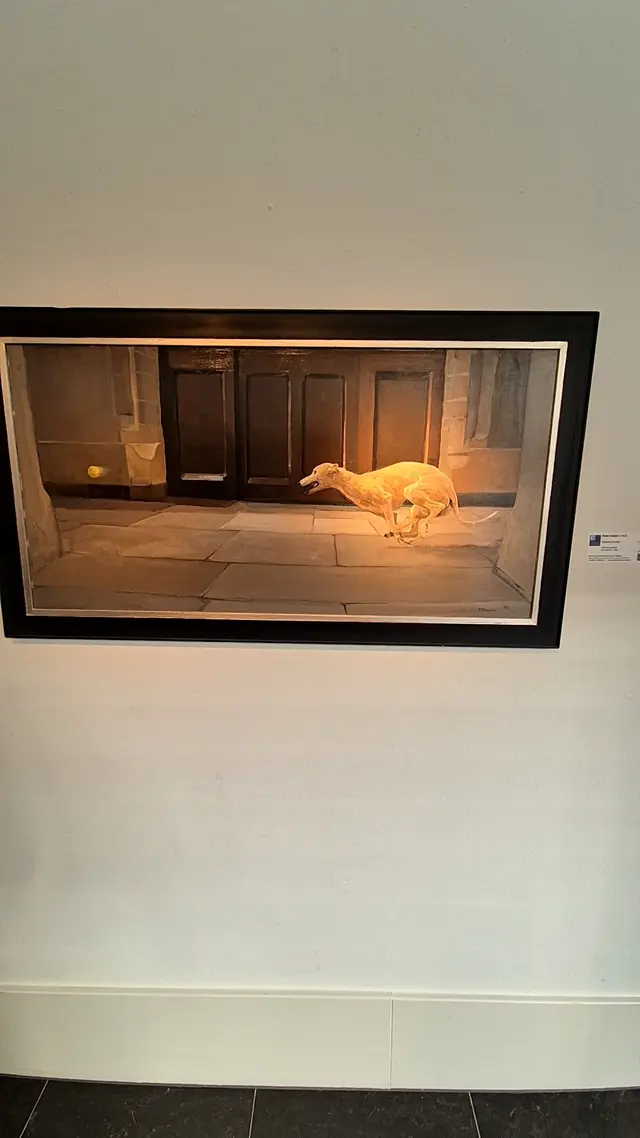
Contemporary Oil Painting of a Running Whippet or Greyhound
Same category
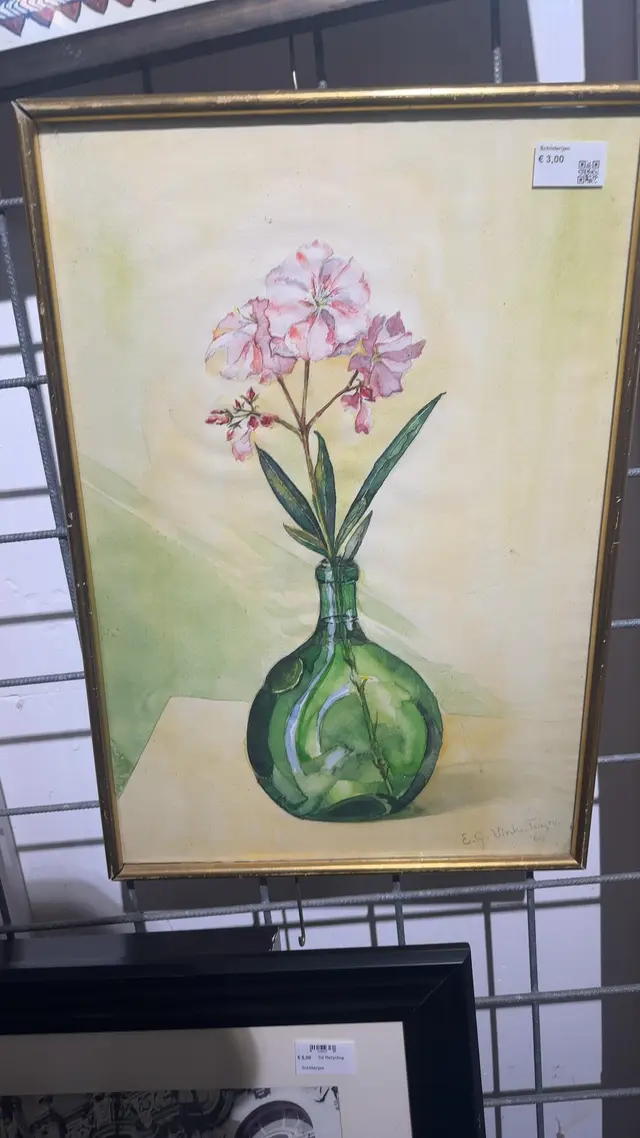
Floral Still Life in Green Bottle, Watercolor
Same category
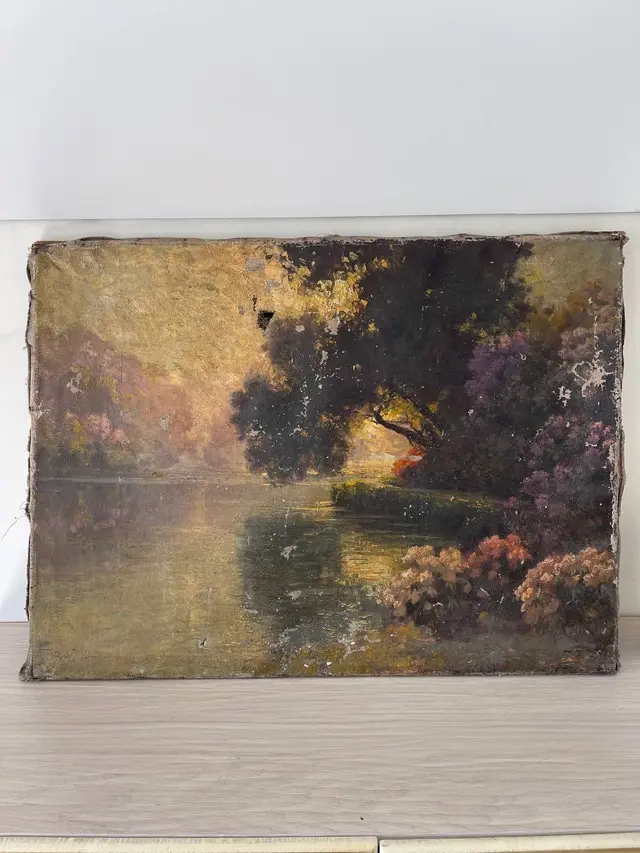
Unstretched Turn-of-the-Century Austrian Landscape Oil Painting
Same category
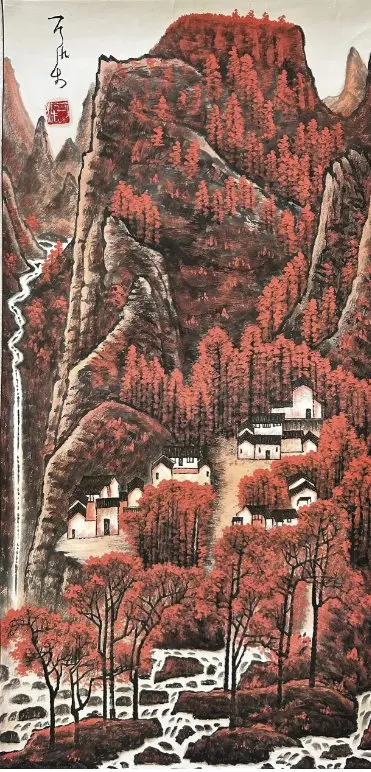
Chinese Shanshui Landscape Painting in the Style of Li Keran
Same category
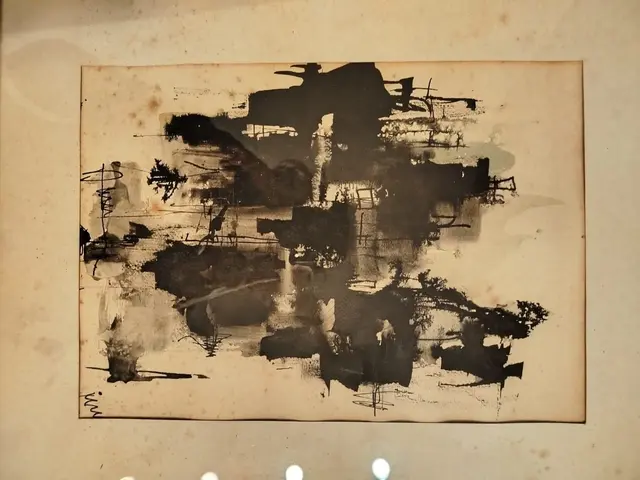
Mid-Century Abstract Ink Wash Drawing, Dated 1963
Same category
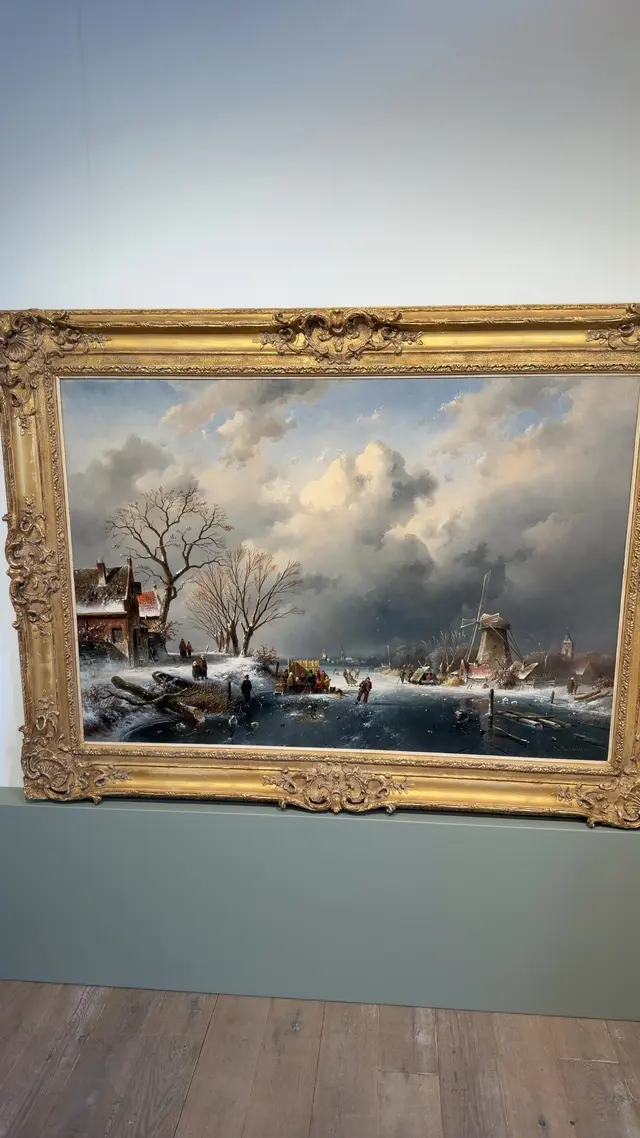
Oil on Canvas Winter Landscape by Charles Leickert, 1862
Same category
Explore Paintings
Oil paintings, watercolors, acrylics, and painted works on canvas, panel, and paper.
Paintings value and rarity guideShare this find
A place for your paintings
Keep its photographs, maker’s marks and the story you know in one object record. Start with a photo.
Create an account for 10 free scans. No credit card needed.
Join the conversation