
Pair of Folk Art Style Horse Paintings
Estimated value
$100 - $400Rarity
Average(4/10)Category
PaintingsEra
Mid-20th Century to PresentOrigin
InternationalArtist / Creator
George KlausVisual assessment
Photo analysis
Save to revisit in your watchlist. This does not add the object to your own collection.
Pair of Folk Art Style Horse Paintings
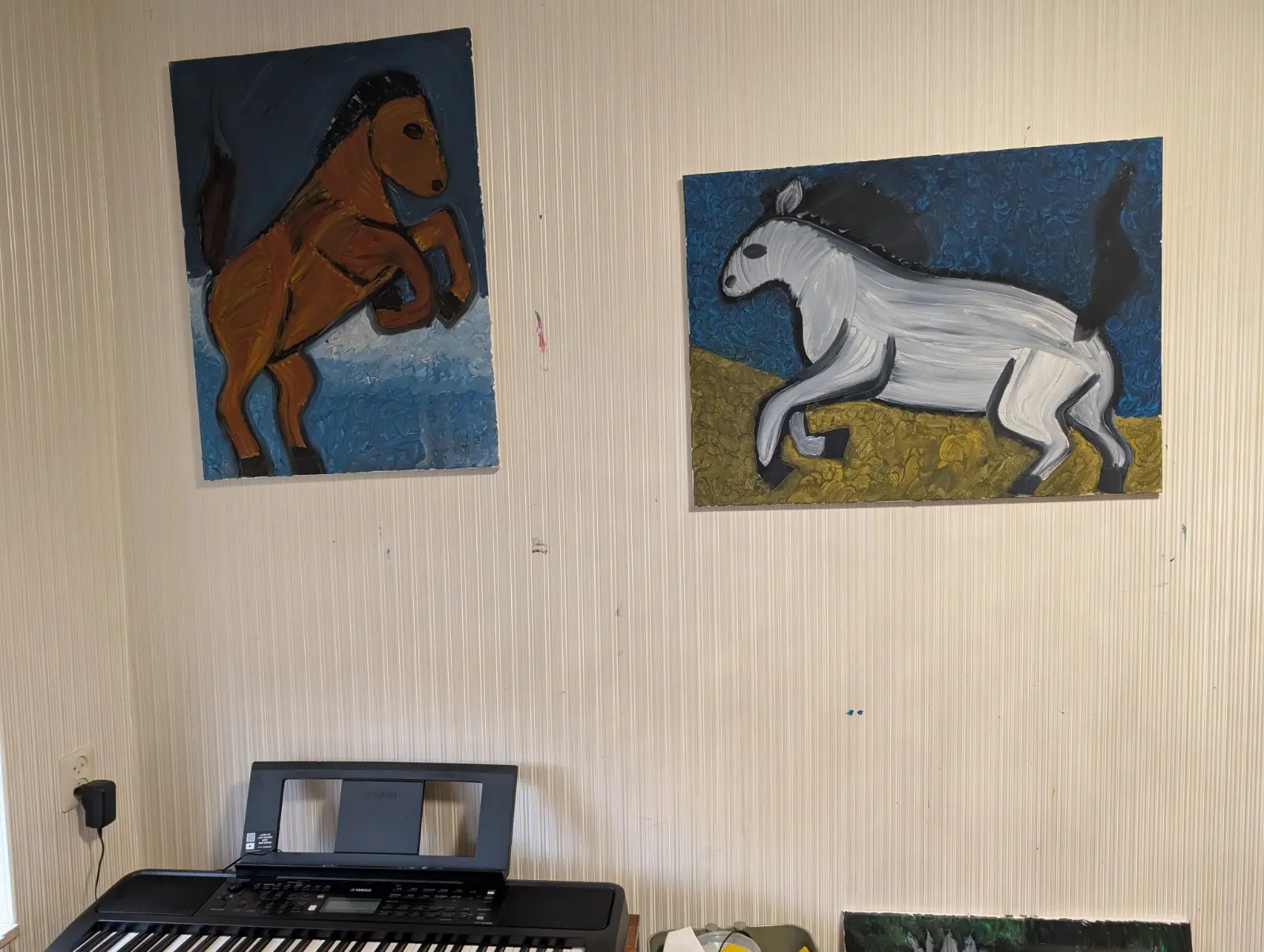
This appears to be a pair of folk art style paintings, depicting horses in a somewhat stylized and abstracted manner. The paintings feature thick impasto application of paint, suggesting oil or acrylic medium, on what seems to be an unprimed or thinly prepared board. The forms are simplified, focusing on the dynamic poses of the horses, one brown and one white, set against bold, textured backgrounds.
Related traditions
American Folk Art
19th Century to Present
Stylized animal depictions, often with bold colors and simplified forms, are a hallmark of American folk art traditions.
Primitivism/Expressionism
Early 20th Century
The intentional simplification of form and emotional intensity found in these pieces echo the broader early 20th-century artistic movements that sought to break from academic realism.
Use and ceremony
Pre-Modern
Horses often symbolized power, freedom, and utility in agriculture and warfare.
Modern Era
In folk art, horses can evoke nostalgia for an agrarian past, represent spirit animals, or simply be admired for their beauty and dynamism, often in a more symbolic than literal sense.
Origins and context
Folk art, by its nature, often stands outside the formal academic traditions of art history. Its roots are typically amateur, self-taught, or community-based, reflecting personal expression and local narratives rather than grand art-historical movements. These pieces exhibit characteristics often seen in 20th and 21st-century self-taught artists, where raw expression and directness of vision are over technical perfection or sophisticated composition. They evoke a primal connection to imagery, much like early modernists who drew inspiration from indigenous or 'naïve' art forms.
Further details
Folk art often features animals as central subjects, symbolizing a connection to nature, strength, or everyday life in rural or traditional communities.
The use of bold, simplified shapes and thick outlines in these paintings is reminiscent of early 20th-century movements like Expressionism or Primitivism, albeit through a folk art lens.
Attribution and evidence
The confidence level is good as the stylistic attributes strongly align with folk art, and the medium and substrate can be reasonably inferred. However, the lack of a signature or further provenance limits certainty regarding a specific artist or exact date beyond a broad period.
Identifying details
- 1Stylistic simplification of forms, characteristic of folk art or naive painting.
- 2Heavy impasto application of paint, suggesting oil or acrylic medium and direct technique.
- 3Lack of visible signature or formal artist's mark, common for amateur works.
- 4Use of what appears to be unprimed board as a substrate.
Open questions
- •The exact medium (oil vs. acrylic) cannot be definitively determined from images alone.
- •The nature of the substrate (wood, masonite, cardboard) is unclear without closer inspection.
- •Absence of signature makes any attribution beyond 'folk artist' speculative.
Photographs that would help
- Examine the reverse of the paintings for any labels, inscriptions, or artist's marks.
- A close-up examination of the paint surface and texture to confirm the medium.
- UV light examination to check for restorations or overpainting.
- Determine the exact dimensions of each piece.
Terms in this record
- Impasto
- A technique used in painting where paint is laid on an area of the surface in very thick layers, usually thick enough that the brushstrokes are visible.
- Folk Art
- Art produced by indigenous artists or by otherwise unaccomplished artists, operating within a traditional culture, or with an idiosyncratic personal vision. It often lacks formal academic training.
- Substrate
- The material or surface on which a painting is made, such as canvas, wood panel, or paper.
Wear and preservation
The paintings appear to be in generally fair amateur condition, with some surface grime and minor edge wear. There are no obvious signs of significant damage, repairs, or loss of paint, though the image quality makes a definitive assessment challenging.
Scarcity and surviving examples
Average · 4/10 estimated rarity
This is a qualitative collection score, not a measured survival count, market percentile or proof of authenticity.
What the photographs establish
Interpretation of the photographs and supplied context. This does not authenticate the object.
- These are likely amateur works, reducing the incentive for forgery.
- The style is straightforward and lacks complex techniques that would be difficult to reproduce.
- No specific attribution or high value claim is being made.
Value and its basis
Estimate recorded: Feb 27, 2026
How we estimate value
- No documented comparable sales are shown for this estimate
- Condition, completeness & craftsmanship
- Demand assumptions may not reflect current transactions
- The range is an estimate, not an asking price or sale result
For informational purposes only, not a formal appraisal.
Related objects
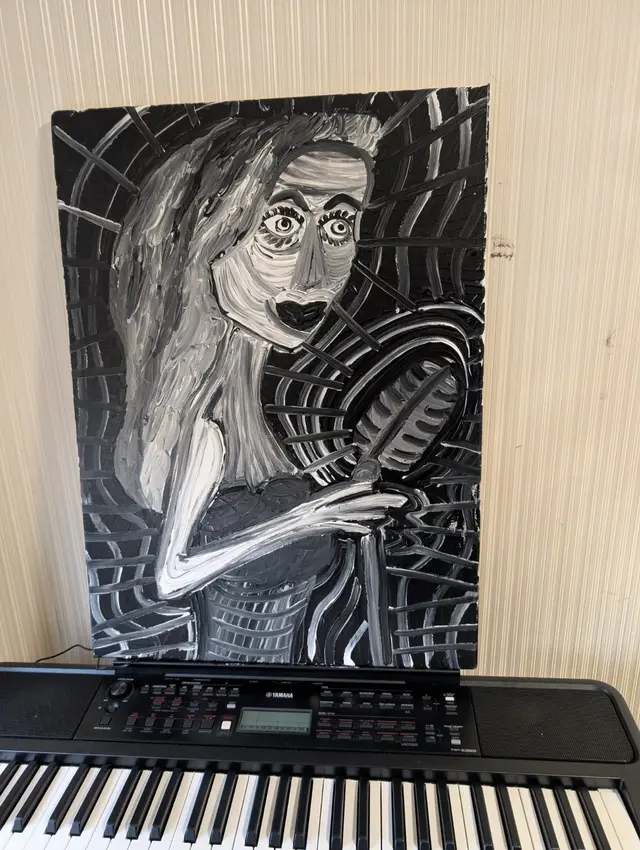
Contemporary Figurative Painting of a Woman with a Microphone
Same maker: George Klaus
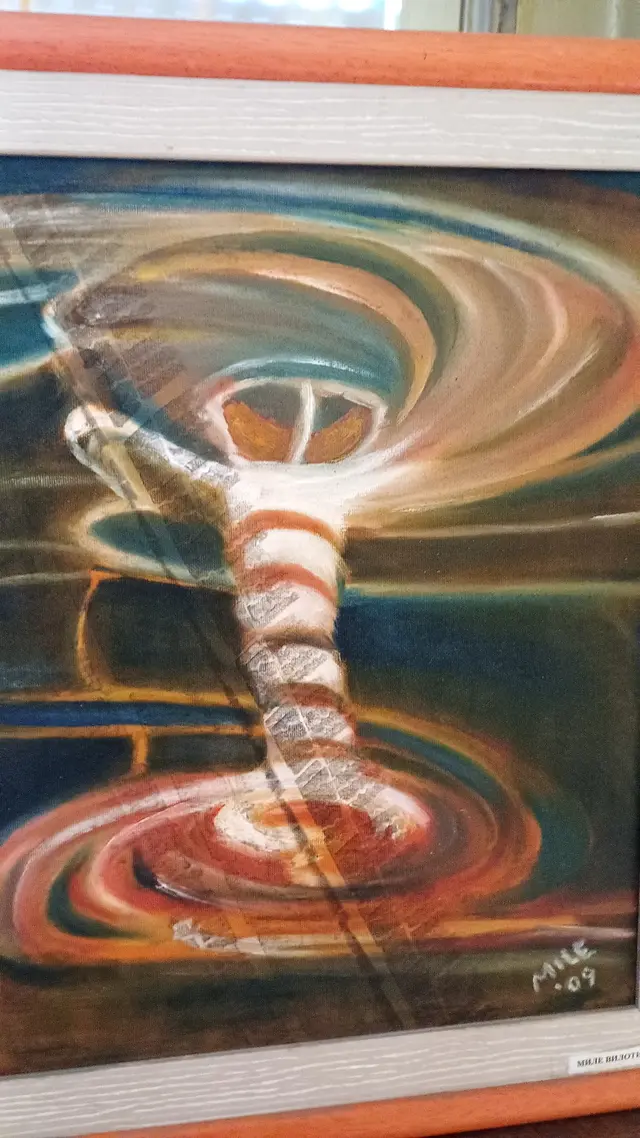
Pair of Contemporary Abstract and Semi-Abstract Paintings Signed "Mile"
Shared title details
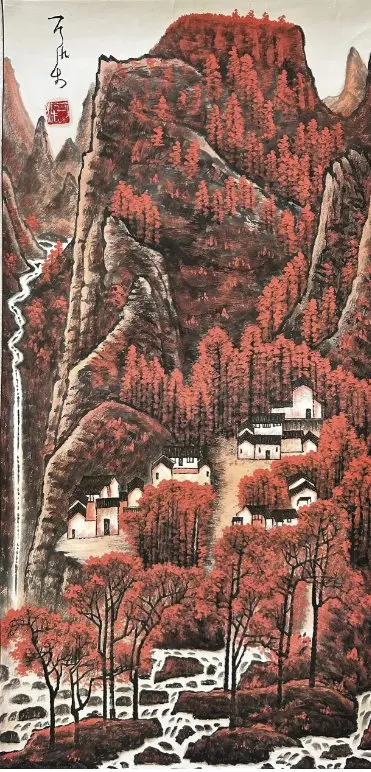
Chinese Shanshui Landscape Painting in the Style of Li Keran
Same category
Framed portrait of a Tudor-style royal sitter
Same category
Mass-market landscape oil painting in the 'wet-on-wet' style
Same category
Contemporary Oil Painting of a Running Whippet or Greyhound
Same category
Explore Paintings
Oil paintings, watercolors, acrylics, and painted works on canvas, panel, and paper.
Paintings value and rarity guideShare this find
A place for your paintings
Keep its photographs, maker’s marks and the story you know in one object record. Start with a photo.
Create an account for 10 free scans. No credit card needed.
Join the conversation