
Octagonal wooden tilt-top pedestal table
Curiosa does not handle the sale. Visit the owner's cabinet to get in touch.
Estimated value
$75 - $275Rarity
Ordinary(3/10)Category
InteriorEra
Possibly late 19th to early 20th century; not establishedVisual assessment
Photo analysis
Save to revisit in your watchlist. This does not add the object to your own collection.
Octagonal wooden tilt-top pedestal table
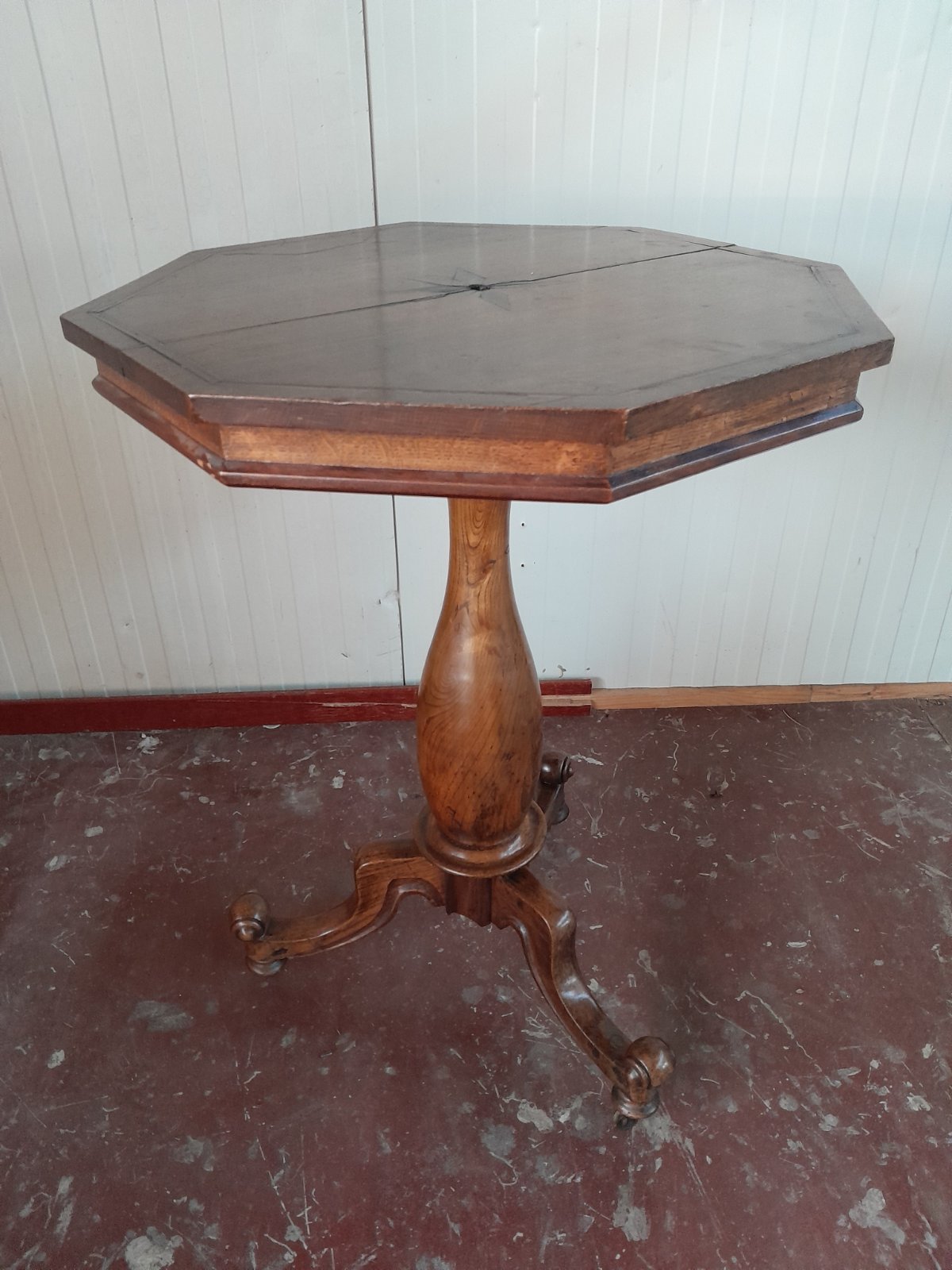
The octagonal top of this wooden pedestal table tilts upright, allowing it to occupy less floor space when stored. It stands on a bulbous turned column and three curved legs with scroll-like ends and small casters. A central star motif and fine perimeter lines decorate the top.
Origins and context
Tilt-top tables were made in several European furniture traditions and continued to be produced in revival styles. Their folding tops made them practical in rooms where furniture needed to be moved or stored.
Attribution and evidence
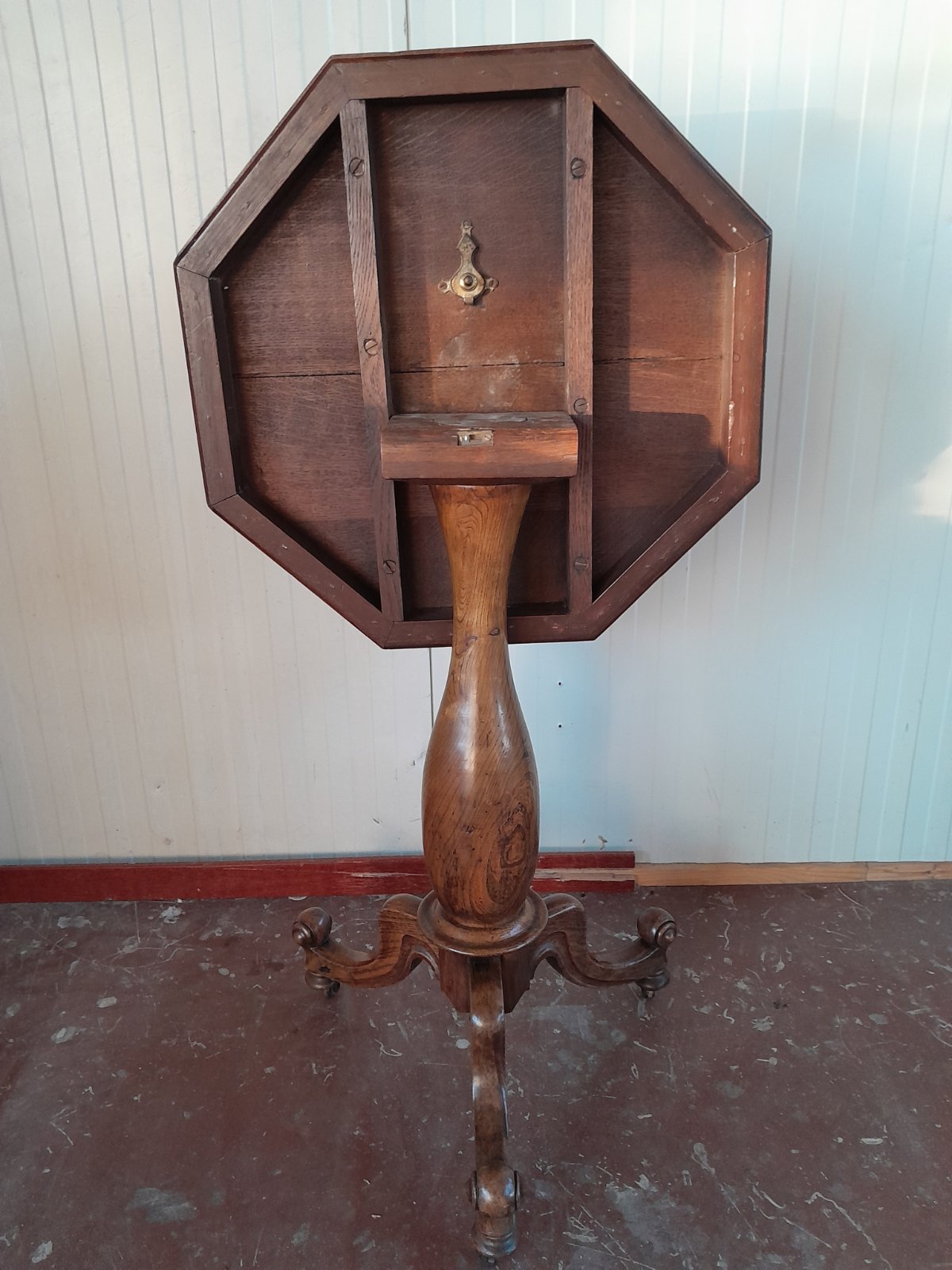
The tilt-top function and pedestal form are clearly supported by the views in both positions. The specific maker, country, date and scarcity of this particular table remain unverified; the rarity assessment is a cautious estimate for the general type.
Identifying details
- 1The upright top in photo 2 exposes the support and hardware, establishing a tilt-top design.
- 2The underside has slotted fasteners and wooden battens, but these alone do not securely date the table.
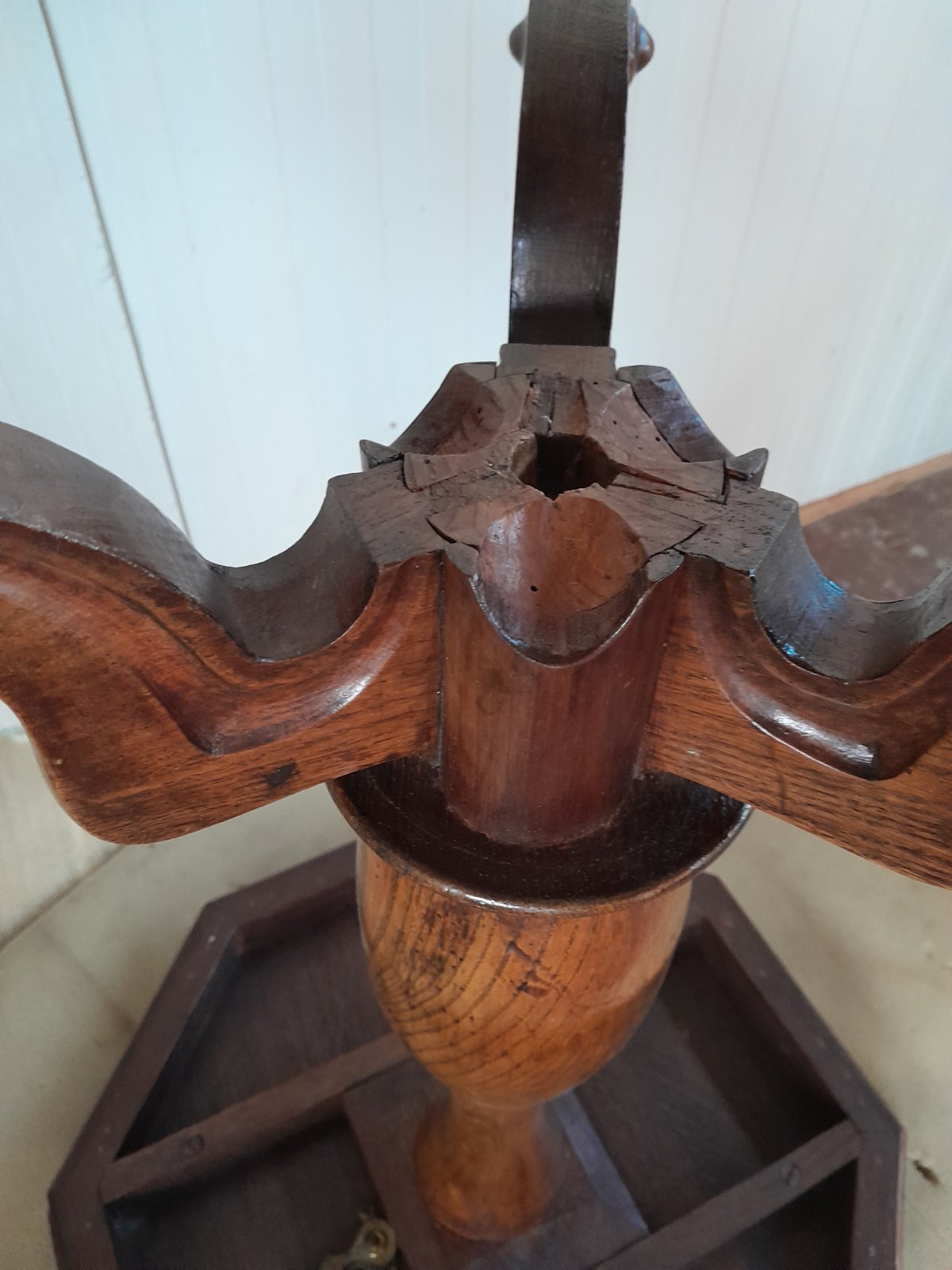
- 3Photo 3 shows the three-leg junction in detail; the open central area and surrounding splits warrant examination.
Open questions
- •The proposed Netherlands, Belgium or Germany origin cannot be distinguished from the visible construction.
- •The tabletop line may include an open split; the image does not resolve all decorative lines from damage.
- •Small holes near the leg junction have an uncertain cause and do not establish active insect damage.
Photographs that would help
- Photograph the tabletop line and central motif close up to distinguish a split from decorative joints or lines.
- Have a furniture conservator inspect the leg junction, holes and tilt mechanism for structural condition and any earlier repairs.
- Photograph any labels or stamps and the tilt hardware close up, including its fasteners, to help assess manufacture and alterations.
Terms in this record
- Tilt-top
- A tabletop mounted so it can be turned upright for storage.
- Batten
- A strip of wood fixed across a surface to support or brace it.
- Caster
- A small wheel fitted to furniture to help it move.
Wear and preservation
Visual assessment only; joint security, repairs and mechanical condition require physical inspection.
A long open line crosses the top through the central motif, with other fine lines whose distinction from decoration is unclear. The edge has small chips and scuffs. The underside of the leg junction shows separated and cracked-looking wood around a central opening, with small holes; the cause and structural effect need closer assessment. The tilt hardware and casters have not been tested.
Materials and construction
The underside has a framed octagonal perimeter and two screwed wooden battens. The column shows prominent grain beneath a glossy brown finish; the wood species and finish history remain uncertain.
Scarcity and surviving examples
Ordinary · 3/10 estimated rarity
This is a qualitative collection score, not a measured survival count, market percentile or proof of authenticity.
What the photographs establish
Interpretation of the photographs and supplied context. This does not authenticate the object.
- No maker's mark or documentation is visible to establish date or origin.
- The age and originality of the tilt hardware and finish are not established.
- The separated wood at the base makes the extent of any past repair uncertain.
Value and its basis
Estimate recorded: Nov 16, 2026
How we estimate value
Collectors and interest
Buyers of traditional occasional furniture may value the folding top and compact pedestal form.
What supports the estimate
- •A complete tilt-top design with an octagonal decorated surface
- •Three curved legs with visible casters
What could change it
- •The indicative estimate assumes an ordinary unmarked wooden table sold as seen, without a premium for the proposed date or origin.
- •A significant structural repair or replacement of parts could reduce value; the cost and extent are not established.
Comparing quality
- •Secure original construction and complete, functioning tilt hardware
- •Documented maker or period attribution with a well-preserved surface
The effect of condition
Condition and value depend particularly on whether the tabletop split is open, the leg junction is secure, the mechanism is complete, and the finish or parts have been replaced. This is an unverified photo-based estimate, not a researched appraisal.
Market interest
For informational purposes only, not a formal appraisal.
The collector’s account
Supporting details
- The collector's proposed late 19th-century date is compatible with the table's period-style pedestal and tilt-top construction, but those features do not establish its date.
Related objects
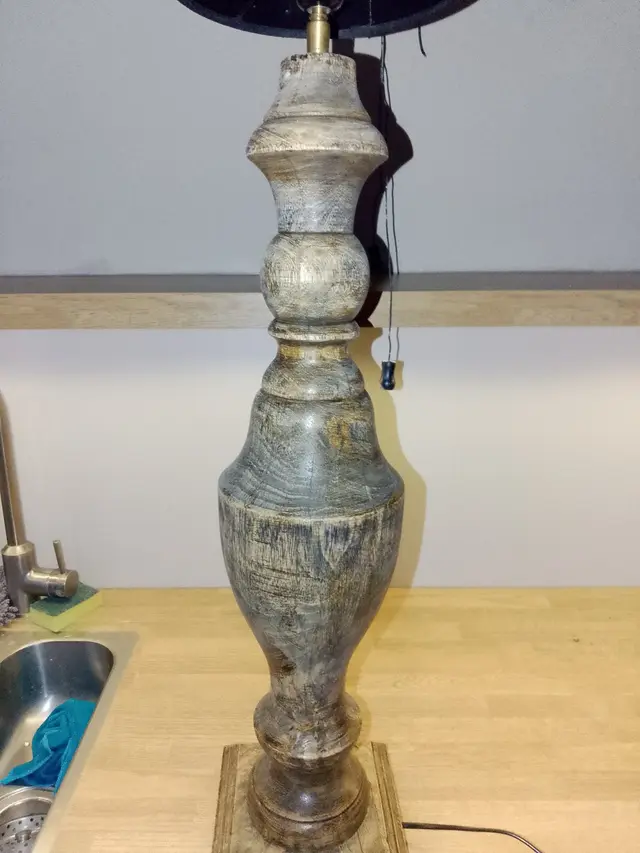
Turned Wood Table Lamp with Distressed Finish
Same category
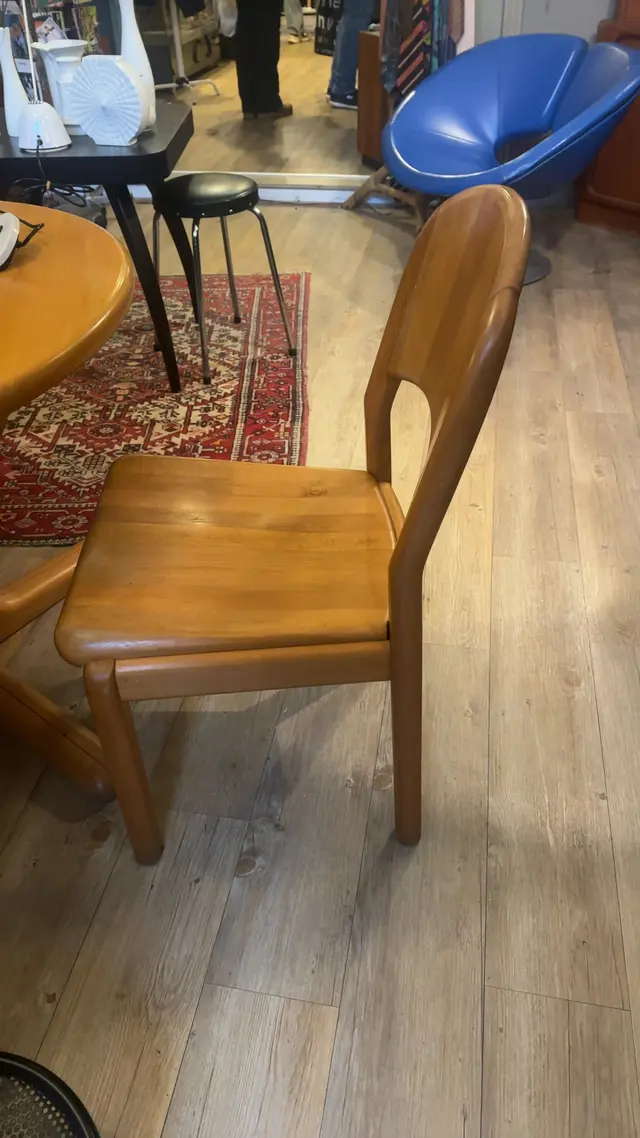
Mid-Century Modern Wooden Dining Chair
Same category
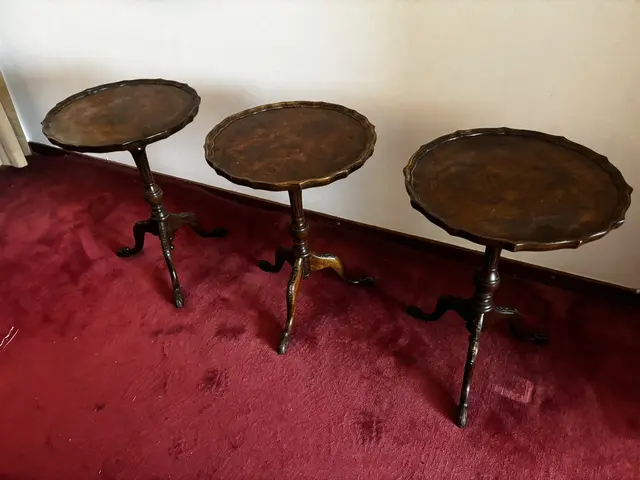
Set of Three George III Style Pie-Crust Tilt-Top Tables
Same category
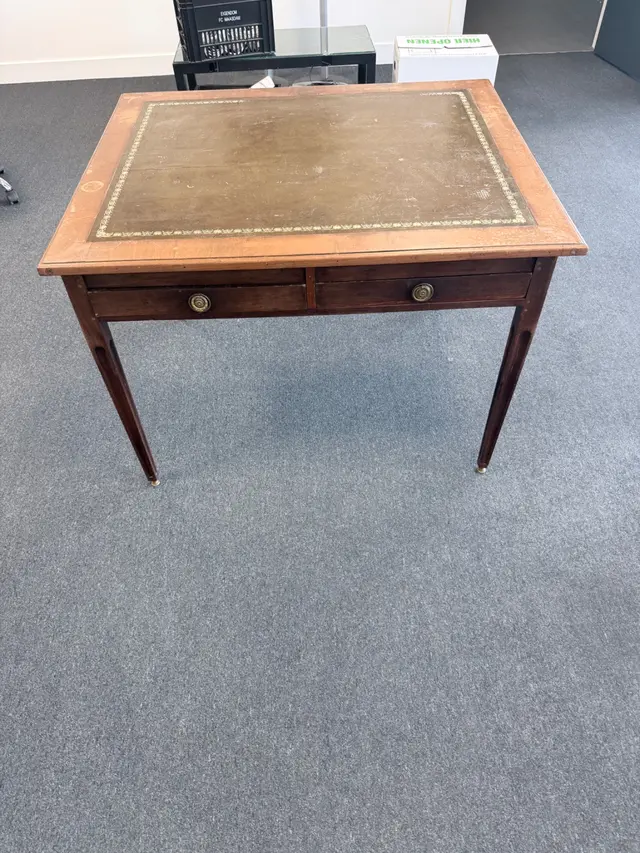
Victorian-style leather-top writing desk or ladies' work table
Same category
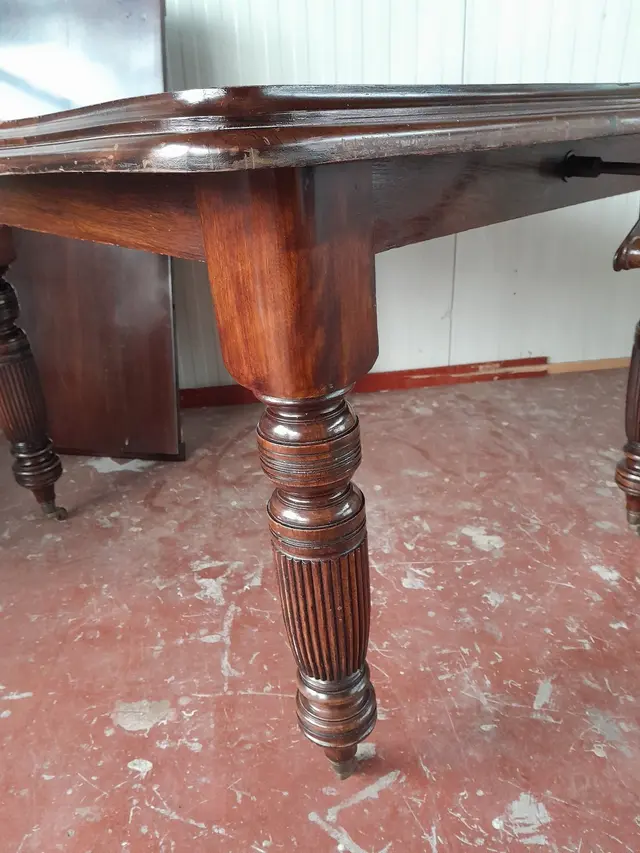
Victorian Era Extending Dining Table
Same category

Modern Fitted Kitchen with Neff Appliances
Same category
Explore Interior
Furniture, lamps, lighting, chandeliers, decorative objects for the home.
Interior value and rarity guideShare this find
A place for your interior
Keep its photographs, maker’s marks and the story you know in one object record. Start with a photo.
Create an account for 10 free scans. No credit card needed.
Join the conversation