Victorian Era Extending Dining Table
Estimated value
$400 - $1,200Rarity
Average(4/10)Category
InteriorEra
Late Victorian (1870-1900)Origin
United KingdomAuthenticity
VICTORIAN ERA EXTENDING DINING TABLE: IDENTIFICATION
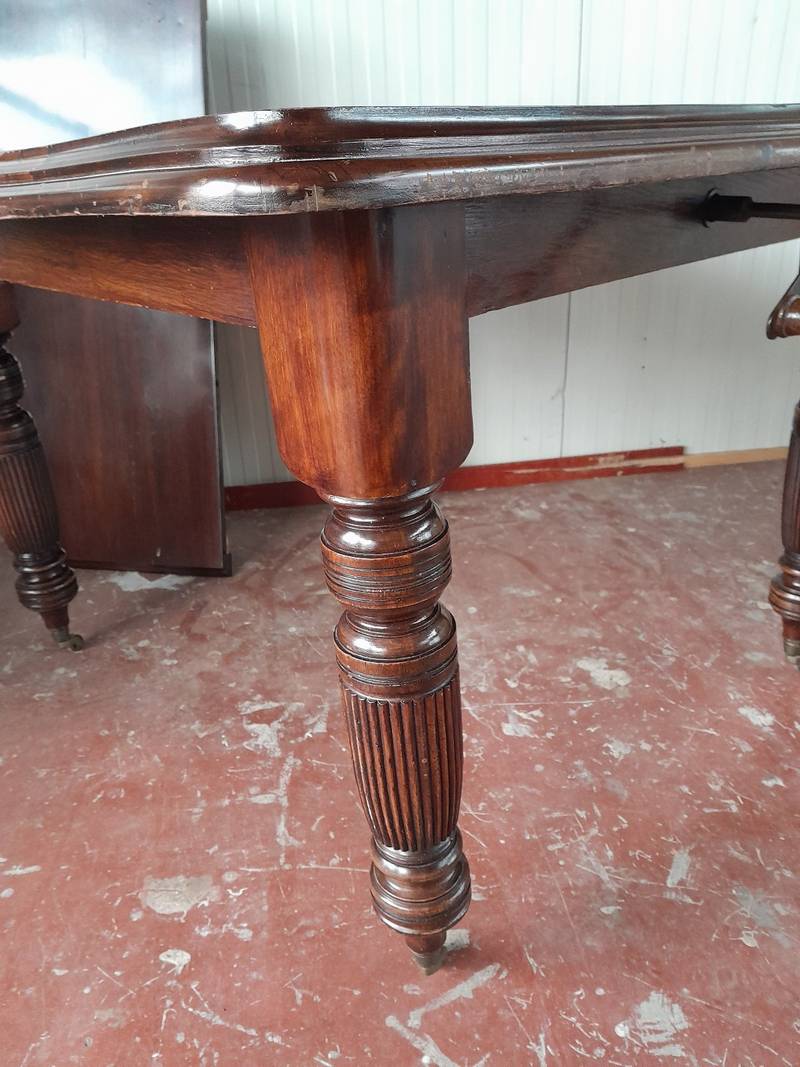
This appears to be a robust extending dining table, likely from the late Victorian period, characterized by its heavily turned and reeded legs. The dark, polished finish and substantial construction are typical of the era, suggesting a piece designed for durability and formal dining. The extending mechanism, which is clearly visible with its wooden runners and metal screw mechanism, indicates its functionality to accommodate additional leaves for larger gatherings.
CROSS-CULTURAL PARALLELS
Where This Object Echoes
Emphasis on robust, formal dining furniture often featuring turned legs and dark finishes.
Ritual & Ceremonial Use
- •Formal family dinners and entertaining guests, where the table's ability to extend would be crucial.
- •The ritual of setting a grand table for special occasions, with the table serving as a focal point.
Meaning Through Time
A symbol of domestic prosperity and the importance of family and social gatherings.
Often repurposed as work desks or smaller dining tables, reflecting a shift away from highly formal dining.
SCARCITY
Typical antique shop fare. Requires some searching but regularly available. This is where most genuine antiques fall.
Typical Characteristics
- Standard antique shop items
- Regularly available
- Moderate collector interest
Confidence Factors
- Construction and style are consistent with late Victorian period furniture.
- Wear patterns suggest genuine age rather than artificial distressing.
- The exposed extension mechanism shows period-appropriate construction.
DESIGN HISTORIAN'S TAKE
Furniture Historian & Restoration Specialist
The visible design elements, construction style, and the type of extending mechanism strongly point to a late Victorian era dining table, allowing for a good level of confidence in the classification.
KEY EVIDENCE
- 1Heavily turned and reeded legs are characteristic of late Victorian design.
- 2The dark, polished finish and substantial construction align with period aesthetics.
- 3Visible extending mechanism with wooden runners and threaded rod indicates a period-appropriate expansion system.
- 4Square form with rounded corners, fitting typical Victorian dining table typology.
- 5Brass or metal casters are consistent with furniture portability trends of the late 19th century.
UNCERTAINTIES
- •Without inspecting the underside or joinery, it's difficult to confirm original finish or extent of any repairs.
- •The specific wood species is hard to definitively identify from images alone; could be mahogany, walnut, or a stained local hardwood.
WHAT WOULD IMPROVE CERTAINTY
- →Photographs of the underside of the tabletop and the apron to examine secondary woods and joinery details.
- →Close-up images of the casters and any visible hardware to check for originality.
- →Clearer images of the extension runners and the threaded rod mechanism.
- →UV light test on the finish to ascertain if it's original or a later overcoat.
CONDITION & GRADE
Condition
The primary condition issue appears to be surface wear and scratches on the tabletop and edges where the leaves join, which is common for a dining table of this age. One of the extension leaves is detached, exposing the underlying runners. The extending mechanism seems structurally sound but would benefit from inspection and lubrication. The reeded turning on the legs generally appears sharp, but some casters may need attention.
DESIGN MARKET VALUE
Updated: Feb 27, 2026
- Market comparables from auctions & retail
- Condition, completeness & craftsmanship
- Current collector demand & trends
- Low = quick sale, high = patient seller
For informational purposes only, not a formal appraisal.
ABOUT INTERIOR
Furniture, lamps, lighting, chandeliers, decorative objects for the home.
Interior value and rarity guideSHARE THIS CURIOSITY
Have your own curiosities to discover?
Scan Your Curiosity
COMMENTS