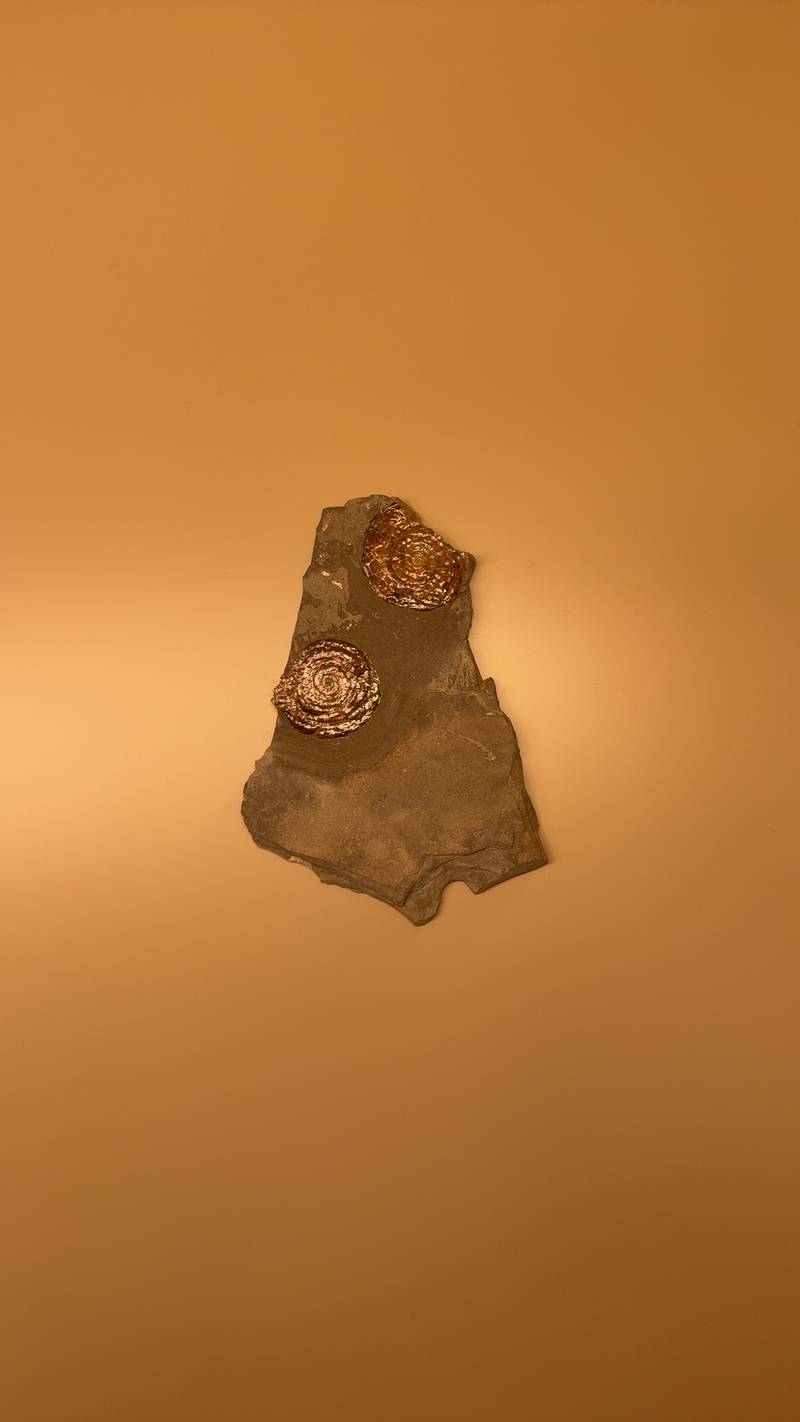
Ammonite - Psiloceras planorbis (Jurassic, Blue Lias, UK) with iridescence
Estimated value
$45 - $120Rarity
Average(4/10)Category
FossilsEra
Lower Jurassic (approx. 200 Ma)Origin
United KingdomAuthenticity
AMMONITE - PSILOCERAS PLANORBIS (JURASSIC, BLUE LIAS, UK) WITH IRIDESCENCE: IDENTIFICATION
A matrix specimen containing two fossilized ammonites exhibiting distinct iridescent preservation. The specimens show the classic planispiral coiled shell structure characteristic of early Jurassic cephalopods. The larger specimen has a diameter of approximately 35-45mm, preserved as a flattened compression within a grey liassic mudstone matrix. The surface displays a brownish-bronze 'fire' caused by the preservation of the original mother-of-pearl (nacreous) layer, which refracts light into various hues.
SCARCITY
Typical antique shop fare. Requires some searching but regularly available. This is where most genuine antiques fall.
Typical Characteristics
- Standard antique shop items
- Regularly available
- Moderate collector interest
Confidence Factors
- Mineralization is consistent with Blue Lias Hettangian fossils
- Matrix texture and bedding planes align with genuine liassic mudstone
- Iridescence levels are typical for the species and not characteristic of artificial dyes
PALEONTOLOGIST'S TAKE
Paleontology Specialist
The morphology of the Psiloceras shell and the specific preservation style are highly diagnostic for this specific period and region, allowing for a high-confidence identification despite the lack of locality labels.
KEY EVIDENCE
- 1Phylum: Mollusca, Class: Cephalopoda, Order: Ammonitida
- 2Distinct iridescent nacre preservation typical of Somerset/Dorset localities
- 3Planispiral coiling with smooth outer whorls diagnostic of the genus Psiloceras
- 4Matrix color and fragmentation pattern consistent with the Blue Lias Formation
UNCERTAINTIES
- •Surface gloss suggests the application of a modern stabilizer/varnish
- •Warm lighting potentially over-emphasizes the metallic 'fire' compared to natural light
WHAT WOULD IMPROVE CERTAINTY
- →Examine specimen under UV light to check for adhesive-based repairs in the matrix
- →Check for locality data from the seller (e.g., Watchet or Lyme Regis)
- →View under cooler, natural sunlight to better assess true color play
CONDITION & GRADE
Grading breakdown
The specimen is valued as a decorative/educational piece; the iridescence is a positive value driver, though the incompleteness of the second shell and matrix fractures prevent a 'museum grade' designation.
Condition
One ammonite is approximately 85% complete with some loss at the aperture, while the second is a partial compression. There are visible fractures across the nacreous layer, which is typical for specimens stabilized with a conservation-grade consolidant such as paraloid B-72.
Weight & feel
Estimated between 150g and 300g; the mudstone matrix is relatively dense but thin, giving it a solid, plate-like feel.
SPECIMEN MARKET VALUE
Updated: May 11, 2026
Similar iridescent Psiloceras multi-blocks from the UK frequently auction for £40-£80 (approx $50-$100 USD) on platforms like Catawiki and specialized fossil dealer sites.
Who buys this
Novice to intermediate fossil collectors and interior designers seeking natural history decor.
What increases value
- •Intensity of the iridescent 'fire'
- •Multiple specimens on a single matrix (multi-block)
- •Stability of the nacre (not flaking)
What lowers value
- •Matrix instability or hidden cracks
- •Evidence of excessive carving/enhancement of the stone border
What makes top-tier examples
- •Total centering of the specimens on the plate
- •Vibrant green or red hues within the nacre (rarer than bronze)
- •Full 360-degree whorl preservation
Grade & condition
Completeness of the keel, vibrancy of iridescence, and aesthetic balance of the matrix.
Rarity & demand
For informational purposes only, not a formal appraisal.
ABOUT FOSSILS
Prehistoric specimens, dinosaur fossils, amber inclusions, and ancient life forms.
Fossils value and rarity guideSHARE THIS CURIOSITY
Have your own curiosities to discover?
Scan Your Curiosity
COMMENTS