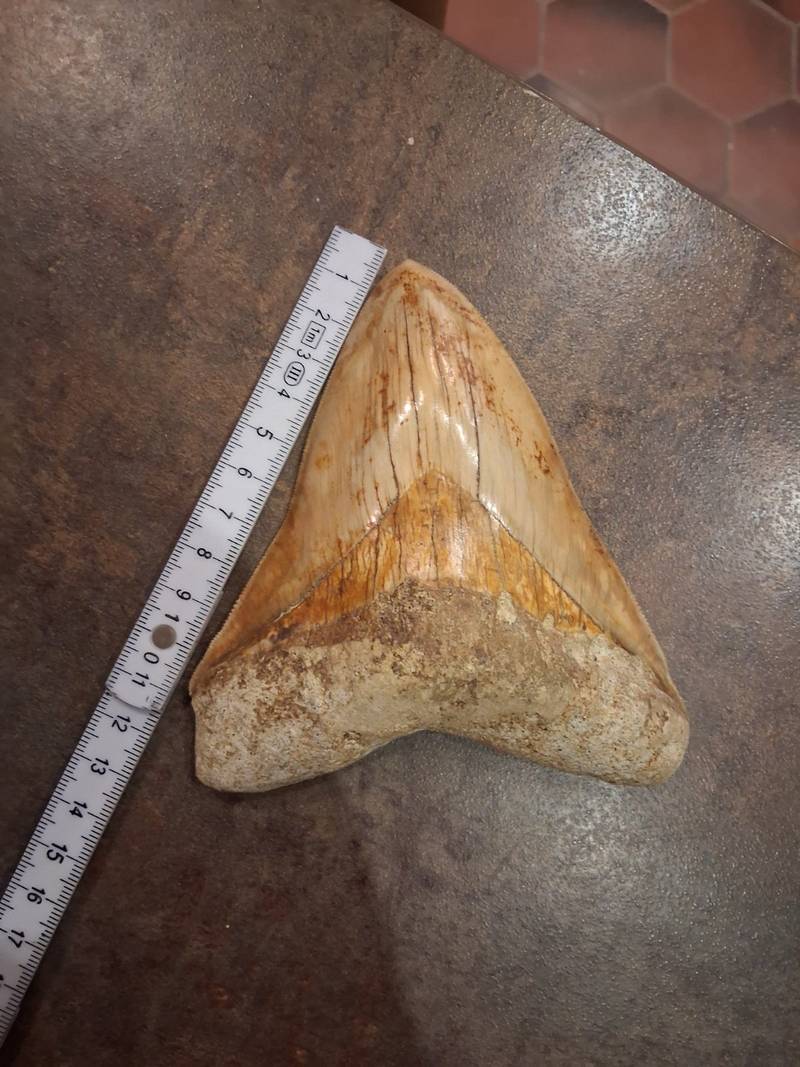
Megalodon Tooth - Otodus megalodon (Miocene to Pliocene)
Estimated value
$180 - $350Rarity
Average(4/10)Category
FossilsEra
Miocene to Pliocene (23.03 – 3.6 Ma)Origin
United StatesAuthenticity
MEGALODON TOOTH - OTODUS MEGALODON (MIOCENE TO PLIOCENE): IDENTIFICATION
Large fossilized upper principal tooth from the extinct megatooth shark Otodus megalodon. The specimen measures approximately 12.5 cm (4.9 inches) along the slant edge. It features a broad, triangular crown with fine serrations still largely intact along the mesial and distal edges. The bourlette, a chevron-shaped band between the enamel and the root, is visible though partially weathered. The root is robust and typically mineralized, exhibiting a porous texture consistent with phosphatization processes.
COLLECTOR NOTES
A Megalodon's bite force is estimated to have been between 108,000 and 182,000 newtons, which is more than ten times that of a modern Great White shark.
SCARCITY
Typical antique shop fare. Requires some searching but regularly available. This is where most genuine antiques fall.
Typical Characteristics
- Standard antique shop items
- Regularly available
- Moderate collector interest
Confidence Factors
- Serration detail and vertical enamel cracks are naturally occurring and difficult to replicate in casts
- Root porosity and mineral pitting are consistent with authentic geologic aging
- Measurement and morphology align perfectly with known Otodus megalodon upper jaw dentition
PALEONTOLOGIST'S TAKE
Paleontology Specialist
Identification is high due to extremely clear images of diagnostic features like serration consistency and the bourlette, which are the hallmarks of this species.
KEY EVIDENCE
- 1Presence of the diagnostic bourlette (chevron line between root and crown)
- 2Fine, regular serrations consistent with Otodus genus
- 3Mineralization patterns and hydration cracking in the enameloid
- 4Triangular, broad morphology identifying it as an upper principal tooth
UNCERTAINTIES
- •Potential for minor fill/stabilization in the root area, typical for commercial specimens
WHAT WOULD IMPROVE CERTAINTY
- →Examine the root/crown junction under UV light to check for adhesive or resin restoration
- →Verify locality to confirm if it originated from a sustainable legal collection site
CONDITION & GRADE
Grading breakdown
Serrations are roughly 85-90% complete. The absence of major restoration and the presence of a sharp tip elevate the grade despite some root mineral pitting.
Condition
The tip is exceptionally well-preserved and sharp. Minor distal chipping is present near the root junction. The root is complete but lacks the high-gloss polish of premium-prepped gallery specimens.
SPECIMEN MARKET VALUE
Updated: May 11, 2026
Heritage Auctions and specialized fossil dealers recently record sales of 4.5" to 5" teeth in this condition between $200 and $400 USD (2023-2024).
Who buys this
Natural history enthusiasts, vertebrate paleontology collectors, and interior designers focusing on cabinet of curiosities themes.
What increases value
- •Slant length of 5+ inches is a significant price tier threshold
- •Sharpness and completeness of the tip
- •Integrity of serrations along both edges
What lowers value
- •Any hidden restoration or acrylic filling in the root can drop value by 40%
- •Enamel peels or 'chatter' marks would decrease aesthetic appeal
What makes top-tier examples
- •No restoration ('natural')
- •Sharp, needle-like tip and 100% serration presence
- •Deeply colored, high-gloss enamel
Grade & condition
Completeness of serrations, tip condition, and percentage of the bourlette remaining.
Rarity & demand
For informational purposes only, not a formal appraisal.
ABOUT FOSSILS
Prehistoric specimens, dinosaur fossils, amber inclusions, and ancient life forms.
Fossils value and rarity guideSHARE THIS CURIOSITY
Have your own curiosities to discover?
Scan Your Curiosity
COMMENTS