Petrified Wood (Silicified)
Estimated value
$100 - $300Rarity
Average(4/10)Category
FossilsEra
Mesozoic Era (Triassic to Cretaceous)Origin
United StatesAuthenticity
PETRIFIED WOOD (SILICIFIED): IDENTIFICATION
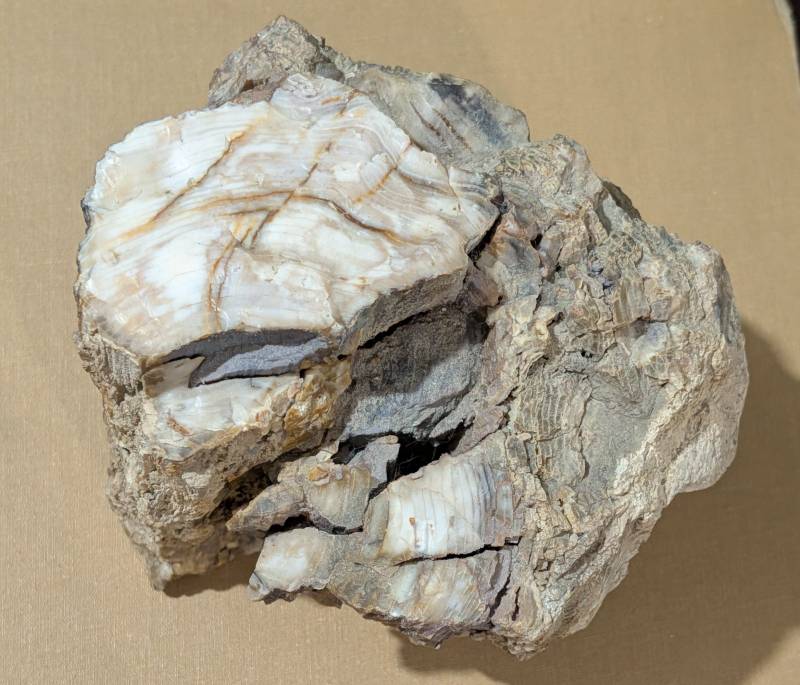
This appears to be a large specimen of petrified wood, showcasing excellent preservation of the original wood grain and growth rings. The silicification process has replaced the organic material with chalcedony or opal, resulting in the distinct glassy fracture and variegated coloration, ranging from opaque white to shades of brown and dark grey. The specimen presents a mix of natural exterior weathering and polished or fractured interior surfaces revealing the internal structure.
SCARCITY
Typical antique shop fare. Requires some searching but regularly available. This is where most genuine antiques fall.
Typical Characteristics
- Standard antique shop items
- Regularly available
- Moderate collector interest
Confidence Factors
- Petrified wood is generally difficult to fake convincingly at this size and with this level of detailed wood grain.
- The naturalistic matrix and varied silicified textures are consistent with genuine specimens.
- The fractures reveal internal mineral banding consistent with permineralization, not modern fabrication.
PALEONTOLOGIST'S TAKE
Paleontology Specialist
The visual evidence strongly points to genuine petrified wood due to the clear preservation of wood structures and characteristic mineral replacement textures. The images are clear and show multiple angles.
KEY EVIDENCE
- 1Clear preservation of wood grain structure and growth rings visible on both smooth and fractured surfaces.
- 2Varied and natural color palette (whites, browns, grays) consistent with silicified wood mineral replacement.
- 3Characteristic conchoidal or splintery fracture pattern on exposed surfaces, typical of chert/chalcedony.
- 4Overall morphology and texture are consistent with large sections of ancient tree trunks that have undergone permineralization.
WHAT WOULD IMPROVE CERTAINTY
- →A precise locality (geological formation and geographic region) would greatly enhance the scientific and market value.
- →Close-up photography of microstructural details to further confirm wood anatomy and mineral composition.
- →UV light examination can sometimes reveal subtle repairs or areas of artificial enhancement, though unlikely for this type of specimen.
CONDITION & GRADE
Condition
The specimen appears to be in good, stable condition for a fossil of this type. The fractures visible are inherent to the break of the rock and appear natural, rather than recent damage. The surfaces show some natural weathering, which is typical for excavated petrified wood.
SPECIMEN MARKET VALUE
Updated: Feb 27, 2026
- Market comparables from auctions & retail
- Condition, completeness & craftsmanship
- Current collector demand & trends
- Low = quick sale, high = patient seller
For informational purposes only, not a formal appraisal.
ABOUT FOSSILS
Prehistoric specimens, dinosaur fossils, amber inclusions, and ancient life forms.
Fossils value and rarity guideSHARE THIS CURIOSITY
Have your own curiosities to discover?
Scan Your Curiosity
COMMENTS