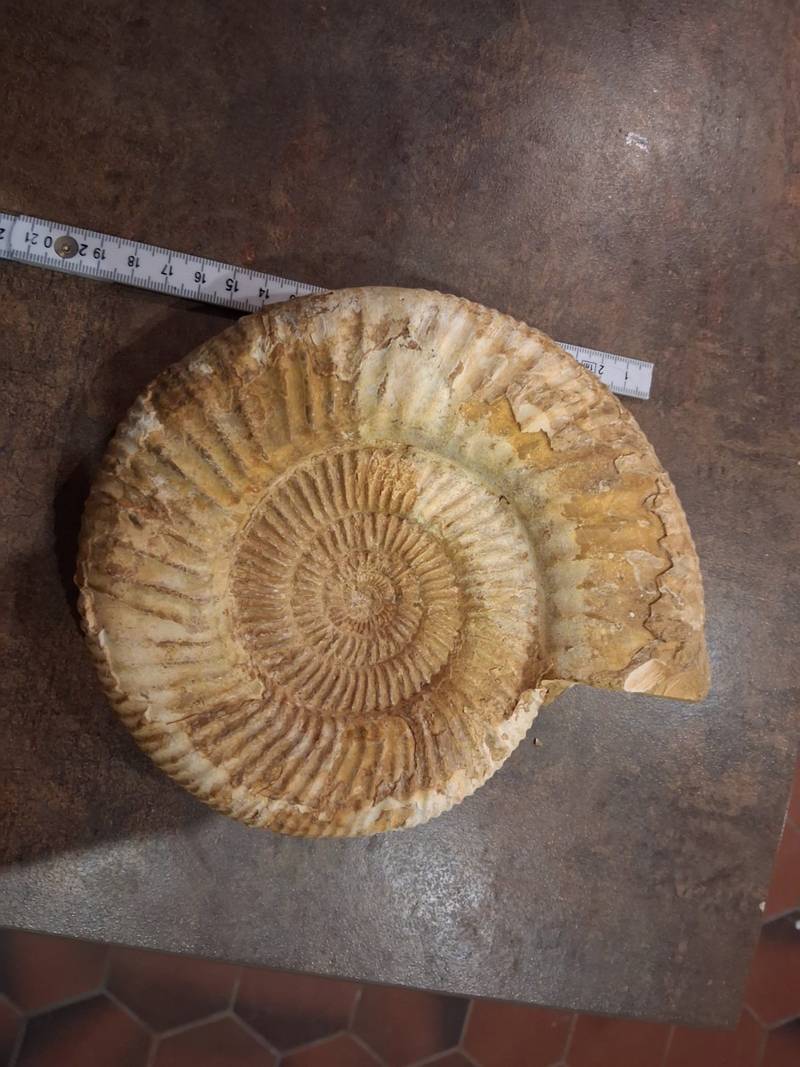
Ammonite Fossil - cf. Perisphinctes (Jurassic, approx. 160 Ma)
Estimated value
$85 - $220Rarity
Average(4/10)Category
FossilsEra
Jurassic Period (approx. 160 Million Years Ago)Origin
InternationalAuthenticity
AMMONITE FOSSIL - CF. PERISPHINCTES (JURASSIC, APPROX. 160 MA): IDENTIFICATION
A large, evolute ammonite specimen measuring approximately 20-21 cm in diameter. The specimen displays prominent primary ribbing that bifurcates on the outer whorl, a characteristic feature of the Perisphinctidae family. The preservation is a sedimentary internal mould with partial replacement by calcite or limonite, typical of deposits found in the European Jurassic formations such as those in France or Germany.
SCARCITY
Typical antique shop fare. Requires some searching but regularly available. This is where most genuine antiques fall.
Typical Characteristics
- Standard antique shop items
- Regularly available
- Moderate collector interest
Confidence Factors
- Natural sedimentation patterns visible in the matrix
- Irregularities in the ribbing consistent with organic growth
- Erosion patterns match natural geological weathering
PALEONTOLOGIST'S TAKE
Paleontology Specialist
The anatomical features (ribbing, coiling) are classic for Perisphinctids, and the scaling against the tape measure allows for accurate size-based valuation. Confidence is high due to clear visual diagnostic markers.
KEY EVIDENCE
- 1Evolute coiling with wide umbilicus typical of the Perisphinctidae family.
- 2Bifurcating ribbing visible on the ventral-lateral shoulder.
- 3Size (20cm) puts it in the 'large collector' category for this genus.
- 4Internal mold preservation indicates a limestone or marl host rock.
UNCERTAINTIES
- •Missing aperture (mouth border) which reduces maximum scientific value.
- •umbilical area shows signs of rough mechanical cleaning which has slightly flattened the inner whorls.
WHAT WOULD IMPROVE CERTAINTY
- →Check under UV light to see if any portions of the ribs have been reconstructed with resin.
- →Apply a small amount of water to the surface; if it smells 'earthy,' it confirms a natural sediment matrix.
CONDITION & GRADE
Grading breakdown
Standard commercial grade; lacks professional museum-quality preparation but retains strong rib definition and structural integrity.
Condition
The specimen is largely complete but lacks the living chamber at the aperture. Visible mechanical prep marks are present in the center (umbilicus), and there is some peripheral erosion on the outer keel.
Weight & feel
Estimated weight 1.5–2.5 kg; feels dense and solid as it is fully mineralized stone.
SPECIMEN MARKET VALUE
Updated: May 11, 2026
- Market comparables from auctions & retail
- Condition, completeness & craftsmanship
- Current collector demand & trends
- Low = quick sale, high = patient seller
For informational purposes only, not a formal appraisal.
ABOUT FOSSILS
Prehistoric specimens, dinosaur fossils, amber inclusions, and ancient life forms.
Fossils value and rarity guideSHARE THIS CURIOSITY
Have your own curiosities to discover?
Scan Your Curiosity
COMMENTS