Megalodon Tooth - Otodus megalodon (Miocene to Pliocene)
Estimated value
$150 - $350Rarity
Average(4/10)Category
FossilsEra
Miocene to Pliocene (23 to 3.6 Ma)Origin
United StatesAuthenticity
MEGALODON TOOTH - OTODUS MEGALODON (MIOCENE TO PLIOCENE): IDENTIFICATION
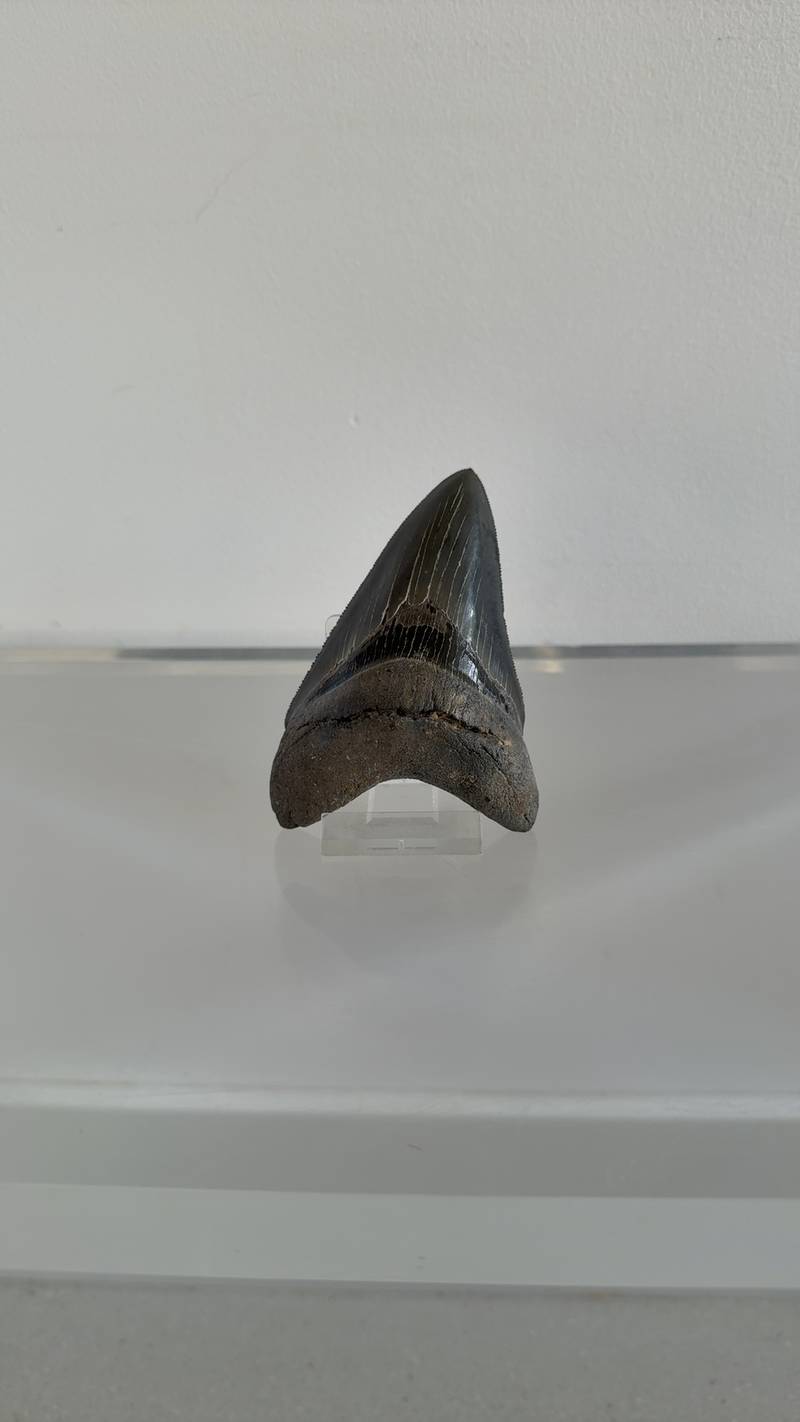
A fossilized shark tooth from the extinct species Otodus megalodon. The specimen features a diagnostic chevron-shaped neck, known as a bourlette, between the tooth blade and the bifurcated root. The labial surface exhibits dark grey to black mineral mineralization of the enameloid, with visible longitudinal grooves and finely preserved distal and mesial serrations. The root is robust and porous, typical of chondrichthyan dental fossils.
COLLECTOR NOTES
The bite force of a Megalodon is estimated between 108,000 and 182,000 newtons, which is roughly ten times that of a modern Great White shark.
SCARCITY
Typical antique shop fare. Requires some searching but regularly available. This is where most genuine antiques fall.
Typical Characteristics
- Standard antique shop items
- Regularly available
- Moderate collector interest
Confidence Factors
- Anatomical features including the bourlette and serrations are consistent with natural fossilization
- Surface mineral patina and root porosity are correct for genuine specimens from Southeast US localities
PALEONTOLOGIST'S TAKE
Paleontology Specialist
The morphometrics and mineralization patterns are highly characteristic of North American Megalodon specimens, and the image clarity allows for the confirmation of diagnostic features like the bourlette.
KEY EVIDENCE
- 1Visible V-shaped bourlette diagnostic of Otodus megalodon
- 2Presence of fine distal serrations along the blade edge
- 3Permineralized bifurcated root with characteristic phosphate-rich coloration
- 4Symmetry suggests a primary anterior position in the jaw
UNCERTAINTIES
- •Potential stabilization or repair adhesive visible at the root line
- •Lack of precise locality documentation (e.g., specific river or pit name)
WHAT WOULD IMPROVE CERTAINTY
- →Inspect the tooth under long-wave UV light to check for epoxy or restoration materials near the root-blade junction
- →Measure the slanted height from tip to root lobe to determine accurate market size (inches)
- →Perform a microscopic inspection of serration density to confirm species
CONDITION & GRADE
Grading breakdown
The tooth retains excellent serrations and tip sharpess, though the root shows some evidence of distal erosion and a possible repair seam.
Condition
The tip is intact and the serrations show minimal feeding wear. There is a horizontal fracture line visible at the junction of the root and bourlette, which may indicate a stabilized repair common in larger specimens.
SPECIMEN MARKET VALUE
Updated: May 10, 2026
Heritage Auctions and specialized dealers like FossilEra frequently sell 4-inch teeth in this condition for $200-$400 USD.
Who buys this
Natural history collectors and interior designers looking for prehistoric statement pieces.
What increases value
- •Blade length (measured on the slant; prices escalate significantly over 5 inches)
- •Completeness of the serrations and sharpness of the tip
- •Integrity and color of the bourlette
What lowers value
- •Undisclosed restoration or 're-tipping' using modern resins
- •Cracking or delamination of the enameloid surface due to humidity changes
What makes top-tier examples
- •Over 6 inches in slant length
- •No visible repairs or restorations under UV light
- •Uniform 'jet black' or 'blue' mineralization
Grade & condition
Condition is graded based on tip integrity, serration quality, root completeness, and the absence of restoration.
Rarity & demand
For informational purposes only, not a formal appraisal.
ABOUT FOSSILS
Prehistoric specimens, dinosaur fossils, amber inclusions, and ancient life forms.
Fossils value and rarity guideSHARE THIS CURIOSITY
Have your own curiosities to discover?
Scan Your Curiosity
COMMENTS