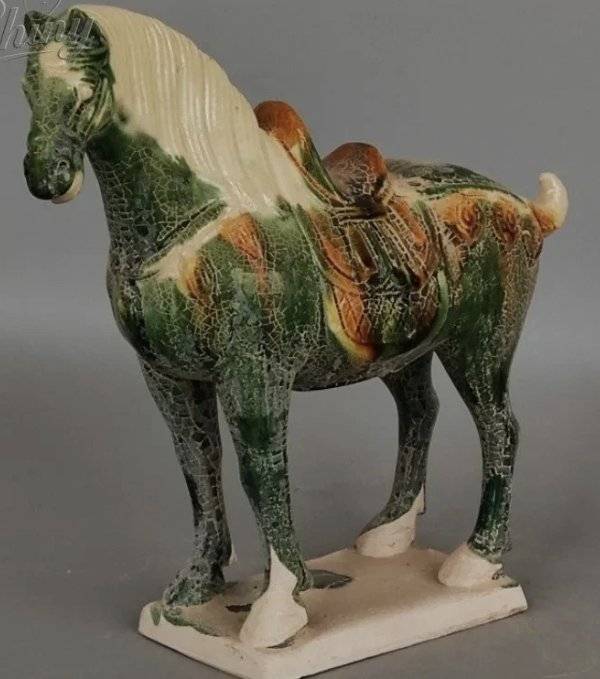
Sancai-style glazed ceramic horse figurine
Estimated value
$100 - $350Rarity
Ordinary(3/10)Category
Ceramics & PotteryEra
mid to late 20th centuryOrigin
ChinaAuthenticity
SANCAI-STYLE GLAZED CERAMIC HORSE FIGURINE: IDENTIFICATION
A ceramic horse figure standing on a rectangular plinth, decorated in the Sancai (three-color) lead-glaze tradition utilizing copper-green, iron-amber, and cream tones. The earthenware body features a visible crackle pattern (crazing) across the green glazed areas, with the glaze stopping short of the hooves and base in typical Tang-style fashion. The horse displays a cropped mane, elaborate saddle with stirrups, and a docked tail characteristic of Tang Dynasty (618–907 AD) equine funerary art.
CROSS-CULTURAL PARALLELS
Where This Object Echoes
Mingqi figures provided the deceased with status symbols for the afterlife.
Ritual & Ceremonial Use
- •Burial practices involving the placement of ceramic retinues in elite tombs to ensure comfort in the spiritual realm
Meaning Through Time
Votive object and vessel for the soul's prestige
Chinoiserie decorative object and symbol of the 'Silk Road' aesthetic
PRODUCTION & FIRING
SCARCITY
Standard antiques commonly found at estate sales and flea markets. Plentiful supply meets modest demand.
Typical Characteristics
- Moderate production runs
- Common at estate sales
- Entry-level collectibles
Confidence Factors
- Uniformity of crazing suggests chemical acceleration rather than natural aging
- Pristine condition of the unglazed clay base lacks typical mineral encrustation found on excavated mingqi
- High prevalence of 20th-century decorative replicas in this specific Sancai palette
Expert review recommended. Consider consulting a specialist before making purchasing decisions.
CERAMICIST'S ASSESSMENT
Ceramics Historian & Kiln Specialist
The form and glaze are well-executed but align perfectly with high-quality 20th-century decorative pieces rather than the rare 8th-century originals sold by Sotheby's or Christie's for six figures.
KEY EVIDENCE
- 1Sancai lead-glaze palette (green, amber, cream) is consistent with 20th-century revivals.
- 2The body is likely a buff earthenware paste fired at approximately 800-900 degrees Celsius.
- 3Glaze dripping/pooling patterns are characteristic of the dipping technique used in Luoyang-style workshops.
- 4Lack of 'silvering' or iridization often seen on authentic excavated lead glazes.
UNCERTAINTIES
- •The glaze flaking on the hoof reveals a very clean, white body underneath, lacking the staining expected from burial.
- •Intentional 'damage' or wear looks surface-level and avoids high-relief areas.
WHAT WOULD IMPROVE CERTAINTY
- →Examine the interior through the venting hole under the belly for modern slip-casting marks.
- →Conduct a TL (Thermoluminescence) test to determine exact firing age.
- →Perform a UV light scan to check if the crazing has been 'inked' to enhance visibility.
CONDITION & GRADE
Grading breakdown
Structural integrity is maintained, though surface abrasions and glaze flaking at the extremities reduce the grade from 'Fine'.
Condition
Significant glaze loss is visible on the forward-left hoof and the upper edges of the mane. The crazing appears consistent with intentional decorative 'archaising' rather than natural centuries-long degradation.
Weight & feel
Estimated weight 1.5 to 2.5 kg; the figure likely has a hollow-cast interior with thick earthenware walls providing a substantial hand-feel.
CERAMICS MARKET VALUE
Updated: May 11, 2026
Who buys this
Interior designers and collectors of Asian decorative arts looking for the 'Silk Road' aesthetic without the museum price tag.
What increases value
- •Vibrancy of the green glaze
- •Scale of the figure (larger sizes command higher premiums)
- •Quality of the sculpting in the saddle and musculature
What lowers value
- •Visible chips on the hooves and mane
- •Evidence of modern mold seams
What makes top-tier examples
- •Presence of iridization (a silvery sheen from long-term burial)
- •Original Tang Dynasty TL-test certification
Grade & condition
Completeness of the glaze, lack of structural repairs, and clarity of the crackle pattern.
Rarity & demand
For informational purposes only, not a formal appraisal.
ABOUT CERAMICS & POTTERY
Pottery, porcelain, stoneware, earthenware, and kiln-fired objects.
Ceramics & Pottery value and rarity guideSHARE THIS CURIOSITY
Have your own curiosities to discover?
Scan Your Curiosity
COMMENTS