
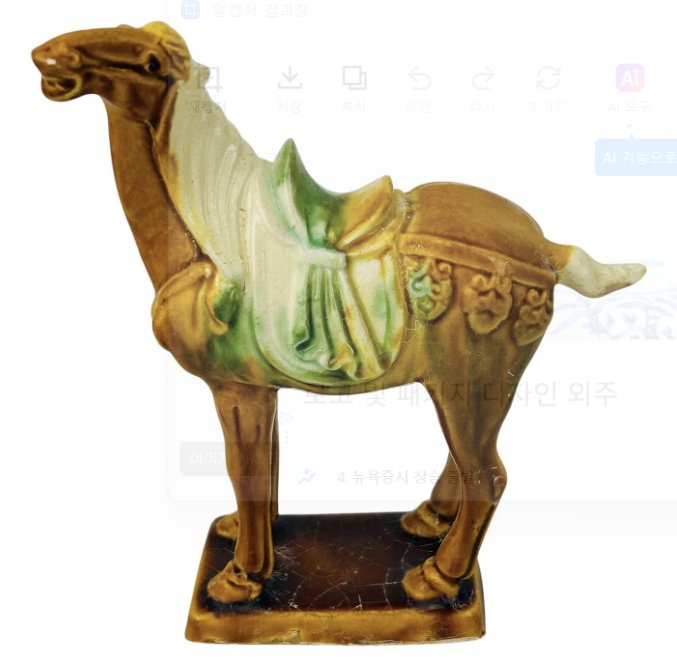
Sancai-style pottery horse figurine
Visual assessment
Photo analysis
Save to revisit in your watchlist. This does not add the object to your own collection.
Sancai-style pottery horse figurine
A ceramic horse figure modeled in the style of the Tang Dynasty (618–907 AD), featuring a lead-based 'sancai' (three-color) glaze palette of amber, green, and cream. The animal is standing on a rectangular plinth with a draped saddle and decorative trappings along the flank. The glaze displays intentional pooling at the base and a broad crazing pattern across the surface.
Related traditions
Tang Dynasty China
618-907 AD
The horse was a fundamental symbol of military power and the prosperity of the Silk Road trade.
Use and ceremony
8th Century
A spiritual vessel intended for the afterlife of a high-ranking official.
Modern Era
A decorative 'Orientalist' accent for interior design and global export.
Origins and context
The original Sancai tomb figures were produced primarily during the 8th century in central China for funerary use, intended to accompany the deceased into the afterlife. These specific polychrome lead glazes were fired at approximately 800°C to 1000°C. This specific example, however, shows the characteristics of the massive revival in export production that occurred in China during the late 20th century to meet global demand for Silk Road aesthetics.
Further details
Classical Sancai glazes are lead-based, which allowed the colors to run and mingle during firing, creating the signature 'bleeding' effect seen on the saddle.
During the Tang Dynasty, horse figurines were indicators of high social status, as the imperial court maintained a massive cavalry of over 700,000 horses at its peak in the mid-8th century.
Attribution and evidence
The identification as a modern reproduction is highly confident based on the glossy surface quality and lack of authentic aging markers, though the exact decade of 20th-century production is less certain without a base mark.
Identifying details
- 1Three-color (Sancai) glaze palette is chemically consistent with modern lead-glaze revivals.
- 2The pale, buff-colored earthenware body visible at the base edge is characteristic of modern Henan and Shaanxi workshops.
- 3Glaze pooling on the plinth is a deliberate stylistic choice common in 20th-century reproductions.
Open questions
- •Total absence of subterranean mineral encrustation commonly found on authentic tomb-excavated pieces.
- •Uniformity of the amber pigment suggests standardized industrial mineral oxides.
Photographs that would help
- Examine the underside of the base for kiln spur marks or manufacturer stamps.
- Perform a 'lick test' on the unglazed foot to check for high porosity typical of earthenware.
- Inspect under UV light to check for modern synthetic adhesives or hidden repairs.
Terms in this record
- Sancai
- Literally 'three colors'; a lead-glazed earthenware technique popularized in the Tang Dynasty using copper (green) and iron (amber) oxides.
- Crazing
- A network of fine cracks in the glaze caused by a mismatch in the expansion coefficient between the body and the glaze.
- Fleabite
- A very small chip or nick in the glaze, often less than 1-2 millimeters in size.
Wear and preservation
The figurine displays distinct surface cracking known as crazing, which is a common trait of low-fired lead glazes. There is a visible fleabite or glaze skip on the front edge of the base exposing the pale earthenware body.
Glaze and painted decoration
The low-fire lead glaze exhibits deliberate crazing and heavy pooling on the base; the green and amber pigments show the characteristic fluid migration typical of Sancai-style firing.
Recorded physical details
Estimated weight ranges from 400g to 600g depending on whether the core is hollow or solid-cast earthenware.
Scarcity and surviving examples
Common · 2/10 estimated rarity
This is a qualitative collection score, not a measured survival count, market percentile or proof of authenticity.
What the photographs establish
Interpretation of the photographs and supplied context. This does not authenticate the object.
- Uniformity of the crazing patterns suggests a modern production rather than 1,200 years of burial aging
- Surface sheen and lack of calcification or 'silvering' typical of excavated Tang ceramics
- Sharpness of the mold lines on the saddle and tail indicates modern slip-casting techniques
Value and its basis
Estimate recorded: May 11, 2026
How we estimate value
Estimate context (not a documented sale): Similar late 20th-century Sancai horses regularly sell on eBay and Etsy for $30-$60 depending on size.
Collectors and interest
Casual home decor enthusiasts and beginning collectors of Asian-inspired decorative arts.
What supports the estimate
- •Visual appeal of the glaze bleed
- •Subject matter (horses remain the most popular Sancai motif)
What could change it
- •High volume of identical pieces in the market lowers scarcity value
- •Presence of chips or cracks in the earthenware body
Comparing quality
- •Authentic period pieces show 'silvering' or iridescence from centuries of burial
- •Superior examples feature hand-sculpted details rather than mold-cast uniformity
The effect of condition
Integrity of the glaze surface, presence of 'flea bites' on extremities, and clarity of the three-color separation.
Market interest
For informational purposes only, not a formal appraisal.
Related objects
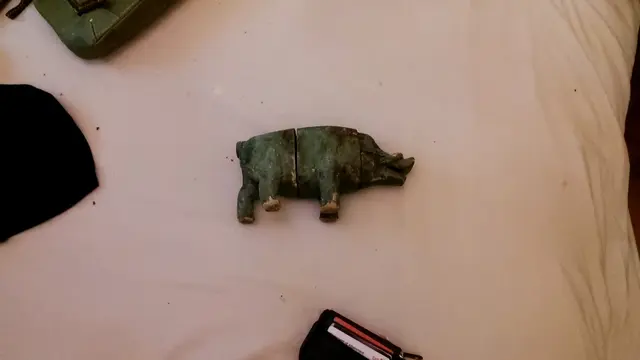
Han Dynasty Style Glazed Ceramic Boar Figurine
Shared title details
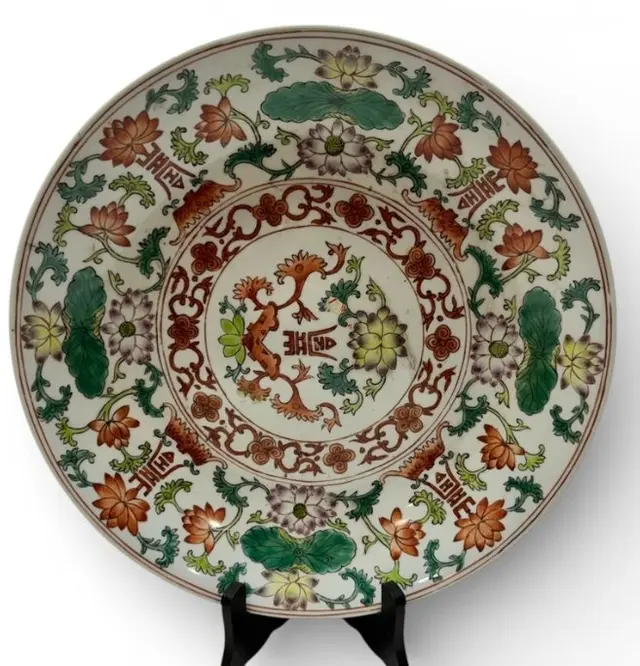
Chinese Wucai-style Famille Verte Porcelain Charger
Same category
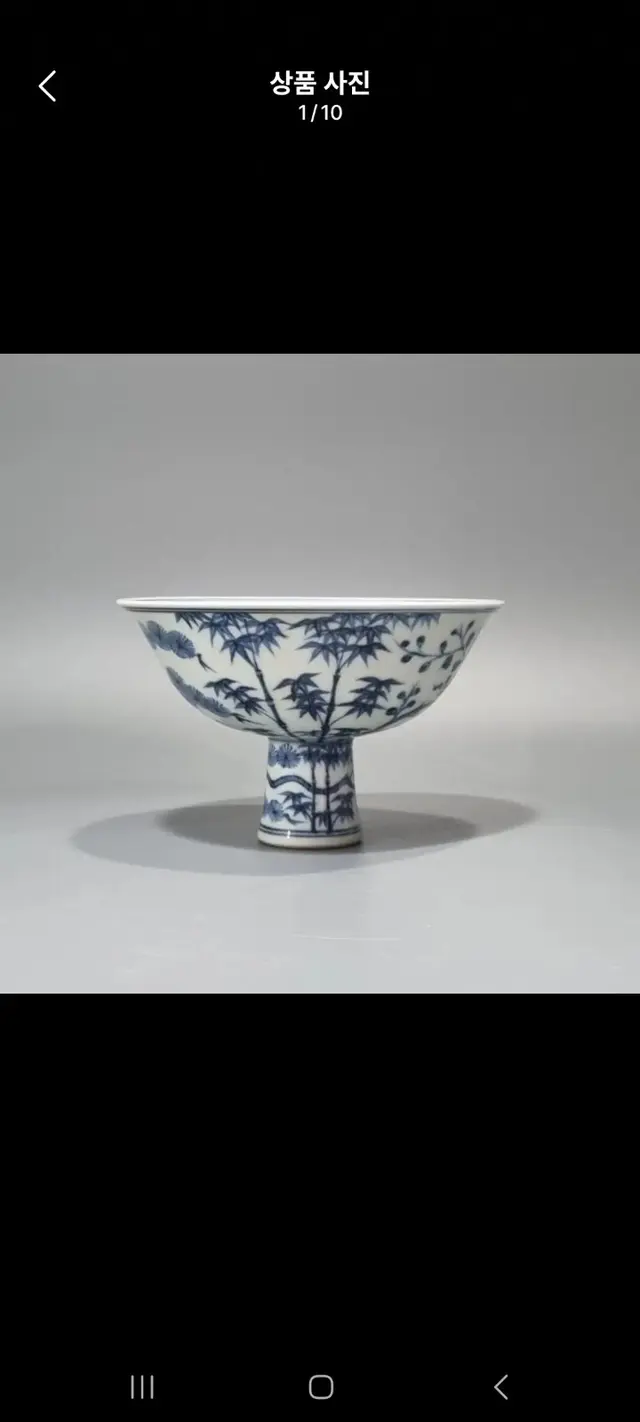
Chinese Blue and White 'Three Friends of Winter' Stem Cup, Ming Style
Same category
Chinese Falangcai Style Ruby-Ground Floral Bowl with Kangxi Yu Zhi Mark
Same category

Chinese Export Porcelain Spaniel Figurine, Qing Dynasty, late 18th to mid-19th Century
Same category

Austrian Ewer in Neo-Classical Style
Same category
Explore Ceramics & Pottery
Pottery, porcelain, stoneware, earthenware, and kiln-fired objects.
Ceramics & Pottery value and rarity guideShare this find
A place for your ceramics
Keep its photographs, maker’s marks and the story you know in one object record. Start with a photo.
Create an account for 10 free scans. No credit card needed.
Join the conversation