
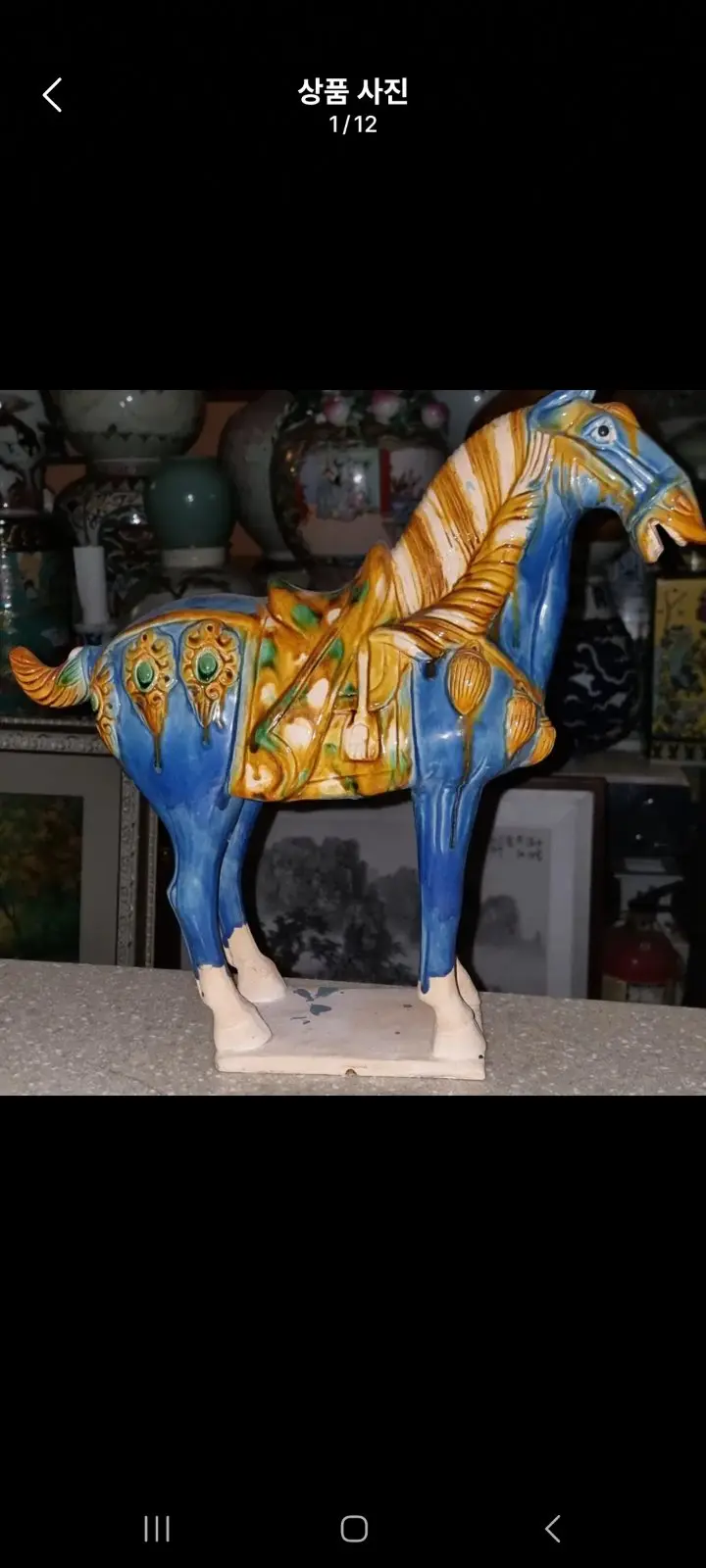
Sancai-style Glazed Ceramic Horse
Estimated value
$150 - $450Rarity
Ordinary(3/10)Category
Ceramics & PotteryEra
mid-to-late 20th centuryOrigin
ChinaVisual assessment
Photo analysis
Save to revisit in your watchlist. This does not add the object to your own collection.
Sancai-style Glazed Ceramic Horse
A lead-glazed earthenware figure of a horse standing on a rectangular plinth, modeled in the style of Chinese Tang Dynasty (618–907 AD) tomb furniture. The body is decorated in three-color (Sancai) glazes including cobalt blue, amber, and leaf green over a buff-colored ceramic paste. Detailed molding shows a tasseled saddle cloth and medallions on the haunches, with deliberate glaze dripping visible on the legs.
Related traditions
Tang Dynasty China
618–907 AD
The horse symbolized military power, status, and the 'Celestial Horses' of the Silk Road.
Use and ceremony
8th Century
A sacred servant for the deceased's journey after death.
20th Century
A symbol of classical Chinese aesthetic and sophisticated interior decoration for the global export market.
Origins and context
The original Sancai tomb figures were produced primarily during the 8th century for the Tang elite; however, the vibrant cobalt blue glaze seen here suggests a 20th-century revival or export production. Cobalt was an expensive imported mineral from Persia during the Tang era, making solid blue horses exceptionally rare in the archaeological record compared to modern reproductions produced extensively in regions like Luoyang since the 1920s.
Further details
The use of cobalt blue in Sancai glazes was so costly in the 8th century that it was often used sparingly as small spots rather than covering the entire body of an animal.
True Tang Dynasty burial figures were never intended for the living; they were created specifically as 'mingqi' or spirit goods to serve the deceased in the afterlife.
Attribution and evidence
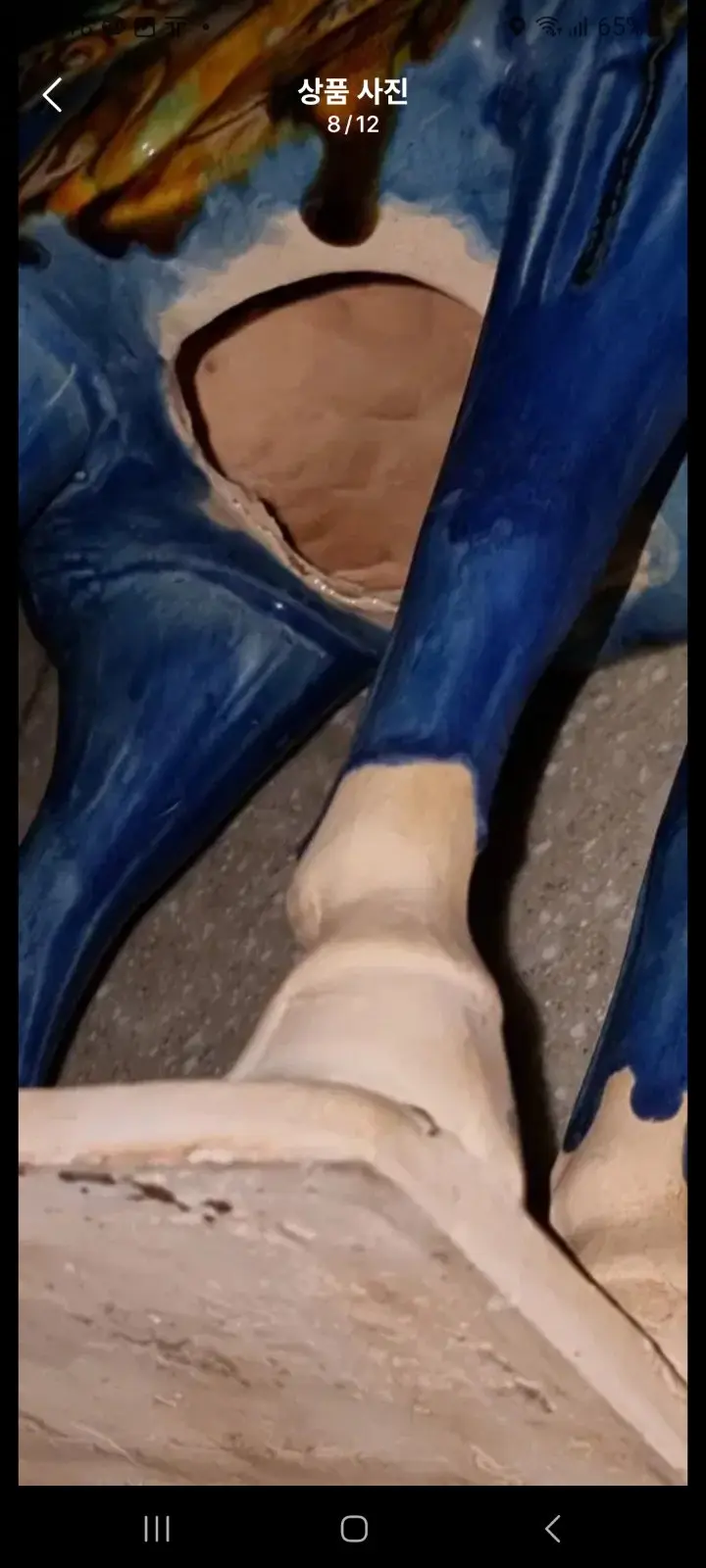
The visual evidence of slip-casting and the specific glaze palette strongly indicates a high-quality 20th-century decorative piece rather than an 8th-century antiquity.
Identifying details
- 1Buff-colored earthenware paste visible on the lower legs and base.
- 2Slip-cast hollow construction with modern smooth interior walls.
- 3Intense cobalt blue glaze saturation consistent with modern chemical formulations.
- 4Decorative molding style replicates the 'Fereghan' horse type popular in Tang art.
Open questions
- •The internal cavity shows extremely clean, smooth surfaces unlikely for an ancient burial object.
- •The crazing pattern appears uniform rather than the irregular fracturing seen on genuine excavated pieces.
Photographs that would help
- Perform a TL (Thermoluminescence) test to determine the last firing date of the ceramic paste.
- Check for UV fluorescence; 20th-century glazes often react differently than ancient mineral pigments.
- Examine the base for any stamped 'China' or 'Made in China' marks often found on mid-century exports.
Terms in this record
- Sancai
- Literally 'three colors'; a lead-glazed ceramic technique using copper (green), iron (amber), and occasionally cobalt (blue).
- Mingqi
- Chinese burial goods made specifically for placement in tombs.
- Crazing
- A network of fine cracks in the glaze caused by the glaze shrinking more than the clay body during cooling.
Wear and preservation
Not applicable; grading scales like PSA or MS do not apply to decorative ceramics, where value is driven by age, authenticity, and lack of structural repairs.
The glaze shows significant all-over crazing, which is a common aging characteristic of lead glazes but also easily simulated in modern kilns. The unglazed buff base and lower legs show minor surface soiling but no evidence of the 'earth encrustation' or mineral crystallization typically found on excavated 8th-century ceramics.
Glaze and painted decoration
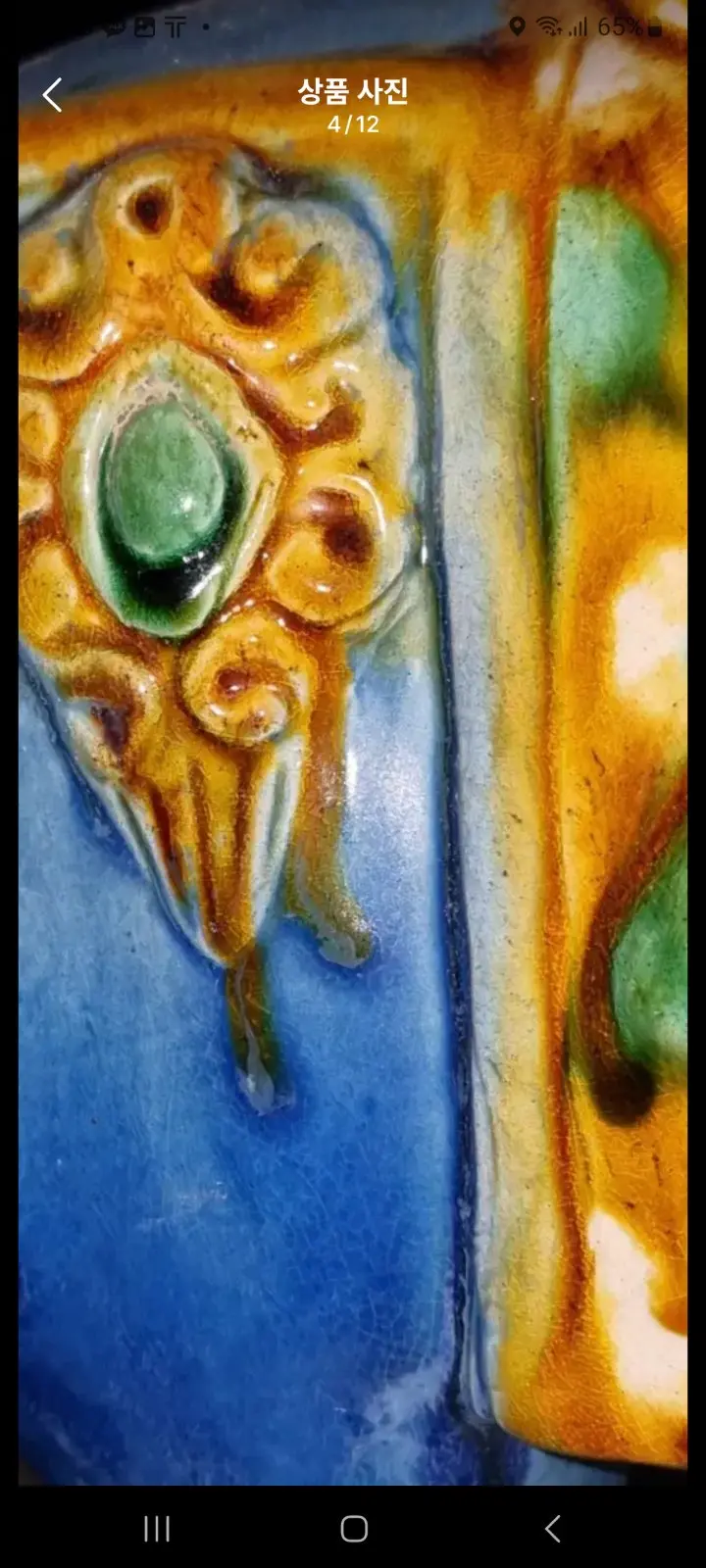
Glossy lead-glaze finish with prominent fine-line crazing (crackling) across the blue and amber sections. Visible glaze pooling occurs at the decorative medallions and where the glaze meets the unglazed lower legs.
Recorded physical details
Estimated at 3.5 to 5 kg; the slip-cast hollow interior visible in the underside image indicates a moderate heft characteristic of mid-century decorative earthenware.
Scarcity and surviving examples
Ordinary · 3/10 estimated rarity
This is a qualitative collection score, not a measured survival count, market percentile or proof of authenticity.
What the photographs establish
Interpretation of the photographs and supplied context. This does not authenticate the object.
- Vibrant, uniform cobalt blue glaze is highly characteristic of 20th-century decorative reproductions
- Internal slip-casting marks visible through the aperture suggest modern manufacturing rather than ancient hand-modeling
- Lack of authentic archaeological degradation or mineral 'root marks' on the unglazed paste areas
Value and its basis
Estimate recorded: May 11, 2026
How we estimate value
Estimate context (not a documented sale): Similar 20th-century 'Sancai Style' horses frequently fetch between $200 and $600 at regional auction houses like Christie's Interiors or specialty Asian art sales.
Collectors and interest
Interior designers and collectors of Asian-inspired decorative arts seeking the Tang aesthetic without the cost of museum-grade antiquities.
What supports the estimate
- •Large scale and visual presence
- •Use of cobalt blue glaze (traditionally more desirable than green/amber alone)
- •Intact condition without visible repairs to the legs or ears
What could change it
- •Oversupply of 1970s-1990s reproductions in the market
- •Structural weakness at the ankles common in these figures
Comparing quality
- •Authentic TL-dated 8th-century provenance
- •Hand-modeled construction rather than slip-cast molding
- •Presence of rare archaeological mineral deposits
The effect of condition
Glaze integrity, presence of chips at the ears/tail, and stability of the plinth.
Market interest
For informational purposes only, not a formal appraisal.
Related objects
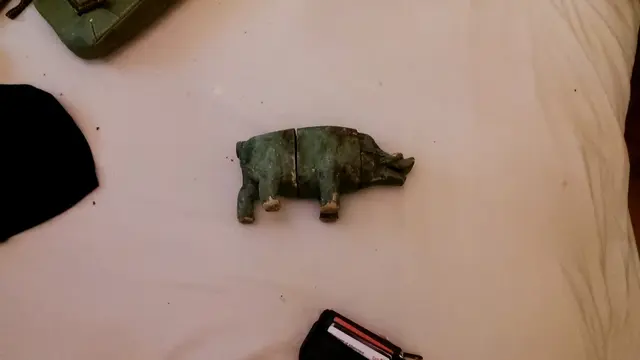
Han Dynasty Style Glazed Ceramic Boar Figurine
Shared title details
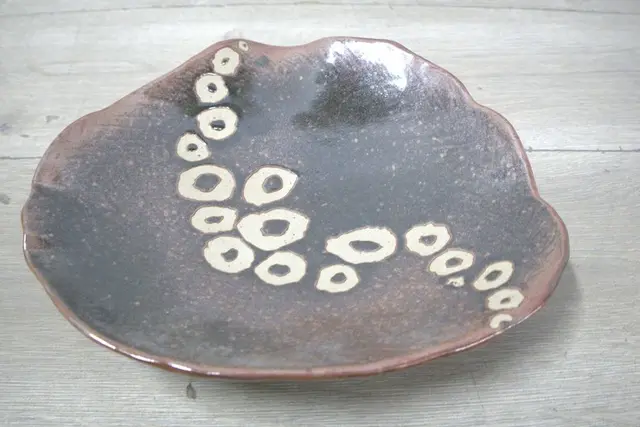
Signed glazed ceramic bowl with ring decoration
Shared title details
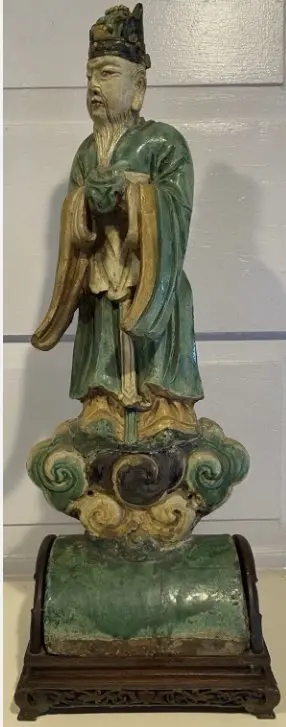
Chinese Shiwan Sancai Glazed Roof Tile Figure
Shared title details
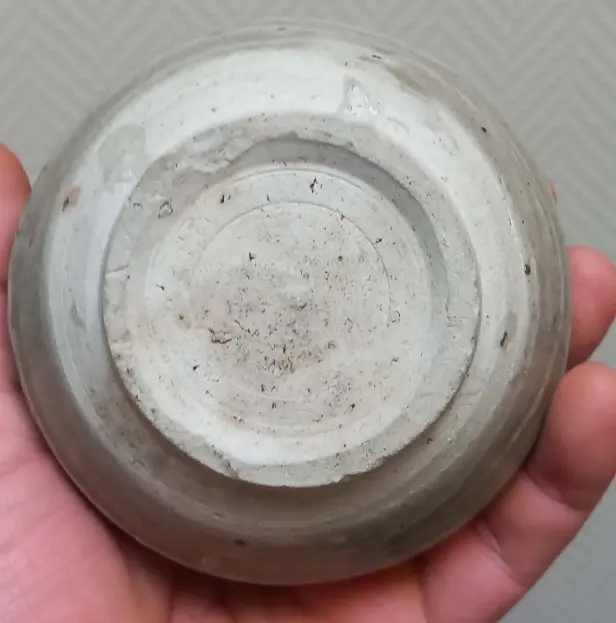
Korean Buncheong-style Glazed Stoneware Jar, Joseon Dynasty Type
Shared title details
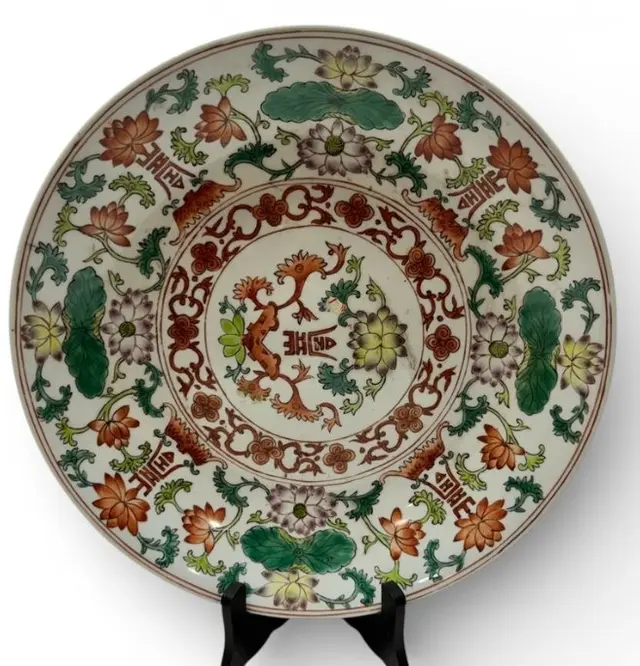
Chinese Wucai-style Famille Verte Porcelain Charger
Same category
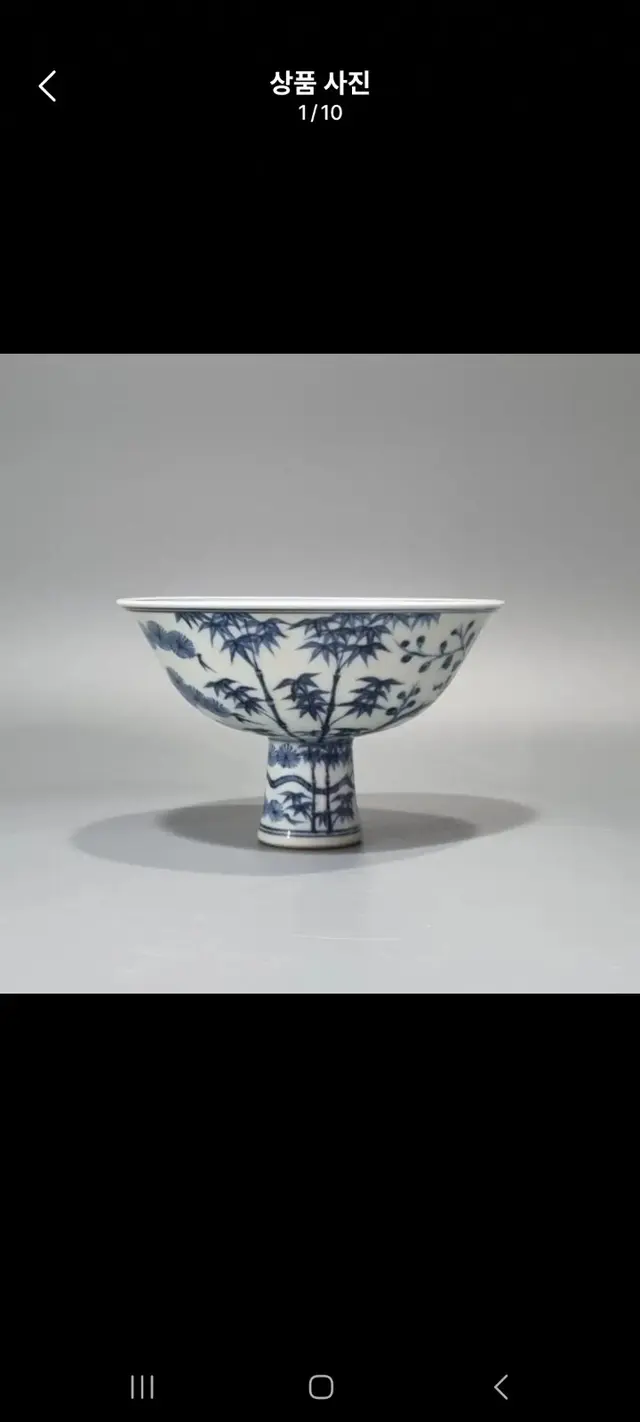
Chinese Blue and White 'Three Friends of Winter' Stem Cup, Ming Style
Same category
Explore Ceramics & Pottery
Pottery, porcelain, stoneware, earthenware, and kiln-fired objects.
Ceramics & Pottery value and rarity guideShare this find
A place for your ceramics
Keep its photographs, maker’s marks and the story you know in one object record. Start with a photo.
Create an account for 10 free scans. No credit card needed.
Join the conversation
Recognise a detail or have a question? Add what you know and cite your source. Suggested corrections stay in the discussion for the owner or a moderator to review.
Sign in to leave a comment
Sign in