
Asian-Style Decorative Porcelain Plate with Dragon Motif
Estimated value
$15 - $45Rarity
Ordinary(3/10)Category
Ceramics & PotteryEra
Mid-20th Century to Late 20th CenturyOrigin
InternationalVisual assessment
Photo analysis
Save to revisit in your watchlist. This does not add the object to your own collection.
Asian-Style Decorative Porcelain Plate
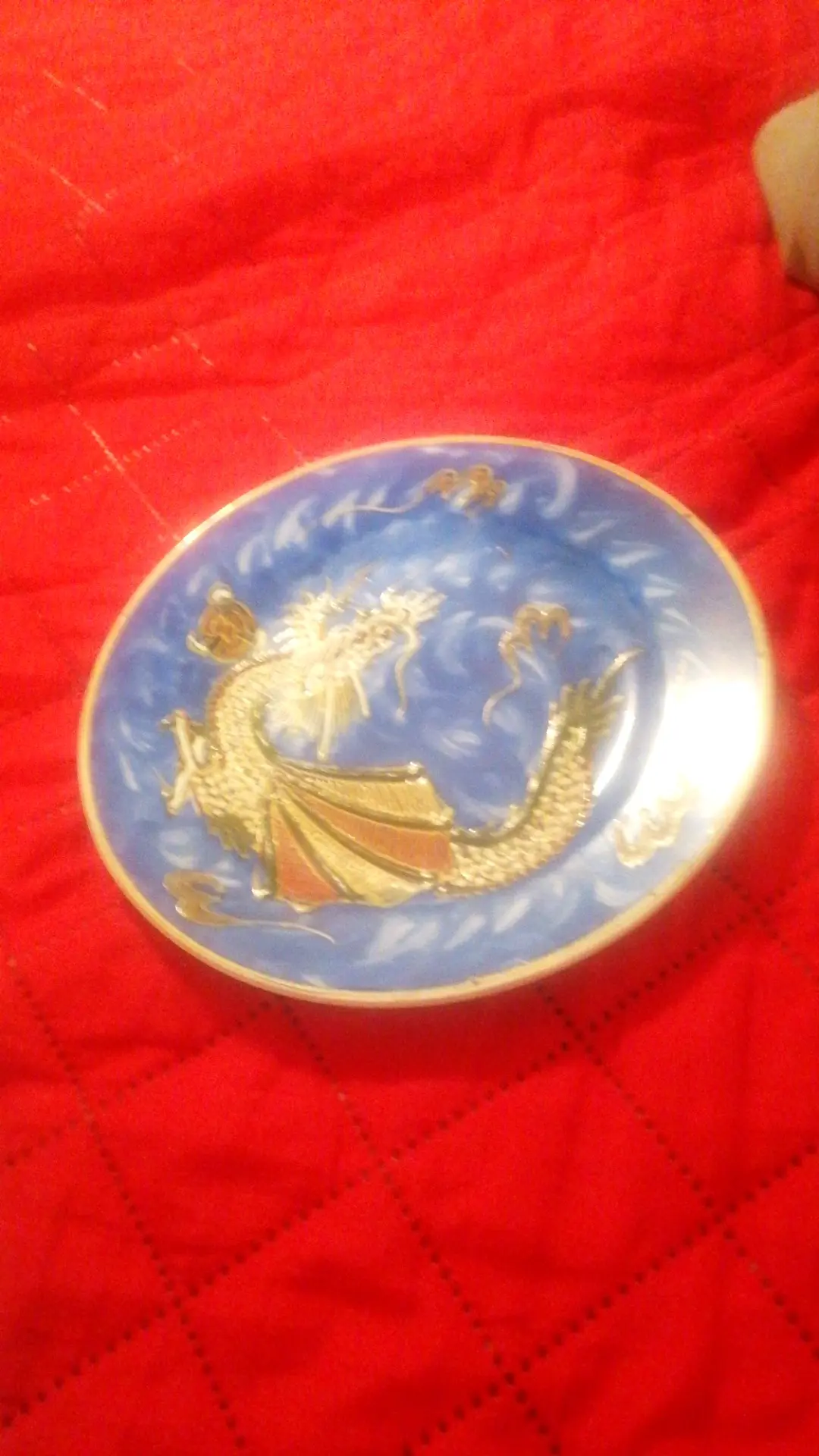
This is a small decorative porcelain plate featuring a prominent dragon motif against a blue ground. The dragon appears to be rendered in a raised, possibly enamelled or gilded finish, with details in white, gold, and a muted reddish-orange. The plate's rim is edged in gold. The overall impression suggests a decorative piece, likely for display rather than daily use, given the prominent ornamentation and the gold details.
Related traditions
Chinese Decorative Arts
Dynastic periods to present
Traditional use of dragon motifs on porcelain for imperial or celebratory objects, symbolizing power and good fortune.
Japanese Porcelain (e.g., Imari, Satsuma-style)
17th Century to present
Richly decorated, often gilded porcelain intended for export, frequently featuring mythical creatures and intricate patterns including dragons.
Use and ceremony
Pre-20th Century
Often associated with imperial power or high status when featured on porcelain, especially for domestic use or tribute.
Mid- to Late 20th Century
Wider commercial appeal, symbolizing general good luck, strength, or exoticism, leading to mass-produced decorative items.
Origins and context
Decorative arts featuring dragons have a long and history in East Asian cultures, particularly in China and Japan, where dragons symbolize power, strength, good luck, and imperial authority. Such motifs became popular on export porcelain from the 18th century onwards, adapting to Western tastes while retaining traditional imagery. Decorative plates themselves evolved from functional dinnerware to specialized display items, often part of souvenir ware or limited edition series in the 20th century.
Further details
In many East Asian cultures, dragons are benevolent creatures associated with water, rain, and good fortune, quite different from the fire-breathing, treasure-hoarding Western dragons.
The number of claws on a dragon can often indicate its significance; four or five claws typically denote imperial connection in Chinese art, while three claws are more common in Japanese and Korean depictions.
Attribution and evidence
Confidence is moderate due to the clear visual evidence of a decorative porcelain plate with a consistent style; however, the absence of any identifying marks (even blurry ones) and the general nature of the motif limit a more precise attribution.
Identifying details
- 1Porcelain body with glossy glaze visible.
- 2Raised dragon motif suggests enameling or relief work.
- 3Gilt detailing on the rim and parts of the dragon.
- 4Blue ground indicative of many East Asian porcelain decorative styles.
Open questions
- •No visible maker's mark or backstamp present, which is crucial for precise attribution and dating.
- •Image quality is moderate, making it difficult to discern subtle details that could indicate higher quality or specific origin.
- •The style is common among a wide range of decorative wares from various regions and production eras.
Photographs that would help
- Obtain clear, well-lit photographs of the underside of the plate, specifically looking for any maker's marks, stamps, or labels.
- Provide measurements (diameter) to accurately assess its size and intended function (e.g., side plate, wall plate).
- Inspect the gilder's work and the fine lines of the dragon for signs of hand-painting versus decal application using a jeweler's loupe or magnifying glass.
Terms in this record
- Gilt
- A thin layer of gold or gold-colored material applied to an object's surface for decoration.
- Backstamp
- A mark or stamp applied to the underside or back of ceramic items by the manufacturer, often including the company name, pattern name, and sometimes a date code.
Wear and preservation
From the image, the plate appears to be in good overall condition. There are no immediately obvious chips, cracks, or significant losses to the decorative elements or gilt rim, though close inspection would be necessary to confirm this.
Glaze and painted decoration
The surface presents a glossy, glazed porcelain body. The dragon decoration creates tactile variance, suggesting raised enameling or relief work rather than mere painting. The blue background appears to have a subtle cloud-like or wave-like pattern, providing depth to the dragon's environment.
Recorded physical details
Due to its size and ceramic nature, the plate likely feels light to moderate in hand, consistent with typical decorative porcelain.
Scarcity and surviving examples
Ordinary · 3/10 estimated rarity
This is a qualitative collection score, not a measured survival count, market percentile or proof of authenticity.
What the photographs establish
Interpretation of the photographs and supplied context. This does not authenticate the object.
- Lack of visible maker's mark or backstamp in the provided image.
- Prevalence of widely produced decorative items with similar motifs from various origins.
- Quality of images limits ability to scrutinize fine details of decoration for hand-painting vs. transfer.
Value and its basis
Estimate recorded: Feb 27, 2026
How we estimate value
- No documented comparable sales are shown for this estimate
- Condition, completeness & craftsmanship
- Demand assumptions may not reflect current transactions
- The range is an estimate, not an asking price or sale result
For informational purposes only, not a formal appraisal.
Related objects
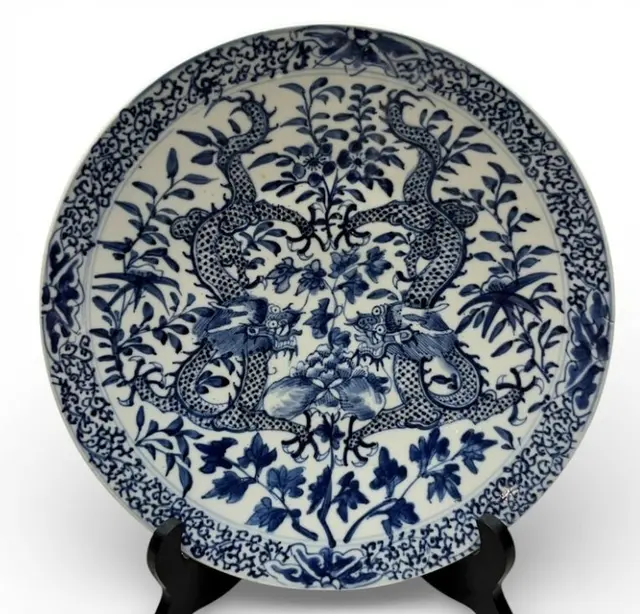
Chinese Blue and White Porcelain 'Dragon and Phoenix' Charger
Shared title details
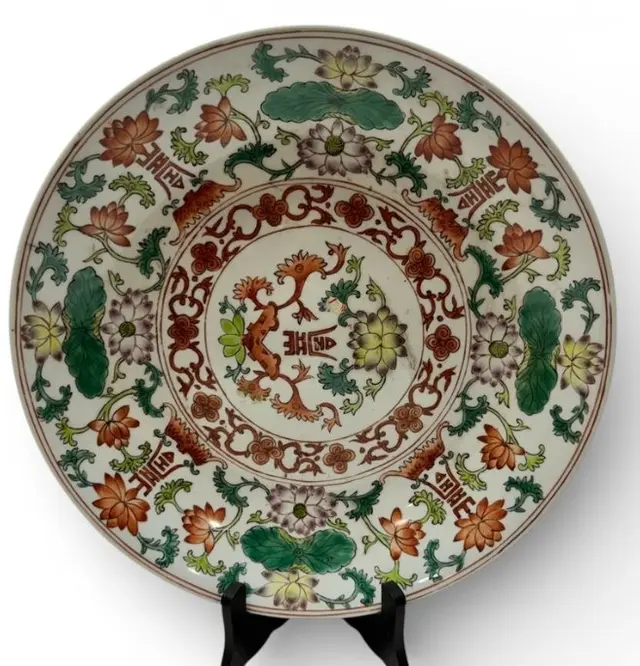
Chinese Wucai-style Famille Verte Porcelain Charger
Shared title details
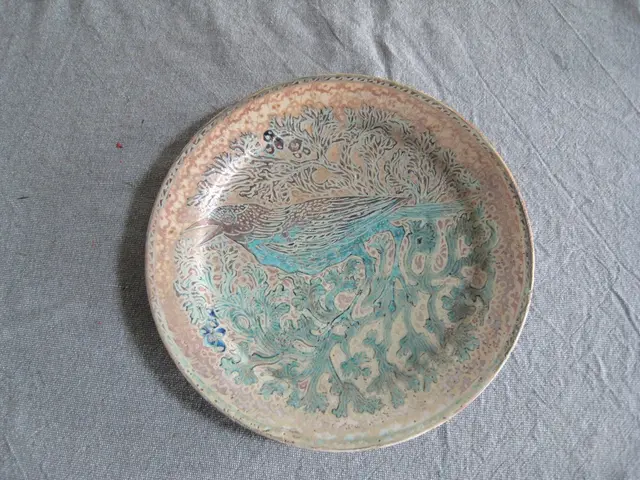
Hand-Decorated Ceramic Plate with Bird Motif
Shared title details
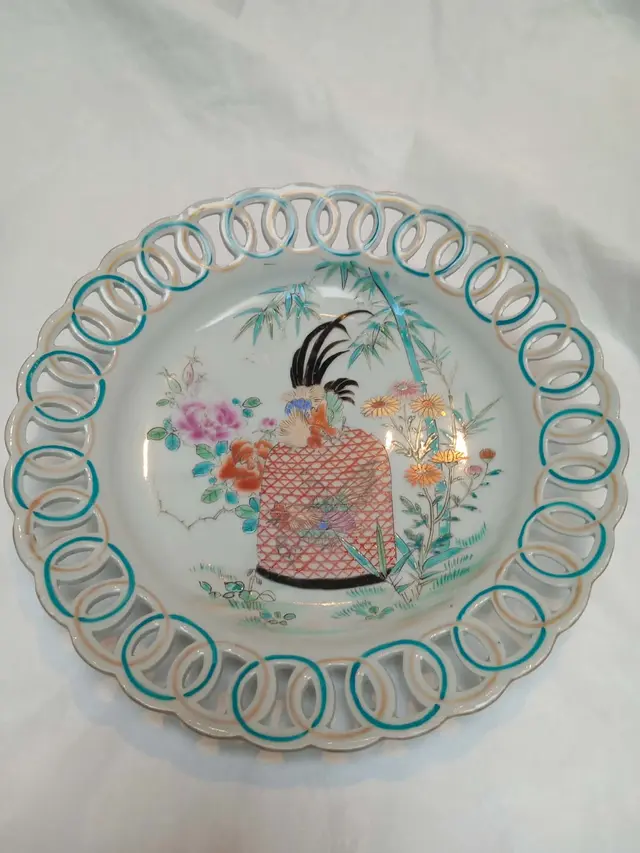
Meiji Period Arita Reticulated Porcelain Plate
Shared title details
Kutani Style Porcelain Censer with Daruma Finial
Shared title details
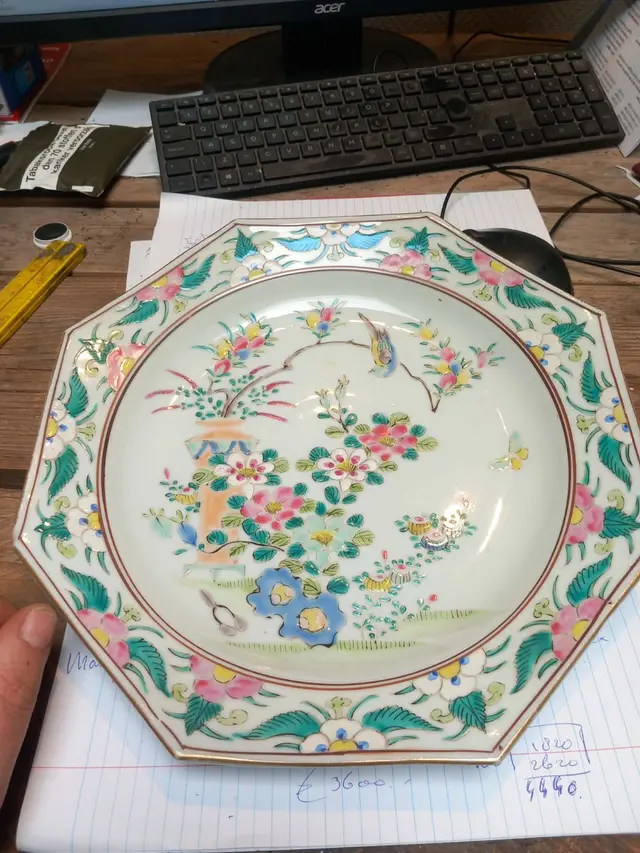
Octagonal Kakiemon-style Porcelain Charger
Shared title details
Explore Ceramics & Pottery
Pottery, porcelain, stoneware, earthenware, and kiln-fired objects.
Ceramics & Pottery value and rarity guideShare this find
A place for your ceramics
Keep its photographs, maker’s marks and the story you know in one object record. Start with a photo.
Create an account for 10 free scans. No credit card needed.
Join the conversation