
Monochrome Oxblood Meiping Vase
Estimated value
$250 - $650Rarity
Average(4/10)Category
Asian ArtEra
Late 19th to early 20th centuryOrigin
ChinaVisual assessment
Photo analysis
Save to revisit in your watchlist. This does not add the object to your own collection.
Monochrome Oxblood Meiping Vase
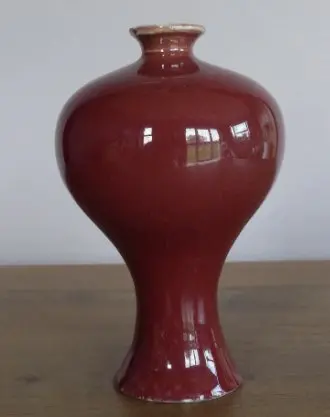
A high-shouldered meiping-form vessel featuring a copper-red monochrome glaze, commonly referred to as 'sang de boeuf' or 'oxblood'. The vessel exhibits a traditional baluster profile with a short neck and flared rim. The base preserves a recessed white-glazed foot bearing a blue underglaze apocryphal Qianlong reign mark in seal script (zhuanshu). The copper-red glaze shows characteristic thinning at the rim and concentrated pooling near the foot, creating a dark, saturated aesthetic profile typical of late 19th-century to mid-20th-century production.
Related traditions
French Ceramics
1880-1910
The 'Sang de Boeuf' glaze heavily influenced 19th-century French potters like Ernest Chaplet and the Sèvres manufactory.
Use and ceremony
Ming Dynasty
The color red (sacrificial red) was strictly reserved for ritual vessels used at the Altar of the Sun.
Late 19th Century
Red monochrome vases became highly fashionable status symbols for Western collectors in the 'Chinoiserie' market.
Origins and context
Copper-red glazes reached technical perfection during the Xuande and Chenghua periods of the Ming Dynasty, but were famously difficult to control in the kiln due to the precise atmospheric requirements needed for copper reduction. The 'Langyao' style was revitalized during the Kangxi reign (1662–1722) and became a staple of Jingdezhen production through the Qing Dynasty. This specific example utilizes the Qianlong Nian Zhi (1736–1795) six-character mark, though the execution of the calligraphy and the mechanical consistency of the glaze suggest a later production from the Late Qing or early Republic period (circa 1890–1940) intended for the export market.
Further details
Copper-red glazes require a kiln temperature of approximately 1300°C in a low-oxygen reduction atmosphere; if oxygen enters the kiln, the glaze turns green instead of red.
The 'Meiping' shape, literally translating to 'plum vase', was originally designed in the Tang Dynasty to hold single branches of blooming plum blossoms.
Attribution and evidence
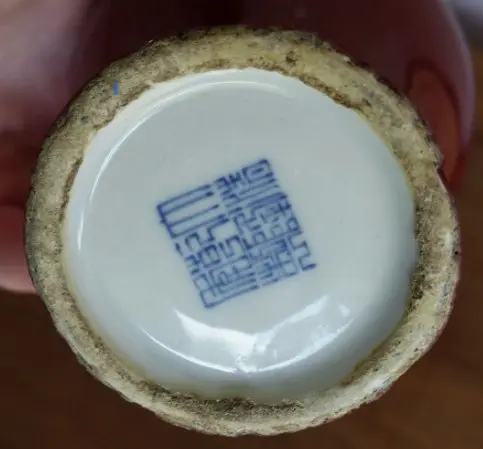
The form and glaze are well-documented, but the apocryphal mark and footrim condition require physical inspection to distinguish between a late 19th-century piece and a mid-20th-century reproduction.
Identifying details
- 1Blue underglaze seal mark is written in a slightly rigid hand inconsistent with 18th-century imperial standard.
- 2Glaze retreat at the rim shows a characteristic white 'collar' common in late 19th-century Langyao-style wares.
- 3Footrim geometry and paste color indicate a high-fired Jingdezhen porcelain body.
- 4Presence of kiln grit on the footring suggests traditional wood-firing or coal-firing rather than modern electric kilns.
Open questions
- •Apocryphal Qianlong mark indicates the piece is a later tribute or export item, not an 18th-century original.
- •Lack of 'crackelle' in the red glaze, which is often more pronounced in authentic Kangxi/Qianlong period reds.
Photographs that would help
- View the vase under a UV light to check for invisible spray-on glass repairs or epoxy fills.
- Perform a 'tap test' with a fingernail; a bright, clear ring indicates a sound porcelain body, while a dull thud suggests hidden cracks.
- Check the interior of the neck to see if the red glaze continues inside or stops abruptly.
Terms in this record
- Meiping
- A vase with a small mouth, short neck, broad shoulders, and a tapering body.
- Sang de boeuf
- French for 'oxblood', describing a deep, mottled red copper-glaze.
- Apocryphal Mark
- A mark placed on a piece of pottery that belongs to an earlier reign, used as a token of respect or to increase market value.
Wear and preservation
Small chips and abrasions visible on the white-glazed rim; the unglazed footring shows grit adhesion and significant dark soil staining from age and handling.
Glaze and painted decoration
Glossy copper-red glaze with visible 'orange peel' pitting and slight crazing under magnification; glaze thins to a pale celadon-white at the rim.
Recorded physical details
Estimated weight of 800-1,200 grams, suggesting a dense porcelain body consistent with late Jingdezhen production.
Scarcity and surviving examples
Average · 4/10 estimated rarity
This is a qualitative collection score, not a measured survival count, market percentile or proof of authenticity.
What the photographs establish
Interpretation of the photographs and supplied context. This does not authenticate the object.
- The Qianlong seal mark appears to be apocryphal and does not match the precision of 18th-century imperial workshops.
- The 'soiling' on the footrim appears unnaturally uniform, a trait sometimes associated with artificial aging in 20th-century copies.
- Monochrome red glazes are among the most frequently reproduced styles in the Jingdezhen market.
Value and its basis
Estimate recorded: May 11, 2026
How we estimate value
Estimate context (not a documented sale): Similar Late Qing red monochrome meiping vases consistently sell at regional auction houses (e.g., Bonhams, Freeman's) in the $400-$800 range.
Collectors and interest
Collectors of Qing-style monochrome ceramics and interior designers looking for 'scholar objects' for Asian-inspired decor.
What supports the estimate
- •Depth and saturation of the red color
- •Execution of the 'plum vase' (meiping) silhouette
- •Age of the footrim staining and wear
What could change it
- •Hidden cracks or restorations to the neck
- •Identification as a post-1970s modern reproduction
- •Large chips on the lip or foot
Comparing quality
- •Controlled glaze pooling that stops perfectly at the footrim without grinding
- •Presence of 'crab’s claw' crazing patterns in the glaze
The effect of condition
Condition of the rim, clarity of the mark, and absence of firing flaws like 'pinholes' in the glaze.
Market interest
For informational purposes only, not a formal appraisal.
Related objects
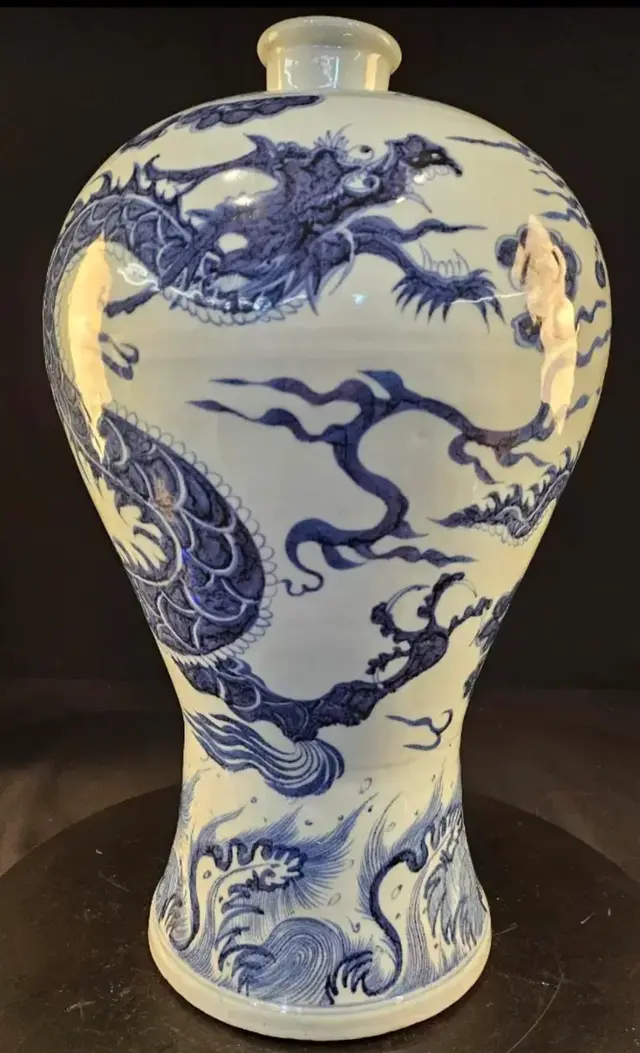
Blue and White Dragon Meiping Vase
Shared title details
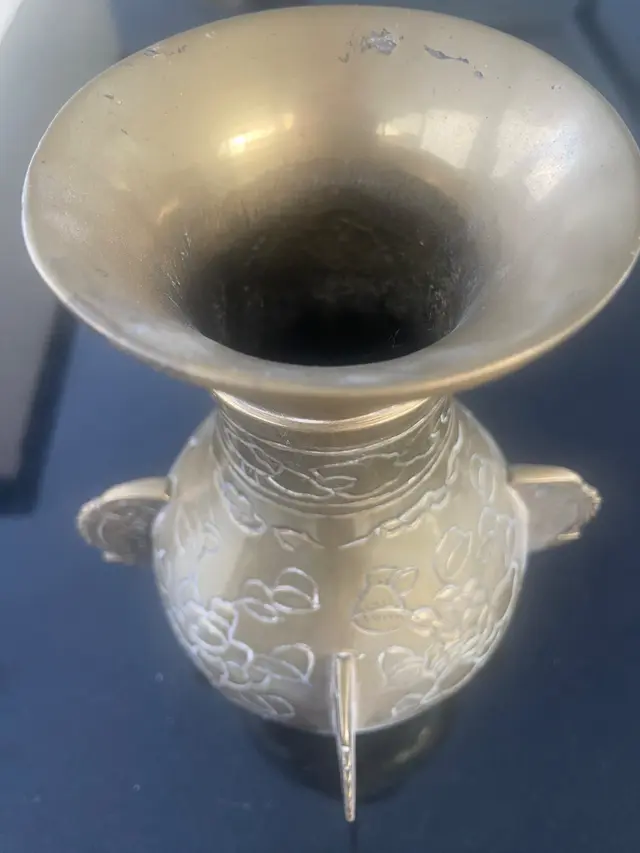
Chinese Brass 'Gu-style' Vase with Floral and Geometric Engravings
Same category
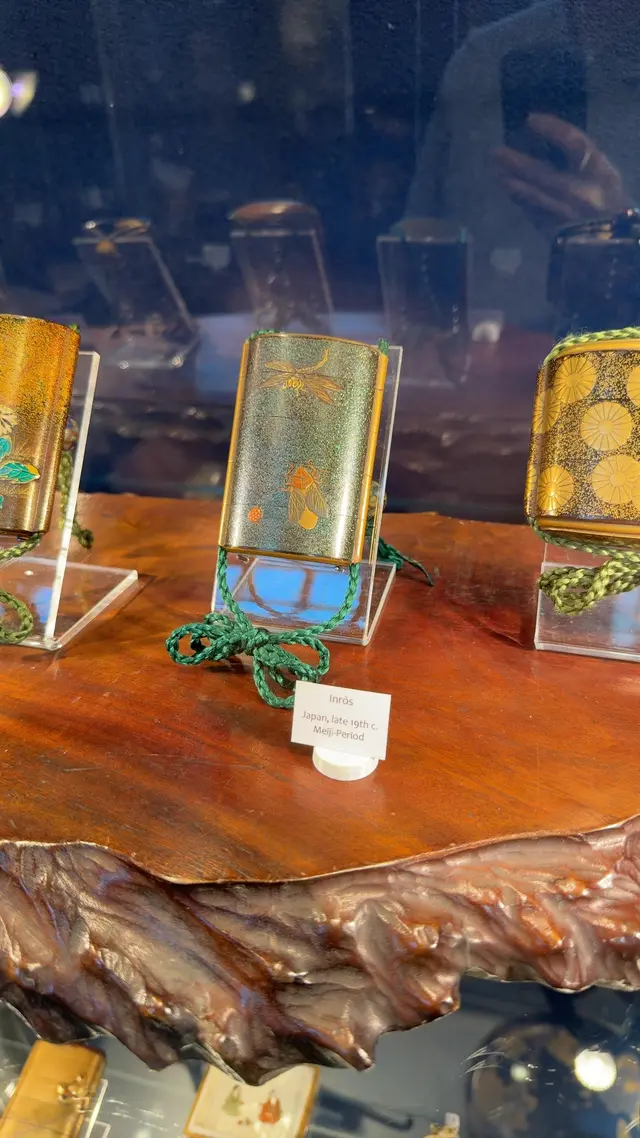
Japanese insect-decorated lacquer inrō
Same category
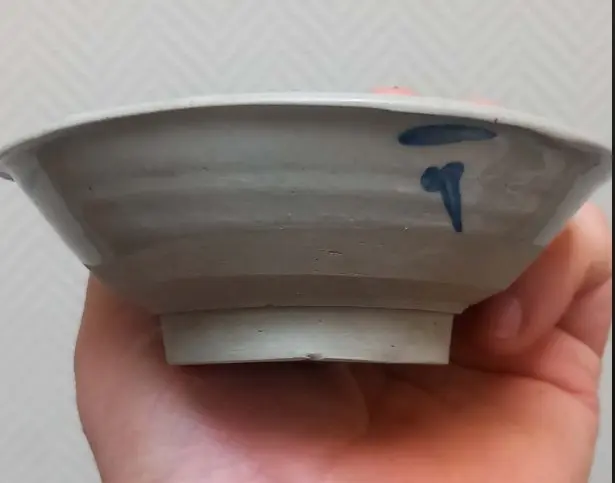
Chinese Blue and White Provincial 'Swatow' Ware Bowl, Zhangzhou Kilns, Late Ming Dynasty
Same category
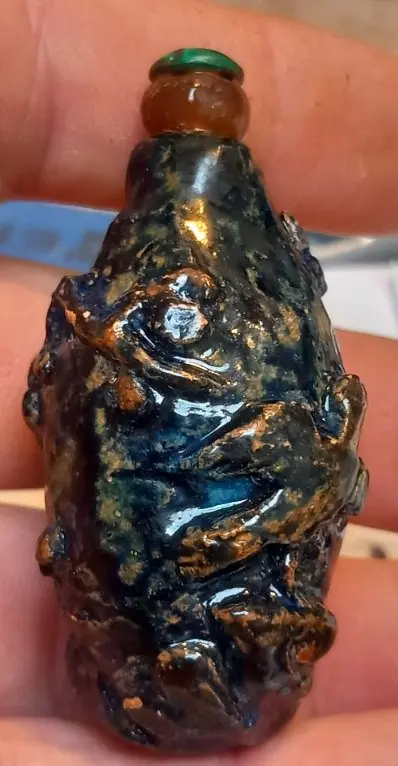
Chinese Molded Lapis-Style Glass Snuff Bottle, Late 19th to Early 20th Century
Same category
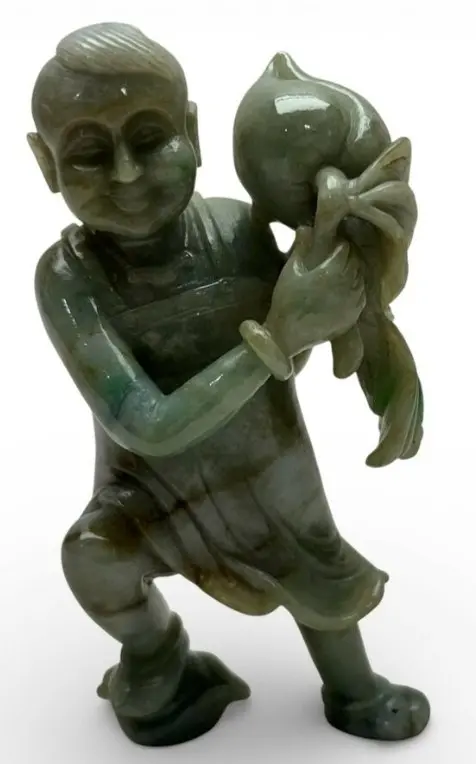
Chinese Jadeite Carving of a Boy with Immortal Peach
Same category
Explore Asian Art
Chinese, Japanese, Korean, and other Asian art and antiques.
Asian Art value and rarity guideShare this find
A place for your asian
Keep its photographs, maker’s marks and the story you know in one object record. Start with a photo.
Create an account for 10 free scans. No credit card needed.
Join the conversation
Recognise a detail or have a question? Add what you know and cite your source. Suggested corrections stay in the discussion for the owner or a moderator to review.
Sign in to leave a comment
Sign in