
Ottoman Style Repoussé Silver Snuff or Pill Box
Visual assessment
Photo analysis
Save to revisit in your watchlist. This does not add the object to your own collection.
Ottoman Style Repoussé Silver Snuff or Pill
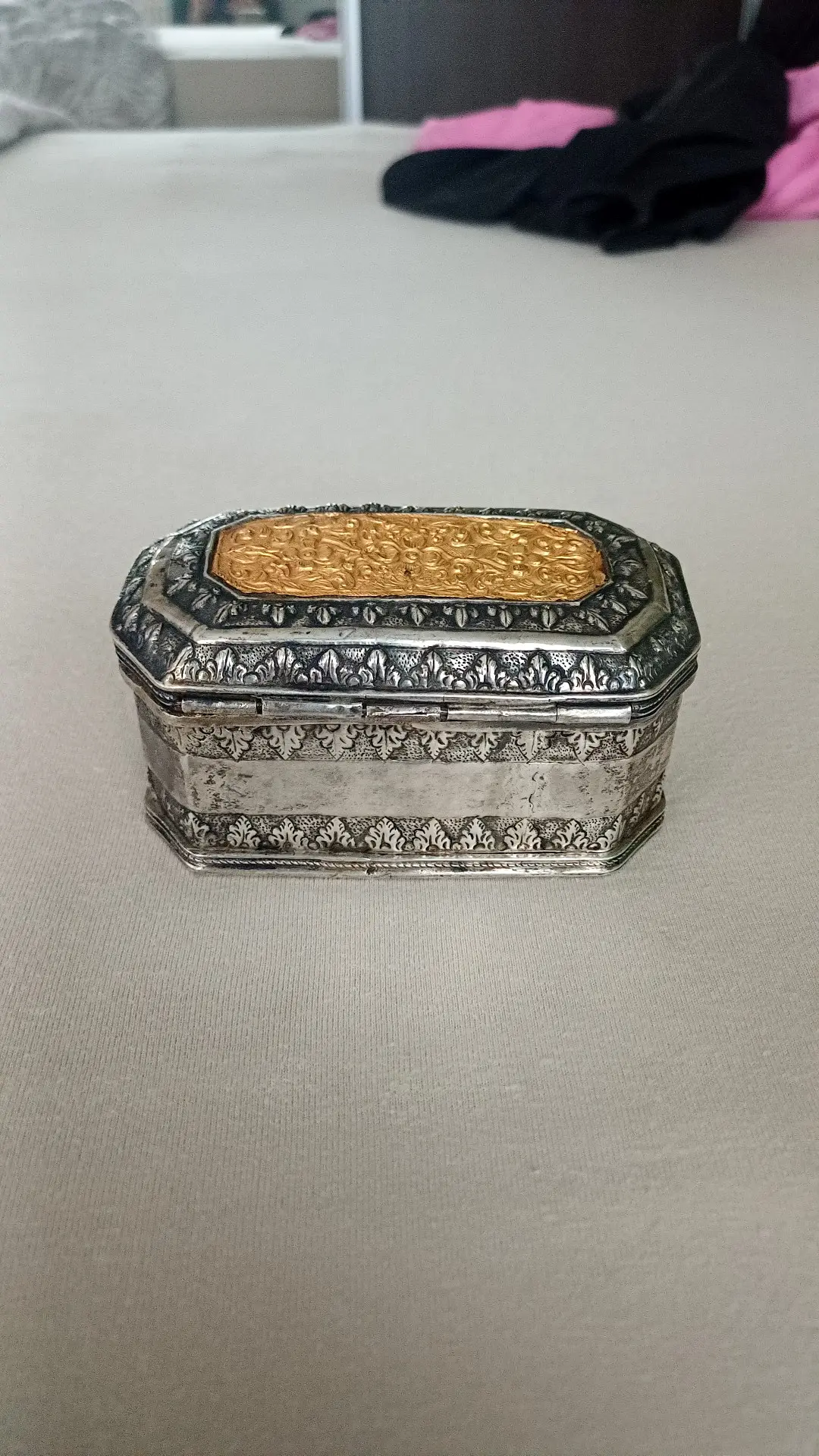
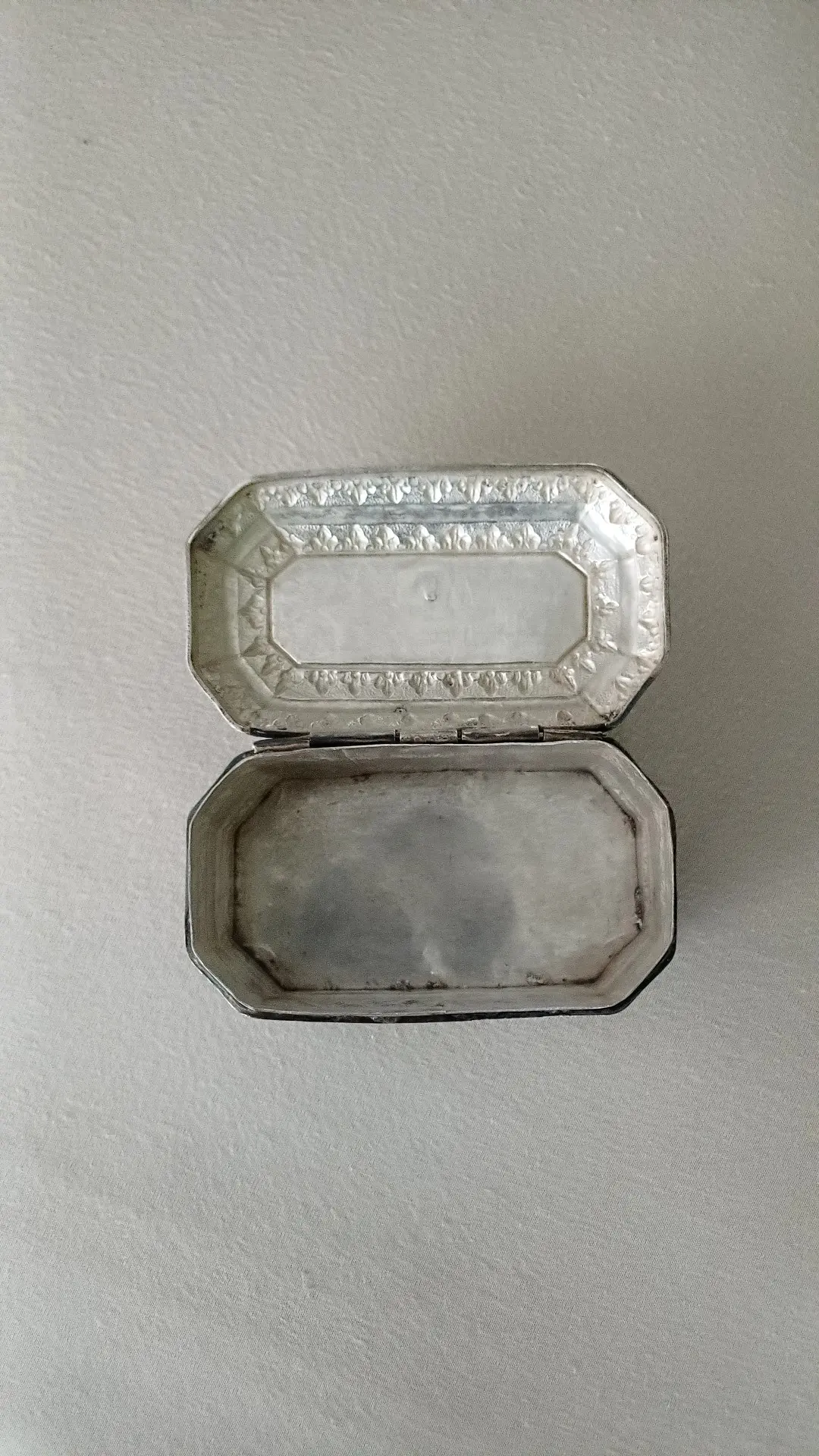
An octagonal silver-toned box featuring comprehensive repoussed and chased floral scrollwork. The hinged lid centers a rectangular gilt-wash (vermeil) panel with a dense arabesque pattern. The side walls are decorated with two registers of foliate borders separated by a plain central band. The interior shows signs of hand-hammering and visible soldering at the hinge joints, consistent with late 19th or early 20th-century craftsmanship.
Related traditions
Ottoman Empire
19th Century
Arabesque and floral motifs known as Rumi and Hatayi patterns.
Use and ceremony
Victorian
An exotic souvenir representing the 'Orient' in Western domestic displays.
Origins and context
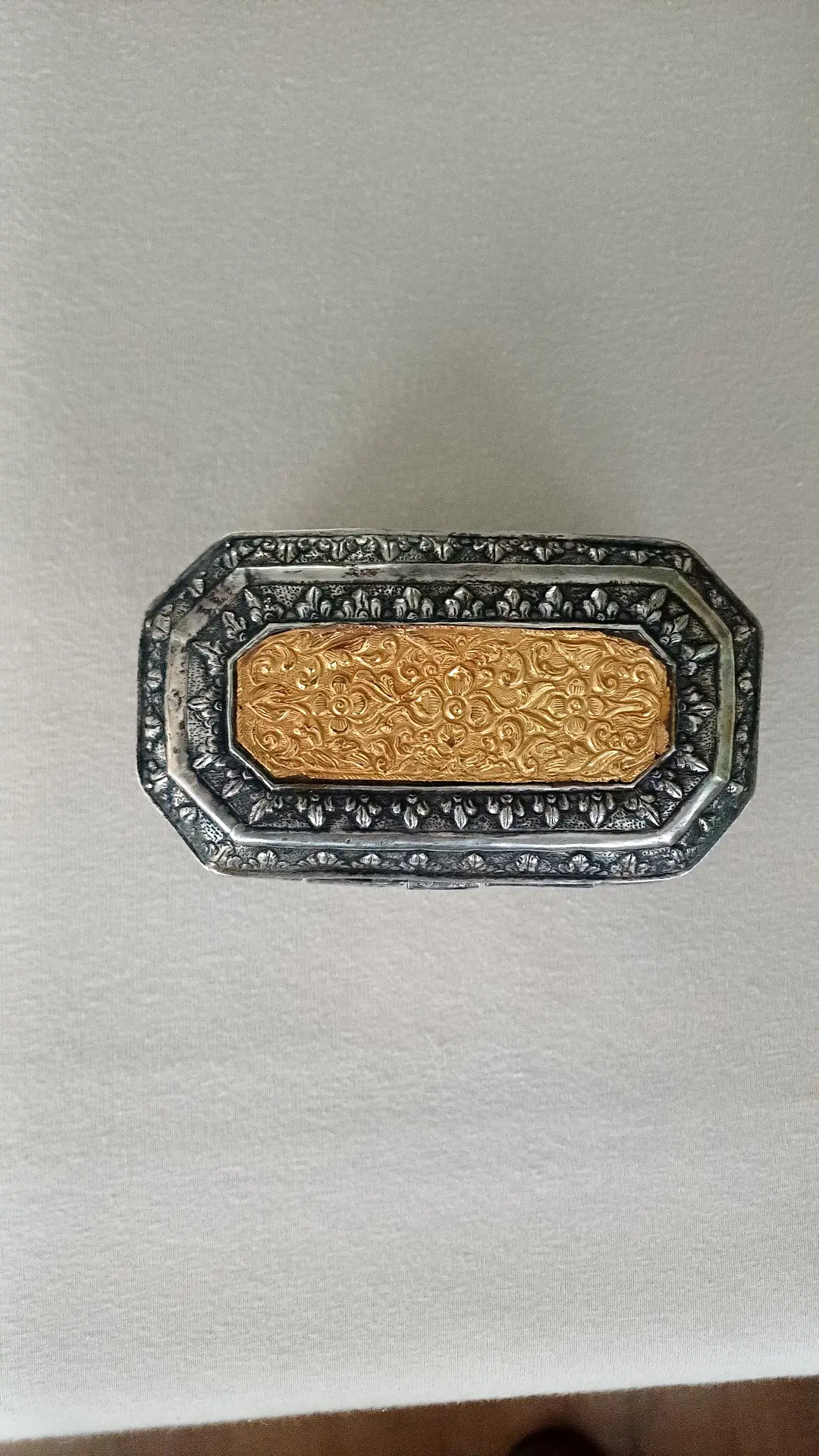
This style of metalwork mirrors the Tuğra-inspired aesthetic of the Ottoman Empire, specifically the 'Savat' niello and repoussé traditions of Van or the Balkans. During the late 19th century, such objects were produced both for domestic use and as 'Grand Tour' souvenirs for Western travelers. The use of parcel-gilt (partial gilding) was a standard technique to highlight intricate lid designs in Near Eastern silversmithing hubs like Istanbul or Tiflis.
Further details
The central gold-colored section on the lid is likely a 'vermeil' finish, where a thin layer of gold was chemically bonded to silver using a mercury-amalgam process common before modern electroplating.
Small boxes of this size were multi-purpose, often utilized for powdered snuff or 'cachous' (breath mints) which became popular in urban centers during the 1890s.
Attribution and evidence
The style and construction are very traditional, but without clear hallmarks, the metal purity and exact origin remain stylistically attributed rather than confirmed.
Identifying details
- 1Repoussé technique shows hand-tooling marks rather than machine stamping.
- 2Parcel-gilt lid panel is a characteristic finish for Near Eastern silver of the period.
- 3Octagonal form and hinge construction are consistent with turn-of-the-century smallwork.
- 4Oxidation pattern suggests long-term exposure to air without recent polishing.
Open questions
- •Absence of silver purity marks (e.g.,.800,.925, or Tuğra) lowers value and increases risk it is silver-plated brass/copper.
- •The interior finish is somewhat rough, which can sometimes indicate lower-tier workshop production.
Photographs that would help
- Conduct a silver acid test on an inconspicuous area to determine metal purity.
- Check the underside and interior rim with a 10x jeweler's loupe for faint struck marks.
- Examine under UV light to see if any modern adhesives were used for lid repair.
Terms in this record
- Repoussé
- A method of decorating metal in which the design is hammered into relief from the reverse side.
- Chasing
- The technique of detailing the front of a metal object using a hammer and punches.
- Parcel-gilt
- An object made of silver where only parts of the surface are gilded.
Wear and preservation
The item is intact with original gilding, though the heavy tarnish and minor base deformations prevent a higher grade.
Significant oxidation present across all silver surfaces. The hinge appears functional but shows minor misalignment. There are small compression dents visible on the lower base molding.
Materials and construction
Matte silver patina with significant tarnish (oxidization) in the recessed areas of the repoussé work. The gilt panel retains a high-relief texture with a muted yellow luster.
Recorded physical details
Estimated weight 60–90 grams; likely feels light due to the thin gauge of the silver sheet used in the repoussé process.
Scarcity and surviving examples
Average · 4/10 estimated rarity
This is a qualitative collection score, not a measured survival count, market percentile or proof of authenticity.
What the photographs establish
Interpretation of the photographs and supplied context. This does not authenticate the object.
- Lack of visible hallmarks or maker's marks on the base or interior rim
- High prevalence of late 20th-century 'antique-style' reproductions from Turkey and India
- Hand-soldered hinges suggest age but require close microscopic inspection to rule out modern assembly
Value and its basis
Estimate recorded: May 10, 2026
How we estimate value
Estimate context (not a documented sale): Similar unmarked Ottoman silver-plated or low-grade silver boxes sell on eBay and at regional auctions (Catawiki 2023) for $80-$150; marked sterling examples can exceed $300.
Collectors and interest
Collectors of Ottoman-era metalwork and enthusiasts of 19th-century 'objects de vertu' or snuff boxes.
What supports the estimate
- •Confirmation of silver content (e.g.,.800 fine or sterling)
- •Existence of a readable maker's mark or regional city stamp
- •Intactness of the gilt-wash on the lid panel
What could change it
- •Being identified as silver-plate rather than solid silver
- •Hidden cracks in the thin repoussé metal after cleaning
Comparing quality
- •Presence of an imperial Tuğra mark
- •Niello (black enamel) inlay accompanying the silver work
The effect of condition
Clarity of the chasing, hinge tension, and percentage of remaining gilding.
Market interest
For informational purposes only, not a formal appraisal.
Related objects
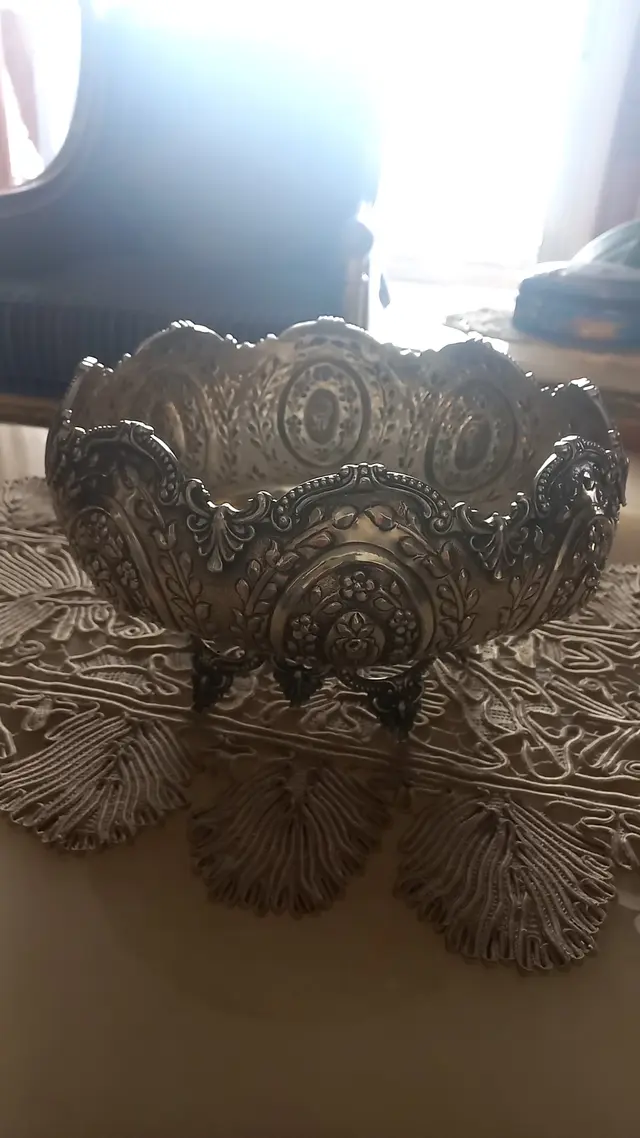
Continental Silver Centerpiece Bowl in Rococo Revival Style
Shared title details
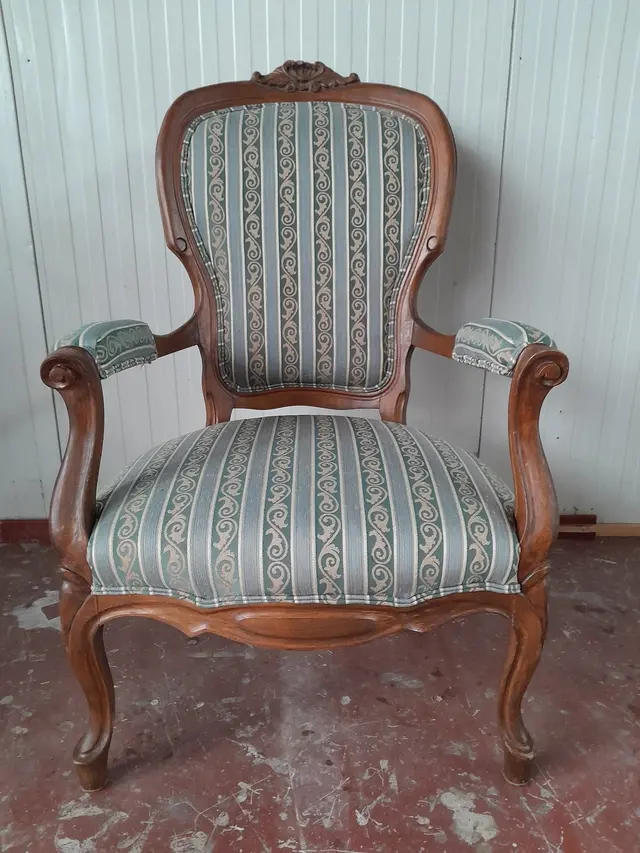
Louis XV Style Fauteuil à la Reine
Same category
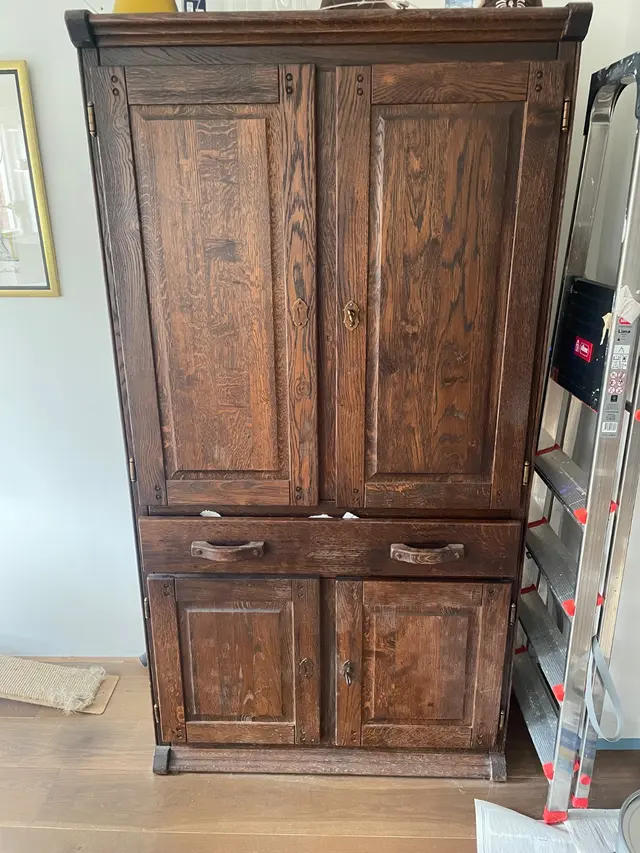
Mission Style Oak Dutch Cupboard (Kast)
Same category
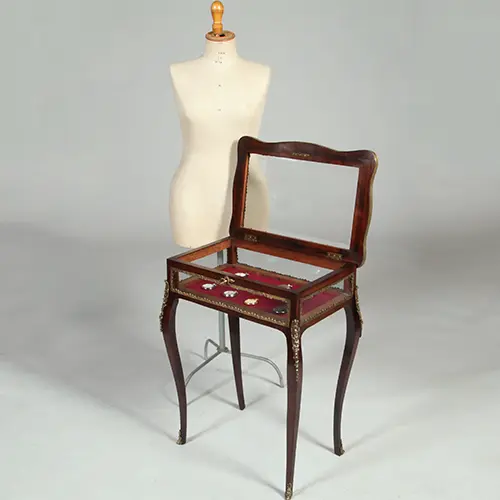
French Louis XV Style Vitrine Table
Same category
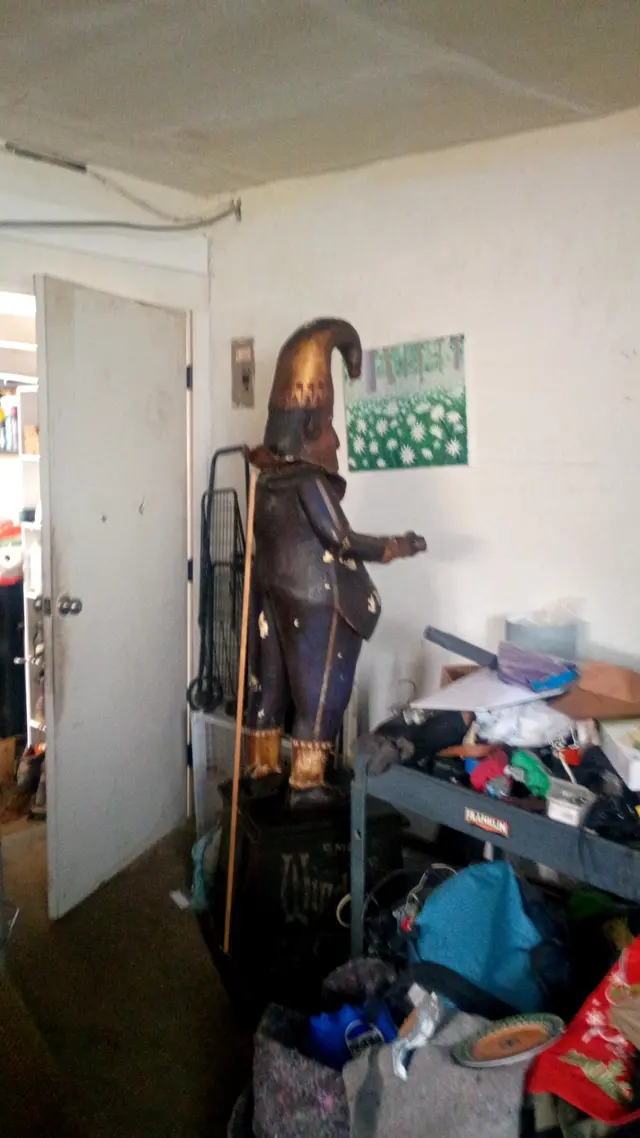
Carved Wooden Punch Figure Cigar Store Style Tobacconist Figure
Same category
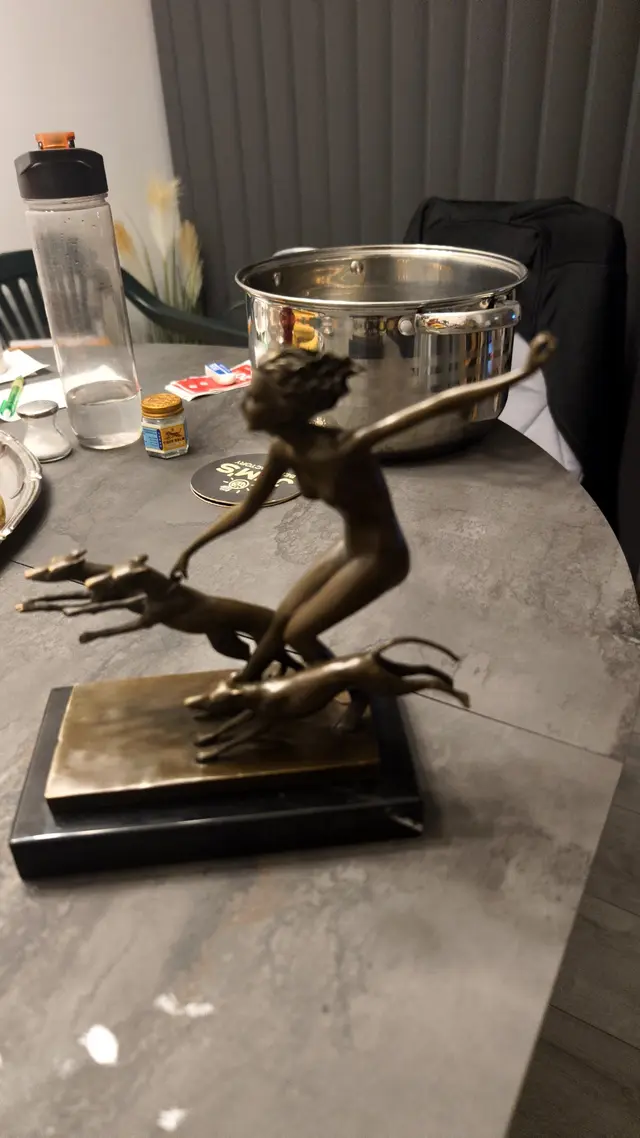
Art Deco Style Bronze Sculpture: Diana the Huntress with Hounds
Same category
Explore Antiques
Objects over 100 years old with historical and aesthetic value.
Antiques value and rarity guideShare this find
A place for your antiques
Keep its photographs, maker’s marks and the story you know in one object record. Start with a photo.
Create an account for 10 free scans. No credit card needed.
Join the conversation
Recognise a detail or have a question? Add what you know and cite your source. Suggested corrections stay in the discussion for the owner or a moderator to review.
Sign in to leave a comment
Sign in