Carved Wooden Punch Figure Cigar Store Style Tobacconist Figure
Estimated value
$800 - $2,500Rarity
Scarce(6/10)Category
AntiquesBrand
WindsorEra
Late 19th to mid-20th Century (requires closer inspection to differentiate period antique from later reproduction)Origin
United StatesAuthenticity
CARVED WOODEN PUNCH FIGURE CIGAR STORE STYLE TOBACCONIST FIGURE: IDENTIFICATION
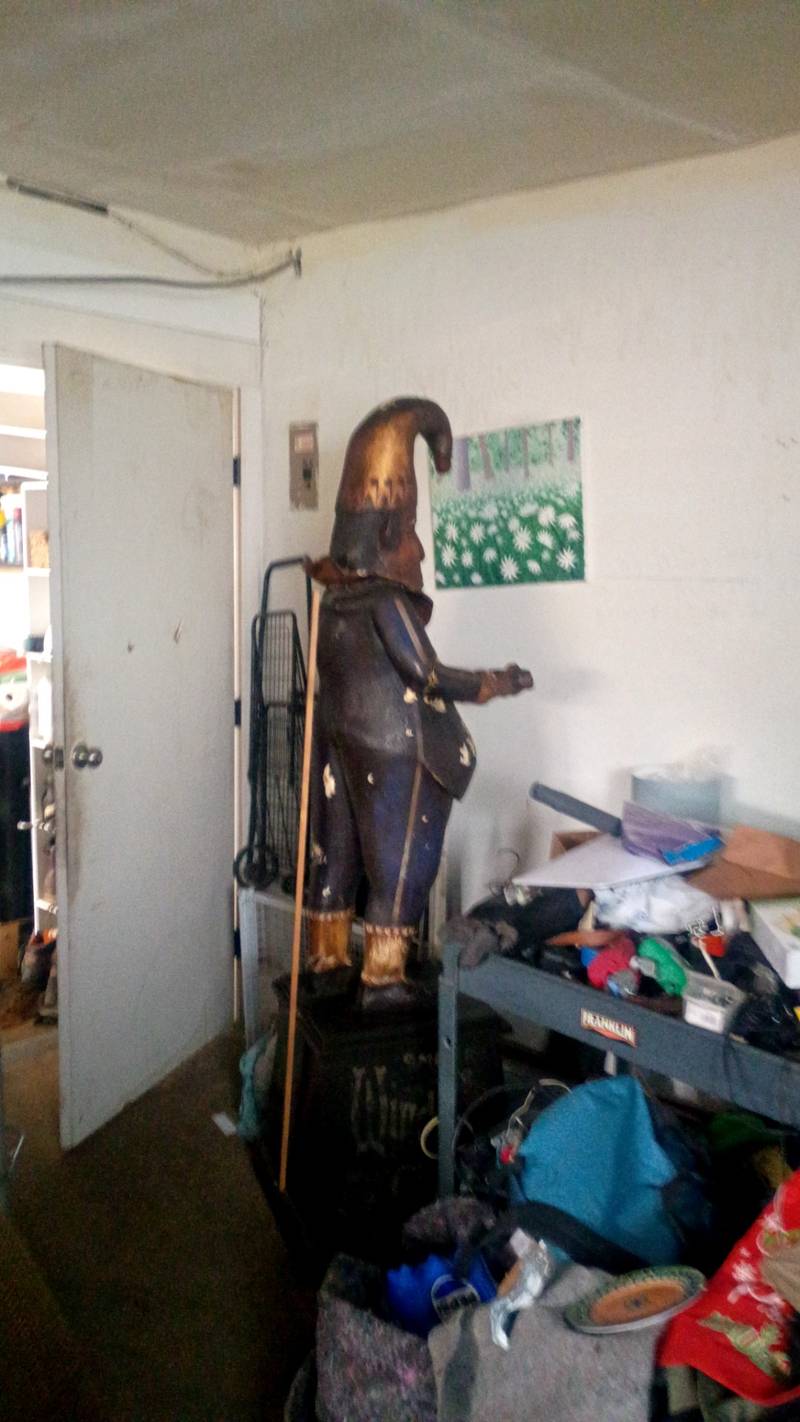
A life-sized carved wooden figure depicting 'Punch' (from Punch and Judy), executed in a style reminiscent of 19th-century cigar store figures. The figure features a prominent hooked nose, a forward-leaning humped posture, and wears a traditional peaked jester-style cap painted with a gold-tone band and geometric musical note motifs. The body is painted in dark tones, possibly blue or black, with extensive flaking and paint loss revealing a white gesso or undercoat beneath. It stands on what appears to be an integral or attached dark wooden base. The carving style is somewhat broad, lacking the fine anatomical detail typical of premier carvers like Samuel Robb or the Skillin workshop.
COLLECTOR NOTES
The character of Punch was so closely associated with smoking that the famous British humor magazine 'Punch' (founded 1841) not only took his name but featured him on nearly every cover until its closure.
SCARCITY
Genuinely harder to find. Perhaps only dozens come to market annually. Collectors actively watch for these pieces.
Typical Characteristics
- Dozens per year at market
- Documented provenance valued
- Active collector pursuit
Confidence Factors
- Folk art and trade figures are heavily reproduced, often with artificially distressed surfaces intended to mimic age.
- The stark white undercoat showing through the flaked areas looks somewhat uniform and lacks the layered patination typical of 100+ years of weathering and repainting.
- The quality of carving, particularly the hands and facial modeling, appears somewhat less refined than standard 19th-century professional shop figures.
- Without hands-on inspection of the wood age, tool marks (chainsaw vs. chisel), and paint analysis, it is difficult to definitively rule out a mid-20th-century decorative piece.
Expert review recommended. Consider consulting a specialist before making purchasing decisions.
ANTIQUARIAN'S ASSESSMENT
Decorative Arts Specialist
While the object type (a carved Punch figure) is clear, determining whether it is a genuine 19th-century trade figure, an early 20th-century fairground piece, or a modern reproduction with artificial aging is impossible from photographs alone. The condition of the paint raises suspicions of recent manufacture or deliberate distressing.
KEY EVIDENCE
- 1Iconography clearly depicts the character 'Punch', identified by the humped back, hooked nose, prominent chin, and characteristic hat.
- 2Scale and posture are consistent with traditional tobacconist or trade figures designed to be viewed from the street.
- 3Visible paint flaking reveals a white ground layer beneath the dark polychrome finish.
- 4The hat features specific painted motifs (musical notes/geometric shapes) over a distressed gold-colored ground.
UNCERTAINTIES
- •The pattern of paint loss on the belly appears somewhat contrived; genuine wear often occurs more gradually on high points rather than large flat flakes.
- •The carving style lacks the crisp definition often seen in authentic period trade figures, which were usually carved by skilled artisans.
- •The stark contrast between the bright white undercoat and the dark overpaint raises questions about the age of the materials used.
WHAT WOULD IMPROVE CERTAINTY
- →Examine the base and underside for construction details, mounting hardware, or maker's marks.
- →Inspect the style of tool marks on the unpainted areas or in crevices; look for evidence of modern power tools (like band saws or rotary carvers).
- →Examine the paint layers under magnification to determine if the 'wear' is natural or artificially induced (e.g., paint applied over an already distressed surface).
- →Assess the weight and type of wood (e.g., white pine was commonly used for American trade figures).
CONDITION & GRADE
Condition
Significant condition issues are visible. There is extensive flaking and loss to the polychrome finish on the torso, exposing large areas of white undercoat. The edges of the hat and collar show wear. The structural integrity of the wood (checking, rot) cannot be fully assessed, but the surface suggests either harsh environmental exposure or deliberate antiquing.
ANTIQUES MARKET VALUATION
Updated: May 10, 2026
Auction results for generic folk art carvings vary wildly. A documented 19th-century cigar store Punch or Judy figure might sell for $5,000-$15,000+ at specialized auctions (e.g., Morphy's or Heritage), whereas modern reproductions often sell in the $200-$800 range.
Who buys this
Collectors of advertising memorabilia, folk art enthusiasts, and decorators seeking striking, large-scale statement pieces.
What increases value
- •Verified age and authenticity as a period (19th century) trade figure.
- •Original paint or an established, well-documented history of repainting over decades.
- •Attribution to a known carver or workshop.
- •Desirability of the subject matter (Punch is popular, though perhaps less valuable than high-quality Native American figures).
What lowers value
- •Identification as a mid-to-late 20th-century reproduction or decorative item severely reduces value.
- •Poor condition, specifically structural instability or rot.
- •Heavy, low-quality modern repainting.
What makes top-tier examples
- •Undisturbed, original 19th-century paint surface.
- •Exceptional carving quality, particularly in the facial expression and clothing details.
- •Documented provenance linking the figure to a specific historic shop or location.
Grade & condition
In folk art, condition is weighed against originality. Wear is expected, but structural loss or poor restoration detracts. A highly distressed surface is only desirable if it is genuinely old and stable.
Rarity & demand
For informational purposes only, not a formal appraisal.
ABOUT ANTIQUES
Objects over 100 years old with historical and aesthetic value.
Antiques value and rarity guideSHARE THIS CURIOSITY
Have your own curiosities to discover?
Scan Your Curiosity
COMMENTS