
Arita Ware
Originating in the Hizen province of Japan during the early 17th century, these ceramics utilize Izumiyama porcelain stone to produce high-fired white bodies. In November 2023, a rare 18th-century Nabeshima-style dish achieved a price of $68,750 at auction, demonstrating the sustained demand for Edo-period palace wares among international collectors.
Explore 2 objects2 objects

1–2 of 2 objectsPage 1 of 1
About Arita Ware
On this page
Items
2
Main category on this page
Ceramics & Pottery
Highest rarity on this page
Uncommon
Collectors on this page
2
Estimates on this page
$85 - $800
Ceramic milestones from the Hizen province kilns
The Kakiemon 'Flying Fox' Pattern Plates
Dating to approximately 1670-1690, these pieces utilize the overglaze enamel palette developed by Sakaida Kakiemon I, characterized by asymmetrical compositions and large areas of milk-white 'nigoshide' space.
Show 3 moreShow less
VOC Monogrammed Export Chargers
Produced between 1690 and 1730 for the VOC, these massive blue and white platters often exceed 50 centimeters in diameter and feature the Dutch East India Company logo surrounded by pomegranate and peony motifs.
The 'Old Imari' Style Garniture Sets
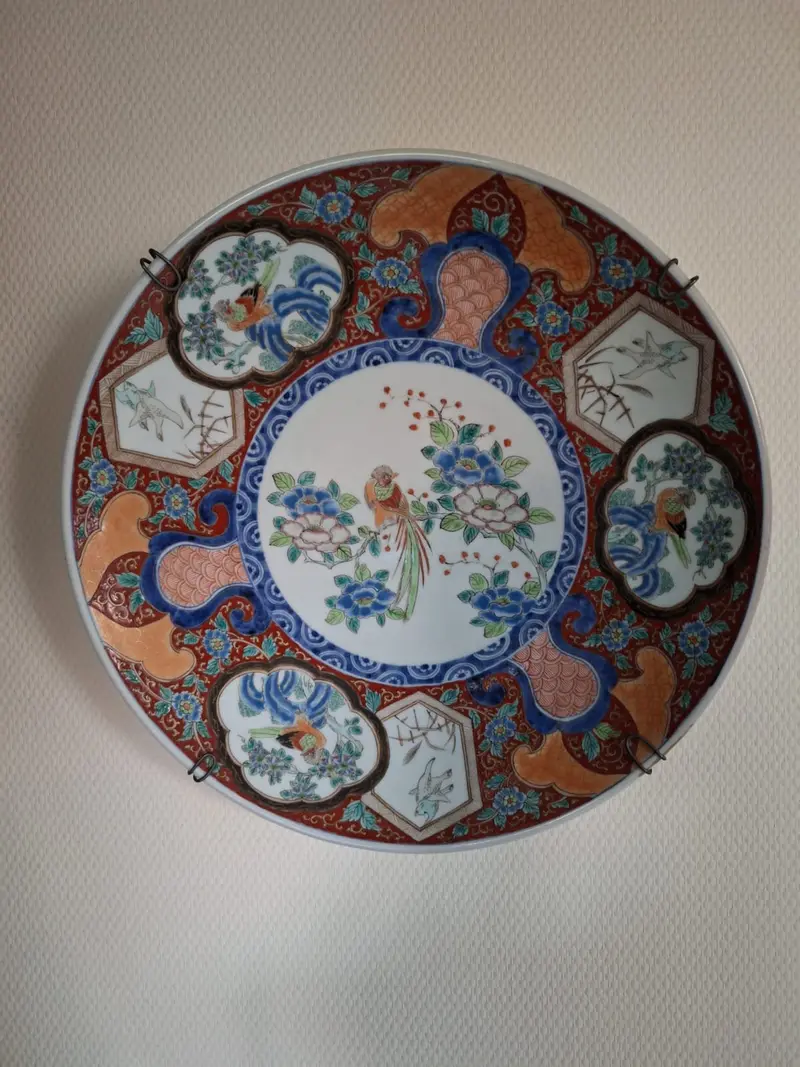
This sub-style emerged in the late 17th century to compete with Chinese Imari, utilizing a deep cobalt blue underglaze combined with iron-red and gold overglaze enamels to create dense floral landscapes.
Meiji Era Koransha Exhibition Vases
The Koransha company won the gold prize at the 1878 Paris Exposition for these sophisticated vessels, which integrated traditional Arita techniques with Western shapes to appeal to the Victorian market.