1970-1975 Toyota Celica ST Liftback (RA28/TA28 Series)
Estimated value
$18,000 - $35,000Rarity
Scarce(6/10)Category
VehiclesBrand
ToyotaEra
1973-1977Origin
JapanAuthenticity
1970-1975 TOYOTA CELICA ST LIFTBACK (RA28/TA28 SERIES): IDENTIFICATION
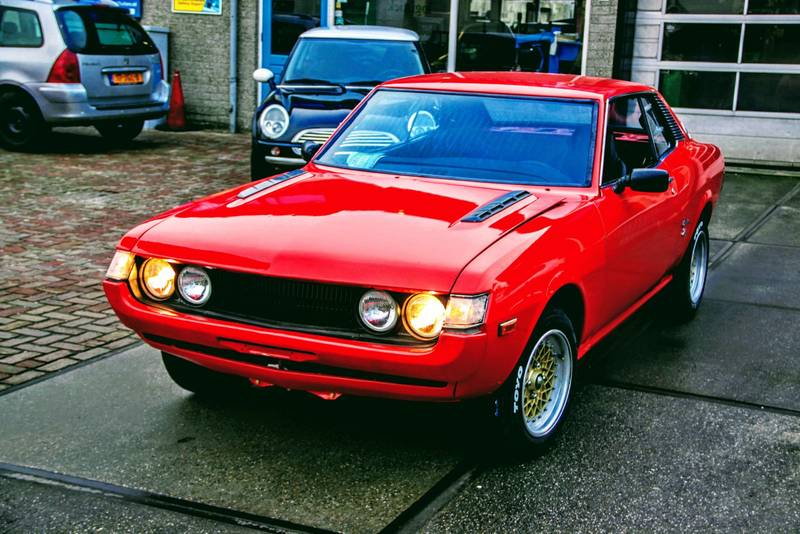
A first-generation Toyota Celica Liftback featuring the distinctive 'mustang-style' silhouette and quad round headlights. This specimen is finished in a non-factory or updated gloss red and equipped with period-style gold-centered mesh alloy wheels and Toyo performance tires. The vehicle displays the 1973-1975 era front-end modification with the recessed grille and integrated hood vents characteristic of the ST or GT trim levels from the Japanese and European markets.
PRODUCTION PERIOD
COLLECTOR NOTES
The Liftback model was originally unveiled as the SV-1 concept car at the 1971 Tokyo Motor Show, two years before it entered official production.
SCARCITY
Genuinely harder to find. Perhaps only dozens come to market annually. Collectors actively watch for these pieces.
Typical Characteristics
- Dozens per year at market
- Documented provenance valued
- Active collector pursuit
Confidence Factors
- The silhouette and specific light configurations are highly distinct to the RA28/TA28 chassis
- No indicators of replica or fiberglass kit-car construction are visible in the body seams
AUTOMOTIVE HISTORIAN'S TAKE
Automotive Historian
Identification of the specific make, model, and year range is near certain based on body lines, however, the degree of mechanical modification cannot be confirmed without interior or engine bay images.
KEY EVIDENCE
- 1Recessed grille with quad round headlights identifying it as a 1973-1977 Liftback model.
- 2Functional hood vents characteristic of the ST/GT trim levels.
- 3Side-view mirror placement on the doors rather than the fenders suggests a European or American export market configuration.
- 4Distinctive 'three-bar' tail light reflection visible in side profile (standard RA28 feature).
UNCERTAINTIES
- •Missing front bumper and possible modifications to the front valance.
- •Non-original wheels and paint depth suggests a full restoration or custom build of unknown quality underneath.
WHAT WOULD IMPROVE CERTAINTY
- →Provide high-resolution image of the VIN tag located on the driver side dash or firewall.
- →Request photo of the engine bay to verify if it retains the 18R or has been swapped with a modern 4A-GE or 3S-GE.
- →Undercarriage photos to inspect for the common corrosion issues in the floor pans and strut towers.
CONDITION & GRADE
Grading breakdown
The vehicle is a modified driver-quality example rather than a concours preservation piece; missing bumpers and aftermarket wheels suggest a personalized 'JDM style' build.
Condition
Visually modified with aftermarket wheels and non-original paint. The front bumper is removed, exposing the lower valance which shows some minor irregularities in panel gap. Headlight housings appear clear and functional.
Weight & feel
Approximately 1,000 to 1,100 kg curb weight, providing a nimble handling characteristic typical of 1970s Japanese unibody sport coupes.
AUTOMOTIVE VALUATION
Updated: May 11, 2026
Bring a Trailer (2023-2024) and RM Sotheby's have seen well-restored RA28 models exceed $40,000, while driver-quality modified examples typically trade in the $20,000 range.
Who buys this
Vintage Japanese Domestic Market (JDM) enthusiasts and collectors of 1970s sporting coupes looking for reliable alternative classics.
What increases value
- •Original twin-cam engine presence (if 18R-G or 2T-G)
- •Rust-free chassis rails and shock towers
- •Completeness of interior trim and dashboard plastics which are difficult to source
What lowers value
- •Evidence of prior accident damage behind the missing front bumper
- •Low-quality body filler (bondo) on lower wheel arches
What makes top-tier examples
- •Original survivor paint and interior
- •Matching numbers drivetrain with documented service history from new
Grade & condition
Panel alignment, paint thickness uniformity, and the presence of original factory weld spots in the engine bay.
Rarity & demand
For informational purposes only, not a formal appraisal.
SHARE THIS CURIOSITY
Have your own curiosities to discover?
Scan Your Curiosity
COMMENTS