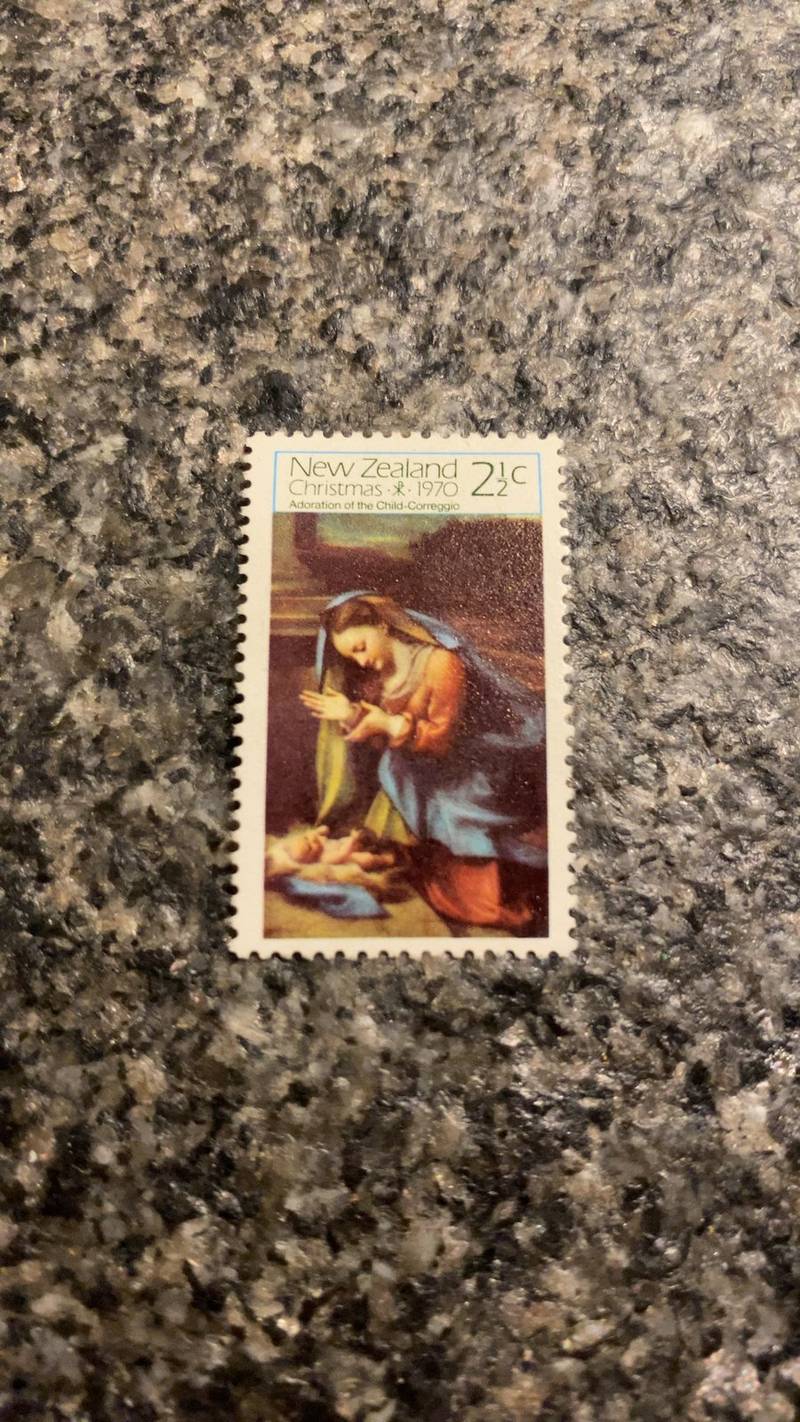
New Zealand 2½c Christmas 1970 'Adoration of the Child' Stamp
Estimated value
$1 - $5Rarity
Ordinary(3/10)Category
StampsBrand
New Zealand Post OfficeEra
1970sOrigin
New ZealandArtist / Creator
Correggio (Antonio Allegri da Correggio)Authenticity
NEW ZEALAND 2½C CHRISTMAS 1970 'ADORATION OF THE CHILD' STAMP: IDENTIFICATION
This is a postal stamp issued by New Zealand for Christmas in 1970, depicting a detail from Correggio's 'Adoration of the Child' painting. The denomination is clearly visible as 2½ cents. The stamp features standard perforation along all four edges and appears to be in unused condition based on visual inspection, though the presence of original gum cannot be fully ascertained from the image.
PHILATELIC NOTES
The 2½ cent denomination was a common value for internal letter postage in New Zealand around 1970, indicating this stamp was primarily intended for everyday postal use during the holiday season.
SCARCITY
Standard antiques commonly found at estate sales and flea markets. Plentiful supply meets modest demand.
Typical Characteristics
- Moderate production runs
- Common at estate sales
- Entry-level collectibles
Confidence Factors
- This is a common, mass-produced issue with low face value, making it an unlikely target for sophisticated forgery.
- The visible details align with known issues of New Zealand's 1970 Christmas stamps.
PHILATELIST'S VERDICT
Philatelist
The stamp's country, issue, and denomination are clearly legible, allowing for a high degree of certainty in its basic identification as a New Zealand Christmas stamp from 1970. The subject matter further corroborates this.
KEY EVIDENCE
- 1Clear 'New Zealand' and 'Christmas * 1970' inscription identifying the country and year of issue.
- 2Denomination '2½c' prominently displayed in the upper right corner.
- 3Printed inscription 'Adoration of the Child - Correggio' indicating the artwork inspiration.
- 4Standard roulette perforations visible on all four sides.
WHAT WOULD IMPROVE CERTAINTY
- →Examine the reverse side of the stamp for gum condition (Mint Never Hinged, hinged, regummed) and any hinge remnants.
- →Measure the perforation gauge using a philatelic perforation guide to confirm consistency with published catalog data.
- →Check for watermarks using a watermark fluid or tray, as watermarks can sometimes distinguish varieties.
- →Consult a specialized New Zealand stamp catalog (e.g., Scott or Stanley Gibbons) for official catalog number, printing details, and known varieties.
CONDITION & GRADE
Condition
Visually, the centering appears good, with even margins around the design. The perforations are regular and show no apparent tearing. Without examining the reverse, it's difficult to assess gum condition (e.g., whether it's Mint Never Hinged, lightly hinged, or regummed) or for any thins or faults.
PHILATELIC VALUATION
Updated: Feb 26, 2026
- Market comparables from auctions & retail
- Condition, completeness & craftsmanship
- Current collector demand & trends
- Low = quick sale, high = patient seller
For informational purposes only, not a formal appraisal.
ABOUT STAMPS
Rare stamps, postal history, first day covers, and philatelic treasures.
Stamps value and rarity guideSHARE THIS CURIOSITY
Have your own curiosities to discover?
Scan Your Curiosity
COMMENTS